Table of Contents (click to expand)
No, a human cannot stick to and climb walls like Spider-Man. Geckos and other climbers use van der Waals forces through sticky footpads, but a 2016 Cambridge study found that a human would need roughly 40 percent of their body surface (about 80 percent of their front) covered in adhesive to hold on, making real-life wall-crawling unworkable.
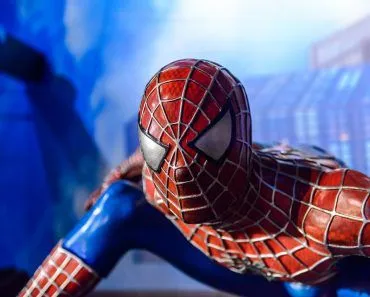
Imagine a broke nerdy teenager who is desperately trying to balance his professional and personal life. Of all the Marvel Universe heroes, Spidey is probably the most relatable. Except, of course, the radioactive spider bite that gave him the ability to climb walls and swing around New York City, fighting crime pro bono. I guess most people can’t put themselves in those shoes.

It doesn’t matter which franchise you prefer (Tobey Maguire, hands down), you undoubtedly respect the CGI and green screen gods for making the portrayal of your friendly neighborhood Spiderman so realistic. In fact, it’s almost realistic enough to make you wonder whether science could actually make Spiderman’s powers a reality.
The Wall Crawler
Let’s look at the most attractive and useful ability of Spidey – the ability to crawl on walls – and see what science has to say about its viability in “our” universe. To find an answer science digs deep into the animal kingdom, where the origins of the wall crawler began.
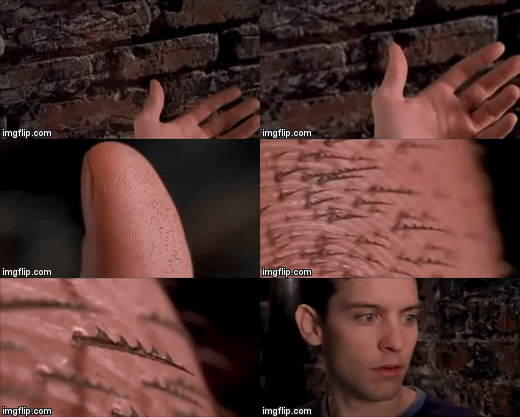
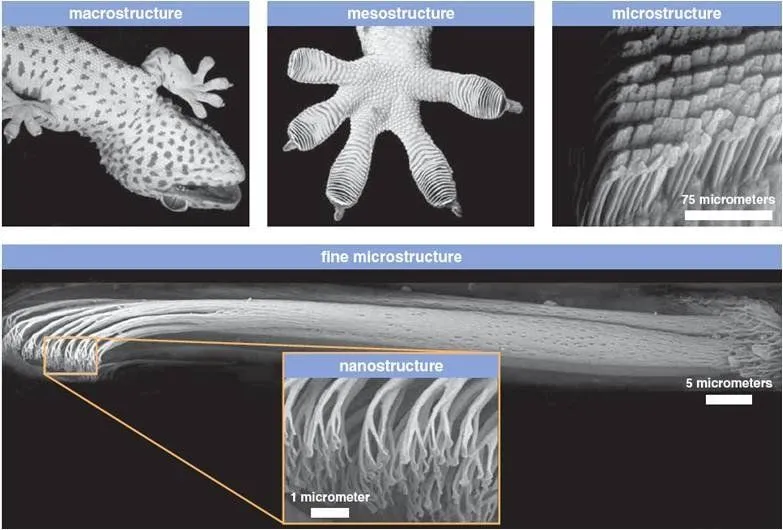
Amongst all the animals that do crawl up walls, from mites to geckos, the technique used is a rather common one. They all have adhesive (sticky) footpads on their body, which have thin hair-like extensions that stick to walls using molecular forces known as Van der Waals forces.
Van Der Waals Forces
Van der Waals forces, simply put, are weak electrical attractions between atoms. As electrons shuffle around within an atom, they momentarily bunch up on one side, creating a fleeting negative pole there and a positive pole on the other. That tiny negative side then tugs on the positive side of a neighboring atom. No single one of these attractions amounts to much, but spread across the billions of hair-like contacts on a footpad, they add up to enough grip to hold a gecko on a ceiling.
This neat trick of physical chemistry was adopted beautifully by biological evolution in animals, but scientists studying this have realized that there are size limitations to using this technique. The animals’ foot size must increase with its body weight in order to use the ability.
According to new research conducted at the University of Cambridge, to implement a similar technique in humans, about 40 percent of the total surface area would need to be covered with adhesive. This would require about 80 percent of the frontal portion of Spidey’s body to be stuck to the wall at all times to prevent him from dropping like a fly. In our universe, that would make wall-crawling a pretty useless trick up Spidey’s sleeve – at least for crime-fighting purposes!

A second observation the researchers made was that certain larger animals increased the strength of their adhesives, rather than the size of their legs. This change, however, would require more strength to peel oneself off a surface, which would lead to far more accidents for Peter Parker than Spidey, when you think about it.
Spiderman might not be able to exist in real life, but that doesn’t stop us from dreaming and being inspired by him. Which rendition of Spiderman is your favorite? Tobey Maguire, Andrew Garfield, or Tom Holland, who has since worn the suit through his own trilogy and a string of Avengers films?
Can You Climb A Wall Like Spider-Man In Real Life?
Here is the twist the Cambridge math doesn't capture: while your skin can't crawl up a wall, engineers have already built gadgets that let an ordinary person do a passable Spidey impression. The trick is not to cover the whole body in adhesive, but to copy the gecko's footpad in a small, reusable patch and then share the load cleverly.
The cleanest demonstration came from Stanford's Biomimetics and Dexterous Manipulation Lab. The team, led by Mark Cutkosky with then-graduate-student Elliot Hawkes, built hand-held pads coated in arrays of microscopic silicone wedges, sawtooth shapes each about 100 micrometers long. When you simply rest a pad on glass it barely sticks, because only the sharp tips touch. Pull down on it and the wedges flatten out, the contact area jumps, and van der Waals forces switch on across the whole patch. Crucially, the pads use special "degressive" springs that spread the load evenly so the top of the patch doesn't peel first. Using these pads, a 70 kg (about 154 lb) climber scaled a 4 m (roughly 13 ft) vertical pane of glass, and the team reported the work in the Journal of the Royal Society Interface in 2015.

Around the same time, the US defense research agency DARPA ran a program called Z-Man with the same goal. Using Geckskin-style paddles developed at Draper Laboratory, a 218 lb (about 99 kg) climber went up and down 25 ft (7.6 m) of glass with no rope or suction cups, and in one trial hauled an extra 50 lb (23 kg) load along for the ride.
So a real-world wall crawl is possible, just not as a full-body superpower. You climb with two sticky paddles, one hand at a time, on a smooth surface like glass, and it is slow, deliberate work rather than a rooftop chase. The honest verdict: science can't make you Spider-Man, but it can hand you his gloves. (For another superhero power that crashes into real physics, see whether the Flash could really run up the side of a building.)
How Does Spider-Man Actually Stick To Walls?
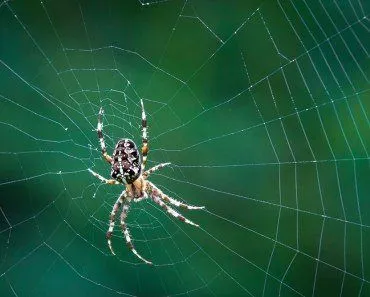
People often ask exactly how Spider-Man clings to a wall, and even how he does it with his suit and boots on. That's a question about the fiction, because in the films and comics the power is, well, made up, but it is loosely modelled on a real bit of biology. Many spiders climb the same way geckos do: the tips of their legs carry dense tufts of fine hairs, called scopulae, that split into thousands of tiny endings. Each contact is microscopic, but together they generate enough adhesion, mostly van der Waals attraction plus a little hydrogen bonding, to hold the spider on a smooth surface like glass, a close cousin of the molecular grip we discussed above.
The early Sam Raimi films leaned into this. In Tobey Maguire's origin scene, tiny barbed hairs visibly sprout from Peter Parker's fingertips, a nod to those spider foot-hairs. The comics, by contrast, never settled on hairs at all. The Official Handbook of the Marvel Universe describes Spider-Man as mentally enhancing the attractive forces between his body and a surface, raising the friction so he stays put, which conveniently explains why gloves and boots don't stop him. Later storylines reframed the ability as control over electrostatic force, which is how the villain Electro is able to short it out.
None of those in-universe explanations are physically workable for a real human, for exactly the surface-area reason the Cambridge study spelled out. But the real spider and gecko biology underneath the fantasy is sound, and it is what makes the gecko-inspired climbing pads above actually grip.
References (click to expand)
- Extreme positive allometry of animal adhesive pads and the size limits of adhesion-based climbing. Proceedings of the National Academy of Sciences (PNAS). NCBI PMC.
- Evidence for van der Waals adhesion in gecko setae. Proceedings of the National Academy of Sciences (PNAS). NCBI PMC.
- Why Spider-Man can’t exist: Geckos are ‘size limit’ for sticking to walls. University of Cambridge.
- Hawkes, Eason, Christensen & Cutkosky. Human climbing with efficiently scaled gecko-inspired dry adhesives. Journal of the Royal Society Interface (2015).
- Climb. Biomimetics and Dexterous Manipulation Laboratory, Stanford University.
- Z-Man Program Demonstrates Human Climbing Like Geckos. DARPA.
- Adhesion of Individual Attachment Setae of the Spider Cupiennius salei. Frontiers in Mechanical Engineering (2021).