Table of Contents (click to expand)
Humans lost their tails about 25 million years ago, when an “AluY” jumping-DNA element inserted itself into the TBXT (Brachyury) gene of our ape ancestors and broke its tail-building instructions. Bo Xia and colleagues identified the mutation in 2024 and showed it also raises the risk of neural-tube defects like spina bifida.
Man, Darwin concluded in The Descent of Man, “despite his God-like intellect, which has penetrated into the movements and constitution of the solar system – with all these exalted powers – still bears in his bodily frame the indelible stamp of his lowly origin.” He was, of course, referring to our primate ancestry. We are just half a chromosome away from being copiously haired and perpetually hunched, from being what one might call a “beast”.
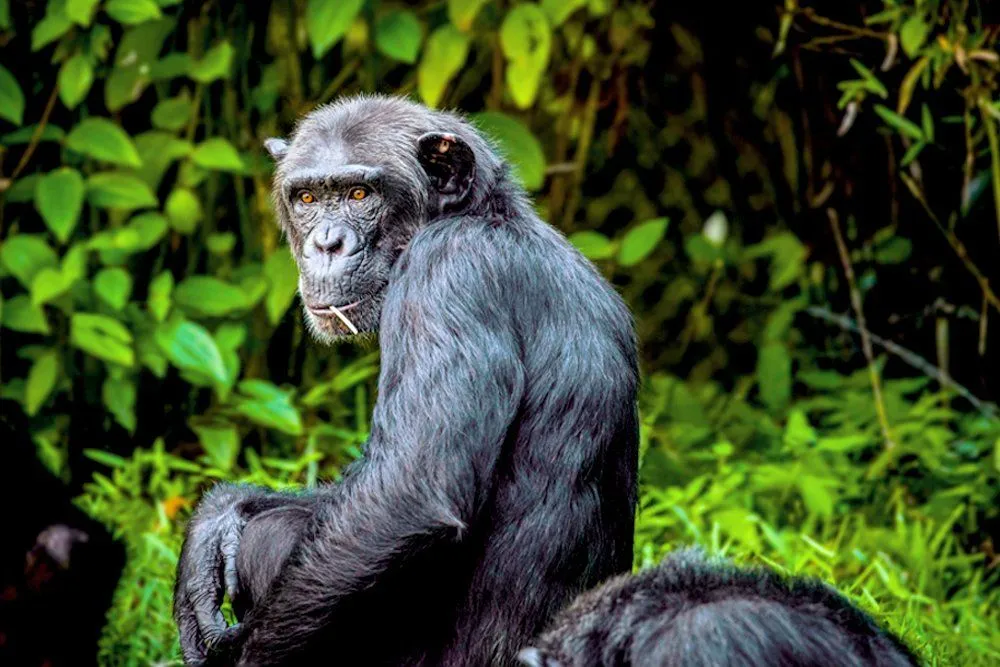
Evolution gradually pruned these traits, but nature isn’t as generous as you might believe. Being rigorously parsimonious, nature only deals in trade-offs. Less hair comes at the cost of feeling colder, while a lowered larynx, which enabled the vocalization of a gamut of sounds and therefore language — possibly the pinnacle of our evolution — made us more liable to choke when we talk while eating.
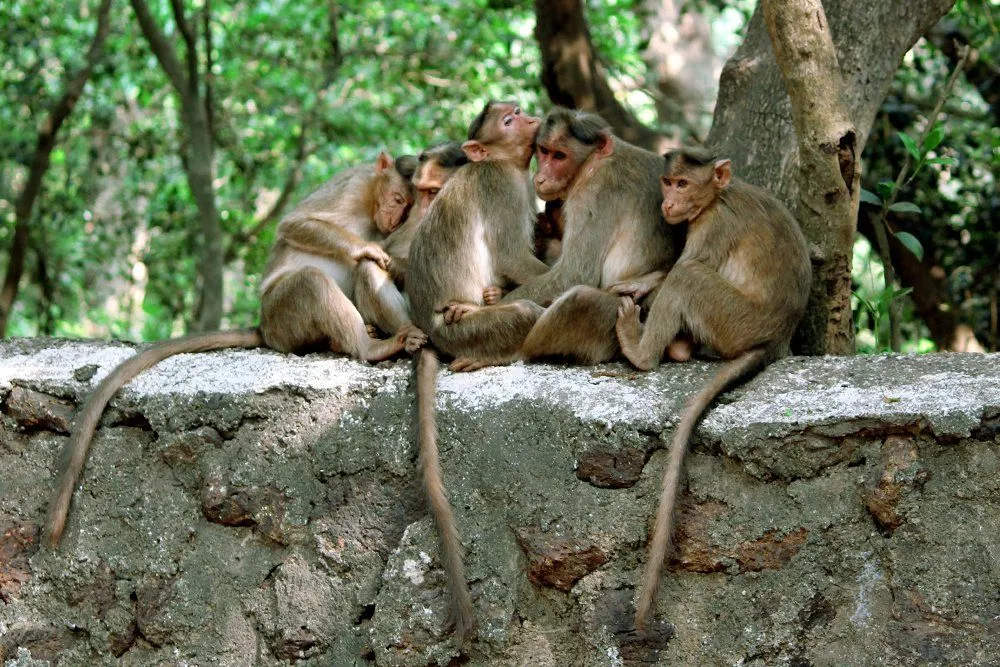
Another such trait is the tail. The tail is not an eccentricity — tied to their pelvis, it is found wiggling and undulating on a variety of animals, but particularly mammals. Apes and therefore humans are exceptions – monkeys did and have continued to flaunt them to date, but why did our common ancestor refuse to grow one? What we’re essentially asking is: what’s the trade-off?
Redundancy
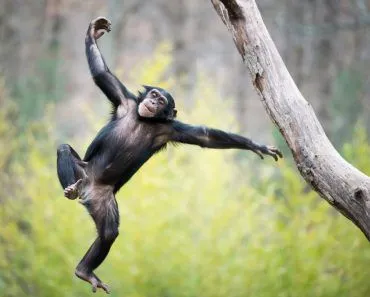
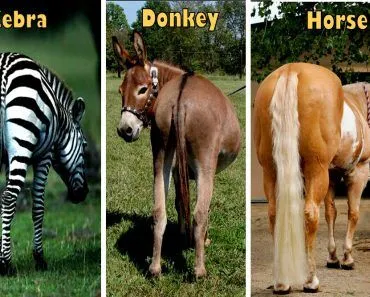
A tail can serve multiple purposes: a horse uses it to swat bugs, a crocodile stores in it, just like a camel stores its body’s excess fat in its hump, fish use their fins to steer, while primates use their tails to hang and swing from branches. In 2024, scientists pinned humans' missing tails on a 25-million-year-old Alu insertion in the TBXT gene that disabled tail-building in our ape ancestors. Why would we waste our time and resources nurturing this redundant appendage? So, we gradually evolved to suppress them.
Not growing a tail became more favorable for survival because it would not disrupt our balance. Most tailed animals are tetrapods – they have four limbs. The tail can be moved by an animal to manipulate its center of gravity and therefore maintain balance. When our ancestors embraced living on the land, it is speculated that to achieve dexterity, to say, forage more effectively, they straightened or rose, beginning to walk on their hind limbs.
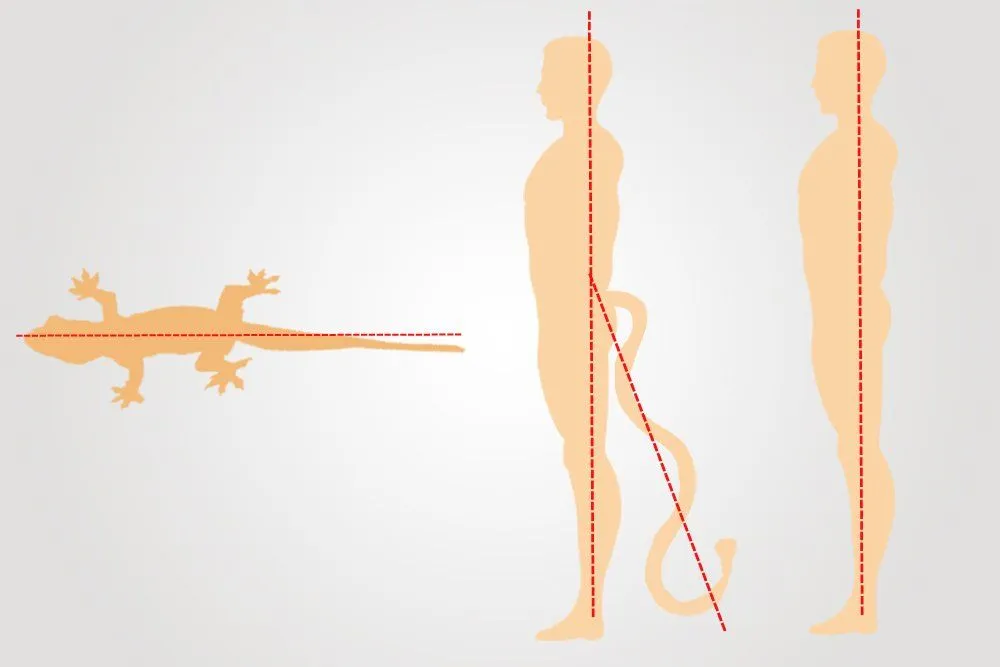
As our bodies gradually evolved to adopt a more vertical orientation than a horizontal one, tails would have surely disrupted our center of gravity, and therefore our balance. Walking upright with a tail would have been quite cumbersome.
Walking on hind limbs did take centuries of practice. A long stick helped until one fine day, our hands were truly “free”. This pair of dangling hands would eventually be responsible for our greatest invention: tools. The invention of tools, or our ability to automate in general, competes with language to be crowned the sole arbiter of our unprecedented evolutionary success.
The Tailbone
Nature might be generous, but it definitely isn’t efficient. Like a bad investor, nature has absolutely no foresight; it only seeks solutions that work in the short term. The most punishing consequence of this lack of prudence is that the mistakes cannot be rectified, and we must live with them. Nature can only add; it can never subtract.
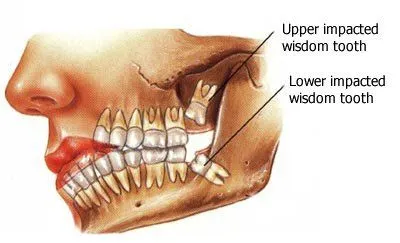
Consider our wisdom teeth, which became redundant once cooking and softer diets shrank our jaws, leaving no room for that last set of molars to come in straight. Or the appendix, long dismissed as a useless leftover of a raw-plant-eating past. Recent research has been kinder to it, though, suggesting it doubles as a microbial "safe house" that helps repopulate the gut with friendly bacteria after a bout of diarrheal illness, and as a small immune outpost on the way.
However, because time and energy constraints don’t allow nature to remove these parts of the body, it has no option but to keep them. These once indispensable organs are now utterly worthless, only a potential source of immense agony that can be alleviated by surgical means. These are called vestigial organs, and the tail is another of them.
Yes, humans, being mammals, do grow a tail, but not for more than 30 days. An appendage comprising 10-12 vertebrae grows at the tip of the spinal cord from a bone appropriately named the tailbone. However, the genes responsible for its growth are turned off in the embryonic stage. After it stops growing, around the 4th week, it is outgrown by other tissues in the next 4 weeks, such that around the 8th week, the tail is effectively nonexistent.
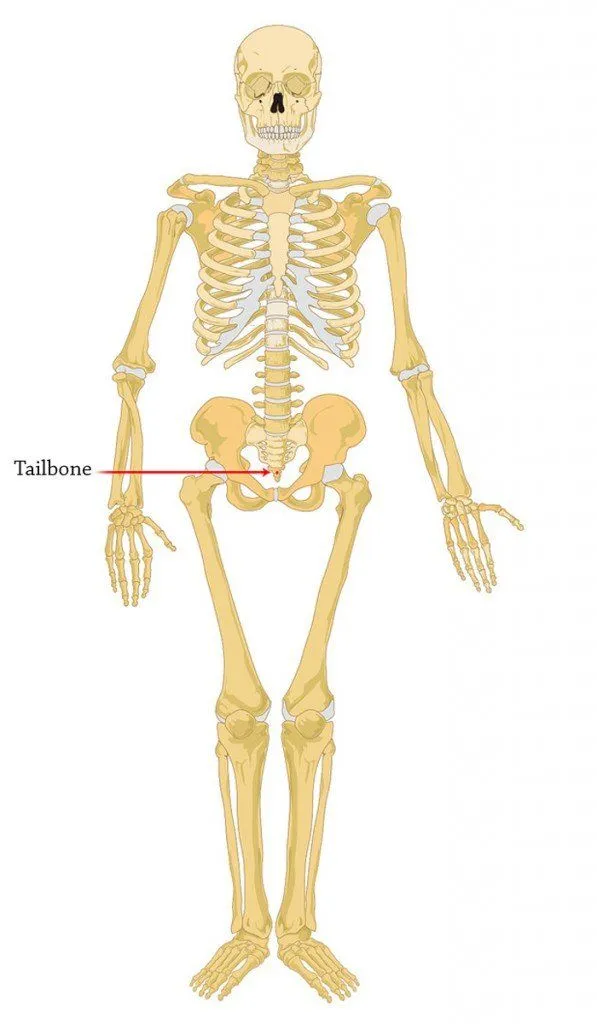
However, children will often develop, like an extra thumb, a fifth appendage – a crude tail. These are cases of atavism, a rare biological occurrence in which an offspring will suddenly evolve traits shared by a distant ancestor, rather than shared with his or her parents. Basically, a millennia-old trait will unexpectedly reappear. These cases are exceedingly rare, with fewer than a hundred described in the medical literature. Of course, the discovery of a tail can elicit confusion, downright terror or, if you worship the Hindu god Hanuman, sanctity. However, for doctors, this is ordinary, and the protrusion is then removed surgically.
One case study I read involved six children aged between 3 days and 2 years, each born with a tail ranging from mere centimeters to, extraordinarily, inches. Interestingly, every tail wasn’t serpentine and slick like the tail of a rat; one was actually bobbed like the tail of a lion! This is the perfect example to illustrate nature’s fallibility and penchant for mutation.
A Genetic Smoking Gun
For decades, the why of our missing tail was easier to answer than the how. Then, in 2024, a team led by Bo Xia at NYU Langone Health found the smoking gun, not in a fossil, but tucked deep inside our genome. Some 25 million years ago, in the common ancestor of all apes, a tiny piece of "parasitic" DNA called an AluY element jumped into the middle of a gene named TBXT (also known as Brachyury), the very gene whose protein orchestrates tail-building in vertebrates from fish to mice.
The insertion landed in intron 6, and it would have been mostly inert if not for an older Alu element sitting backwards just next door in intron 5. The two pieces of stray DNA, like two magnets finally close enough to feel each other, snapped together when the gene was read, bending the RNA into a hairpin loop and causing the cellular machinery to skip an entire chunk of the message. The result was a shorter, blunter version of the TBXT protein, and a body plan with nowhere to grow a tail.
To prove it, Xia’s team engineered the same splice into mice and watched the animals be born without tails, or with crooked stumps, exactly as predicted. But nature, as we’ve said, is a bad investor. The same mutation that took our tail also nudged up the risk of neural-tube defects like spina bifida, a quiet evolutionary tax our species still pays, roughly one in every thousand newborns, for the privilege of standing upright.
The Unknowns
So, it seems we traded the tail for walking on our hind legs, sort of. The molecular accident is now known (a single jumping-DNA insertion in the TBXT gene), but the deeper question (why this particular mutation took hold in our ancestors’ population rather than being weeded out) is still up for debate. The leading guess is that the balance benefits for early upright apes outweighed the costs, including a slightly higher risk of neural-tube defects. Who knows what adversity fell upon our ancestors some 25 million years ago that pressurized their genes to repress the tail. It seems that survival could be salvaged only at the immediate cost of our tails. Who knows why we decided to walk on two legs?
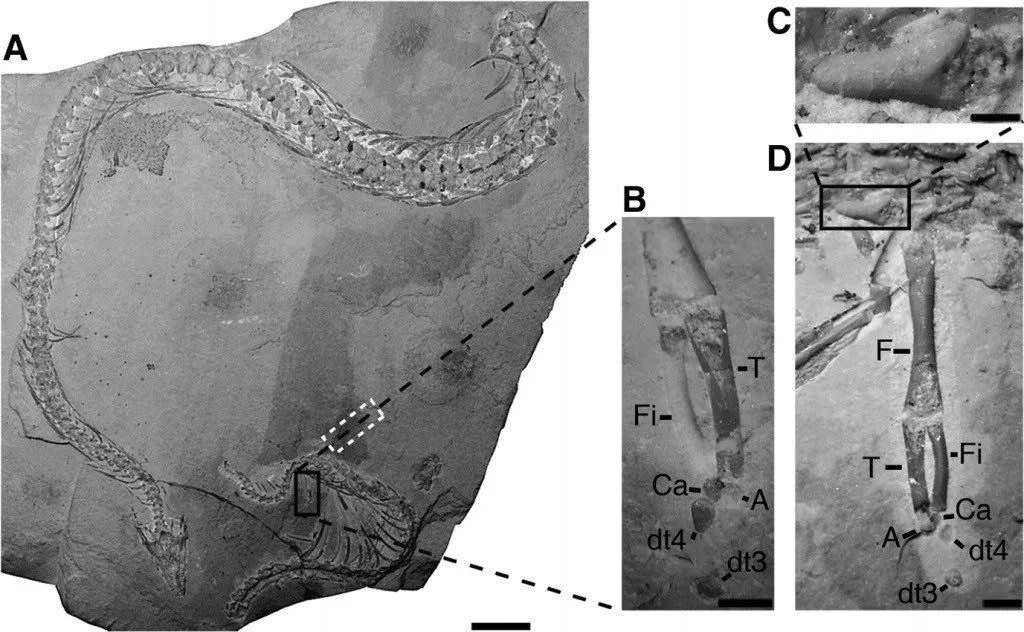
What’s more, there is no single, particular gene that determines a tail’s growth, just like there is no single, particular gene to determine the color of your iris. Turning on a gene is like fiddling with a haphazard, inscrutable configuration of levers. The one we accidentally push may push another, which then pushes another, setting in motion a cascade of more unknown pushed levers. There are just too many variables involved.
In a few years or millennia, perhaps even the tailbone will disappear. However, until then, the tailbone and a plethora of other traits, such as our sharp canines or ever-drooping spines, represent archives of our wild evolutionary history. They are the grim reminders of our savage past.
References (click to expand)
- Xia B. et al. On the genetic basis of tail-loss evolution in humans and apes. Nature (2024).
- Lawrence A. et al. Spinal neural tube formation and tail development in human embryos. eLife (2024).
- Mukhopadhyay B. et al. Spectrum of human tails: A report of six cases. J Indian Assoc Pediatr Surg (2012).
- Kvon E.Z. et al. Progressive Loss of Function in a Limb Enhancer During Snake Evolution. Cell (2016).
- Atavism: Embryology, Development and Evolution. Nature Scitable.
- Bollinger R.R. et al. Biofilms in the large bowel suggest an apparent function of the human vermiform appendix. J Theor Biol (2007).