Table of Contents (click to expand)
We crave chocolate mainly because of its sensory appeal: the sweet-and-fatty taste plus cocoa butter that melts at body temperature. Chocolate does contain mood-related compounds (theobromine, caffeine, phenylethylamine and a trace of anandamide), but they occur in such small amounts, or are broken down so quickly, that the feel-good effect comes mostly from the pleasure of eating, plus habit and culture, rather than a real drug-like high.
Hasn’t this question crossed everyone’s mind! Anyone, at any age, on any occasion, loves chocolates. It’s your birthday? Chocolate. Feeling stressed? Chocolate. Bored? Chocolate!
Chocolate is not just a universal favorite, but also a universal craving. Chocolate has the ability to give non-addicts a ‘kick’ similar to a drug. Chocolate might be the reason behind the saying that desserts don’t go to the stomach, but to the heart. Let’s find out why.
Sensory Appeal Of Chocolates
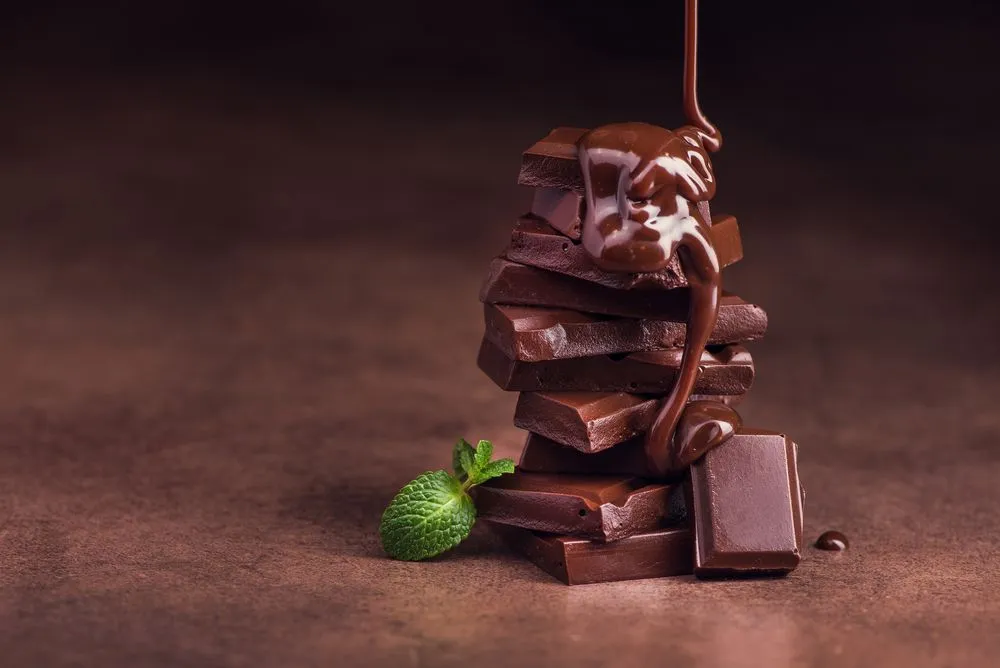
Chocolates have a chemosensory appeal, right from the packaging to the chemical compounds present in the bar, chocolate is a complete package to increase a craving. A combination that attracts every individual when it comes to craving, chocolate contains both sugar and fats. Chocolate also contains cocoa butter, which provides a pleasant oral sensation, as it melts at room temperature. The feeling of satisfaction that we get when we take a bite of chocolate and feel it immediately melting in our mouth is a seemingly universal pleasure. The texture of the chocolate, along with its aroma, makes it a very easy choice for ingestion.
Chemical Properties Of Chocolate
A bite of chocolate is never enough, so you soon find yourself downing the entire bar. Chocolate contains xanthine and theobromine, which have addictive properties. A typical Hershey Bar contains 92mg of theobromine (197mg/100g). Theobromine is also found in tea and coffee, but chocolate is its richest source. However, despite the name, there is no bromine in theobromine; the “-ine” is simply the suffix chemists tack onto alkaloids. The word comes from Theobroma, the genus name Carl Linnaeus gave the cacao tree in the 18th century, built from the Greek roots theos (“god”) and broma (“food”), so theobromine literally means “food of the gods”. Chocolate also contains tyramine and phenylethylamine, which are biogenic amines that cause arousal, raised blood sugar and blood pressure, increasing alertness and contentment.
Phenylethylamine is often called a “love drug”, the idea being that it quickens the pulse the way falling in love does, and that romantic reputation is part of why we hand out chocolates on Valentine’s Day. The mood story, though, is largely a myth. The phenylethylamine you swallow is broken down almost entirely by an enzyme called monoamine oxidase (MAO) in the gut before it can reach the brain, so the amount that actually gets there is far too small to make you feel like you are in love.

Chocolate is sometimes said to be craved because it supplies magnesium, the idea being that the body is making up for a deficiency. The evidence for that is thin, though: if low magnesium were really the trigger, we would expect to crave spinach, almonds or beans just as strongly, yet the craving is almost always specifically for chocolate. Chocolate contains 380 known chemicals; it is mind-boggling how many compounds can trigger our neurotransmitters.
What Makes Chocolates Addictive?
Just like the drug opium, which makes us feel euphoria, chocolates trigger the production of natural opiates in the brain. These natural opiates give us a feeling of well being and put us in a ‘trance’ state. Adam Drewnowski from the University of Michigan found that if the part of the brain that triggers the release of natural opiates was blocked, the participants decreased their intake of chocolate.
Emmanuelle di Tomaso and Daniele Piomelli reported in Nature in 1996 that chocolate contains ‘cannabinoid mimics’. Cannabinoids are substances that act on the same brain receptors as the active compound in cannabis, THC (tetrahydrocannabinol), the chemical that makes one feel ‘high’. Before you picture chocolate as a legal high, though, there is a catch: these compounds are present in such minuscule amounts that one estimate suggests a 60 kg (130 lb) person would have to eat about 11 kg (25 lb) of chocolate in one sitting to feel anything marijuana-like.
One of those compounds is anandamide, a feel-good molecule the brain already makes on its own (its name comes from the Sanskrit word for ‘bliss’). So if the brain produces anandamide anyway, what does chocolate add? The amount of anandamide in chocolate is tiny, but chocolate also carries compounds that slow the enzymes that normally break anandamide down. The plausible effect, then, is not a flood of new anandamide from the bar but a slight prolonging of the bliss molecule your own brain has already released.
Why Do Women Crave Chocolate More Than Men?

A correlation between the menstrual cycle and a rise in chocolate cravings is often reported, with many women saying they crave chocolate most in the days before their period. For years this was blamed on hormones or on dips in blood sugar, but the evidence does not really hold up. When Julia Hormes and Paul Rozin studied the question, they found that women who had gone through menopause carried on craving chocolate almost as much as before, even though their monthly hormone swings were gone. Tellingly, the perimenstrual chocolate craving is far more common in the United States than in countries such as Spain, and women born abroad report it much less often. In other words, this looks more like a learned, cultural pattern, reinforced by marketing, than a hard-wired biological one.
Other Health Benefits Of Chocolate
Chocolates (dark chocolate and cocoa) contain flavonoids called flavanols. Flavonoids are plant-based substances that have antioxidant and anti-inflammatory effects. Dr Ding analyzed 24 studies done on cocoa flavonoids and heart disease. They found that chocolate helps to decrease unhealthy cholesterol (LDL), improve blood flow, increase good cholesterol (HDL) and lower insulin resistance, effectively preventing Type 2 diabetes and heart disease.
Another research study done in Italy found that cocoa has brain-protective properties, as it helped patients with minor cognitive impairment perform better in their mental functions and speaking ability tests. The participants who drank high-flavonoid cocoa performed better than the low-flavonoid cocoa participants. This does not mean that cocoa directly helps in dementia, but it shows a strong correlation.
Why Is Dark Chocolate Healthier Than White Chocolate?

White chocolate, despite the name, contains no cocoa solids at all, just cocoa butter, sugar and milk, which is why it carries none of the flavanols. Milk chocolate has only about 10% cocoa liquor, while dark chocolate contains at least 35% cocoa liquor. More cocoa means more flavanols, which is what makes dark chocolate the healthier option of the three.
No wonder chocolate has such a global appeal. A lot of that pull is simple pleasure, the sweet, fatty, melt-in-the-mouth experience, wrapped up with habit, memory and a good deal of clever marketing. The ‘love chemicals’ make a charming story, but they are mostly bit players. And if you are going to be hooked on something, a square of dark chocolate is about as harmless a habit as it gets!
References (click to expand)
- Neuroscience For Kids - sweet mysteries of chocolate. The University of Washington
- Chocolate: Pros and cons of this sweet treat - Harvard Health. Harvard University
- Chocolate Craving and Liking. University of Pennsylvania (hosted PDF)
- Hormes JM, Rozin P. Does culture create craving? Evidence from the case of menstrual chocolate craving. PLOS ONE (2017). NCBI/PMC
- Michener W, Rozin P. Pharmacological versus sensory factors in the satiation of chocolate craving. Physiology & Behavior (1994). PubMed
- di Tomaso E, Beltramo M, Piomelli D. Brain cannabinoids in chocolate. Nature (1996). PubMed