Table of Contents (click to expand)
Human pregnancy lasts about 40 weeks (roughly 280 days, or nine months) because the mother hits a metabolic ceiling: by birth, supporting the fetus already costs close to twice her resting energy, and one more month would push her past what she can sustain. The older idea that pelvis width sets the limit no longer fully holds up.
The majestic wildebeest gives birth on the wide open Savannah. Faced with the prospect of being devoured by a hungry pride of lions, each calf toddles up on four legs, ready to race for its life across the plains soon after birth. In a tiny egg buried deep within the sand, a sea turtle hatches. Beneath unforgiving skies filled with seagulls, it races to the cruel sea for its very survival. From day one, it is entirely alone.

From reptiles to amphibians to birds, newborns in the animal kingdom are often able to move, run, swim and glide from a very early age. Reptiles and amphibians lay eggs that often hatch without any parental supervision whatsoever. Birds and mammals feed their young or lactate. Primates alone (orangutans and humans being the most obvious examples) are fairly unique in their years-long investment in their young.
Human babies are born unable to roll over or even lift their head, let alone walk, but why is that the case? Why do human fetuses not grow longer in the womb, or develop faster? Why does a human pregnancy last nine months, and why isn’t it longer to ensure that human babies are born with more capability to survive?
How Does The Fetus Develop In The Womb?
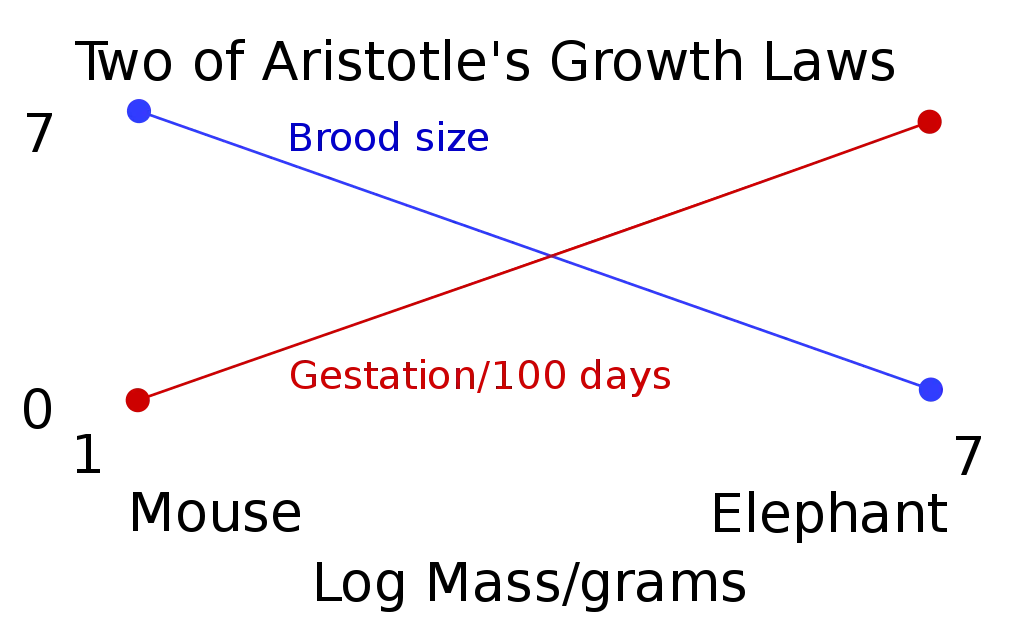
The bigger the animal, the longer the pregnancy.
The duration of gestation increases with the average adult body mass of the mammal. Squirrels and mice are pregnant for less than a month, while giraffes and sperm whales gestate for roughly 14 to 16 months. Elephants top the charts, with pregnancy lasting upwards of 600 days (almost two years!). Humans and most primates lie somewhere in the middle of this line; a human pregnancy averages about 280 days, or 40 weeks.
There is also considerable variation of gestation length within a species. Human pregnancies vary by as much as five weeks, excluding premature and late births.
Every single one of those ~280 days is crucial. Development in the womb is incredibly rapid; a single cell absorbs nutrients from the fluid inside the womb, slowly adding components, developing the heart, lungs, skin, hair, and meters of intestines. From chains of chemical molecules alone, bodies can create miniature versions of themselves, with all that they need to become a human adult.
Fetal development is divided roughly into three phases: the germinal, the embryonic, and the fetal stages.
The germinal phase is the shortest, lasting only two weeks. The clump of cells that is the fertilized ovum travels down into the uterus and implants itself into the lining, triggering a host of chemical changes in the parent. The cells, which are like a blank page, start differentiating: one into a future heart cell, another into a future neuron, a third to make up your bones, and so on.
The embryonic stage starts in the third week and lasts until the eighth. The nervous system forms the spinal cord during this time.
Almost every organ and limb develops into its final form during the fetal stage. New nerves and blood vessels form every day, while the digestive and respiratory systems develop in their entirety.
The fetus is now ready to be born!
The Pelvis Problem
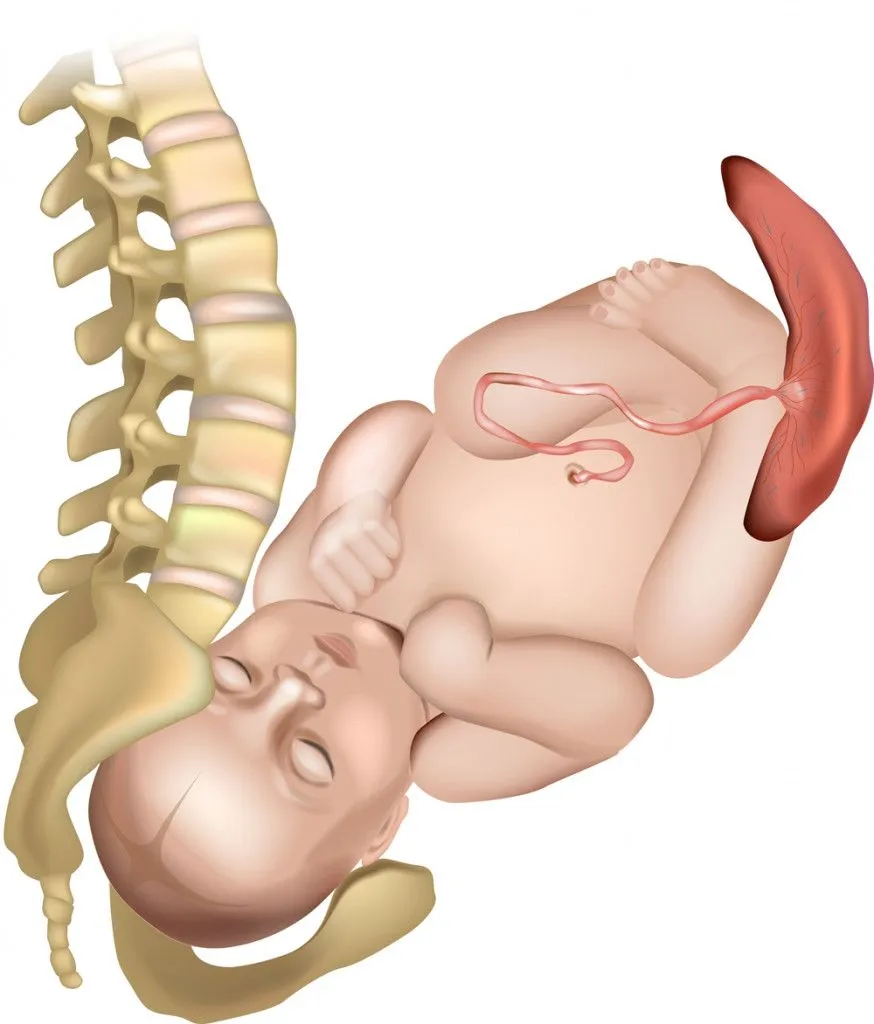
Most anthropologists and biologists believe that babies don’t develop into fully physically and mentally independent beings due to the width of the pelvis. During birth, the baby should rotate downwards, so that the head faces the birth canal. The journey out into the world is a tight fit, with the head just able to make it through.
Therefore, there is a tradeoff; how big can the head and brain inside it be before it is too big to fit through the pelvis and birth canal?
A human newborn’s brain is only about 27% the size of an adult’s brain. By comparison, a chimpanzee newborn’s brain is about 36% the size of an adult chimpanzee’s brain. That gap of roughly nine percentage points might seem small, but it translates into a profound difference in capabilities at birth. For human babies to be born with abilities similar to a chimpanzee newborn, gestation would need to run about 18 to 21 months, more than double the typical length of nine months.
The size of a newborn head would also need to increase from the present average of 9 cm to about 11-12 cm. The width of the pelvis would need to be about 3 cm larger. For those with a uterus, there is already more than 3 cm of variation in hip size. Some people have narrower hips, and other people have larger ones, but this variation has very little effect on the size of the fetus.
Other researchers think that this tiny size is a benefit. In the first weeks after birth, the brain grows at an incredible rate of about 1% a day, slowing to roughly 0.4% a day by three months, for a total increase of around 64% over the first three months. As the brain grows, more and more information can be stored. Children are incredible learners, absorbing and assimilating information and learning about the world incredibly quickly. Learning requires an expansion in brain size as more neurons and brain matter are added. The smaller the brain is at birth, the faster human babies can learn and grow their brains in response to new information.
Yet another more recent school of thinking suggests that the pelvis has very little to do with the degree of development, brain and head size, and ultimately the length of pregnancy.
A newborn head that is any larger would require the pelvis to widen; in theory, this would be a disastrous event for us bipedal wonders.
People with uteruses also typically have wider pelvises than people without, so it follows that walking and running would be less efficient for people with wider hips. When this was empirically tested, it was found that there is so much interpersonal variation that whether you have a uterus or wider hips is largely irrelevant.

So, if wider hips aren’t bad for running and walking, and some people could already give birth to humans with an 11-12 cm head, does the pelvic constraint hypothesis really hold up?
Metabolic Mayhem
Newer research, known as the Energetics of Gestation and Growth (EGG) hypothesis, suggests that the length of pregnancy is linked to the energy demands of the fetus and the metabolic capability of the parent. Again, we face a biological tradeoff: keep the fetus in the uterus, giving it a higher chance of surviving on its own, but drain the parent’s resources. Or would it be better to deliver the fetus early and make it more vulnerable, but preserve the parent’s health and chances of survival?
Humans are not the only species facing this dilemma. Mammals tend to give birth right when the parent is just about metabolically unable to keep sustaining the fetus, and when the fetus is just about able to survive outside. A fetus grows hungrier and hungrier as pregnancy goes on, and by around 40 weeks the energy a human mother spends supporting it pushes her close to her sustainable ceiling, about twice her resting metabolic rate. Carrying the pregnancy much longer would mean exceeding that limit, which is why birth happens when it does rather than later.
What Does 40 Weeks Mean For Human Evolution?
Whether it is the pelvis or the parent’s metabolism that is the limiting factor, most anthropologists believe that the unique helplessness of human babies among primates has changed the course of human evolution.
“It takes a village to raise a child.”
Humans are social mammals, and when one set of parents is occupied with caring for their young, and unable to forage for food, other members of the community must help out. Before agricultural society originated, parents would typically space their children out by 4-5 years, before this dropped down to 2-3 years, which required the community to care for them.

Babies probably brought human communities together, teaching us to bond, communicate, and be there in meaningful ways for each other!
References (click to expand)
- Jukic, A. M., Baird, D. D., Weinberg, C. R., McConnaughey, D. R., & Wilcox, A. J. (2013, August 6). Length of human pregnancy and contributors to its natural variation. Human Reproduction. Oxford University Press (OUP).
- Martin, R. D., & MacLarnon, A. M. (1985, January). Gestation period, neonatal size and maternal investment in placental mammals. Nature. Springer Science and Business Media LLC.
- Why Humans Give Birth to Helpless Babies. Scientific American
- Holland, D., Chang, L., Ernst, T. M., Curran, M., Buchthal, S. D., Alicata, D., … Dale, A. M. (2014, October 1). Structural Growth Trajectories and Rates of Change in the First 3 Months of Infant Brain Development. JAMA Neurology. American Medical Association (AMA).
- Dunsworth, H. M., Warrener, A. G., Deacon, T., Ellison, P. T., & Pontzer, H. (2012, September 18). Metabolic hypothesis for human altriciality. Proceedings of the National Academy of Sciences (PNAS).