The James-Lange theory of emotion states that emotions are the result of physiological reactions to external stimuli, not the other way around. In William James’s own words, "we feel sorry because we cry, angry because we strike, afraid because we tremble." The theory has been heavily criticized, most notably by Walter Cannon and Philip Bard, and modern psychology treats it as a partial, early sketch rather than a complete account of emotion.
Questions concerning what emotions are and what purpose they serve have fascinated behavioral scientists and psychologists for centuries. Many theories have been proposed by researchers on the how and why of emotions, as well as what the implications are of these feelings. The James-Lange theory is one of the early counter-intuitive theories that attempts to answer the most pertinent questions revolving around human emotions. But over time with the new discoveries and revelations in psychological and physiological research, this theory has been criticized and amended. Modern alternatives, from the Cannon-Bard and Schachter-Singer theories of the early 20th century to Lisa Feldman Barrett’s theory of constructed emotion and Antonio Damasio’s somatic marker hypothesis, are now considered more complete.
But it is still worth knowing what the James-Lange version of emotion actually says. The James-Lange theory states that emotion arises from physiological arousal, and those physiological arousals are caused by external stimuli. Put simply, emotions are a by-product of the physiological changes in our body, not the trigger of them.
History Of The James-Lange Theory
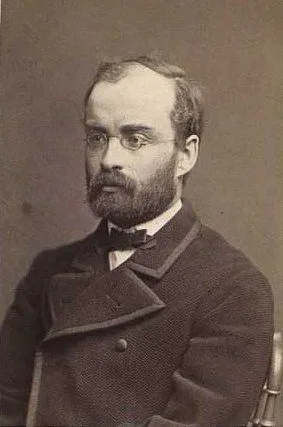
Renowned American psychologist William James, in his 1884 paper "What Is an Emotion?" in the journal Mind, and Danish physician Carl Lange, in his 1885 monograph Om Sindsbevægelser (translated into German in 1887), independently proposed this idea, one of the oldest theories of emotion. They arrived at it at almost the same time and without knowledge of each other’s work, which is partly why their names are now bolted together. Later researchers combined their writings into what is now known as the James-Lange Theory of Emotion.
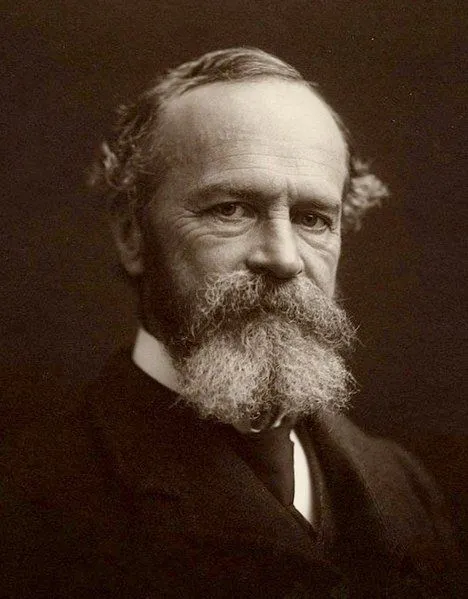
James and Lange both believed that emotions are the results of physiological reactions to external stimuli. Now, James’ work in this area revolved more around emotions as consequences of a physiological change, while Lange’s theory argued for emotion as the manifestation of a physiological change. Nevertheless, both researchers presented the basic idea that emotion does not start with the conscious experience of a causative factor.
What Exactly Is James-Lange Theory Of Emotion?
James and Lange propose that your brain does not simply decide it is feeling an emotion based on sensory information coming in through your eyes, ears, skin and so on, and then instruct the body (based on the type of emotion) to speed up the heart rate, breathe faster or sweat more. That’s not how emotions work, if James and Lange are to be believed.
James put the idea more bluntly in his original 1884 paper: "we feel sorry because we cry, angry because we strike, afraid because we tremble." In other words, the bodily reaction comes first, and what we call an emotion is the brain noticing that reaction. Strip the bodily change out of the picture and, on this view, the emotion itself disappears.
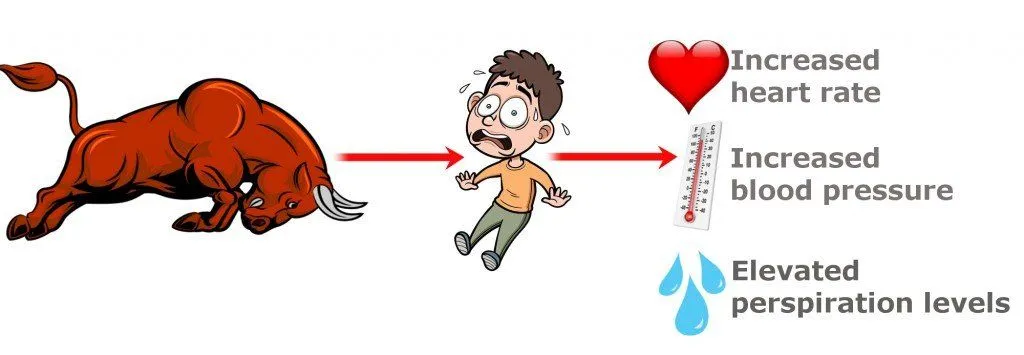
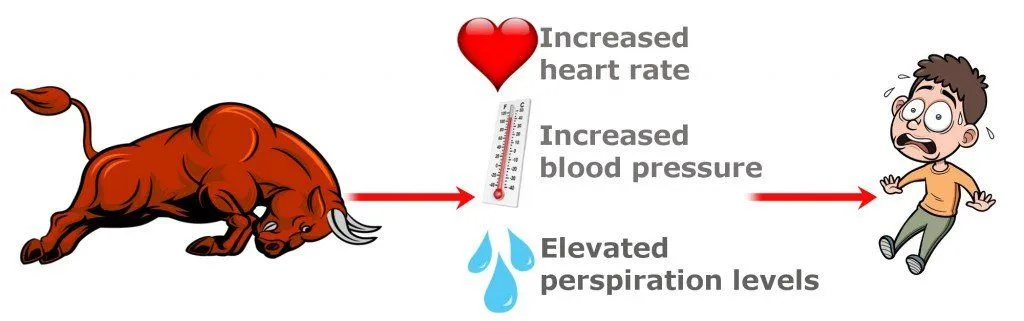
According to the James-Lange theory, external stimuli in the environment are picked up and decoded by the brain, but even before you consciously process them, your body is already responding with physiological changes, such as a rise in heart rate, a shift in blood pressure, or pupillary contraction or expansion. The emotions you then experience are essentially the brain’s reading of those physiological changes. In the textbook shorthand asked on many exams, emotion results from physiological states triggered by stimuli in the environment.
In other words, you might ask something like “Why am I feeling excited?” The James-Lange explanation would be that because you are breathing fast and your heart is pumping rapidly, your brain concludes that you are excited!
A Deeper Look Into The James-Lange Theory
So, James and Lange suggested that for someone to feel an emotion, he or she must first experience bodily responses (physiological), such as increased heart rate, increased respiration, or even a sweating forehead. Once this bodily reaction is perceived, then the person can say that he or she feels an emotion.
We experience various situations and events that can result in physiological changes, such as a heart rate increase, muscular tension, dryness of the mouth, perspiration and many others. These changes are controlled by our autonomic nervous system. The James-Lange theory suggests that emotions are a byproduct of these physiological changes, not their cause.
When external stimuli from the environment occurs, their signals are received and comprehended by the cortex of the brain. The visceral organs and the skeletal muscles are then triggered by the autonomic nervous system and somatic nervous system. The somatic and autonomic systems will then stimulate the brain, which will be decoded as an experience of emotion.
The James-Lange theory is a counter-intuitive approach, contrasting with conventional wisdom related to the cause and effect of emotions and their manifestation. Both scientists emphasized that the autonomic activity and the actions that are induced by an external stimulus generate the feeling of an emotion, not the other way around.
James-Lange Theory Examples
By now, you probably got the implications of James-Lange theory, and if not, consider a few real-life examples that corroborate this theory. Let’s begin with this example: You and your partner are sitting together on a comfortable sofa having a good discussion. You suddenly say or do something outrageous, which provokes your better half. He/she gets furious and makes you realize that it’s your fault for behaving/saying such bizarre stuff. He/she keeps fuming about what your did until you finally give in and apologize. You try to console him/her by saying you didn’t really mean it or intend to offend. He/she budges and accepts your apology, but warns you not to repeat it again. You agree and the heat of the conversation starts to diminish. Just when you feel that things are normalizing, suddenly, he/she recollects some other miserable thing you did a decade ago! Astonishingly, he/she recollects all the details of that mishap and starts the argument all over again! Now, what’s going on there is actually a James-Lange moment!

Your partner was in an aroused or angry state, but then it faded once you apologized and convinced them you wouldn’t do it again. Cognitively, your partner has adjusted things and said to himself/herself—yes, he/she has recognized his/her mistake and I’m vindicated—it’s all settled now. However, the trouble is that it takes a long time (a few minutes) for the sympathetic nervous system to return to its baseline (normal levels) from an aroused state of agitation. Although cognitively he/she may feel that the problem is solved after an apology, his/her heart is still racing; what he/she is experiencing is the James-Lange phenomenon.
Evidence: The Facial Feedback Hypothesis
The most famous test of a Jamesian idea in modern psychology is the facial feedback hypothesis: the claim that adopting a facial expression nudges your felt emotion in that direction, because your brain is partly reading its mood off your face. The classic version was the Strack, Martin and Stepper (1988) "pen-in-mouth" study, in which students rated cartoons as funnier when they held a pen between their teeth (which forces a smile-like muscle contraction) than between their lips (which suppresses it).
That study fits the spirit of James-Lange neatly: the bodily change comes first, the felt emotion follows. But the picture is messier than it once looked. A large 17-lab Registered Replication Report published in 2016 in Perspectives on Psychological Science failed to reproduce the original effect. A bigger, pre-registered 2022 collaboration in Nature Human Behaviour, the Many Smiles Collaboration, found a small but real facial-feedback effect on self-reported happiness. Separately, randomized trials of botulinum-toxin injections that paralyze frown muscles have shown modest antidepressant effects, hinting that the body–feeling loop is real even if the cartoon-rating version was too neat.
So the broad Jamesian intuition (the body talks back to the brain) survives. The strong claim that briefly arranging your face can flip your mood does not, at least not as cleanly as early studies suggested.
Criticism Of James-Lange Theory
Walter Cannon, a physiologist and chair of the Department of Physiology at Harvard Medical School, was the most influential early critic of the James-Lange theory. In his landmark 1927 paper in the American Journal of Psychology, Cannon laid out several problems with it. The two most damaging:
- The body responds too slowly. Visceral changes like heart rate and gut activity unfold over seconds, but we can feel afraid or angry almost instantly. Emotion cannot just be a readout of those slow signals.
- The same physiological response goes with different emotions. Fear, anger and excitement all produce a very similar pattern of increased heart rate, sweating and rapid breathing. If emotion were simply the perception of bodily change, we should not be able to tell these emotions apart, but we obviously can.
Cannon also pointed to animal experiments. He and his student Philip Bard cited work in which cats with their sympathetic nervous system severed still displayed rage when provoked, and Bard’s later decortication studies (1928, 1934) produced what became known as "sham rage" — cats whose cerebral cortex had been surgically removed still showed full-blown rage responses. If feeling the bodily change were strictly required for emotion, these animals should not have been able to mount one.
Out of this critique came the Cannon-Bard theory, which holds that the bodily reaction and the felt emotion happen in parallel, both triggered by the thalamus, rather than one causing the other. A few decades later the Schachter-Singer two-factor theory (1962) added a cognitive layer: you feel a generic arousal, then label it as fear, anger, joy and so on based on what is going on around you.
More recent frameworks have moved further still. Lisa Feldman Barrett’s theory of constructed emotion argues that emotions are not biologically pre-packaged categories at all, but constructions the brain builds on the fly from interoceptive signals, prior experience and context. Antonio Damasio’s somatic marker hypothesis, by contrast, preserves the Jamesian flavor: bodily states act as gut-level signals that bias decision-making, often before any conscious feeling shows up.
The fact-based takeaway: James-Lange is no longer considered a complete theory of emotion, but the core intuition that the body and the brain talk to each other constantly, and that the body is often talking first, has aged surprisingly well.
References (click to expand)
- James W. What is an Emotion? Mind, 1884. Classics in the History of Psychology, York University.
- Cannon WB. The James-Lange Theory of Emotions: A Critical Examination and an Alternative Theory. American Journal of Psychology, 1927. (UCLA SAN Lab PDF)
- Johnsen EL, Tranel D, Lutgendorf S, Adolphs R. A neuroanatomical dissociation for emotion induced by music. International Journal of Psychophysiology, 2009.
- Wagenmakers EJ et al. Registered Replication Report: Strack, Martin, & Stepper (1988). Perspectives on Psychological Science, 2016.
- Coles NA et al. A multi-lab test of the facial feedback hypothesis by the Many Smiles Collaboration. Nature Human Behaviour, 2022.
- Barrett LF. The theory of constructed emotion: an active inference account of interoception and categorization. Social Cognitive and Affective Neuroscience, 2017.
- Walter Bradford Cannon. Harvard Medical School.