Table of Contents (click to expand)
Aphantasia is the inability to voluntarily picture images in your mind, the so-called “mind’s eye.” It is a real variation in how the brain works, not a disease, and it affects roughly 1% of people. There is no known cure, but it rarely causes serious problems and many aphantasiacs lead completely ordinary lives.
Imagine an isolated beach. Picture the horizon, the edge of this gargantuan dome of our planet, slowly engulfing a beautiful sunset. The water gushing red, as if on fire. Picture this from the top of a hill, the rays grated by a palm tree. Think about the sound that the waves make when thrashed onto the rocks beneath. Smell the wet sand.
The evolutionary biologist Robin Dunbar once said, “What sets us apart is a life in the mind, the ability to imagine.” As it turns out, however, some people cannot. Everyone is quite familiar with our ability to devise any background and pluck objects from our memory to place them on the canvas, something commonly referred to as our mind’s eye. To aphantasiacs, this is incomprehensible and the ability to imagine is just absurd.
What Is Aphantasia?
The seemingly easy task of visualizing, which we heavily rely on and shamelessly take for granted, is a splendid gift that not everyone is bestowed with. The inability to visualize images in one’s head is known as aphantasia. The word combines the Greek a- (“without”) with phantasia, a term Aristotle used for “the power by which a mental representation is presented to us.” The term aphantasia itself is recent: the neurologist Adam Zeman and his colleagues at the University of Exeter coined it only in 2015.
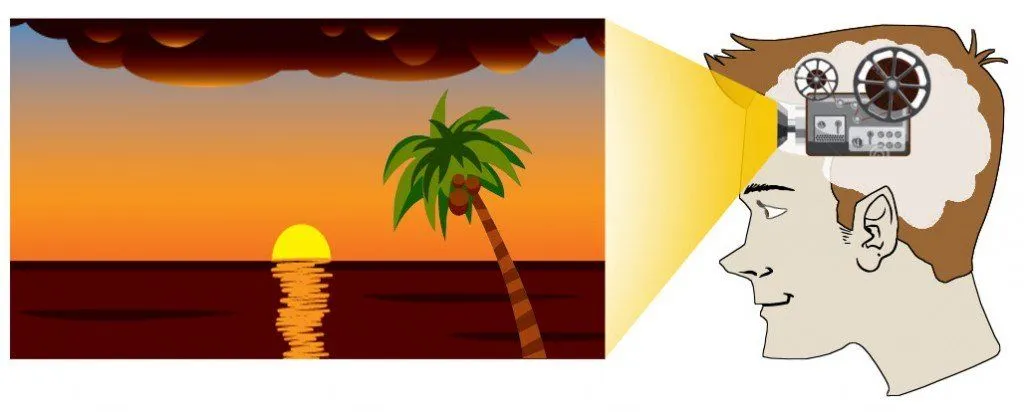
The mind’s eye is like a projector screen where colorful events play out as a series of still or moving representations. True to its name, this neurological condition makes one unable to project images on their screens. I’ve italicized “condition” to bring attention to the fact that aphantasia isn’t a disorder, which is defined as a failure of a bodily function or a specific illness. It is rather a neurological variation that affects the brain without any serious health risks.
Aphantasia was first suspected in 1880 by Sir Francis Galton, an explorer, anthropologist and eugenicist, and a cousin of one of my favorite scientists and the proprietor of one of the most revolutionary ideas of the 19th century, Charles Darwin. Galton was always fascinated by human intelligence and conducted innovative experiments to realize the inner workings of the intricate machinery based in our mind.
His thinking resonated with the philosophy of the absurd, which was cheerfully advocated by overtly keen observers of the 20th century, such as Sartre and Camus. If social or cognitive science was about explaining the unexpected (the anomalies), then people like these turned its methodologies on its head and scrutinized something so ingrained, so effortless in assisting the representation of reality that their invisible complexities, now conspicuous, seemed baffling or absurd.

Galton handed out his now-famous “breakfast-table” questionnaire, asking 100 men of science to picture their breakfast table from that morning and rate how vivid the image was. To his surprise, a sizable fraction insisted they saw nothing at all, leading Galton to conclude that some people simply lack a working mind’s eye. Modern surveys put the figure lower than his early impression suggested: roughly 1 in 100 people report no voluntary imagery whatsoever, a number that climbs to around 3-4% once faint, “dim and vague” imagery is counted too.
However, Galton’s research was restricted to statistics and not the condition itself. It was after sporadic cases of psychiatric patients reporting the sudden loss of imagination after an accident that attention was once more brought to this topic.
Aphantasia In A New Light
More focused research was conducted in 2005 by cognitive neurologist Adam Zeman at the University of Exeter, following a report by a patient stating that he had lost the ability to visualize.
The patient, MX, named like a hairdryer, as they usually are in neurological accounts to conceal their identity, was a 65-year-old man who lost his imagination following a minor heart procedure (a coronary angioplasty, which clears blocked arteries). Zeman published the case in 2010, and this strange disability aroused sudden interest. After Carl Zimmer of Discover magazine wrote about Zeman’s paper, 21 more people with the same condition came forward to voice their angst, and it was this group that prompted Zeman to coin the word “aphantasia” in 2015.
These people participated in an experiment, along with a control group. The experiment sent them through an fMRI machine to determine which mental faculties are responsible for envisioning scenarios, highlighted by colorful patches of activity on the scans (fMRI tracks blood flow rather than using X-rays).
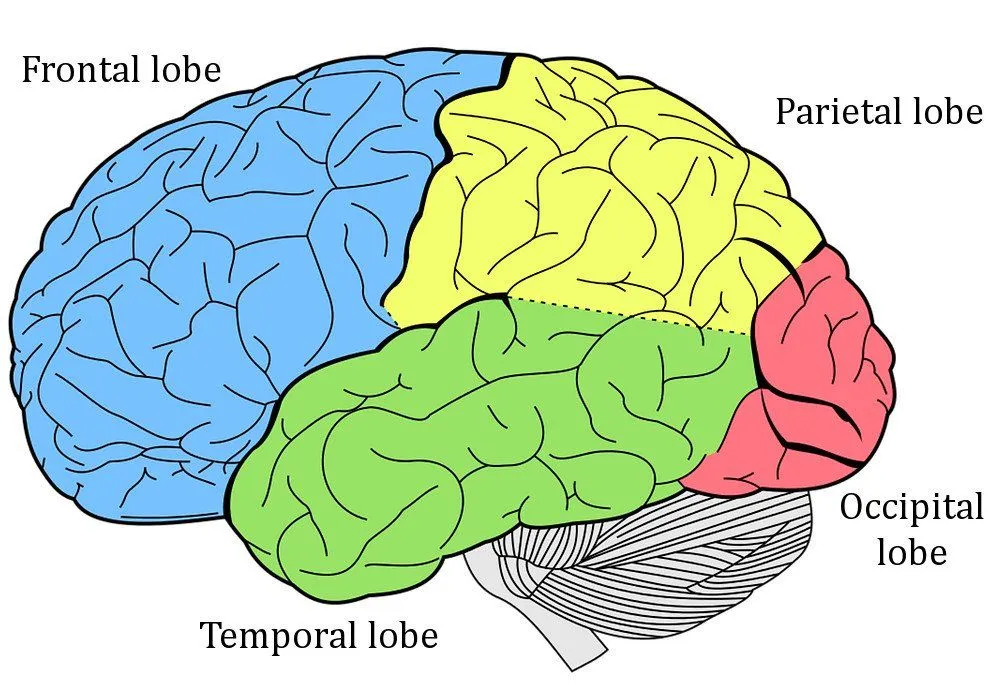
When MX tried to picture famous faces, his brain showed reduced activity in the posterior, visual regions at the back of the head, while activity in his frontal lobes actually increased, as if he were working harder to compensate for a picture that never arrived. These rear regions normally help integrate our visual and other senses, while frontal areas are tied to the abstract thinking we lean on for daydreaming and imagination.
It seems that we recognize objects, smells or tastes from our hard drive, and similar to the “add media” function on a standard PowerPoint presentation, pin it down on a template. Furthermore, the occipital and temporal lobes process this information and project the desired visual on our screens. Because the memories of these patients are fully intact, it might be that the problem arises from some unfortunate disconnections within these neural networks. Or worse, the wiring might be non-existent.
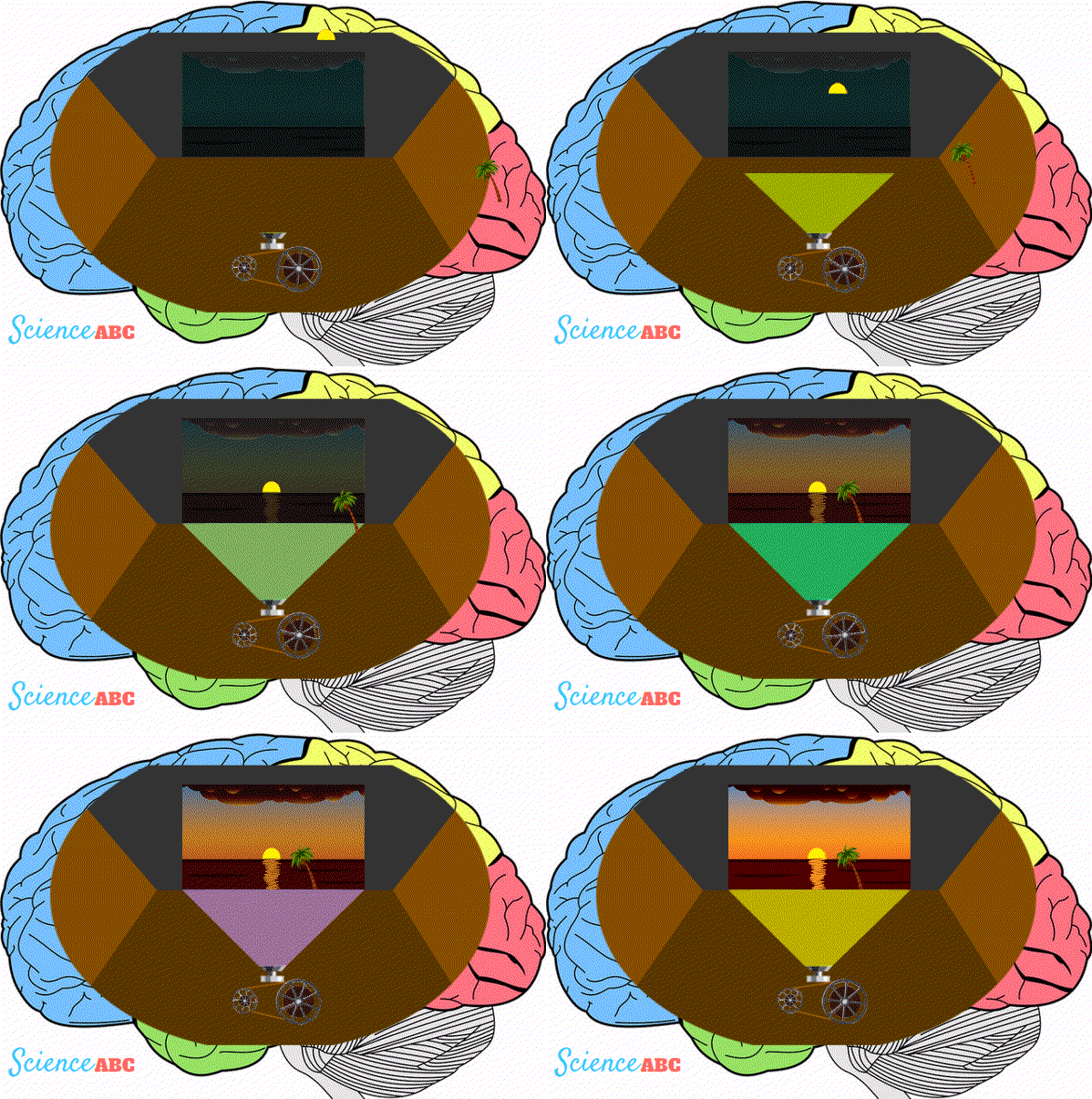
Remarkably, these same people do experience vivid imagery in their dreams! Zeman accounts for this by claiming that people with aphantasia may be able to form images, but due to a faulty projector, they don’t have conscious access to them. Although the participants reported acquiring this condition at a very young age, there have been people who have been enduring it since birth! This is known as congenital aphantasia. Fortunately, this impedance did not prove to be a strenuous roadblock to their survival.
Why Do Aphantasiacs Tend To Be Better Critical Thinkers?
It seems that the astonishing efficiency of the human brain, evident in its undulated plasticity, allows for rewiring of the huge portion of their lobes that were primarily employed for visualization. Those areas of the brain can then be tuned for sharper factual memory. The patients struggled to remember faces, but were eerily good with facts. Patients also felt immense distress when they talked about the inability to recall the faces of their loved ones, especially the ones who were deceased.
Instead, their descriptions seemed more analytical, including a person’s contours or features. These characteristics are commonly observed in gifted programmers. Consider Blake Ross, a co-founder of Firefox and one of the programmers behind its clean interface, who openly talked about his aphantasia in a 2016 Facebook post, in which he says, “I have never visualized anything in my entire life.” After stumbling on the piece in Discover, he asks, shocked, “What do you mean “lost” his ability?” and describes himself as thinking, “Shouldn’t we be amazed he ever had that ability?”

He talks about avoiding books throughout his life that described vivid landscapes and sunsets, as they did not invoke anything within him. To him, counting sheep seemed to be nothing more than a metaphor!
There is no established cure for aphantasia, and for most people there is nothing to cure: it is a variation, not a disease. Researchers are still untangling its fundamental causes, weighing whether they stem from genetic, developmental or psychological factors, and the condition often runs in families. Tellingly, recent work has shown that the difference is real and measurable rather than imagined. A 2022 study found that merely imagining a bright shape makes the pupils of strong visualizers constrict, an automatic reflex that is absent in aphantasiacs, and people with aphantasia also tend to report weaker autobiographical memory and more difficulty recognizing faces. Small studies of imagery training have nudged faint visualizers toward slightly stronger imagery, but nothing reliably switches the mind’s eye on for someone who has never had one.
Our ability to cultivate mental imagery is certainly helpful to comprehend creativity when forming mental models, reading fiction, imagining new shapes or rotating objects mentally. It accelerates learning and improves our performance of all sorts of skills. Athletes and musicians have reported that mental rehearsals or simulating movements in their heads to be as helpful as the physical activity itself.
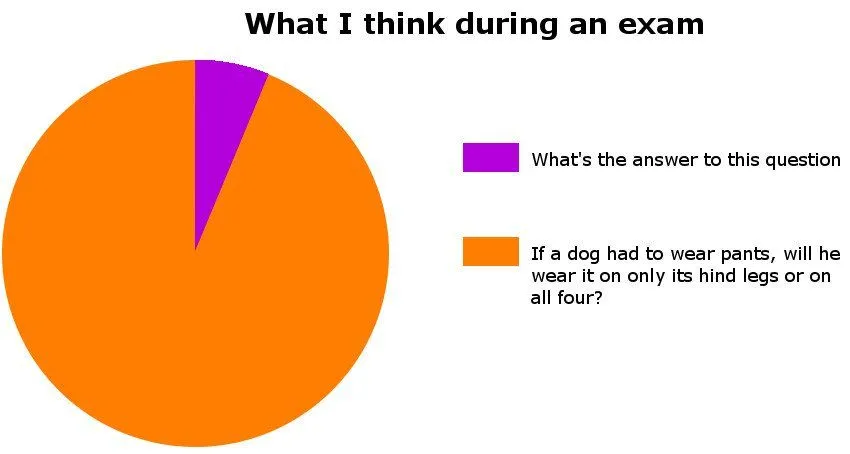
Unfortunately, they are also responsible for the evocation of completely irrelevant scenarios that uncontrollably race through your head just when you’re sitting down for an important exam.
An article was featured on BBC’s website regarding the condition, which included a test designed to determine where you lie on the spectrum of aphantasia. Take a look and go through the test for yourself to determine whether you are an aphantasiac too!
References (click to expand)
- Zeman, A., Dewar, M., & Della Sala, S. (2015). Lives without imagery - Congenital aphantasia. Cortex.
- Zeman, A. Z. J., et al. (2010). Loss of imagery phenomenology with intact visuo-spatial task performance: a case of 'blind imagination'. Neuropsychologia. PubMed, NIH.
- Kay, L., Keogh, R., Andrillon, T., & Pearson, J. (2022). The pupillary light response as a physiological index of aphantasia, sensory and phenomenological imagery strength. eLife. PMC, NIH.
- A decade of aphantasia research: what we’ve learned about people who can’t visualise. University of Exeter.
- Aphantasia - absence of the mind’s eye. Language Log, University of Pennsylvania.