Table of Contents (click to expand)
Stem cells are unspecialized cells that can both self-renew (make more of themselves) and differentiate into specialized cell types such as skin, muscle, blood, or nerve cells. The three main categories are embryonic stem cells, adult (tissue-specific) stem cells, and induced pluripotent stem cells (iPSCs) — reprogrammed adult cells. Their ability to replace damaged cells makes them the basis for therapies for blood cancers, sickle cell disease, type 1 diabetes, and more.
You’ve almost certainly heard the words “stem cells” pervading mainstream media in recent decades. Popular science has reported on how these cells could be a cure for numerous diseases, regrow injured tissue, and even be the secret to immortality. That’s right! Some believe these cells hold the secret to everlasting youth, but do stem cells live up to the hype?
Before you answer that, it’s important to understand what exactly stem cells are.
What Are Stem Cells?
Stem cells are cells with the special ability to turn into any other specialized cell type. Suppose you start going to the gym to get bulked up before summer hits. All those gains will come with the help of muscle stem cells, which are the “raw” cells that will differentiate and turn into new muscle cells.
Just as these muscle cells didn’t start out as muscle cells, neither did other cells of your body. Each and every cell in the body is born as an unspecialized stem cell.
Stem cells are the blank slates upon which the form and function of cells are etched. Stem cells are basically the body’s cells before they have been assigned a particular job or task.
Why Are Stem Cells Important?
One characteristic quality of stem cells is that they are immortal and can divide indefinitely. This, however, is a property that stem cells have only at their early undifferentiated stage. As stem cells continue to develop, mature and specialize into a particular type of cell, they lose this “immortality”.
What do I mean by stem cells maturing? Allow me to explain.
When a sperm fuses with an egg, it forms a zygote. This zygote is a totipotent stem cell. This single totipotent stem cell can become any cell it wants. The single cell begins to divide into more cells. Around five days in, when the embryo reaches the blastocyst stage, the cells of the inner cell mass become what is called pluripotent.
Pluripotent stem cells lose some options in their ability to develop into any cell type, which means they can’t develop into all cell types. Instead, they can only develop into a select few. These pluripotent stem cells make up the mass of a body, called the embryo. As the embryo develops, the pluripotent cells become multipotent cells. As you might have guessed, these cells have an even smaller range of cell types they can turn into.
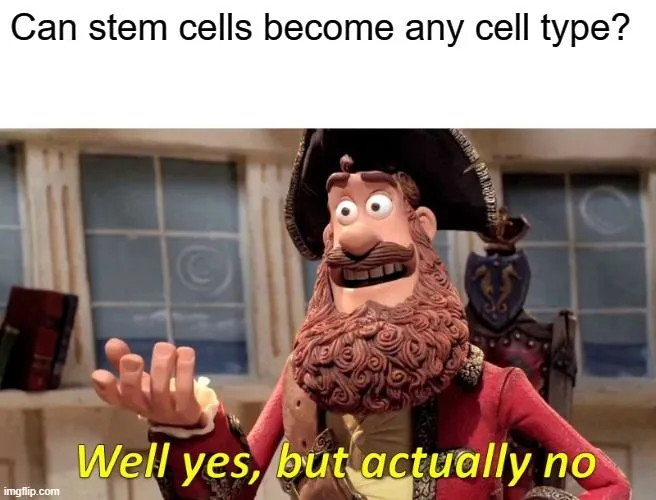
This process goes on and on until, eventually, these stem cells become unipotent stem cells. Unipotent cells, as their name suggests, can only form one type of cell, such as blood cells, brain cells, nerve cells, etc.
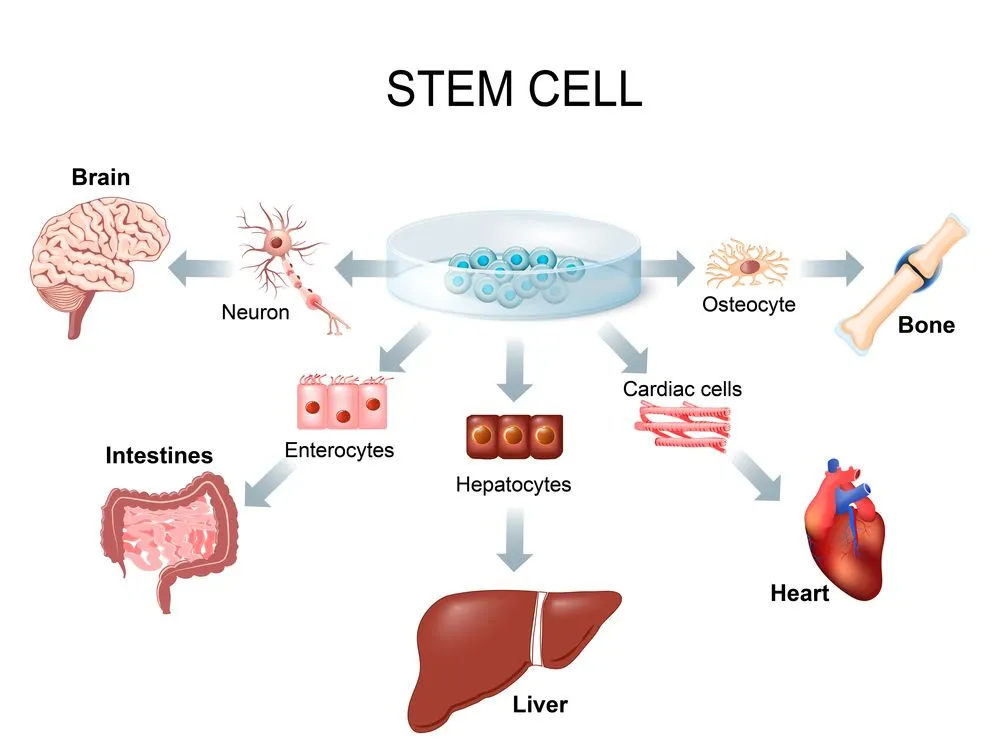
Types Of Stem Cells
The section above speaks about the different “potencies” of stem cells, but those aren’t actually the types of stem cells. Instead, those classifications are just how stem cells are organized into groups based on their developmental abilities.
By origin, stem cells fall into three main categories: embryonic stem cells, adult stem cells, and induced pluripotent stem cells (iPSCs). iPSCs were the breakthrough that won Shinya Yamanaka the 2012 Nobel Prize: take an ordinary adult cell (a skin cell, for example), force it to express four transcription factors (Oct4, Sox2, Klf4, c-Myc), and it reverts to a pluripotent state functionally similar to an embryonic stem cell — no embryo required.
Embryonic stem cells are those that form very early in our lives. These come into existence right after fertilization, within a few days of being a zygote. These cells were mentioned earlier, as totipotent and pluripotent cells.
Adult stem cells are more limited than embryonic ones — they're location-specific and can usually only differentiate into the cell types of their resident tissue. They persist throughout life, quietly replacing cells in the bone marrow, intestinal lining, skin, and other tissues as those cells wear out.
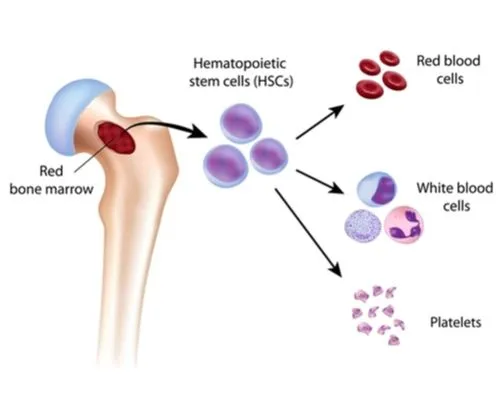
For example, in the bone marrow within our bones lie hematopoietic stem cells. Such stem cells are only capable of becoming different blood cells, depending on what type the body needs. This happens through a specific biological process, called hematopoiesis, in this instance.
Applications Of Stem Cells
Stem Cell Therapy
In stem cell therapy, stem cells are taken (from either yourself or a donor) to repair or regenerate a damaged organ. Over the past few decades, a lot of research has focused on stem cell therapy, especially in the treatment of cancer and heart defects. Stem cells are popularly used to treat people suffering from brain and spinal cord injuries by making them replace the damaged nerve cells.
However, this therapy is far from perfect. We know very little about how stem cell therapy will work in the long run. Sometimes, the stem cells fail to differentiate into the intended cell type.
With this being said, many families opt for stem cell banking. A mother, at the time of delivery, will allow her stem cells from the umbilical cord to be collected. These are then “banked”, meaning that they’re stored in a biological bank and kept safe.
These banked cells can be withdrawn if and when needed for any of the family members. The logic is that it’s always better to use stem cells that belong to your own bloodline than to take a stranger’s.
3D Tissue Bioprinting
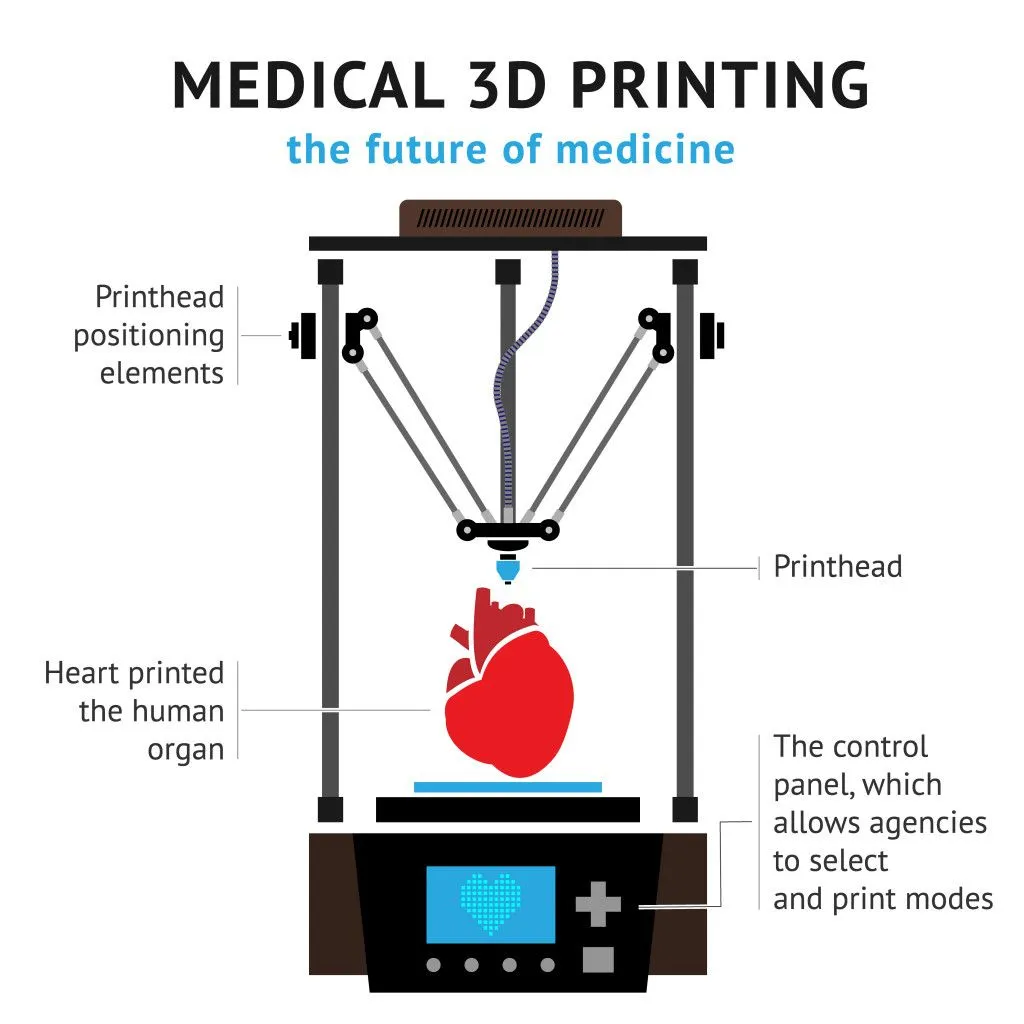
This is a relatively new application of stem cells. Instead of injecting stem cells into a person’s body to heal the organ, why not simply bioprint a new organ? That’s what 3D tissue bioprinting attempts to achieve. Just like printing ink on paper, stem cells are printed on scaffolds and grown in a lab until they turn into a new and functioning organ.
In fact, another experiment is focusing on 3D bioprinting organs and tissues aboard the International Space Station, in microgravity. Gravity’s absence allows the stem cells to grow easier, which makes it easier to control the way the stem cells grow!
Anti-Aging Therapy
Stem cells are immortal, meaning that they don’t die; they just keep dividing. This rare property is why stem cells are eagerly looked at to counter the one thing no living being can avoid—time’s effect on the body.
A person’s stem cells could potentially be used to heal their body from all the bodily damage caused by aging. Just as a car gets rusty over time, so too does our body. Our cells’ DNA becomes damaged over time and they no longer function as effectively. Stem cells can replace our damaged cells and possibly reduce or even reverse the effects of aging!
Conclusion
The incredible potential stem cells hold to treat a variety of diseases makes them an endlessly exciting area of scientific research, and the pace of clinical translation has picked up in recent years. In 2023, the US FDA approved Casgevy — a CRISPR-edited stem cell therapy from Vertex and CRISPR Therapeutics — for sickle cell disease and beta-thalassemia, the first CRISPR therapy ever approved. Vertex's VX-880, a stem-cell-derived islet cell therapy for type 1 diabetes, has shown patients producing their own insulin again. Multiple iPSC-based trials for Parkinson's disease and age-related macular degeneration are in progress.
Concerns remain. The ethical issues around embryonic stem cell sourcing pushed much of the field toward iPSCs over the last decade. Scientists also continue to wrestle with the risks of teratoma formation, off-target differentiation, and immune rejection when manipulating stem cells in the lab. Regulatory frameworks are no longer a future concern; the FDA, EMA, and the International Society for Stem Cell Research (ISSCR) already issue detailed guidelines, and the field is actively pushing them forward as new therapies move out of the lab and into hospitals.
References (click to expand)
- Alison, M. R., Poulsom, R., Forbes, S., & Wright, N. A. (2002). An introduction to stem cells. The Journal of Pathology. Wiley.
- Lapidot, T., Dar, A., & Kollet, O. (2005, September 15). How do stem cells find their way home?. Blood. American Society of Hematology.
- Zakrzewski, W., Dobrzyński, M., Szymonowicz, M., & Rybak, Z. (2019, February 26). Stem cells: past, present, and future. Stem Cell Research & Therapy. Springer Science and Business Media LLC.
- Biehl, J. K., & Russell, B. (2009, March). Introduction to Stem Cell Therapy. Journal of Cardiovascular Nursing. Ovid Technologies (Wolters Kluwer Health).
- Chagastelles, P. C., & Nardi, N. B. (2011, September). Biology of stem cells: an overview. Kidney International Supplements. Elsevier BV.
- Strauer, B. E., & Kornowski, R. (2003, February 25). Stem Cell Therapy in Perspective. Circulation. Ovid Technologies (Wolters Kluwer Health).
- Prochazkova, M., Chavez, M. G., Prochazka, J., Felfy, H., Mushegyan, V., & Klein, O. D. (2015). Embryonic Versus Adult Stem Cells. Stem Cell Biology and Tissue Engineering in Dental Sciences. Elsevier.
- Andreas, K., Sittinger, M., & Ringe, J. (2014, September). Toward in situ tissue engineering: chemokine-guided stem cell recruitment. Trends in Biotechnology. Elsevier BV.
- Lo, B., & Parham, L. (2009, April 14). Ethical Issues in Stem Cell Research. Endocrine Reviews. The Endocrine Society.
- Stem Cell Information (National Institutes of Health)
- Shinya Yamanaka - Facts: 2012 Nobel Prize in Physiology or Medicine for iPSCs (NobelPrize.org)
- FDA Approves First Gene Therapies to Treat Patients with Sickle Cell Disease (US FDA, 2023)