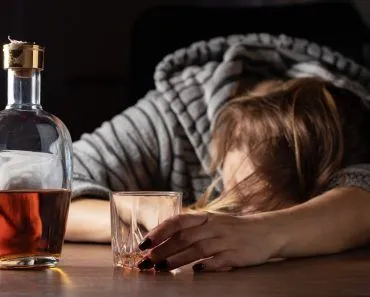
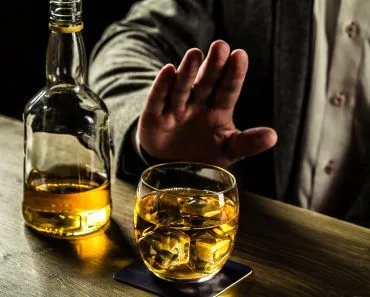
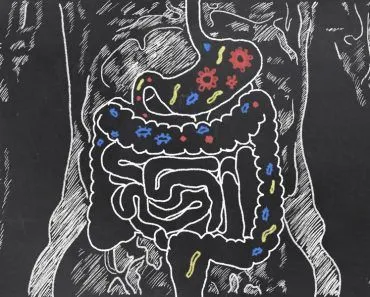
Drunk people want even more alcohol because alcohol does two things at once: it activates the brain's dopamine reward circuit (making the act of drinking itself feel rewarding), and it impairs the prefrontal cortex's ability to switch attention and weigh long-term consequences. So the buzz keeps reinforcing "more drink = good" while the brain's judgment system is too dulled to override it.
People who drink alcohol on a fairly regular basis can relate to this: when you’re buzzed, you generally tend to crave even more alcohol. Now, this might be a little subjective, as not everyone might feel the same way after downing a few drinks. However, in general, there are many cases wherein people who are quite drunk already want even more alcohol.
They may not want to drink more after they’ve had a drink or two, but once they’re really drunk, they usually want even more. Why is that? Is it purely coincidental or is there some scientific reason behind it?
How Does The Alcohol Affect The Brain?
It’s no secret that alcohol affects the brain. Drinkers say all sorts of things about why they like to drink, but most moderate drinkers would say that they like drinking alcohol because of the way it makes them feel – more sociable, less stressed and more relaxed. It’s true that people have different experiences and ‘sensations’ when they get drunk, but it’s generally agreed upon that alcohol makes one feel ‘happier’.
But why is that?
Well, simply put, alcoholic beverages act largely as CNS depressants, or in other words, they act as a sedative to the central nervous system, which means that they depress the nerve cells, which dulls and alters their ability to respond as efficiently as they normally do.
Alcohol potentiates the action of gamma-aminobutyric acid (commonly known as GABA, the major inhibitory neurotransmitter in the brain), and inhibits the action of glutamate (the main excitatory neurotransmitter) in the human brain. Consequently, cognitive and motor skills suffer due to alcohol consumption. Thus, it’s no surprise that a drunk person has a hard time concentrating on things.
Why A Particularly Drunk Person Insists On Drinking Even More?
There are a number of reasons behind this phenomenon; one of them is related to a specific mechanism called GABA receptor agonism.
A GABA receptor agonist is a drug that produces sedative and muscle relaxant effects, among many others, by acting as an agonist (a chemical that binds to a receptor and activates the receptor to produce a biological response) for one or more GABA receptors.
What the GABA receptor agonist does is make your main ‘train of thought’ work alright, but it also makes it less likely for your brain to spawn related/associated thoughts than it normally does. For instance, when you are driving ‘normally’ (i.e. you are not under the influence of alcohol), your brain does many things simultaneously. For example, when you approach a stop light, you check your speedometer, mentally calculate the speed you have to maintain to comfortably come to a halt at the light, cross-check traffic etc.
However, when you’re drunk, GABA sites are overstimulated by alcohol, so your brain cannot ‘change tracks’ as smoothly as it normally does. Therefore, as you approach the stoplight, you keep focusing on it, and forget to glance at your speedometer. Or alternatively, you may check your speed, but then forget to check surrounding traffic or switch back to the stop light. This is one of the reasons why drinking and driving are a bad combination, as alcohol helps you focus on what you are doing at a given time, but negatively affects your ability to switch to other tasks/activities.
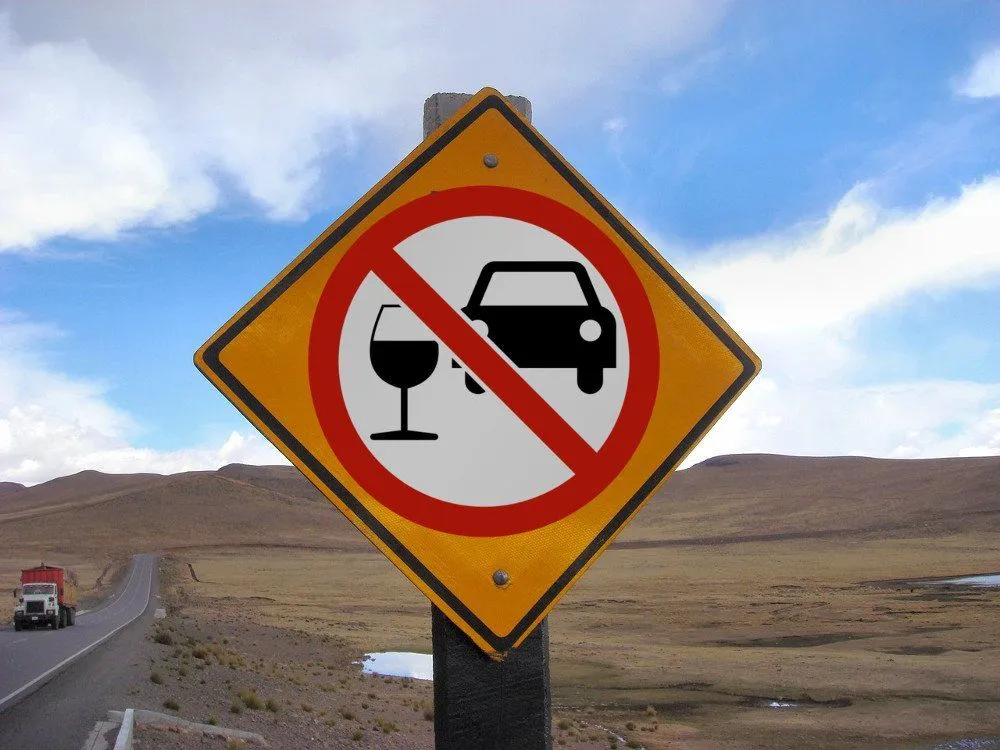
Alcohol makes you focus on what you’re doing, which, while you’re at the bar, is the act of drinking itself; that’s why you want more alcohol when you’re buzzed.
Dopamine And Serotonin
Alcohol not only inhibits glutamate (the brain’s main excitatory neurotransmitter) but also boosts release of the reward-linked neurotransmitters dopamine and serotonin. Even small amounts of alcohol can trigger the release of dopamine in the nucleus accumbens region (the so-called ‘reward center of the brain).
A number of neurotransmitters in different parts of the brain combine and make the consumption of alcohol enjoyable, while also making an individual think that they are having a good time. The euphoria produced by these neurotransmitters reinforces the behavior of drinking, and also the idea that more is going to be good.
Furthermore, there are significant expectancy effects associated with alcohol consumption, i.e., you expect to feel certain things, and therefore you do. Adding to that, there are positive social effects and the relaxation of inhibition, which also contributes to making you yearn for even more alcohol.
Alcohol Myopia: Why Your Focus Narrows To The Next Drink
That ‘can’t change tracks’ effect we described earlier actually has a name. Psychologists Claude Steele and Robert Josephs gave it one back in 1990, and they called it alcohol myopia. Just as a near-sighted person can see what’s right in front of them but not what’s far away, a drunk person’s attention becomes near-sighted too. As Steele and Josephs put it, alcohol has a ‘narrowing’ or ‘myopic’ effect on your ability to weigh competing cues in your environment.
In plain terms, getting drunk narrows your focus to the most obvious, immediate information around you, while the more distant stuff (such as the hangover waiting tomorrow, the money you’re spending, or the fact that you’ve already had plenty) quietly drops out of view. Your behavior ends up overly influenced by whatever is loud and right-now, and far less by consequences that sit further away.
This matters a lot for the ‘one more drink’ question. When you’re at the bar, the most salient cue in the room is the glass in front of you and the warm buzz it just delivered. The reasons not to order another round are real, but they’re abstract and distant, exactly the kind of cue alcohol myopia pushes out of frame. So the immediate reward wins by default, not because the drunk brain decided more was wise, but because it can barely ‘see’ the arguments against it. The same near-sighted attention is part of why we make poor decisions when we’re drunk in general.
The Priming Effect: How The First Drink Sets Up The Next One
There’s another piece to this, and it kicks in remarkably early. Researchers call it the priming effect: that first dose of alcohol doesn’t just make you feel good, it actively raises your desire for more. The opening drink behaves a bit like an appetizer, sharpening the appetite it’s supposed to satisfy.
A 2022 meta-analysis in the journal Addiction (Halsall and colleagues) pooled dozens of laboratory studies and found a small-to-moderate priming effect: after a first drink, people reported measurably stronger craving and went on to consume more than people given a placebo. Interestingly, the size of that first drink didn’t reliably change how much people then drank, though larger doses were sometimes linked to stronger craving. In other words, it’s the act of starting that flips the switch, more than the exact amount you start with.

The chemistry behind this loops right back to the reward system we already met. According to the National Institute on Alcohol Abuse and Alcoholism (NIAAA), even low doses of alcohol increase dopamine release in the nucleus accumbens, and this release ‘may contribute to the rewarding effects of alcohol and may thereby play a role in promoting alcohol consumption.’ So the first drink primes the pump in two ways at once: it nudges up dopamine in the reward center, and it builds the expectation that the next drink will feel just as good. Pair that priming with alcohol myopia narrowing your focus to the glass in front of you, and the pull toward ‘just one more’ starts to make a lot of biological sense.
References (click to expand)
- Alcohol Interacts with Receptors in the Brain to Produce its .... Duke University
- Alcohol and the Brain - Student Resources - Resources - Alcohol, Tobacco, and Other Drugs Program - IUP - iup.edu
- This is your brain on alcohol - Harvard Health. Harvard University
- Alcohol Effects on the Brain - www.sccollege.edu
- The Effects of Alcohol on the Brain - Scripps Research. Scripps Research
- The neurocognitive effects of alcohol on adolescents and college students - alcohol.web.unc.edu:80
- Alcohol Myopia Revisited: Clarifying Aggression and Other Acts of Disinhibition Through a Distorted Lens. Perspectives on Psychological Science (PubMed)
- The impact of alcohol priming on craving and motivation to drink: a meta-analysis. Addiction, 2022 (PubMed)
- Alcohol and Dopamine. Alcohol Health and Research World, NIAAA (NIH / PubMed Central)