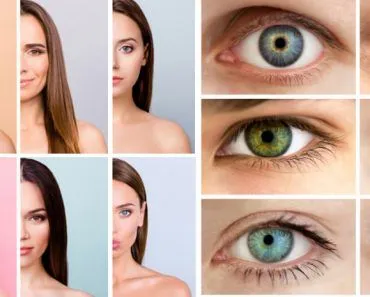
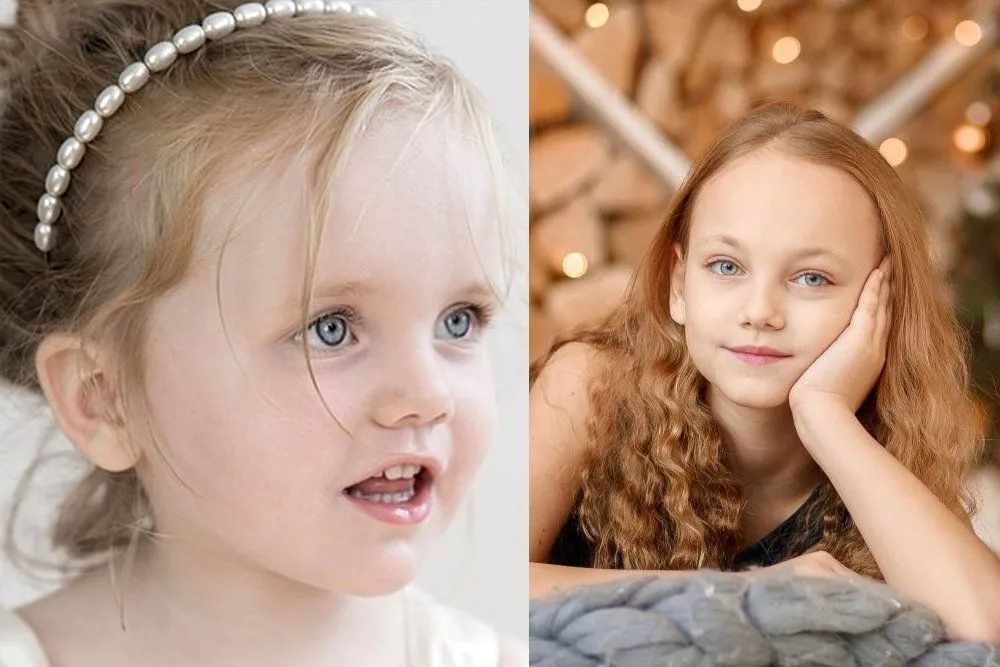
Most blond Europeans owe their hair color to a single DNA-letter change in a regulatory enhancer near the KITLG (KIT Ligand) gene, identified by Guenther, Kingsley and colleagues (Nature Genetics, 2014). The variant turns down melanin production specifically in hair follicles, producing lighter hair without affecting eye color or causing other side effects. It behaves as a near-recessive trait, which is why blond children often appear in families of dark-haired parents.
In June of 2014, an evolutionary geneticist and his team discovered that if a single DNA base pair was changed, if one rung was renamed from an A to a G, when just one letter among the billions that compose the book that is you is miswritten, the appearance of its cover is dramatically altered. This single mutation differentiates blonds from brunettes!
Of Mice And Men
Biologists already discovered several decades ago that color, whether of our eyes, hair or skin, is a function of the amount of melanin in our body. Melanin is the pigment with which our hair, skin and eyes (to some extent) are painted. A high level of melanin causes darkened skin and hair, whereas its scarcity causes them to lighten. Northern Europeans have blond hair and fair skin because they contain less melanin than the dark-haired and dark-skinned Africans.
However, David Kingsley, an evolutionary geneticist at Stanford University in California, wanted to discover the underlying fundamental genetic mutations that led to the production or curtailment of melanin. Bear in mind how excruciatingly difficult this venture was. David had to search for a single gene, for the tiniest variations of base pairs among the 20,000 genes or the innumerable base pairs that constitute the human genome.
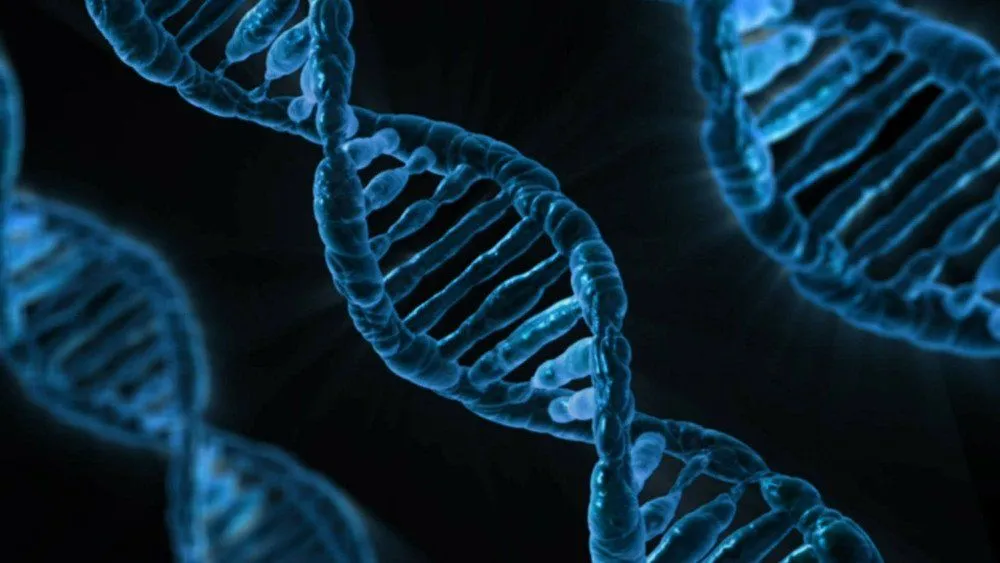
However, David did successfully find it. After six years of arduously examining the genetic variation in thousands of people from Iceland and the Netherlands, David and his colleague Catherine Guenther zeroed in on a single DNA letter change about 350,000 base pairs downstream of a gene called KITLG (KIT Ligand), in a regulatory enhancer region. That single base swap (an adenine for a guanine) is what flips light-haired Europeans away from their dark-haired ancestors. Unsurprisingly, a number of variations were exhibited by genes that were directly or indirectly involved in the production of melanin.
To test his discovery’s veracity, David turned to mice, of course. David and his team found the region of DNA in mice that caused them to appear brown. In mice of lighter colors, some even white, the code was written backwards! Following this splendid discovery, the researchers created two variations of the human version of that DNA: while one variant was left unchanged, the other was changed and written just as it appears in a brunette. The researchers then inserted each variant into two different mice.
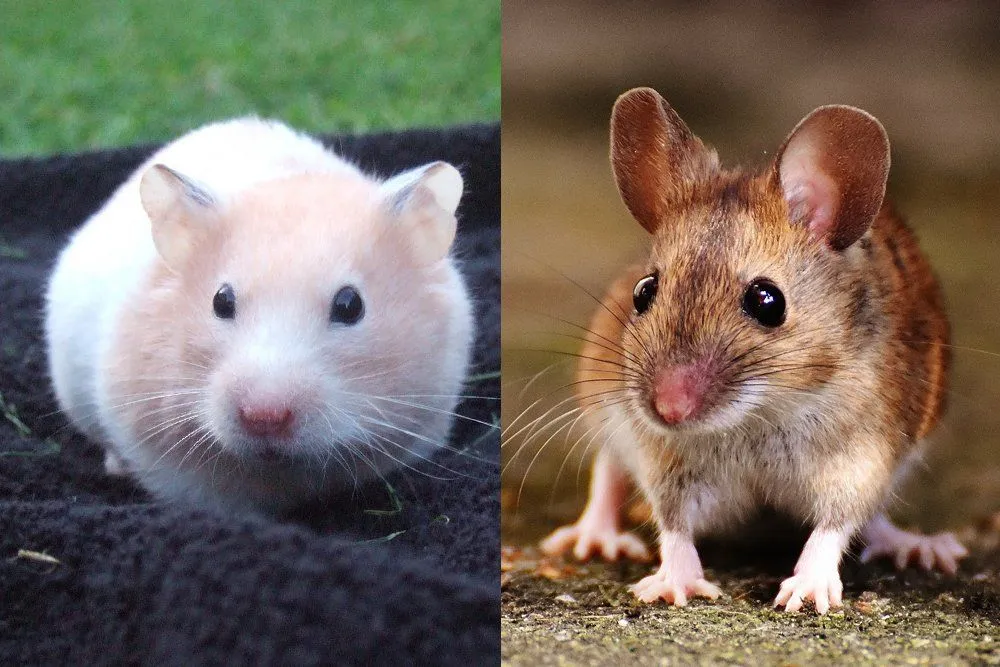
As one would expect, the mice into whom the changed DNA was planted grew to be darker than the mice into whom the unchanged DNA was planted. Guenther, Kingsley, and colleagues published their findings in Nature Genetics on June 1, 2014.
The ‘Color’ Gene
Every discipline under the umbrella of evolutionary biology is certain that a trait is never the result of one mutation of a single gene. They are certain that a tweak of this magnitude cannot have such a profound effect. A trait is instead an inscrutable combination of several genes activating and deactivating, seemingly indiscriminately. For this reason, the color gene might not even exist. However, David discovered the signaling gene, a single gene that is pivotal to the combinatorial play of genes that produces melanin. It puts the play in motion. In a way, one can call it the color gene, but it only paints our hair and skin, not our eyes.
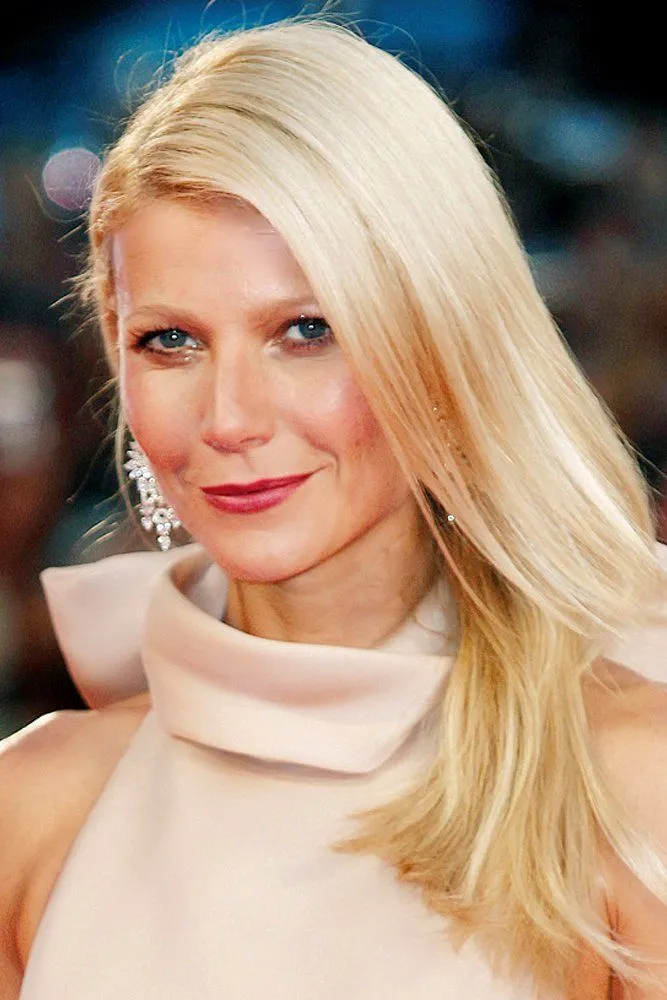
This is because the activation and deactivation of the signaling gene affects other genes as well. It affects genes responsible for the formation of blood, egg, sperm and stem cells. If the signaling gene was to switch on or off to kick-start the production of blond hair, the consequences would have been devastating. However, this isn’t the case.
David explains that “this isn’t ‘a turn the switch off’, it’s a ‘turn the switch down.'” That is, it’s not binary, but can be modulated like a thermostat. Consequently, the effects of the DNA mutation, David and his team discovered, don’t seep too deep, but alter only the properties of a single organ – our skin. It is the only way no fatal harm can be incurred. This discovery demolishes the archaic stereotype that whatever is responsible for hair color also determines the color of our eyes. It’s “literally skin deep,” David concludes.
Why Do I Have One Random Blonde Hair?
Have you ever parted a head of dark hair and found a single pale strand hiding in the crowd? It feels like a glitch, but it is really just biology doing its job one follicle at a time. The color of any individual hair is set inside the bulb at its root, where pigment cells called melanocytes manufacture melanin and hand it off to the cells that build the growing shaft. As the StatPearls histology reference puts it, the melanocytes resting among the matrix cells of the bulb are what give a hair its color.
Crucially, every follicle runs its own little pigment factory, and each one cycles independently of its neighbors. So if the melanocytes in one bulb dial their output down, or simply skip a beat, that single hair grows in lighter (or even white) while the strands all around it stay dark. The change is purely local. It does not mean your other follicles are about to follow suit, and a lone fair hair on a dark head is not a sign of anything wrong. It is the same turn the switch down logic David described, except playing out in just one of the roughly 100,000 follicles on your scalp. The same follicle-by-follicle independence is why grey hairs tend to show up one strand at a time rather than all at once.
Where Did Blonde Hair Come From?
The fair coloring we now picture as quintessentially Northern European is not as ancient as you might assume. What is striking is not just where the light-pigmentation genes came from, but how recently they became common.
In a landmark study of ancient DNA, Iain Mathieson, David Reich and colleagues read the genomes of 230 ancient Eurasians and watched the genes for pale skin and light eyes sweep upward in frequency over the last several thousand years (Nature, 2015). Several pigmentation variants that are almost universal in Europeans today, such as the light-skin allele of SLC45A2, were rare in early populations and rose under natural selection, while others, like the SLC24A5 variant, arrived with incoming Neolithic farmers. Blue eyes, carried by a change near HERC2/OCA2, turned up even earlier, in Mesolithic hunter-gatherers. The lesson applies to hair too: the pale palette we associate with Northern Europe was assembled relatively late, partly by selection and partly by waves of migration mixing their DNA into the continent. The blonde gene did not appear and instantly spread. It rode along on a much larger reshuffling of the European gene pool.
Is Blonde Hair Recessive Or Dominant?
It is tempting to file blonde hair under a tidy schoolroom rule: brown is dominant, blonde is recessive, and a fair-haired child needs two copies of the blonde version. There is a grain of truth there. The classic European KITLG variant does behave in a near-recessive way, which is exactly why blonde children can pop up in families of dark-haired parents who each quietly carry one copy.

But the single-gene story is an oversimplification. As the U.S. National Library of Medicine’s MedlinePlus explains, the type and amount of melanin in hair is determined by many genes, most of them still poorly understood, and hair color does not follow a clean dominant-versus-recessive pattern. MC1R is the best-studied, but KITLG, TYRP1, OCA2, SLC24A5 and a long list of others all chip in. That is why natural hair runs as a smooth spectrum from palest flax to jet black, as the Fischer-Saller scale above shows, rather than sorting people into a few neat boxes. It also explains a familiar pattern that MedlinePlus notes directly: many blonde children darken into brunettes by their teens, as pigment genes ramp up around puberty.
How Can Dark-Skinned People Be Blonde?
Here is the twist that quietly dismantles any link between dark skin and dark hair. In Melanesia, the island region of the Pacific that includes the Solomon Islands and Vanuatu, a striking fraction of children have deep brown skin and naturally golden-blonde hair. And the gene behind it is not KITLG at all.

In 2012, Sean Myles, Carlos Bustamante and their colleagues compared the genomes of blonde and dark-haired Solomon Islanders and pinned the trait to a single change in a different pigment gene, TYRP1, swapping the amino acid at position 93 from arginine to cysteine (Science, 2012). That one variant accounts for an enormous slice of the hair-color variation on the islands, sits at about 26% frequency there, and is essentially absent everywhere else in the world. It is inherited recessively, so a child needs two copies to turn blonde. The remarkable part is that Melanesian and European blondness evolved completely independently, two unrelated mutations in two different genes arriving at the same look on opposite sides of the planet. It is a textbook case of convergent evolution, and proof that “blonde” is not one gene, one people, or one history, but a color the genome can reach by more than one road.
References (click to expand)
- The Genetics of Blond Hair | Science | AAAS. sciencemag.org
- Guenther, C. A., Tasic, B., Luo, L., Bedell, M. A., & Kingsley, D. M. (2014, June 1). A molecular basis for classic blond hair color in Europeans. Nature Genetics. Springer Science and Business Media LLC.
- Understanding Genetics: Human Health and the Genome - www.thetech.org
- Kenny, E. E., et al. (2012). Melanesian Blond Hair Is Caused by an Amino Acid Change in TYRP1. Science. PubMed (NIH).
- Mathieson, I., et al. (2015). Genome-wide patterns of selection in 230 ancient Eurasians. Nature. PMC (NIH).
- Is hair color determined by genetics? MedlinePlus Genetics. U.S. National Library of Medicine.
- Histology, Hair and Follicle. StatPearls. NCBI Bookshelf.