Table of Contents (click to expand)
The satisfied, relaxed feeling after a good poop is mostly the work of two nerves. As the rectum empties, the vagus nerve fires, briefly slowing the heart and dropping blood pressure for a short “poo-phoria.” At the same time, the pudendal nerve and the pelvic floor muscles that were straining to hold things in finally get to relax. That combination is why pooping after a long wait can feel almost euphoric.
If each session on the pot takes us about 12 minutes, then humans spend a whopping 73 hours a year just pooping! And after most of those minutes, we feel a sense of serene relief, as if life suddenly has fewer burdens.
Why do we feel so good after pooping? As much as it is necessary for us to poop, we can’t deny that we also enjoy doing so on a certain level.

With that in mind, let’s try to answer the million-dollar question.
You need to poop to get rid of the body’s waste and undigested food, while also making room for more food in your digestive system. However, the pleasure doesn’t only come from clearing your bowels; it also lies in the stimulation of certain nerves in the body.
The Pudendal Nerve
The pudendal nerve is a mixed nerve (one with both sensory and motor nerves) that is primarily responsible for the sensory and motor innervation of the perineum and external genitalia in both genders. The perineum is the region between the anus and the genitalia. The nerve passes through your pelvis and the gluteal area (i.e., your buttocks) at the top of the thigh bone, and links to the nerves that arise from the spinal cord.
You have a pudendal nerve on both the left and right sides of your body
The pudendal nerve is responsible for most of the movement and sensations that occur in your pelvic area, including those in your external genitalia and anus, as well as the muscles that allow you to release your poop into the pot.
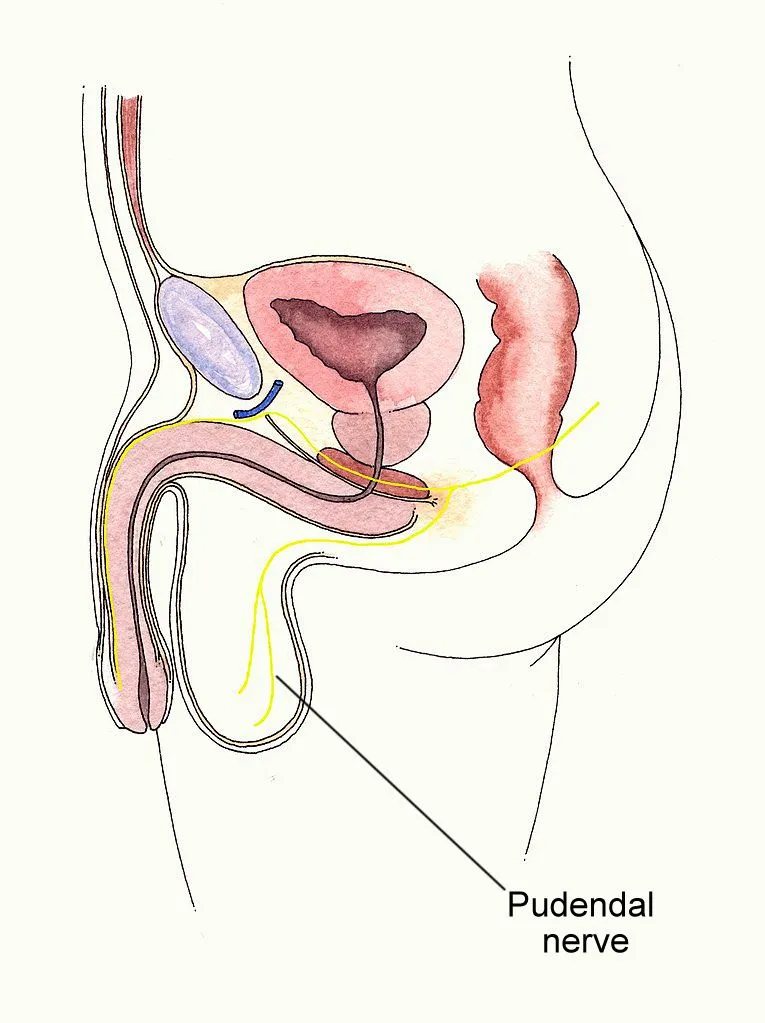
Pooping leads to the stimulation of this nerve. Since the nerve innervates the anus and the genitalia, and is responsible for sensory input, including pleasure, when it is stimulated, it leads to a certain amount of arousal and pleasure.

The Vagus Nerve
The vagus nerve is a long, branching nerve that connects the brainstem to most of the digestive tract, including the bulk of the colon. It’s the tenth cranial nerve, and it regulates a wide range of vital body processes, including mood, digestion, immune signalling, and heart rate. The lower part of the colon and the rectum are wired in slightly differently (through the sacral parasympathetic nerves), but they share reflex pathways with the vagus, so when something dramatic happens down there, the vagus hears about it.
The vagus nerve transmits signals from the digestive system and other organs to the brain and back. It is the tenth cranial nerve (nerve arising directly from the brain) and travels from the brainstem, where it originates, down the neck and into the belly.
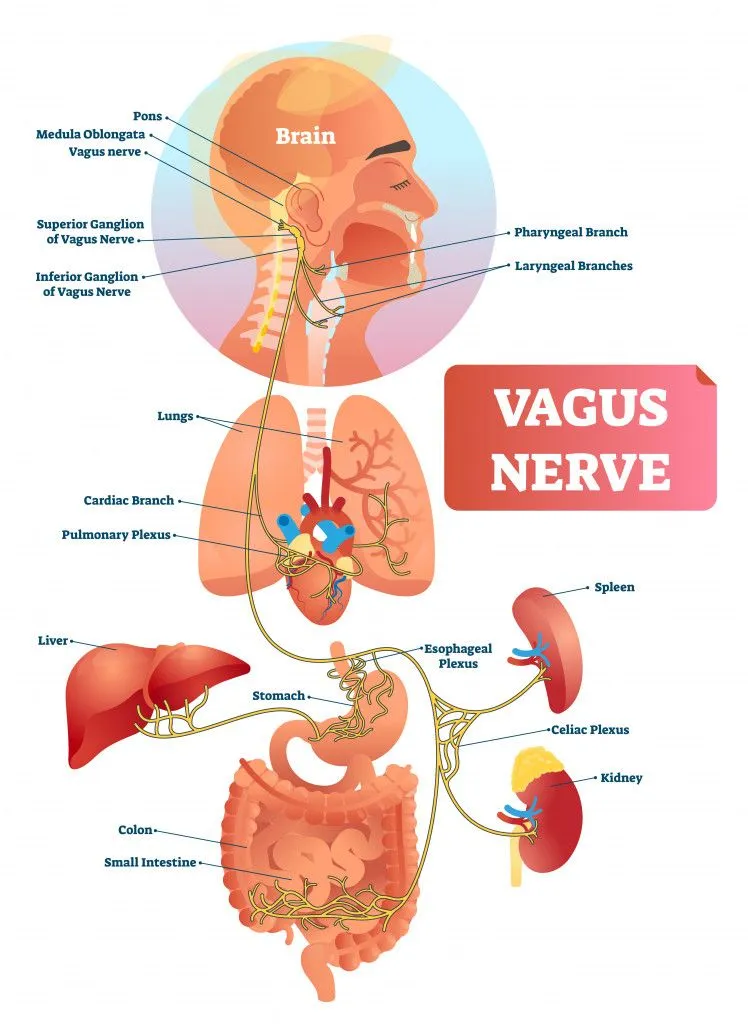
When you actually poop, the rectum stretches as the stool passes through, and you typically bear down (a Valsalva manoeuvre). Both of those trigger the vagus nerve, which then turns down your heart rate and blood pressure for a short time, leaving you feeling pleasantly drained and relaxed afterwards. That brief vagal dip is the physiological core of “poo-phoria.”
However, keep one thing in mind before you go and over-stimulate your vagus nerve for that “poo-phoria.” Overstimulation of the vagus nerve can also be unhealthy. Instead of the pleasure you’re craving, it can cause you to pass out on the toilet!
The Muscles
Certain muscles in your body tighten up, notably your internal and external anal sphincters, to prevent poop from escaping at inconvenient times. Your internal anal sphincter is an autonomic muscle that doesn’t require any conscious thinking, but your exterior anal sphincter is under your control.
The remaining muscles in the digestive tract are responsible for moving food through the system. The cumulative effect of all these contractions is a rise in abdominal pressure. I’m sure you know the feeling!
The majority of what we experience as normal is the enlargement of the bowels caused by the presence of air, fluid, or stool.
When we poop, not only are we relieved of this strain, but we also give our muscles the much-needed relaxation they require.
Does Pooping Feel Good for Women and Men Differently?
A lot of people search specifically for whether pooping feels good for women, or for men, so let’s clear that up. The basic plumbing is the same in everyone: the same vagus nerve dip, the same pelvic-floor relief, and the same pudendal nerve doing the sensory work. Where bodies differ is in which structures that pudendal nerve happens to be wired into.

Inside the pelvis, the pudendal nerve gives off the inferior rectal nerve, which controls the external anal sphincter and carries sensation from the anal canal. It then continues forward and ends as the dorsal nerve of the clitoris in women and the dorsal nerve of the penis in men. So the very same nerve trunk that registers a bowel movement also carries pleasure signals from the clitoris or the penis. That shared wiring is why a satisfying poop can carry a faint echo of pleasure, and it applies to both sexes.
Is one sex wired to enjoy it more? There’s no good evidence that pooping is reliably more pleasurable for women than for men, or the other way around. The pudendal pathway, the vagal heart-rate dip, and the relief of an emptied rectum are common to everyone. Any difference you notice is far more likely to come from how full your rectum was and how long you held on than from your sex.
Is It Normal to Enjoy Pooping?
If you’ve ever wondered whether it’s a bit weird to find pooping genuinely satisfying, relax: it’s completely normal. That intense, almost giddy version of the feeling even has a nickname. Gastroenterologist Dr. Anish Sheth and co-author Josh Richman coined the term “poo-phoria” in their book What’s Your Poo Telling You? to describe the wave of relaxation that can follow a big, complete bowel movement.
The euphoria is most likely after a large stool, simply because a fuller rectum stretches more and gives the vagus nerve a bigger jolt. As that nerve fires, it can briefly give you the chills, slow your heart, and drop your blood pressure, leaving you feeling lightheaded and pleasantly drained. Pair that with the relief of finally unloading muscles that were clenched to hold everything in, and a good poop can feel like a tiny reset button. Enjoying that is a sign your bowels are working the way they should.
There is a limit, though. Push the vagus nerve too hard, usually by straining against a stubborn stool, and that blood-pressure drop can tip over into defecation syncope, which simply means fainting on the toilet. So the goal is an easy, unforced movement, not a marathon of straining. And while pleasure and relief are normal, pain is not. Sharp pain, bleeding, or a constant feeling that you never quite finish are worth raising with a doctor, since they can point to constipation, hemorrhoids, an anal fissure, or other gut conditions rather than ordinary poo-phoria.
A Final Word
Imagine it’s your day off from school. You are cozy in bed watching TV, when you feel the urge to poop.
Many people in this circumstance may feel like their bodies have betrayed them, making them feel helpless and weak. You feel like you have no control over your body or intestines. Therefore, normal bowel movements can help to allay this concern. Once you do visit the toilet, that satisfaction and relaxation is all you needed. The vagus nerve plays a role behind this experience too.
The vagus nerve, when stimulated during your visit to the loo, lowers the blood pressure and heart rate, giving you that much-needed relaxation.
Finally, we know why we feel so good after taking a visit to the bathroom!
References (click to expand)
- Yu, S. W. B., & Rao, S. S. C. (2014, February). Anorectal Physiology and Pathophysiology in the Elderly. Clinics in Geriatric Medicine. Elsevier BV.
- What color is your poop and other pressing fecal matters. The UC San Diego Medical Center, Hillcrest
- HOW OFTEN DOES THE AVERAGE PERSON POOP?. The University of Massachusetts Amherst
- Constipation - Health Encyclopedia - URMC. The University of Rochester Medical Center
- Bowel health - HealthyWA. healthywa.wa.gov.au
- Breit, S., Kupferberg, A., Rogler, G., & Hasler, G. (2018, March 13). Vagus Nerve as Modulator of the Brain–Gut Axis in Psychiatric and Inflammatory Disorders. Frontiers in Psychiatry. Frontiers Media SA.
- (2021) Anatomy, Abdomen and Pelvis, Pudendal Nerve - NCBI. The National Center for Biotechnology Information
- Shafik, A., El-Sherif, M., Youssef, A., & Olfat, E.-S. (1995). Surgical anatomy of the pudendal nerve and its clinical implications. Clinical Anatomy. Wiley.
- (2021) Neuroanatomy, Spinal Nerves - StatPearls - NCBI Bookshelf. The National Center for Biotechnology Information
- Tigga, M. (2019). An unusual case of defecation syncope. Journal of Mid-life Health. Medknow.
- Ogle, K. T. (2012, May). Is your patient having a vasovagal reaction?. Nursing Made Incredibly Easy!. Ovid Technologies (Wolters Kluwer Health).
- Pudendal Nerve: Function, Anatomy and Branches. Cleveland Clinic.
- Why Does Pooping Feel Good? And Other Poop Mysteries Solved. Healthline.