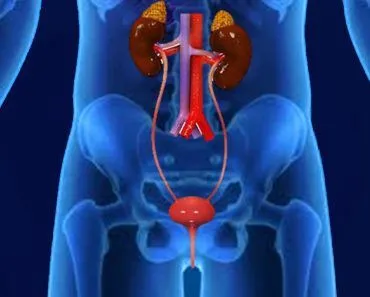
The reason we don’t pee when we’re asleep is that overnight the brain releases more antidiuretic hormone (ADH, also called vasopressin), which tells the kidneys to reabsorb water back into the bloodstream instead of dumping it into the bladder. Urine production doesn’t stop completely, but it drops sharply, so the bladder typically takes all night to fill.
It’s strange how we feel the urge to urinate involuntarily throughout our waking hours, but rarely when we are asleep. Have you ever wondered why that is? What physiological sorcery saves us every night from the ordeal of waking up from the most pleasant of slumbers and stumbling to the washroom, only to return to the bed fully aroused, unable to get back to sleep?
The Antidiuretic Hormone (ADH)
Our kidneys try to balance the amount of water stored in our bodies by absorbing some of the water and recirculating it into our bloodstream, while also extricating some and venting it through the urethra in the form of urine. While dehydration is dangerous for obvious reasons, overhydration is also dangerous, as a surplus of water will dilute the salts necessary for our survival.
The hormone responsible for the absorption of water is known as vasopressin, or the antidiuretic hormone (ADH). It’s synthesized by neurons in the hypothalamus and released into the bloodstream from the posterior pituitary. When ADH is high, it signals the kidneys to reabsorb the water passing through them so we don’t become dehydrated; when ADH is low, the kidneys allow more water to pass through, so we don’t become overhydrated.
You must have noticed (or experienced) how someone who is drinking alcohol suffers from the perpetual urge to urinate. Alcohol makes you pee because it is a diuretic, a substance that promotes the increased production of urine.

Alcohol actually inhibits the release of ADH from the posterior pituitary, so less of it reaches the kidneys in the first place. The repercussions are obvious: the kidneys, missing their usual ADH signal, let more water pass straight through into the bladder instead of reabsorbing it back into the blood.
Thus, the reason we don’t feel the urge to urinate when we’re asleep is that the brain, recognizing the body is at rest, increases ADH release. The extra ADH pushes the kidneys to reabsorb most of the water passing through them back into the bloodstream. Urine still trickles into the bladder, but at a much slower rate, which is why a normal bladder can hold out for the whole night.

Why We Still Tend To Pee At Night
Of course, we know that this isn’t completely true. The suppression isn’t absolute. People, every now and then, do go through the ordeal of waking up from the most pleasant of slumbers and stumbling to the washroom.
Our kidneys do allow a small volume of water to pass and fill the bladder when we sleep; it is the urine’s gradual accumulation overnight, plus the fall in ADH as the circadian wake-up phase kicks in, that drives the irrepressible urge to pee in the morning. Sometimes the bladder is already so full by then that the tiniest addition during the night tips it past its limit and wakes you up early.
The bladder can be almost entirely filled due to the consumption of alcohol (which, if you were paying attention, suppresses ADH and therefore exacerbates the problem), coffee, water or simply any liquid in the hours before sleep. The bladder then finds the resulting pressure overbearing; when it is completely filled, it signals the brain that it needs to be emptied… immediately!
How Does Your Body Know Not To Pee At Night?
So far we have a hormone, but who tells the hormone when? Your body doesn’t wait until you’re drifting off and then scramble to dial up ADH. It anticipates the night well in advance, and it does so using an internal clock. Tucked deep in the hypothalamus, just above where your optic nerves cross, sits a tiny cluster of neurons called the suprachiasmatic nucleus, or SCN. This is the body’s master circadian clock. It reads the light signals arriving from your eyes and uses them to set the time for clocks scattered throughout the rest of your organs.

Your kidneys are among the busiest of those clock-bearing organs; in fact, they are second only to the liver in the number of genes whose activity rises and falls on a daily cycle. Because of this, ADH release isn’t flat across 24 hours. In healthy adults, vasopressin follows a daily rhythm and reaches its highest concentration during the hours of sleep, precisely so the body can hold on to water at a time when you aren’t drinking any. The circadian system effectively pre-schedules the overnight ADH surge, so by the time your head hits the pillow, your kidneys are already being told to conserve. That is how your body "knows": it isn’t reacting to sleep so much as running a timetable that expects it.
This also explains why a jet-lagged traveler or a night-shift worker can find their bladder behaving at the wrong times. When the clock is shifted or scrambled, the vasopressin rhythm goes with it, and that nighttime surge can blunt or slip out of phase. The same diurnal pattern tends to fade with age, which is one reason older adults are more likely to wake up needing the bathroom.
Why Your Bladder Holds More Urine While You Sleep
Shrinking the urine supply is only half the trick. The other half happens at the storage tank itself. It turns out the bladder is not a passive balloon that fills to the same threshold around the clock. Its functional capacity (how much it can comfortably hold before it nags you) shifts with the time of day, and it leans toward holding more during the sleep window.

The bladder’s inner lining, the urothelium, runs its own circadian clock. Laboratory work in mice has traced part of this to a protein called connexin 43, which sits in the bladder wall and helps release the signaling molecule ATP as the bladder stretches. ATP is one of the messengers the bladder uses to tell the brain "I’m filling up." During the animal’s rest phase, connexin 43 levels and ATP release drop, the bladder reports its fullness more quietly, and functional capacity goes up; during the active phase the opposite happens. In mice whose internal clock is genetically broken, this daily rhythm in capacity disappears altogether, which is strong evidence that the clock, not chance, is steering it.
On top of the quieter signaling, your sleeping brain raises its arousal threshold, meaning it takes a stronger nudge to pull you out of sleep. So while you slumber, three things line up in your favor: less urine is being made, the bladder is willing to hold a larger volume, and the brain is harder to wake. Only when accumulation finally overruns that larger overnight capacity, often right as the morning circadian shift lowers ADH again, does the urge break through and march you to the bathroom.
References (click to expand)
- Vasopressin - Wikipedia. Wikipedia
- Physiology, Vasopressin. StatPearls. NCBI Bookshelf.
- Nocturnal Enuresis. StatPearls. NCBI Bookshelf.
- Recent Advances in Understanding the Circadian Clock in Renal Physiology. PMC, NCBI.
- Nocturia. StatPearls. NCBI Bookshelf.
- Circadian coordination of ATP release in the urothelium via connexin43 hemichannels. Scientific Reports, PMC.