A fire sprinkler activates when the heat of a fire bursts a heat-sensitive glass bulb in the sprinkler head, usually rated to break between 57 and 74 °C (135-165 °F), which releases pressurized water. Each head triggers on its own, so smoke alone won't set one off and they don't all go off at once, despite what the movies show.
Hollywood has always used fire sprinklers as a useful trick to resolve a scene. Sprinklers go off “accidentally” or are cleverly “turned on” by our heroes. This strategy may be used for an action sequence or comedic relief, or even to serve as a romantic backdrop for an indoor kiss in the rain.
However, did you know that most movies get fire sprinklers woefully wrong? The truth is, sprinklers don’t quite work the way that movies want us to believe. Consider the scene in Bridget Jones’s Baby, where a birthday cake sets off the entire fire sprinkler system. It’s quite impossible for that to happen.
So how do fire sprinklers work? How do they go off at just the right moment of a fire, and can they really be set off accidentally?
Overview Of Automatic Fire Sprinkler Systems
A sprinkler fire fighting system automatically detects and extinguishes fires inside an indoor space. It’s one of the different forms of active protection against fire. The major advantage of this is that it works completely automatically, with no need for manual intervention.
The first recognizable sprinkler system dates back to London in 1812, when Sir William Congreve fitted a manually operated setup in the Theatre Royal, Drury Lane. The first truly automatic sprinkler, one that goes off on its own without anyone needing to turn a valve, came later. Henry Parmelee patented his version in the United States in 1874, using a plug held shut by solder that melted in a fire. Although the design has changed a great deal since then, the basic principle remains much the same.
Automatic fire sprinkler systems are extremely effective. According to the British Automatic Fire Sprinkler Association, there has never been a multiple-fatality fire in a UK home protected by a working sprinkler system. Across the US, the picture is just as reassuring: the National Fire Protection Association reports that when sprinklers are present and a fire is large enough to set them off, they control the fire roughly 97% of the time, and the risk of dying drops sharply compared to homes with no sprinklers at all.
The system consists of a water supply and a network of pipes leading to sprinkler heads as the most basic elements. A fire pump is used to pump the water into the pipes from the water source. The pipes are kept pressurized to ensure that the water flowing out will be forceful enough to extinguish a fire.
In laboratories and warehouses, you may see a sprinkler network installed under the ceiling. In buildings like shopping malls, the pipes may be laid over a false ceiling, with only the sprinkler heads visible below. In most cases, we may only see the little heads poking out.
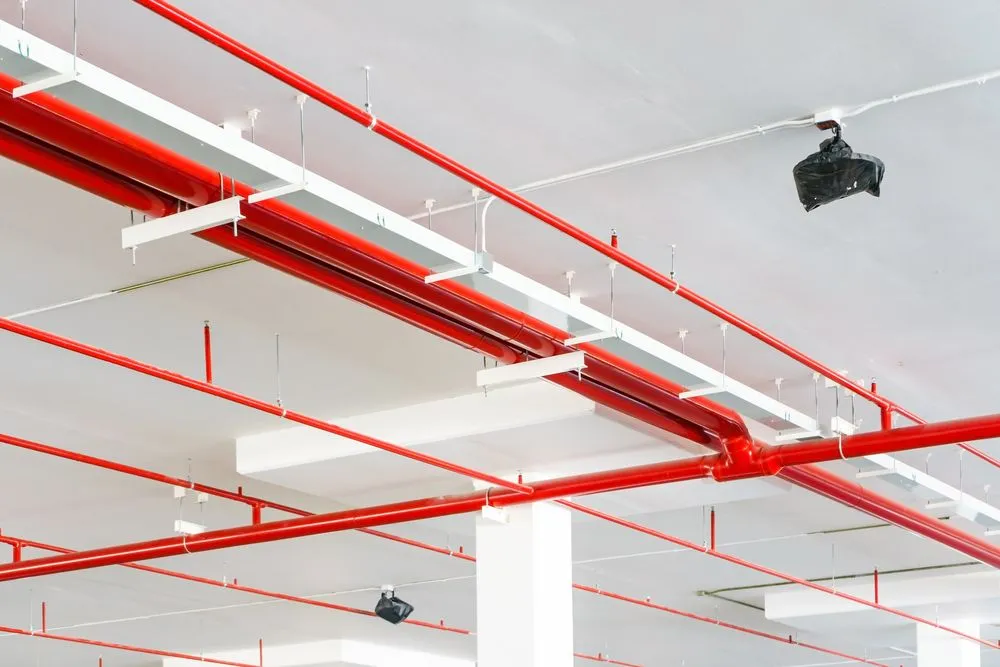
The sprinkler heads, and the glass bulbs within them, are the triggers in the system.
How Do Fire Sprinklers Go Off?
Aside from the pressurized water in the pipes, how do the sprinklers actually go off? Fire sprinklers, specifically sprinkler heads, are able to detect heat.
This is what a sprinkler head looks like:
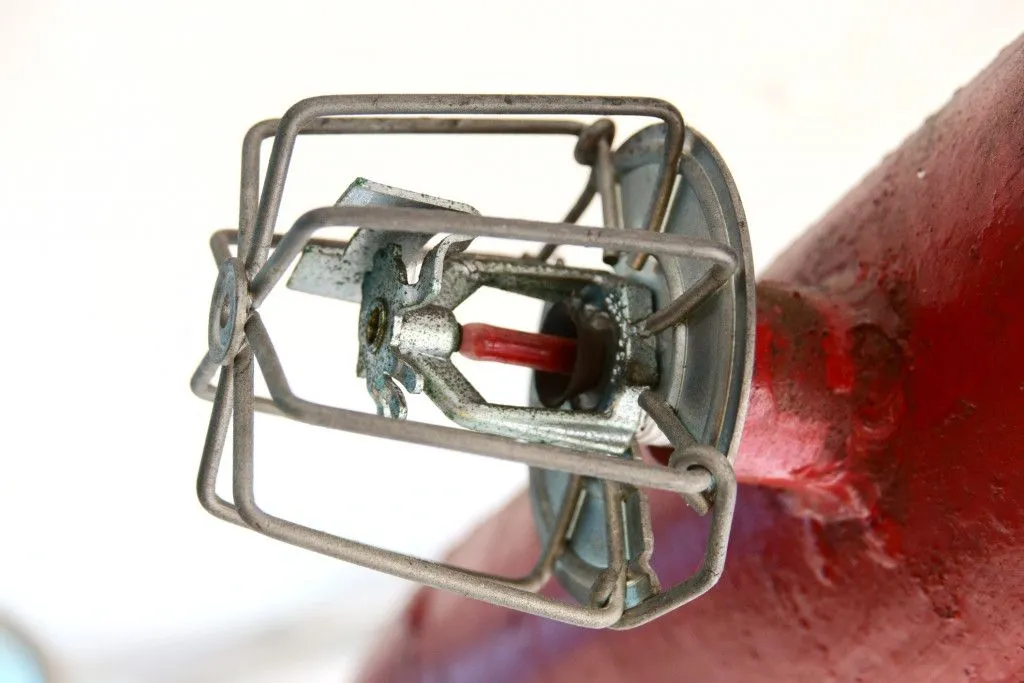
The red vial-looking thing in the middle is the glass bulb. This is the key element for the operation of a sprinkler head. The opening in the sprinkler head is kept closed by this glass bulb. It’s usually filled with glycerin-based liquid that is sensitive to temperature.
When there’s a fire, the air around it heats up. The hot air travels upward, to where the sprinkler head is located. This causes the liquid inside the bulb to heat up and expand. When the temperature of the glass bulb reaches a threshold limit, the liquid expands beyond what the glass can contain, and it breaks!
The bulb breaking causes the sprinkler heads to ‘open’ and trigger the system. The difference in pressure caused by the broken bulb causes valves to open and the water to rush out of the nozzle, and spray over the fire. In most cases, an alarm is also set to trigger when this system is tripped.
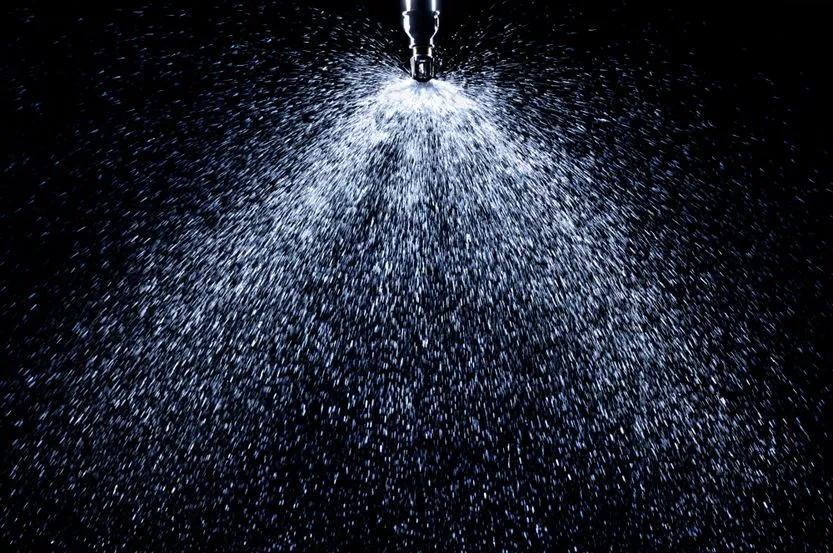
Different sprinkler installations may have different threshold temperatures. This depends on factors like the normal room temperature of the protected space, which depends on the location, the purpose of the protected space, and the maximum temperature that you can expect the room to be without a fire present that needs to be put out. For the ordinary spaces most of us spend our days in, that threshold usually falls between 57 and 74 °C (135-165 °F), comfortably above any temperature a room would reach without an actual fire. The color of the liquid inside the bulb conveniently indicates its threshold temperature.
The most common bulbs are orange, red, and yellow. Under the standardized color code, the lowest-rated bulbs are orange with a temperature rating of 57˚C, then red at 68˚C, and yellow at 79˚C. The highest-rated ones are black at 260˚C and are reserved for special, high-heat circumstances like industrial ovens and furnaces.
| Temperature | Color | Temperature Rating | Max. Ceiling Temperature |
| 57˚C | Orange | Ordinary | 38˚C |
| 68˚C | Red | Ordinary | 38˚C |
| 79˚C | Yellow | Intermediate | 65˚C |
| 93 or 100˚C | Green | Intermediate | 65˚C |
| 141˚C | Blue | High | 107˚C |
| 182˚C | Mauve | Extra High | 149˚C |
| 260˚C | Black | Ultra High | 240˚C |
Types Of Automatic Fire Sprinkler Systems
The most commonly used system is a wet pipe-type sprinkler system. In this setup, the pipes are kept filled with water and pressurized. This means that the water is always waiting just behind the sprinkler heads, resulting in very fast reaction times.
Dry pipe sprinkler systems are used in areas where water might freeze in the pipes, or in areas prone to natural calamities where there is a chance of the pipes rupturing. Here, the pipes are not filled with water, but rather with compressed air. When a sprinkler is activated, this pressurized air rushes out and the water from the source rushes in.
There are further variants of the dry pipe system. Pre-action systems rely on two triggers. First, something like a smoke detector or a manual switch lets water into the pipes, and then the usual bulb trigger sets the system off. This two-step system is used in places with water-sensitive equipment or artifacts inside the premises, for added protection against accidental triggers.
The last type is the deluge system, which is very rare in real life, but seems particularly widespread in movies. We’ll discuss that variety in more detail below.
Can Fire Sprinklers Go Off Accidentally?
Let’s clear one thing up at the start… no burnt toast or candle-riddled birthday cake can set off a fire sprinkler. Only an actual fire with a “might-burn-down-the-house-if-left-unchecked” nature could possibly raise the temperature of the air enough to actually rupture the glass bulb of a sprinkler head.
The other misconceived image is that of the all-or-nothing sprinkler system. In actuality, the thing about the design of most sprinklers is that only the sprinkler heads that are near the fire will go off in the event of localized fires. Only the bulbs near enough to the fire to get sufficiently heated will break, so only those sprinkler heads will go off.
In most cases, fires start from a single point of origin, so fire sprinklers work pretty effectively at cutting off the fire before it reaches a point where the entire sprinkler network needs to be activated. In fact, the National Fire Protection Association notes that a single sprinkler controls a home fire about 90% of the time, and in roughly three out of four fires where sprinklers operated, only one head ever went off.
In other words, it’s not like in the movies when the whole system turns into a waterfall at the tiniest hint of fire. Your office computer won’t get drenched because you started a fire in the break room.
Consider the scene in Veronica Mars, when Kristen Bell holds up a lighter to the smoke alarm and triggers all the sprinklers in the room instantaneously. This is quite an unlikely event, as realistically, only Veronica would have gotten soaked in such a situation.
Triggering a smoke alarm or a manual fire alarm trigger also won’t cause the system to go off in most cases. We see this misconception in countless movies where all you need to do is pull the emergency fire alarm lever and moments later… an indoor rainstorm!
Usually, fire sprinklers will be set off only if they encounter a sufficiently high temperature. The manual fire alarm may trigger other safety measures, but not a glass bulb sprinkler system.
Deluge Fire Sprinkler Systems
The type of sprinkler “overreaction” seen in movies is only possible in the case of a deluge sprinkler system.
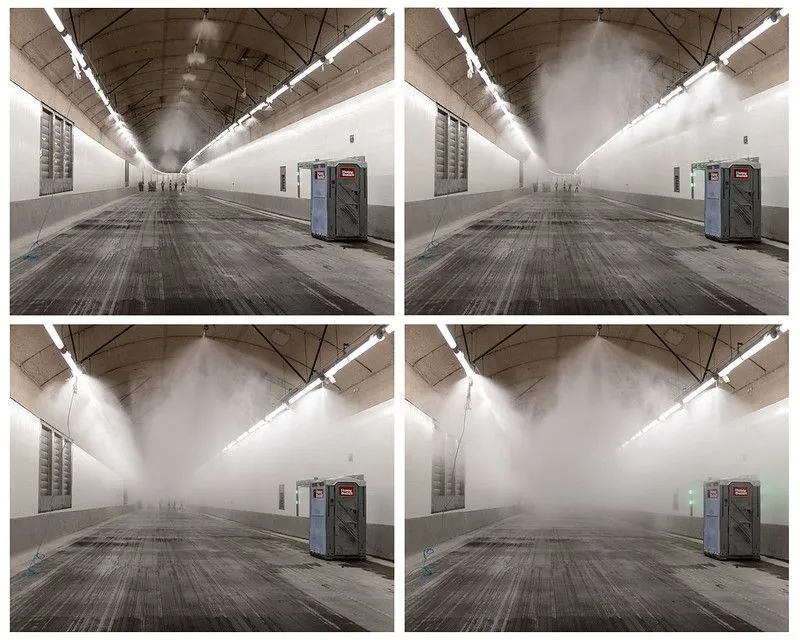
Deluge systems don’t have individual heat-sensitive glass bulb triggers on sprinkler heads. The sprinkler heads are always ‘open.’ They are triggered by some other alarm. Thus, when another trigger (a smoke alarm, a manual switch, or some other alarm) is set off, they go off all at once, causing a “deluge”, as the name suggests.
But the thing is, deluge systems are actually really rare. Deluge sprinkler systems are only installed in places with extremely high fire risks, precisely because they go off so easily. As much as people might fear fires, nobody wants the risk of accidental water damage either!
Most movie scenes with sprinklers are not set in spaces where there would be any need for a deluge system to be set up. So we can conclude that movies are working with and leaning into some common misconceptions about fire sprinklers.
A Safe Bet
People might decide against installing automatic fire sprinkler systems in their homes or offices because they’re afraid that the sprinklers might go off accidentally. In actuality, the American Fire Sprinkler Association puts the odds of a sprinkler discharging by manufacturing fault at roughly 1 in 16 million, far longer odds than being struck by lightning. Sprinkler heads can only go off in the presence of a temperature as high as only a fire could produce, and only the sprinkler heads right above the fire will go off.
In other words, an automatic fire sprinkler system is a very good system to choose if you’re looking for the most reliable protection against fires.
References (click to expand)
- Yates, C. S. (2002). Fire sprinkler systems. Plant Engineer's Reference Book. Elsevier.
- How home fire sprinklers work. National Fire Protection Association (NFPA).
- U.S. Experience with Sprinklers. National Fire Protection Association (NFPA).
- What Do Fire Sprinkler Colors Mean? National Fire Sprinkler Association (NFSA).
- Why Sprinklers? British Automatic Fire Sprinkler Association (BAFSA).