Table of Contents (click to expand)
Planned obsolescence is the deliberate design of products with a short, fixed useful life so buyers have to keep upgrading. The term was coined by Bernard London in 1932 and popularised by designer Brooks Stevens in 1954. Famous examples include the Phoebus light-bulb cartel of the 1920s-30s, GM's annual model change, Apple's iPhone “batterygate” throttling, and printer firmware that bricks third-party ink cartridges.
We are currently experiencing an overabundance of consumer goods. Every day, it feels like some new product is being released, but these releases are usually just a slight upgrade to the line of products that came before them.
The interests of the companies that make them rest on people returning to buy these products year after year, ensuring their financial viability and covering the cost of research and development.

As logic would dictate, people only return to buy a better iteration of the same product if the one they are using breaks down or is incompatible with new upgrades the company has made. The idea of deliberately designing products for a fixed life span so people keep upgrading is called planned obsolescence and is ingrained in every popular product we use today.
Let’s see where this all began…
Planned Obsolescence History
The term “planned obsolescence” itself was coined by American real-estate broker Bernard London in his 1932 pamphlet Ending the Depression Through Planned Obsolescence, and popularised in 1954 by industrial designer Brooks Stevens, who described it as “instilling in the buyer the desire to own something a little newer, a little better, a little sooner than is necessary”.
One of the most striking historical cases came even earlier. From 1925 to 1939 the Phoebus cartel, a group of the world’s biggest lightbulb manufacturers (including General Electric, Osram and Philips) secretly agreed to cap the life of incandescent bulbs at around 1,000 hours, down from the 1,500-2,500 hours their engineers were perfectly capable of building. Member companies were fined if their bulbs lasted too long. It remains the textbook example of an industry literally engineering its products to fail faster.
Meanwhile, the early 20th century saw a boom in the automotive industry, as Ford, General Motors and Chrysler emerged as the front runners. Mass production enabled enormous economies of scale, and car ownership exploded: by 1929, roughly 60% of American families owned an automobile.
This momentum slowed in the mid-1920s as the American auto market began to saturate. To keep unit sales growing, GM president Alfred P. Sloan instituted the annual model change: every year, GM would roll out restyled cars so the previous year’s model would feel dated, even if it still drove perfectly well.
The strategy worked. GM overtook Ford in US sales in 1927, the same year Ford was forced to halt Model T production to retool, and the “annual model” mindset spread rapidly through American consumer product design.
As years passed, companies evolved different strategies to enforce planned obsolescence, the impacts and use of which are seen today and definitely here to stay.
Here are the most common types of planned obsolescence in our culture today.
Types Of Planned Obsolescence
Contrived Durability
Things are always moving towards decay, so no product can be designed that holds its full function forever; it is only a matter of time before it breaks down. However, some products are deliberately designed in a way that shortens their life spans. These decisions are taken before manufacturing, during the design stages, which guides the specification of every component of that product.

Artificially shortening a product’s life span is a strategy called contrived durability. This is done by decreasing the durability of a product by using cheap materials in crucial areas, designing suboptimal component layouts, and using plastic or soft metal at key junctions, which increases the speed at which the product wears down. These are usually seen in toys, as just a little rough play can destroy key components of a toy and render it useless.
Prevention Of Repairs
Many devices today come as single-use versions, even when they can be repaired and their life spans can be prolonged (e.g., disposable cameras). Such products are often impossible to service and are completely sealed during manufacturing. This is to ensure that the device gets damaged when anyone attempts to repair it.
In some cases, when a certain part of the device breaks down, the manufacturers make the replacement parts either unavailable or irrationally expensive so that it makes no economic sense to get it repaired. This is seen in the inkjet printers made by Canon, where the print head eventually fails, but replacement of that part is very expensive.
Many phone manufacturers have come under scrutiny for not allowing users to repair their phones. Apple introduced its now-infamous pentalobe screws on the iPhone 4 back in 2010, and used them across iPhones for years afterwards. These screws cannot be easily removed with standard consumer tools, making at-home repairs much harder.
The most-cited modern example is “batterygate”. In December 2017 Apple admitted that iOS updates were deliberately slowing down older iPhones with aged batteries. The company eventually paid up to $500 million to settle a US class action in 2020 and another $113 million to 34 state attorneys general the same year. Apple framed the throttling as battery management, but for many consumers it crystallised the suspicion that older iPhones were being made to feel obsolete on purpose.

Perceived Obsolescence
Trends play a very important part in the sales of certain products and perceived obsolescence is when a thing goes out of fashion, even though it remains durable. Many products are mainly desired for their aesthetic value, instead of their functionality.
Clothes are a prime example of this, as fashion dictates what is “in” and trendy. Products like this go through a cycle of desirability commonly referred to as a “fashion cycle”. By constantly releasing new styles, manufacturers ride the trend and constantly maintain their sales.

This is also seen in electronic products to a certain extent; cutting-edge, newly released and slightly upgraded phones and other devices replace their still working and durable counterparts and establish themselves as new status symbols.
Systemic Obsolescence
Systemic obsolescence is when products are squeezed out of a company’s ecosystem rather than being broken outright. For example, when older iPhones stop receiving the latest iOS updates and gradually lose access to new apps and features, nudging the user toward a new model. It also shows up in soldered-in RAM and SSDs that prevent later upgrades, and in proprietary connectors and chargers that turn perfectly working accessories into junk the moment the manufacturer switches standards (think of the parade of Apple charging ports (30-pin to Lightning to USB-C), with each transition rendering a closetful of cables useless).

This could also be the result of incompatible technology in the older computers, making them unable to run new interfaces and rendering them obsolete.
Programmed Obsolescence
In some cases, products are designed in such a way that they must be repurchased after they are used a certain number of times. For example, inkjet printers install smart chips that prevent the use of the printer after a certain number of pages, or block third-party ink cartridges, even though the printer itself is still durable and technically functional. HP’s “Dynamic Security” firmware, which has been used to brick generic cartridges, has been the subject of multiple consumer lawsuits and settlements; Epson has faced similar firmware actions.
Is Planned Obsolescence Illegal?
For most of the last century, planned obsolescence was not illegal anywhere; it was simply a business strategy. Some of the tactics around it could collide with other laws (the Phoebus cartel, for instance, was a classic price-fixing arrangement of the kind antitrust law exists to stop), but deliberately building something to wear out was not a crime in itself.

That changed in France. Under its Energy Transition Law of 17 August 2015, France became the first country to make planned obsolescence a specific criminal offense, writing it into the Consumer Code (Article L.441-2). The law defines it as deliberately shortening a product’s lifespan to increase its rate of replacement, and it carries penalties of up to two years in prison and a fine of 300,000 euros (roughly $325,000). Courts can raise that fine to as much as 5% of a company’s average annual turnover.
In September 2017 the French campaign group HOP (Halte à l’Obsolescence Programmée, or “Stop Planned Obsolescence”) used this law to file a complaint against printer maker Epson, accusing it of blocking printing while cartridges still held ink and of prematurely ending the life of internal ink pads. After a multi-year investigation by France’s consumer-protection authority, the DGCCRF, Epson was summoned to the criminal court in Nanterre, where the first hearing was held on 2 July 2026. Right to Repair Europe describes it as the first criminal trial for planned obsolescence anywhere in the world. (The allegations have not yet been tested in court, and no finding has been made against the company.)
Other countries have leaned on existing consumer and competition law rather than a dedicated ban. In 2018 Italy’s competition authority fined Apple 10 million euros and Samsung 5 million euros for pushing software updates that slowed older phones without adequately warning owners. In the United States there is still no criminal law against the practice; regulators and consumers instead rely on class-action lawsuits (such as Apple’s “batterygate” settlements) and the growing wave of right-to-repair legislation.
The Complete Picture
Planned obsolescence is prevalent in every industry and these practices are rampant. This philosophy influences company decisions about product engineering and manufacturing. It enables them to use the least expensive component according to the projected life cycle of the product, although this also depends on the tier of the product and if they’re marketing it to be affordable.
Planned obsolescence helps earn companies regular revenue and boosts the sales of the entire industry, resulting in more consumer spending. Unfortunately, this model is unsustainable in society, as we keep replacing old products with new ones, rather than repairing them. This creates more waste and pollution, and uses up more natural resources. Most people have no idea how companies play with their instincts and coax them into buying things they don’t really need under the guise of the latest trend or some perceived status.
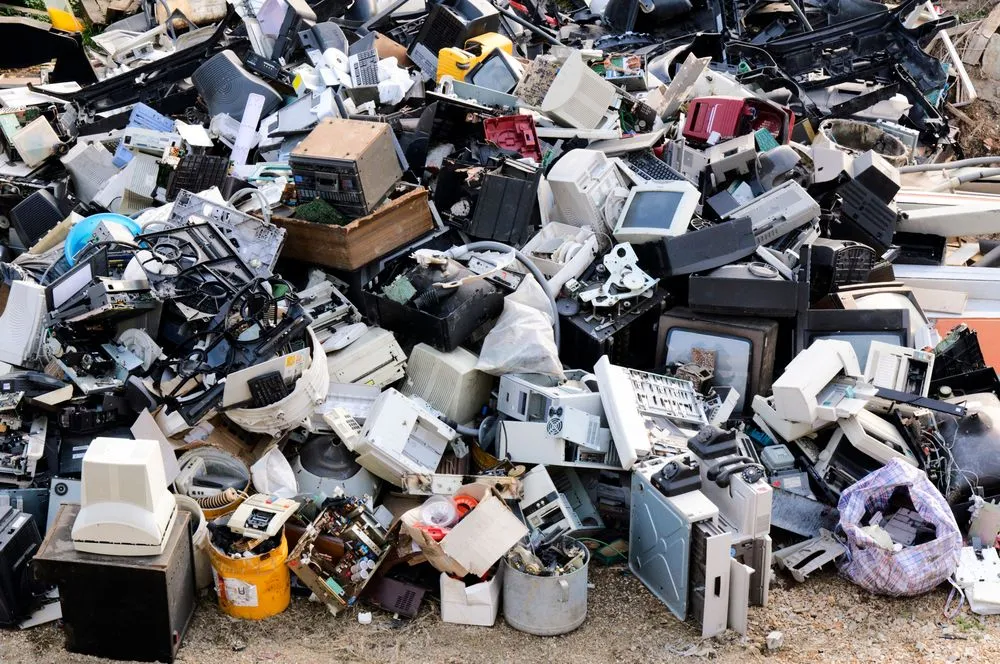
Regulations are finally starting to push back. The European Union’s 2019 ecodesign “right to repair” regulations, which took effect in March 2021, require makers of washing machines, dishwashers, refrigerators, and televisions to keep spare parts available for 7 to 10 years and to design products that can be opened with common tools. The EU then adopted a broader Right to Repair Directive in 2024, which member states must transpose into national law by 2026. France went further with a publicly displayed repairability index in 2021, evolving into a durability index in 2024.
The momentum is global. By 2024, every US state had introduced some form of right-to-repair bill, and New York, California, Minnesota, Colorado and Oregon have passed electronics repair laws. More stringent rules are still needed if we want to seriously reduce e-waste and shift consumer culture away from disposability, but for the first time in a century of planned obsolescence, the legal current is finally running the other way.
References (click to expand)
- Iizuka, T. (2006). An Empirical Analysis of Planned Obsolescence. SSRN Electronic Journal. Elsevier BV.
- Krajewski, M. (2014). The Great Lightbulb Conspiracy. IEEE Spectrum.
- Directive (EU) 2024/1799 on Common Rules Promoting the Repair of Goods. European Commission.
- Grout, P. A., & Park, I.-U. (2003). Competitive Planned Obsolescence. SSRN Electronic Journal. Elsevier BV.
- French HOP Complaint May Test Whether Planned Obsolescence Is a Misdemeanour. Latham & Watkins.
- Opening of a Trial for Planned Obsolescence Against Epson: A Historic First Step. Right to Repair Europe.
- Burns, J. (2018). Italy Fines Apple, Samsung For ‘Planned Obsolescence’ In Phones. Forbes.