Table of Contents (click to expand)
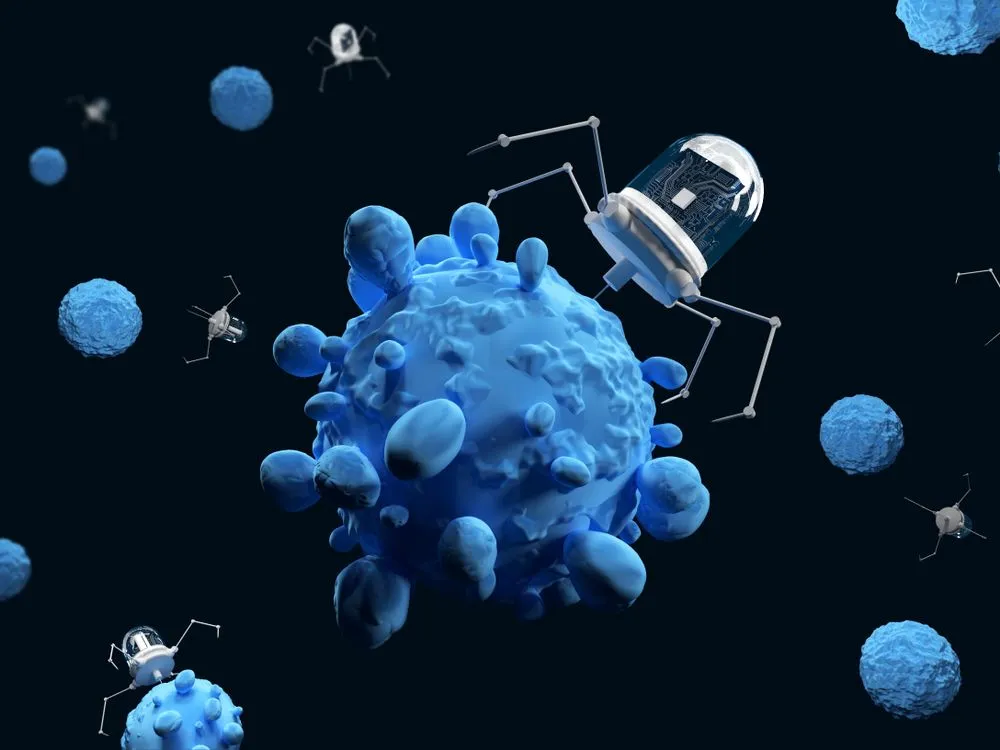
Nanotechnology is the science of building and controlling matter at the nanoscale, between roughly 1 and 100 nanometers (one nanometer is 10-9 meter, a billionth of a meter). At this scale, materials take on unusual properties, so the scope of nanotechnology now spans medicine, electronics, energy and advanced materials, from mRNA vaccine delivery to faster computer chips.
Our perception of the world is readily changing for the better. With the onset of newer technologies that are not just environmentally friendly and economically efficient, but also provide far more insight into the molecular nature of things, we are on a path to design ground-breaking systems that operate with incredible speed and will open unseen gateways to mankind’s progress.
Nano technology, or simply ‘nanotech’, falls directly in this exciting category.
With unending potential applications in nearly all spheres of life, it is the technology of today and tomorrow!
What Is Nano Technology Fabrication?
In the simplest of terms, nanotechnology refers to the science of building and controlling objects whose size range is measured in nanometers. The nanoscale is usually defined as roughly 1 to 100 nanometers in at least one dimension, although fabricated structures can run up to several hundred nanometers. One nanometer is 10-9 meter, which is one billionth of a meter, so a single sheet of paper is about 100,000 nanometers thick. Nanostructures are extremely complex and find great usage in various fields.
The idea goes back to physicist Richard Feynman, who first sketched out the field in his 1959 lecture “There’s Plenty of Room at the Bottom.” The word “nanotechnology” itself was coined in 1974 by Japanese engineer Norio Taniguchi, and later popularized by K. Eric Drexler in his 1986 book Engines of Creation. The real turning point, though, was the invention of the scanning tunneling microscope by Gerd Binnig and Heinrich Rohrer at IBM in 1981 (work that won the 1986 Nobel Prize in Physics), which finally let scientists see and even nudge individual atoms, kicking off the full-blown study of structures at the nanoscale. Many otherwise puzzling phenomena make more sense once the size of the system is decreased exponentially. As they say, the macrocosm reflects the microcosm.
Therefore, nanotechnology helps erase the disparity in accuracy and precision between small and large systems. The 180-degree turn around of properties observed while scaling down the size of the system opens new avenues for further new and as-yet unknown applications.
Nano Technology Techniques

The primary and most trivial distinction between different methods of nanomanufacturing is Top-down vs. Bottom-up methods. Top-down nanomanufacturing involves extracting small nanoscale materials from a larger material by taking out remnants from it until the desired size and properties are received. This category allows for the printing methods of nanotechnology fabrication.
The other method, i.e., bottom-up method is the polar opposite of top-down manufacturing. In this method, objects are built from the atomic or nuclear level and taken up the scale until an appropriate product is extracted.
Top-Down Methods
- Conventional Lithography – This method consists of three steps: coating, exposing and developing. Coating involves a substance called the substrate, along with a polymer layer, which is called resist. Exposing involves exposing the resist to electron beams. Developing involves extracting a positive or negative image from the resist with the help of a chemical substance.
- Photolithography – As is clear from the name, photolithography uses UV rays or X-rays to expose a radiation polymer through a mask. The image shown on the mask is replicated by placing the mask with the resist.
- Scanning Lithography – This method makes use of high-speed electrons and ions to produce the desired patterns on the resist via the mask. The resolution achieved here is greater than photolithography.
- Soft Lithography – This technique uses a mold made of the desired liquid polymer precursor. This method primarily aids in the establishment of large equipment from nanostructures. The biggest advantage of this method is that the mold is usually made of non-toxic substances and can therefore be used from biological nanomaterials.
Nano Top-Down Methods
- Nano-Imprint Lithography – Nano-Imprint Lithography makes the reverse 3D structure of a pre-existing nanomaterial. The object taken is called the master and the process is carried out under very high pressure for the replication process to be precise. This method can be thought of as nanoscale embossing and therefore requires very complex equipment.
- Nano-Sphere Lithography – In Nano-Sphere Lithography, multiple nanospheres are placed together, which ultimately make the ordered pattern on the mask. The mask is placed in a colloid, which is different for each material of the surface object. The empty space among the lined-up nanospheres creates an opportunity to make relatively flat patterns on the mask surface. The holes left on the mask after the process can be used to produce extremely intricate 3D nanostructures and designs.
- Colloidal Lithography – In Colloidal Lithography, electrostatic forces are deployed on the mask in order to produce very complex nanostructures and designs in the form of short hand arrays. This is the only difference between colloidal and nanosphere lithography. Different types of nanostructures can be formed with the help of this method, such as holes, cones and even sandwiches.
- Scanning Probe Lithography – The smallest imaginable tip-like structures on the atomic scale are used to produce images. This method is optimum for the production of high-resolution nanostructures with very complex geometric patterns.
Bottom-Up Methods
- Plasma Arcing – A calculated potential is applied to the electrodes in which a plasma is taken. The gas ionizes and vapors are produced at the two electrodes. This method is primarily used to collect layers on surfaces.
- Chemical Vapor Deposition – The substance that you want to deposit is taken to its gaseous form and then allowed to deposit as a solid on the surface of another object. A flat surface is usually preferred for this process.
- Sol-Gel Synthesis – This process is carried out in the liquid phase. The liquid is then allowed to sit on top of the surface and ultimately becomes more of a gel-like substance.
Significance Of Nano Technology
For a long time this was a list of promises, but a lot of it has now arrived. Nanotechnology is already woven into everyday products and medicine, and its scope keeps widening across health, electronics, energy and materials. Here are some of the places it shows up today.
Medical And Everyday Uses
- used for bacteria-free, stainless and wrinkle-free personal body armor
- used for making water and residue-free thin films for computers, laptops, eyeglasses and cameras
- used in the manufacture of smart fabrics
- can aid in the process of ‘light weighting’ the automobile industry
- has a great role to play in Nano Bioengineering for the conversion of substances into their complex counterparts
- can aid in making powerful batteries and engines for the automobile industry, which also have temperature control
- nanoparticles are used to create special catalysts to boost the speed and productivity of chemical reactions
- nanoparticle-based cancer drugs are already approved and in use (for example, liposomal doxorubicin and albumin-bound paclitaxel), and nanoparticles are also used to improve tumor detection
- cleaner water can be made easily available with almost no added costs, owing to the high impurity detection property of nanoparticles
- lipid nanoparticles carry the fragile mRNA in the COVID-19 vaccines safely into your cells, which is the single most widely used piece of nanotechnology in medicine today
Technological Uses
- MRAM computers can be made to boot almost instantly
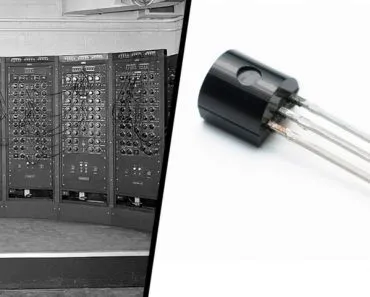
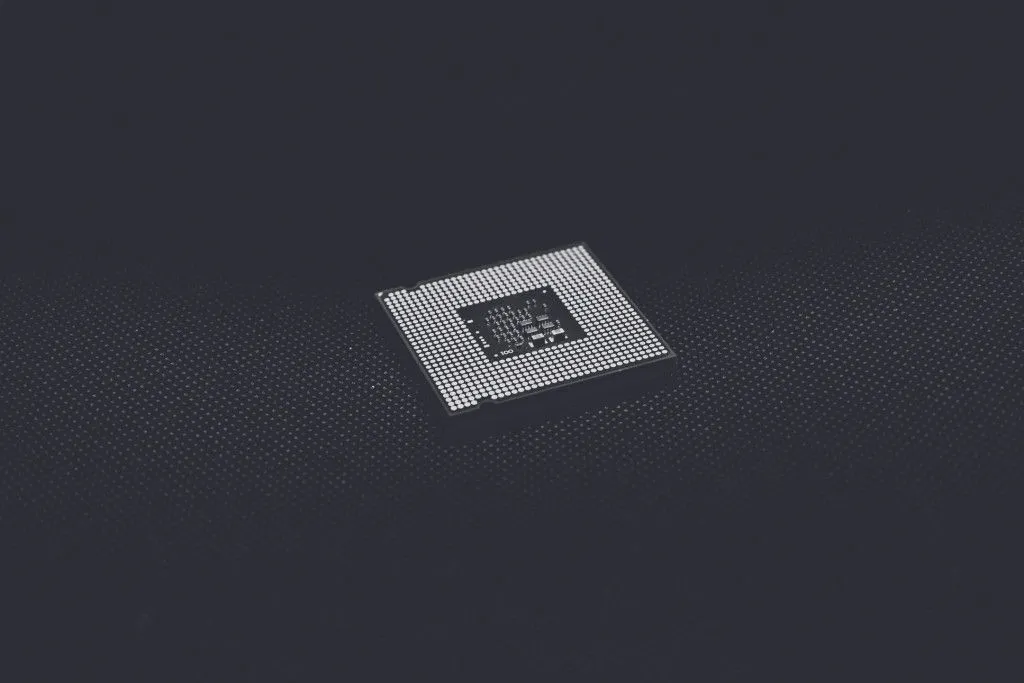
- High-speed and compact transistors can be made with the help of nanotechnology
- Very high-definition TVs and computers can be manufactured
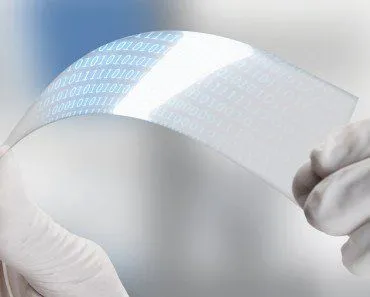
- Ultra-flexible and foldable screens, once described as the future, now ship in everyday foldable phones
- Improved diagnostic care is available
- Helps in the creation of cheaper and more effective molecular novel gene sequencing techniques
- Nanomaterials such as graphene and carbon nanotubes are being built into batteries and supercapacitors to store more energy and charge faster
- Nanostructured and perovskite solar cells are pushing solar panels toward higher efficiency at lower cost
Nanotechnology may still feel like science fiction, but it has quietly become part of modern life, and its scope is enormous. The vast spectrum of products that can be made or even bettered with the help of this technology is mind-boggling. We can easily mold the properties and underlying characteristics of any given substance to our need. Things can be made for a lower cost, but also at a more advanced level, all at the same time!
References (click to expand)
- Nanotechnology Fabrication Methods..
- Benefits and Applications - National Nanotechnology Initiative.
- 1. What is nanotechnology? - European Commission.
- What is Nanotechnology? - National Nanotechnology Initiative.
- The History of Nanoscience and Nanotechnology. PMC, NCBI.
- The Nobel Prize in Physics 1986 (scanning tunneling microscope). NobelPrize.org.