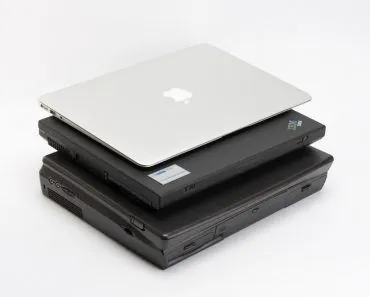
Over the decades, computers have reduced exponentially in both size and cost, such that now they are even affordable for personal computing. This is largely due to the miniaturization in transistor technology, super-efficient silicon-integrated circuits, and the effect of Moore’s Law.
Computers hold a vital place in modern society and have played a pivotal role in humanity’s development in recent decades. This tribe of hunter-gatherers has reached the moon and could become a multi-planetary species in the near future thanks to, in no small part, our ability to mechanize repetitive procedures while storing and processing data based on given instructions.
Take a glance around and you will find them everywhere. They power the smartphones in your pocket, the watch on your wrist, the pacemakers that run people’s faulty hearts, the engines of your cars, the elevators of your building, the traffic sign at the 4-way crossing, your grandma’s cochlear implants and even specialty toilet seats… clearly, computers have become ubiquitous.

However, this wasn’t always the case. Early computers were huge, often the size of an entire room! However, these massive machines could barely reach the processing power of the device that now handily fits your pockets; it would take hours to produce the results that your smartphone produces in mere seconds. Considering that this amount of progress took only a handful of decades to achieve, it’s quite a feat indeed. Peeling back the curtains on this technological advancement will help us better understand the leap in computing that has come to define this century, and humanity as a whole.
Why Were Early Computers So Big?
At the most fundamental level, the purpose of a computer is to take the external input (provided by humans and in current cases, external environments and other programs) and process it to produce a meaningful output.
Computers have existed in rudimentary forms before electricity. These were one-to-one correspondence devices that used fingers to do arithmetic and simple calculations (e.g., the abacus). These devices were further iterated to do faster and more complex calculations.

Invention Of Punch Cards
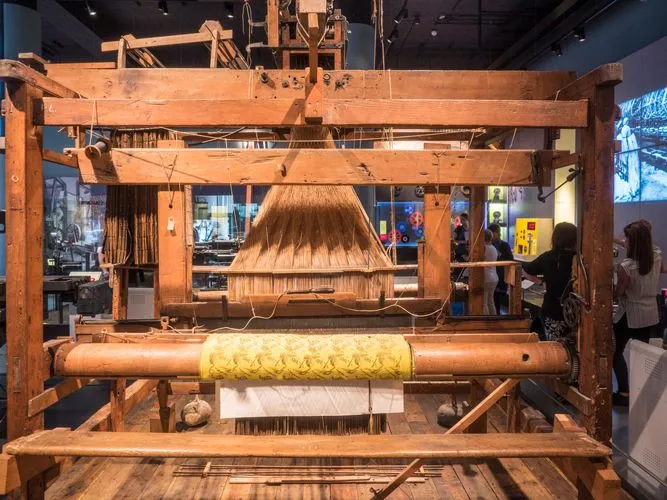
A major leap was made by Joseph-Marie Jacquard in 1804 when he developed a system where punch cards were used as the input for looms. These punching cards could be replaced to feed in a new input, while allowing the main machine to remain as is. In 1837, Charles Babbage (often called “the father of the computer”) proposed the design of the Analytical Engine, the first concept for a general-purpose, programmable computer. It used punch cards as input and a printer as output, but Babbage never fully built it; the first working general-purpose computer, Konrad Zuse's Z3, did not appear until 1941.
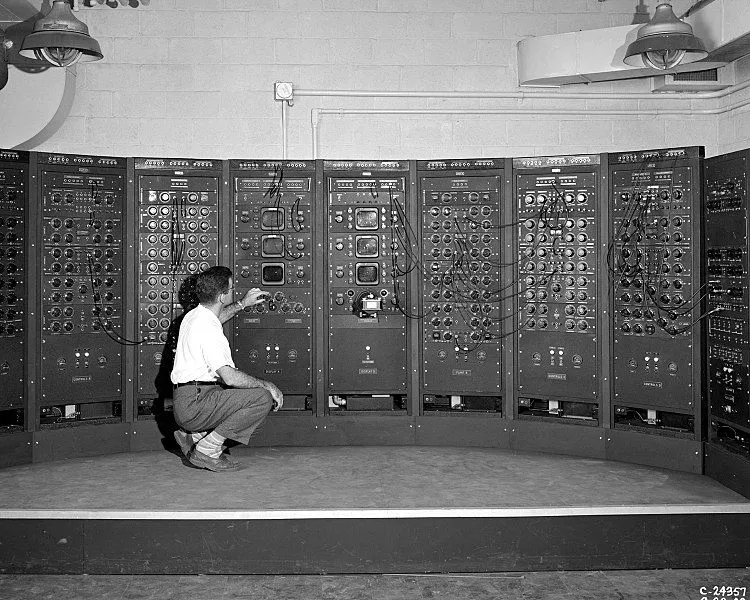
After the widespread distribution of electricity, electromechanical relays were used as switches to interact with computers. For analog computers, a continuously changeable physical quantity was vital. For this purpose, the physical phenomena of electrical, mechanical and hydraulic quantities was used to model the problem that needed to be solved. These computers were extensively used in World War 1.
Dawn Of The Digital Computers
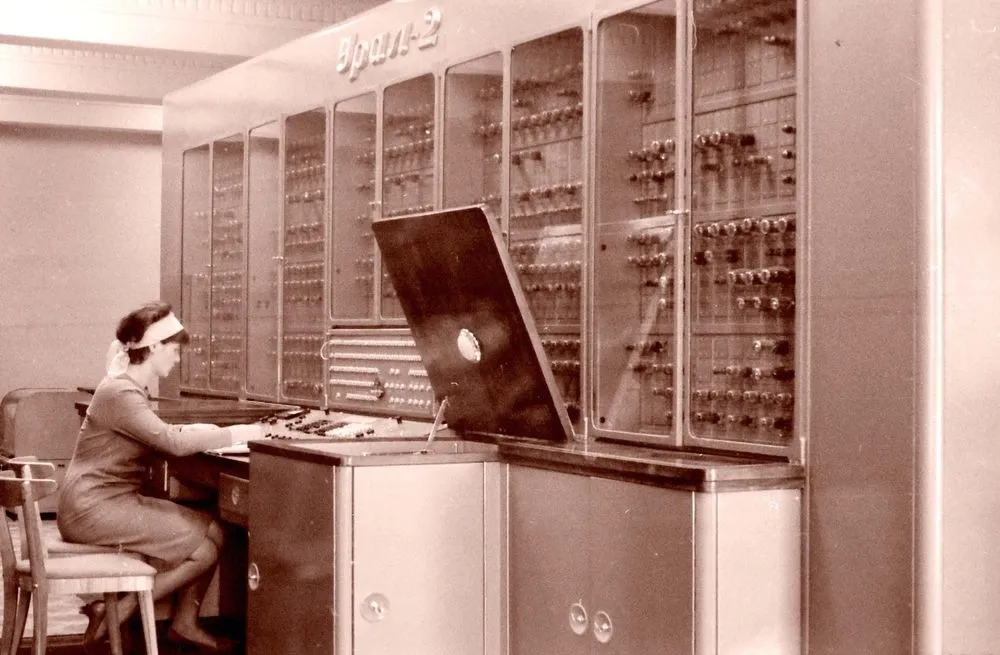
On the contrary, digital computers assigned different quantities through symbols, which was their major advantage, as the processes in digital computers could be reproduced more reliably.
Discovery Of Transistors
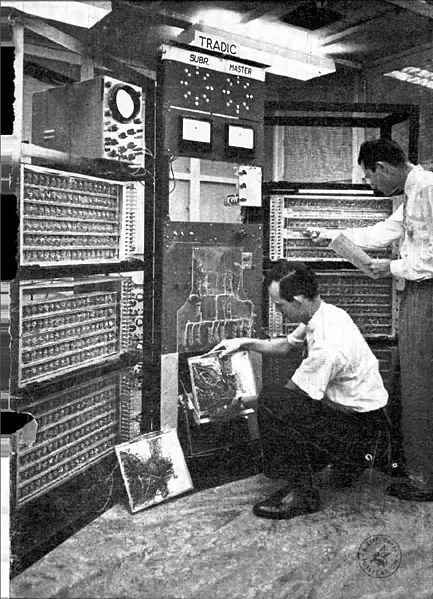
These were the first-generation computers that relied on vacuum tube logic circuitry for programming. These were placed in rooms bigger than an average house and would break down very often. These saw their heyday in the 1950s, but were replaced by transistors; this helped in gaining mainstream interest, as they were much faster, smaller and more reliable. For comparison, one bit in a vacuum tube was close to the size of a thumb, while a bit in transistors was the size of a fingernail.
Age Of Integrated Circuits
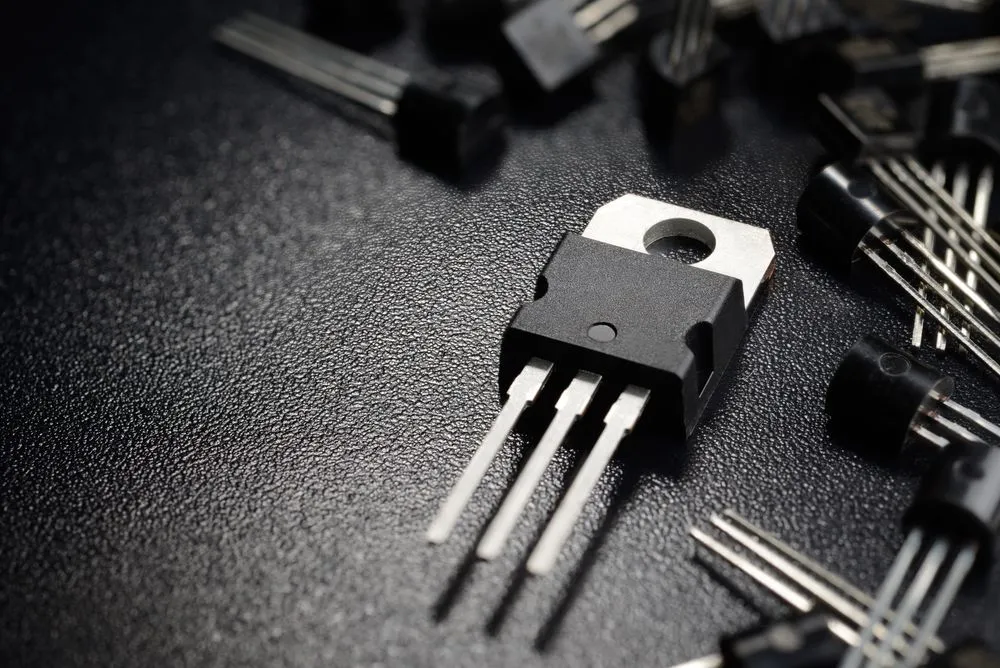
The next leap was seen when transistors were replaced by integrated circuits in the 1960s. This represents the advent of the third generation of computing and came about through the use of tiny MOS transistors (metal oxide semiconductor field-effect transistor), also called MOSFET. The large transistor size shrunk down to make electronic circuits on a flat piece of material (silicon is the most widely used material for IC). This propelled the processing power and simultaneously reduced the size of the computer. An integrated circuit could fit thousands of bits into a space the size of a hand!
This development placed the available computing power on an exponential curve, resulting in the present that we live in today.
How Big Was The First Computer?
We keep saying “the size of a room,” but it is worth pausing on just how literal that was. The machine usually credited as the first general-purpose electronic computer, ENIAC (Electronic Numerical Integrator and Computer), was unveiled at the University of Pennsylvania’s Moore School of Electrical Engineering on 14 February 1946. Designed by John Mauchly and J. Presper Eckert for the U.S. Army, it weighed roughly 27 metric tons (30 short tons) and sprawled across about 167 square meters (1,800 sq ft), close to the floor space of a small house.

Packed into that wall of metal were 17,468 vacuum tubes, around 1,500 relays, 70,000 resistors and 10,000 capacitors, stitched together by nearly five million hand-soldered joints. The tubes glowed and ran hot, and they burned out often enough that simply keeping ENIAC switched on was a full-time job.
And the reward for all that bulk? ENIAC could carry out roughly 5,000 additions per second. That felt miraculous in 1946, yet the processor inside a modern smartphone runs billions of operations in that same second while tucking into your palm. Barely eighty years separate the room-sized giant from the fingernail-sized chip, which is exactly what makes the shrink so astonishing.
Which Invention Allowed Computers To Become Smaller?
If this story has a single hero, it is the transistor. On 16 December 1947, physicists John Bardeen and Walter Brattain, working under William Shockley at Bell Labs in New Jersey, built the first working transistor, a tiny “point-contact” device made from a slab of germanium. It did the same job as a bulky, hot, failure-prone vacuum tube, switching and amplifying electrical signals, but in a sliver of the space and on a sliver of the power. The trio shared the 1956 Nobel Prize in Physics for the breakthrough.

The transistor shrank the building block; the integrated circuit then shrank the whole machine. In 1958, Jack Kilby at Texas Instruments demonstrated the first working integrated circuit, combining several components on a single piece of semiconductor. The following year, Robert Noyce at Fairchild Semiconductor devised the silicon-based planar version that became the blueprint for every chip since. Rather than soldering thousands of separate parts together, engineers could now print an entire circuit onto one sliver of silicon.
So the honest answer to “which invention made computers smaller” is really two inventions working hand in hand: the transistor replaced the vacuum tube, and the integrated circuit packed steadily more transistors into steadily less space. That second trend is the one Moore’s Law would soon turn into an exponential rule, and the same logic that slimmed mainframes into desktops keeps laptops getting lighter and slimmer today.
Moore’s Law And The Advent Of Personal Computers
The silicon computer chip became the gateway to unlocking the potential for exponential processing power. The size of transistors was becoming smaller and smaller, and with each iteration, more computing power could be packed into the same amount of space; leading-edge process nodes have shrunk to TSMC's 2 nm gate-all-around technology, which entered volume production in late 2025!
Gordon E. Moore, the co-founder of Intel, published a paper in Electronics Magazine on April 19, 1965, describing what would become known as Moore's Law. He originally observed that the number of transistors on an integrated circuit was doubling every year, and revised the figure to once every two years in 1975. The often-quoted "18 months" actually comes from a separate observation by Intel executive David House about chip performance doubling every 18 months. Either way, the cumulative effect over half a century is computers millions of times faster than those of the 1960s.
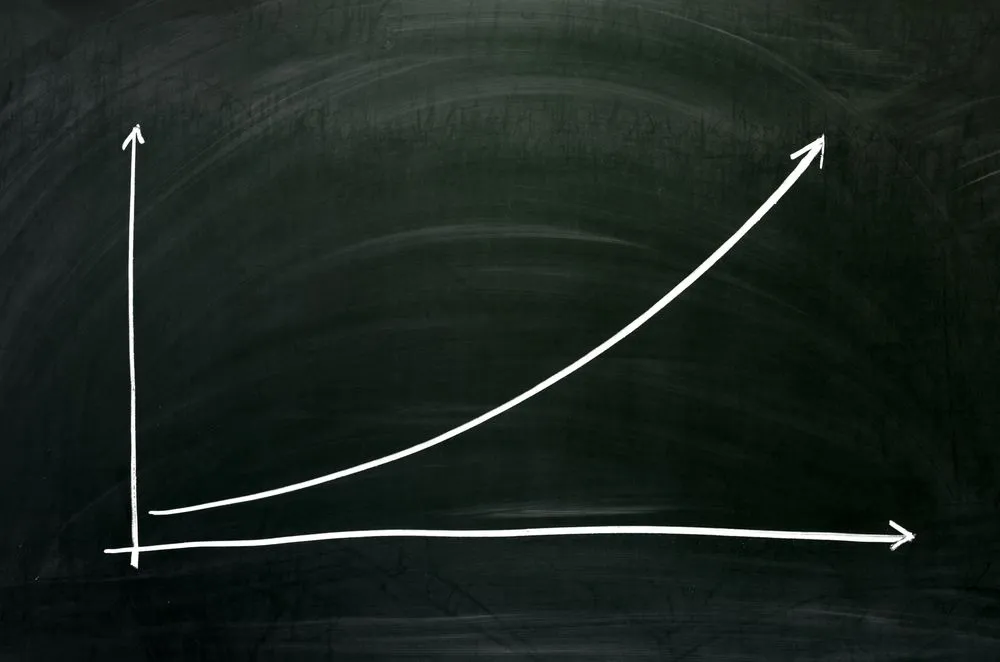
This also meant an exponential reduction of the cost of the same processing power every 18 months. Thus, a chip that would pack 2000 transistors in 1970 would cost $1000; the same would cost $500 in 1972, $250 in 1974 and about $0.97 in 1990. The cost of that chip today would be a mere $0.02, clearly showing the power of exponential growth. This is what allowed computers to become a household phenomenon, traveling from our desks to our bags to our pockets and fingertips!
Conclusion
The shrinking of the bulky vacuum tubes, followed by ever-shrinking transistors has significantly reduced the size of a computer. Combined with advancements in storage technology, a better power supply, and cooling methods, this rapid tradition of improvement has given us the powerful personal computers that we see today.
Moore’s Law has been surprisingly accurate in terms of predicting the size and computing power of modern computers in the last half-century, but it is approaching a physical limit, as transistors can no longer be made significantly smaller without quantum effects taking over. That being said, the advancement could come from other ingenious ways of using better materials than silicon, or making 3d circuits. A major leap of computing could unlock unprecedented power once we crack the quantum computing puzzle. In any case, it will be exciting to see how future advancements in computer hardware further change the way we live and communicate with each other. Indeed, it’s a good time to be alive!
References (click to expand)
- History of Computers. The University of Rhode Island
- Moore's Law - www.umsl.edu
- W Hsu. Defining the Dimensions of the “Space” of Computing. jods.mitpress.mit.edu
- The world's first general-purpose computer turns 75. Penn Today, University of Pennsylvania.
- 1947: Invention of the Point-Contact Transistor. The Silicon Engine, Computer History Museum.
- July 1958: Kilby Conceives the Integrated Circuit. IEEE Spectrum.
- Computer Basics. sites.highlands.edu