Table of Contents (click to expand)
- What Are Noise-canceling Headphones?
- How Do Noise-canceling Headphones Work?
- Why Are Noise-canceling Headphones Less Effective At Blocking High-frequency Noise?
- What Frequency Does Noise-canceling Actually Work At?
- How Do You Actually Block High-pitched Sound, Then?
- Why Do My Headphones Make A High-pitched Sound Of Their Own?
Noise-canceling headphones are less effective at blocking high-pitched sounds because they are more difficult to cancel out. High-frequency sounds are less predictable and not as continuous, so the time delay in noise-canceling headphones makes it difficult to cancel out these noises.
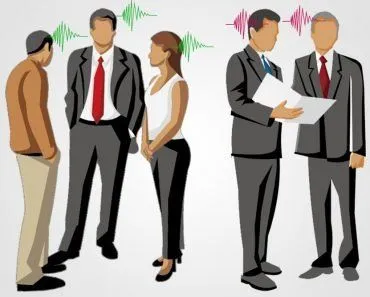
If you’ve ever used noise-canceling headphones, you may have noticed that while they’re pretty good at blocking low-frequency noise, they’re not as effective when it comes to canceling high-pitched noises (like someone talking, or a sudden, sharp noise).
What’s the reason behind this anomaly?
What Are Noise-canceling Headphones?
To be honest, their name is quite self-explanatory. Still, for the uninitiated, noise-canceling headphones are a special type of headphones that minimize unwanted ambient sound from entering your ear through active noise control. Their obvious advantage lies in their ability to reduce undesirable, ‘external’ noise and enhance the overall listening experience.
These headphones are not solely used by music composers, singers and enthusiasts, but also by aircraft crew to listen to vital announcements and other pieces of information with much more clarity within the noisy surroundings of an aircraft. That’s why some of the most advanced military forces in the world already use noise-canceling headphones for all their operational requirements.
How Do Noise-canceling Headphones Work?
‘Active’ noise-canceling headphones use a very clever method to block ambient/external sounds. Firstly, they have some noise-absorbing materials packed inside them. This extra layer of materials acts as the first line of defense against ambient noise.
However, in addition to that, active noise-canceling headphones also create their own sound waves! Yes, you heard that right. The moment an ambient sound wave (noise from the surroundings) hits them, they produce their own sound wave that is 180 degrees out of phase from the original sound wave (noise).
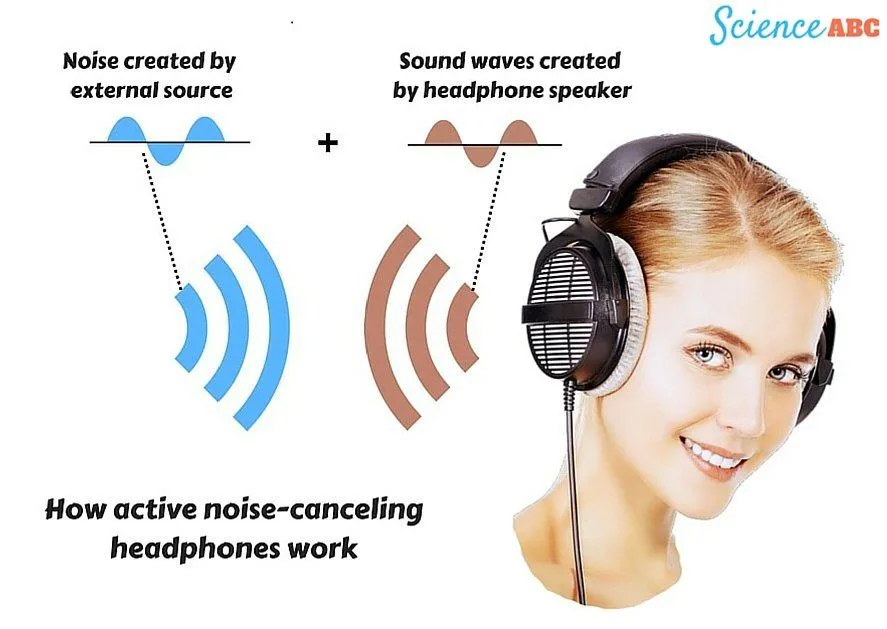
You can read more about how noise cancelling headphones work in this article.
Why Are Noise-canceling Headphones Less Effective At Blocking High-frequency Noise?
Noise-canceling headphones are found to be very effective against low-frequency (ambient) sounds, but when it comes to high-frequency sounds, it’s usually observed that these headphones prove to be less effective.
Why is that?
One might think that the headphones in question aren’t good enough, which is why they don’t block high-pitched noise as nicely. However, let me assure you that more often than not, it’s usually not a problem with the headphones. This anomaly is caused by the inherent ‘nature’ of high- and low-frequency sounds.
You see, noise-canceling headphones can only pick up noise when it passes through them. There is a time delay before these headphones can actually produce their own sound (whose phase is shifted by 180 degrees). What this means is that the headphones have to ‘guess’ how the noise sound will play out in the future. In other words, they have to estimate the audio profile of the noise and produce their phase-shifted response sound accordingly.
Low-frequency sounds have a longer wavelength and usually tend to be more repetitive.
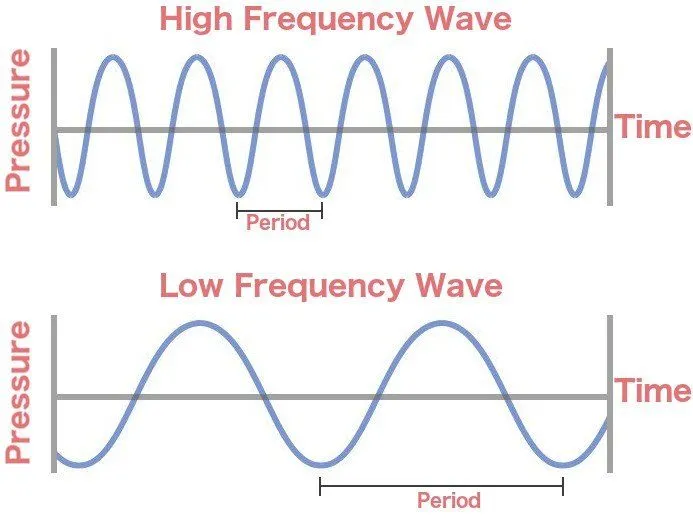
In contrast, high-frequency sound waves embed more information, shift more often and are therefore far less predictable.
This is why low-frequency sounds are so easily canceled by these headphones, as those sounds don’t fluctuate as much and remain quite constant (think of the low-pitched, constant humming onboard an airplane).
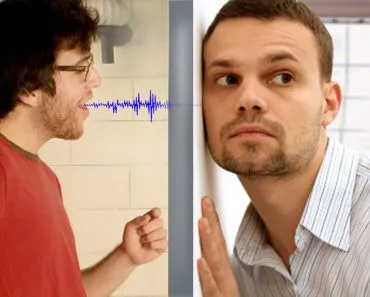
High-frequency sounds (e.g, babies crying, people talking etc.) are much less predictable and not as continuous. This is why the time delay in noise-canceling headphones makes it difficult to cancel out these noises, as they are just short bursts, as opposed to being more continuous and consistent.
What Frequency Does Noise-canceling Actually Work At?
So far we’ve been throwing around ‘low’ and ‘high’ frequency, but where exactly does the magic happen? It turns out active noise control has a fairly hard ceiling. According to acoustic engineers, cancellation is easiest when the sound pressure oscillates slowly, which is another way of saying its frequency is low, generally no higher than a few hundred hertz, and at most around 1,000 Hz (1 kHz) in the specific case of noise-canceling headphones.
That’s why the steady drone of a jet engine, a train rumble or an air conditioner (mostly below a few hundred hertz) gets flattened so beautifully, while a voice or a clattering keyboard (which carry plenty of energy well above 1 kHz) sail right through. The culprit, again, is wavelength. A 1,000 Hz tone has a wavelength of only about 0.34 meters (roughly 13 inches), and it keeps shrinking as the pitch climbs. For the headphone to cancel a wave, its tiny error microphone and speaker need to sit comfortably inside that wavelength. Once the wavelength becomes that short, a quiet spot at the microphone can easily be a loud spot a centimeter away at your eardrum, so the anti-noise can actually make things worse rather than better. The electronics simply can’t react and place the inverted wave precisely enough at those speeds.
How Do You Actually Block High-pitched Sound, Then?
Here’s the reassuring twist: the frequencies that defeat active cancellation are exactly the ones that ordinary, low-tech sound isolation handles best. To stop higher-frequency noise from reaching your ear, most noise-canceling headphones don’t even try to cancel it. They simply block it the old-fashioned way, with sound isolation and soundproofing built into the ear cups.

This is called passive isolation, and it’s the mirror image of active cancellation. A dense, well-sealed barrier (foam-lined ear cups, snug ear cushions, or a pair of squishy foam earplugs) is great at stopping short-wavelength, high-pitched sound but fairly poor at the long, lazy waves of low bass. Measurements back this up: when researchers tested foam earplugs on a dummy head, the amount of noise they blocked actually increased with frequency, climbing all the way up to about 2 kHz before leveling off. Properly inserted foam plugs can knock down high-frequency sound by tens of decibels.
So if a screeching saw, a crying baby or office chatter is bothering you, the fix isn’t a fancier cancellation chip. It’s a better physical seal. That’s precisely why over-ear designs, snug-fitting tips and dedicated hearing protectors such as earplugs and earmuffs (the same gear recommended for noisy workplaces) are the real heroes against high-pitched noise, with active cancellation quietly mopping up the low rumble underneath.
Why Do My Headphones Make A High-pitched Sound Of Their Own?
There’s a second, sneakier version of this question. Some people flip on noise cancellation in a quiet room and hear a faint high-pitched hiss or whine that wasn’t there before. In that case the headphones aren’t failing to block a sound, they’re adding one.

This is a known trade-off of the technology. The noise-canceling circuitry can slightly reduce audio quality and introduce a small amount of high-frequency hiss, a low-level ‘noise floor’ produced by the microphones and amplifiers that constantly listen to your surroundings. In a loud cabin you’d never notice it, but in a silent room with no music playing, that tiny electronic hiss becomes audible. It’s usually most obvious the instant you switch cancellation on with nothing playing.
One more honest caveat: not every faint ringing you hear is coming from the headphones. A very quiet, sealed environment is also when your own ears get a chance to be heard, and many people perceive a soft internal ringing in true silence. So if the sound persists with the headphones off, the electronics are off the hook. Either way, a little background music almost always masks the hiss completely.
References (click to expand)
- Digital Active Noise Cancelling Headphones - ese.wustl.edu
- Engineering Silence: Active Noise Cancellation - www4.ncsu.edu:80
- Analog Active Noise Canceling Headset - people.ece.cornell.edu
- Threshold Noise-Cancelling Headphones. The University of Illinois Urbana-Champaign
- N.Narahari - Noise Cancellation In Headphones - CiteSeerX
- Active Noise Control to the Rescue? - Acentech
- Noise-cancelling headphones - Wikipedia
- Noise attenuation characteristics of a foam type earplug measured using a dummy head - J UOEH (PubMed)
- Provide Hearing Protection - NIOSH, CDC