Table of Contents (click to expand)
The ISS solar panels aren’t actually made of gold. Their gold or orange tint comes from the amber Kapton (polyimide) film that backs the arrays and reflects sunlight. The solar cells themselves are silicon, the same material as the blue and black panels on Earth. The Sun-facing cell side is dark and nearly black, while the bright gold we usually see is the reflective rear of the array.
If you’ve ever seen a solar panel, then you have probably noticed that they are typically blue or black in color. However, these aren’t the real “gold standard” of solar panels (pun intended). The panels attached to the International Space Station are gold in color, but what’s the reason for this difference in color, and does it lead to any performance differences in the harnessing of solar energy? Before we dive into the differences between these two kinds of panels, let’s first review the basic function of a solar panel.
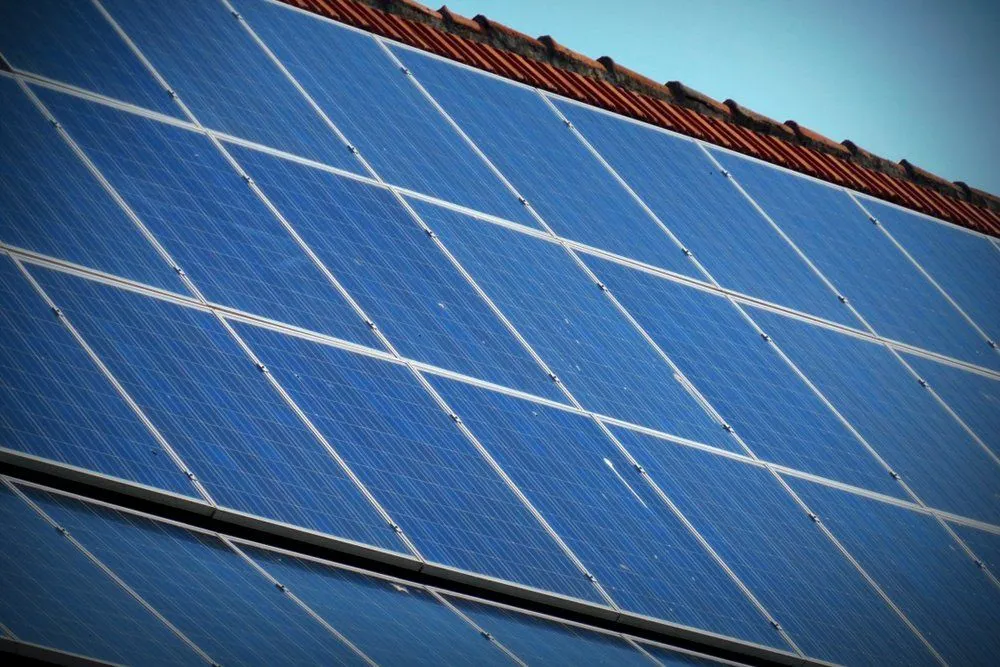
Working Of A Solar Panel
A solar panel works by harnessing light energy that is emitted by the Sun. To be more precise, a solar panel harnesses the photons emitted from our nearest star. Our Sun is an incredibly good fusion nuclear reactor and starts by fusing Hydrogen into Helium. This process of fusion releases extreme amounts of energy in the form of heat and light. The light that the sun emits consists of tiny packets of energy known as photons. It takes about 8 minutes and 20 seconds for these photons to travel from the Sun to the Earth, a distance of approximately 149.6 million kilometers (93 million miles).
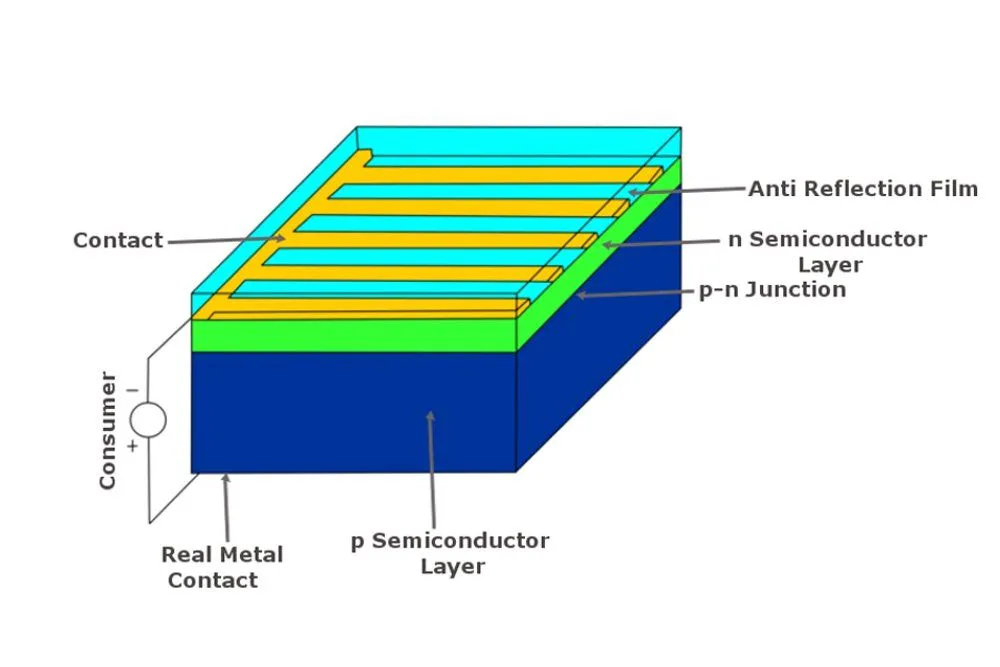
The flood of photons striking Earth is converted into electricity within a solar panel due to the Photovoltaic Effect (PV). The photovoltaic effect was first discovered in 1839 by Alexandre-Edmond Becquerel. At age 19, when experimenting with silver chloride in an acidic solution, he placed two platinum electrodes in the solution and observed that when light struck the electrode, a voltage was produced between the electrodes. The photovoltaic and photoelectric effects are similar in their basic concept: when exposed to light, a certain amount of voltage and current are present. The primary difference occurs in the use of terminology. The term “photoelectric effect” is usually applied where electrons need to be ejected, whereas the term “photovoltaic” is used to describe the excited charge within a given material.
Blue And Black Panels
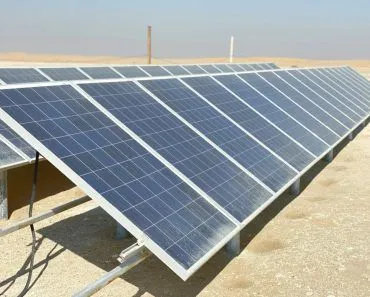
Solar panels are blue because they’re made of silicon or polycrystalline, which is used to make the main photoelectric film of the solar panel. However, the predominant shade of blue is made even more prominent due to the anti-reflective coating on the panel. This anti-reflective coating helps to improve the efficiency and absorbing capacity of the panel. Black solar panels (also known as monocrystalline panels) are more efficient, as black is a good absorber.
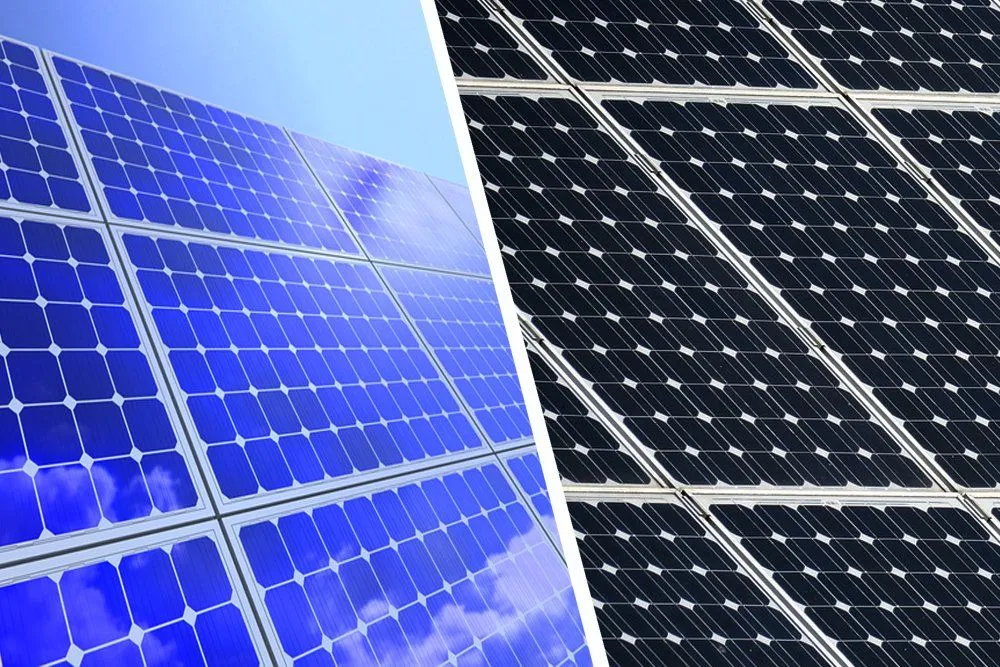
The silicon used in polycrystalline panels is made from raw silicon that has been melted and poured into molds, which gives them a square shape. This process doesn’t align the silicon perfectly, which results in the formation of many individual silicon crystals within the mold. The nature of the individual silicon crystals also produces the speckled, glimmering appearance and blue color of polycrystalline panels. The polycrystalline cell manufacturing process leads to less waste and energy use than what is needed to produce monocrystalline cells, so for years polycrystalline panels were cheaper and dominated the market, which is why so many of the panels you have seen have a blue hue to them. That picture has flipped in recent years. As monocrystalline manufacturing has become cheaper and more efficient, the higher-performing black monocrystalline panels have taken over the majority of the market (roughly 60% of global installations as of 2024), so newer rooftop panels are increasingly black rather than blue. The silicon used to make the black panels has very high purity, and the crystals are grown as a single, perfectly aligned structure rather than the many small, randomly oriented crystals found in a polycrystalline cell.
Golden Panels
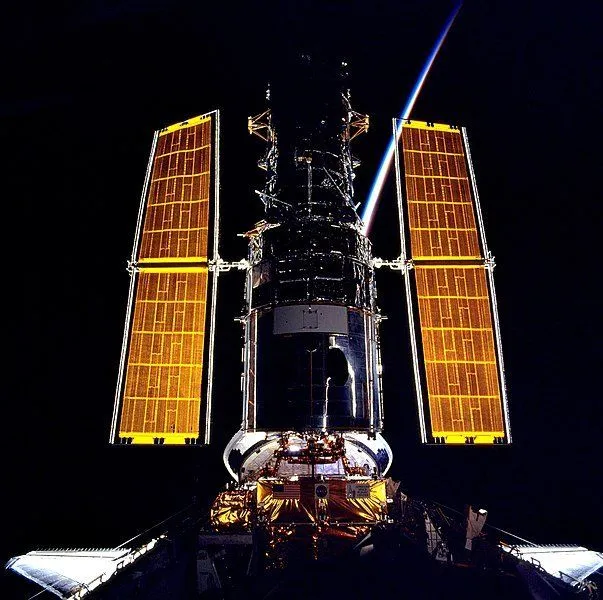
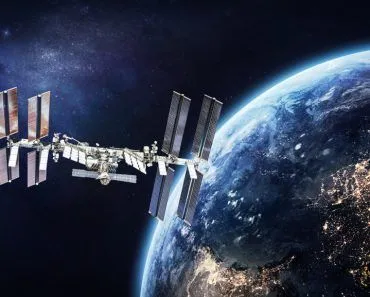
Here is where the popular myth needs clearing up: the ISS arrays are not actually golden because they are coated in gold, and gold is not a magical, more-efficient material for catching sunlight. In fact, the cells that do the real work are silicon, the very same semiconductor used in the blue and black panels back on Earth. So why do they look gold? The color comes from the backing the cells are mounted on. NASA and its partners built the arrays as flexible blankets, and the cells sit on a thin sheet of Kapton, a polyimide film with a natural amber tint that is often aluminized to reflect heat. When sunlight glints off that reflective rear surface, the whole array takes on its famous gold or orange glow. The Sun-facing side, where the silicon cells actually sit, is dark and almost black, just like the panels on your neighbor’s roof. The solar arrays of the ISS are responsible for the life support, control systems, and all other systems on the station. The blanket design can be folded up for launch or completely unfurled in orbit. Once an array reached orbit, ground controllers sent commands to deploy the blankets to their full size, and gimbals are used to rotate the arrays so that they face the Sun and provide maximum power to the space station. When fully extended, each of the eight original solar array wings is about 35 meters (115 feet) long and 12 meters (39 feet) wide. These arrays degrade over time in the harsh space environment, so multiple crewed missions have been flown to maintain and upgrade them.
The four original sets of arrays generate 84 to 120 kilowatts of electricity, enough to easily power about 40 homes. The arrays produce more power than the station needs at any one moment, so there is always an ample supply to run the station’s systems and experiments. The extra power is used to charge the station’s batteries. There are stretches of every orbit where the arrays are partly or fully shadowed as the station passes behind the Earth. During these times the arrays collect no sunlight, which is exactly when the storage batteries become pivotal. More recently, between 2021 and 2023, astronauts installed six newer iROSA (ISS Roll-Out Solar Arrays) on top of the original wings. These lighter, fan-out arrays unroll like a tape measure instead of unfolding like an accordion, and each one adds more than 28 kilowatts. Together with the still-working portions of the legacy arrays, they have pushed the station’s total power capacity to more than 250 kilowatts. So while these solar arrays aren’t practical for the everyday rooftop solar customer, they are essential for the ISS, as they remain the main source of power for the station.