Table of Contents (click to expand)
- Why Do We Have Days And Nights?
- What Are Days And Nights Like On The ISS?
- Why Frequent Day-Night Switches Can Be A Problem
- How Does The ISS Simulate A Normal Day-Night Environment?
- A ‘Day’ In The Life Of An ISS Astronaut
- How Long Is A Day In Space?
- What Do Astronauts See On Earth’s Night Side?
- Winding Down
The astronauts on the ISS experience 16 sunrises and sunsets in the span of a single earth day. Hence, the ISS sticks to a standard time zone and controls its lighting accordingly, to simulate a normal day-night routine up there in space.
Days and nights!
When we were little kids, they were nothing but a measure of how close the next holiday was. As we grew older, it became a mundane cycle of goals and deadlines and paychecks. Some find beauty and mystery in days and nights, whereas for others, it’s just a consequence of the earth’s motion.
No matter what your notion of a day and night is, for all earthlings, it is an inevitable cycle of darkness and light that repeats every 24 hours.
However, once you leave our planet, all those pre-set definitions begin to crumble.
For instance, consider the astronauts up there on the International Space Station. Have you ever wondered what days and nights are like for them?
Let’s find out!
Why Do We Have Days And Nights?
We perceive days and nights as a consequence of Earth’s rotation.
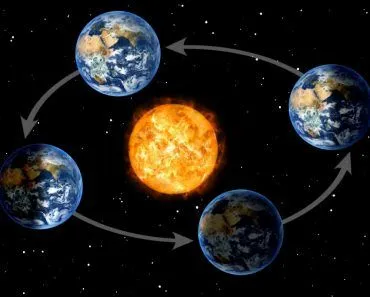
Along with revolving around the sun in an elliptical orbit, our planet also rotates about its axis. As it spins, the part of the earth that faces the sun experiences ‘daytime,’ whereas the part that’s hidden from the sunlight experiences ‘night’.
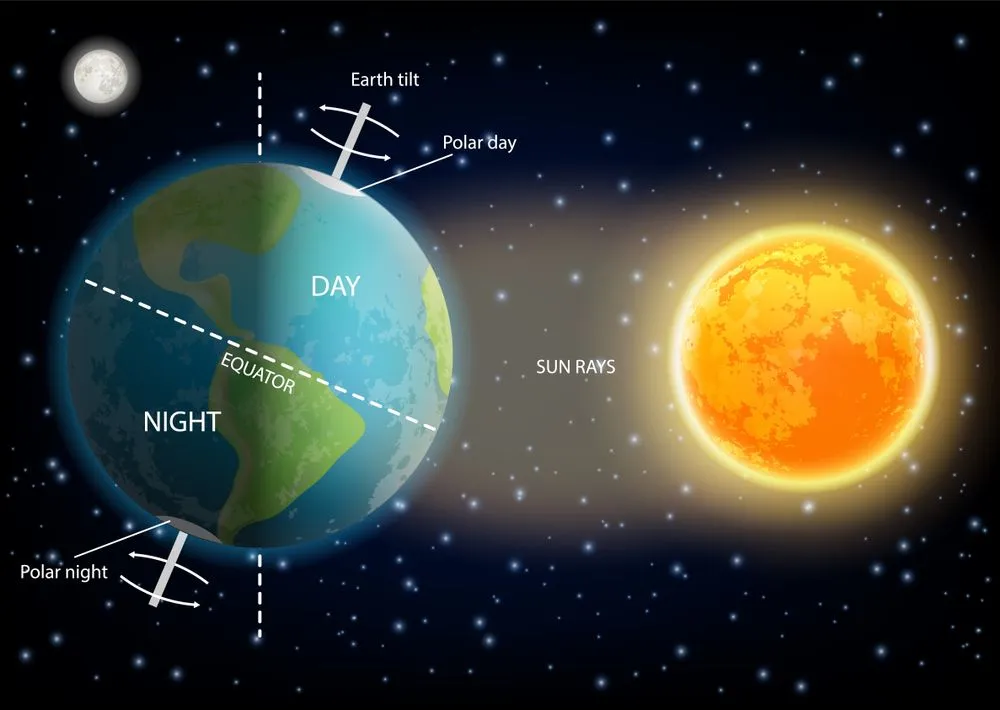
The earth spins insanely fast, at a speed of about 1670 km/h. Even at this rate, however, our planet takes almost 24 hours to complete one rotation. Thus, we have 24 hours in a day with approximately 12 hours of sunlight and 12 hours of darkness.
What Are Days And Nights Like On The ISS?
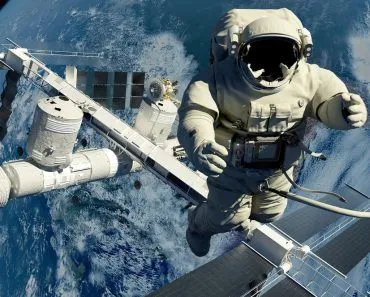
The International Space Station
The International Space Station, in simple words, is a large research facility used to conduct microgravity experiments in space. Launched in collaboration by various international space agencies—NASA (United States), Roscosmos (Russia), ESA (Europe), JAXA (Japan), and CSA (Canada)—the space station orbits the earth in an elliptical trajectory at an average height of 400 km.
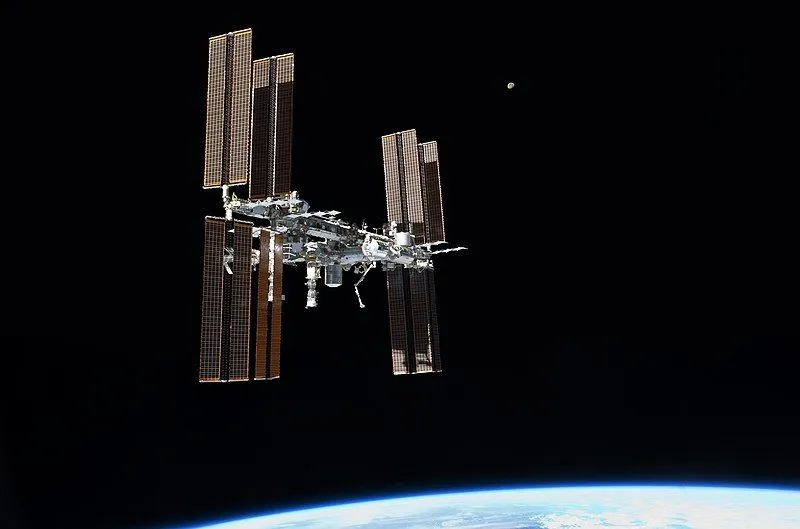
Typically, six or seven astronauts occupy the space station at any given time, with the standard crew rising to seven since the SpaceX Crew Dragon began routine flights in 2020. So, do these astronauts experience days and nights up there? If yes, are they similar to the days and nights on Earth?
Days And Nights On The ISS
The ISS orbits the earth at a whopping speed of 27,600 km/h and completes one revolution in about 90 minutes.
During its orbit, the spacecraft spends roughly half the time basking in the sunlight, and the rest behind the earth’s shadow. Thus, the space station experiences about 45 minutes of daylight and 45 minutes of darkness in each revolution.
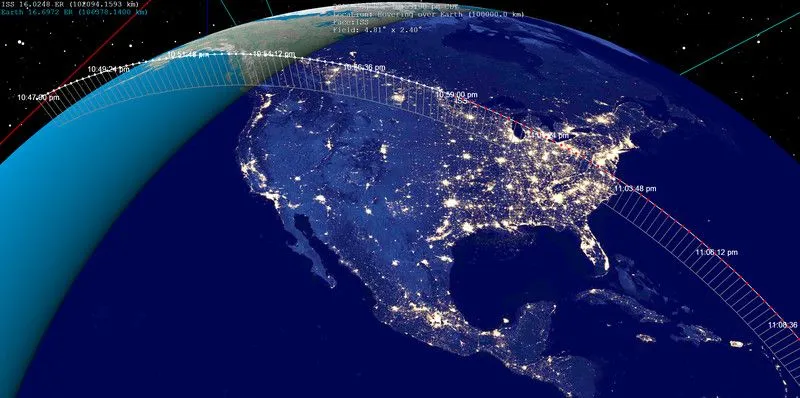
In 24 hours, the ISS orbits Earth 16 times. Thus, in the span of a single earth day, the astronauts aboard the ISS witness 16 sunrises and 16 sunsets.
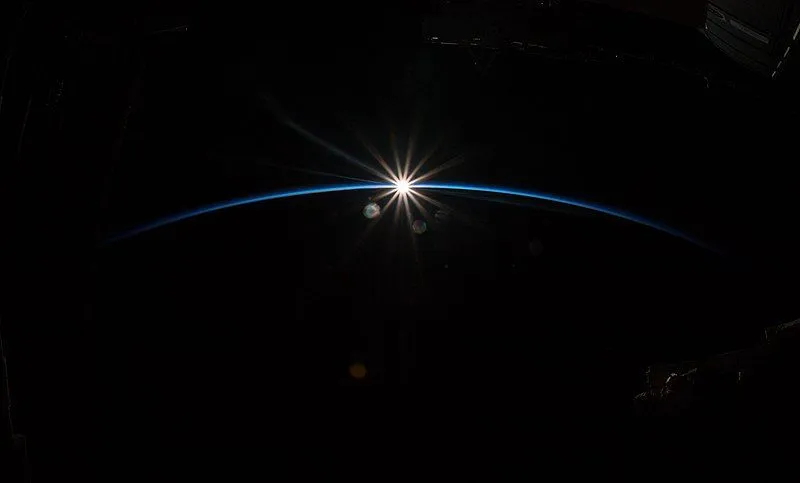
Why Frequent Day-Night Switches Can Be A Problem
Initially, being able to witness 16 sunsets in a day, from space, sounds awesome, but in the long run, it can be a serious problem.
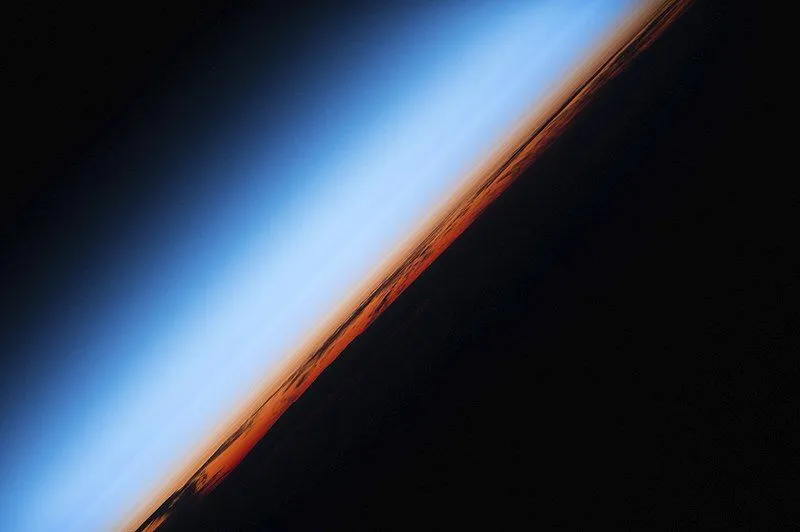
Human bodies are wired to run on 24-hour cycles, and light plays a major role in governing those cycles.
Our Circadian rhythms are accustomed to the light patterns on Earth. Sunlight triggers us to wake up, whereas darkness promotes sleep and inactivity. Hence, rapid switching between sunlight and darkness can take a toll on the biological clock of astronauts.
We can’t let the astronauts on one of the most important missions in the world feel as if they are in a perpetual state of jet lag. Hence, it is necessary to create a “normal” day-night environment onboard the ISS.
How Does The ISS Simulate A Normal Day-Night Environment?
1. Sticking To A Time Zone
The International Space Station is set to the Universal Coordinated Time (UTC). UTC is the global standard of time, which is determined using two factors:
- International Atomic Time: Calculated using highly precise atomic clocks.
- Universal Time: Calculated based on the earth’s rotation.
All the time zones in the world are synchronized based on the UTC Standard.
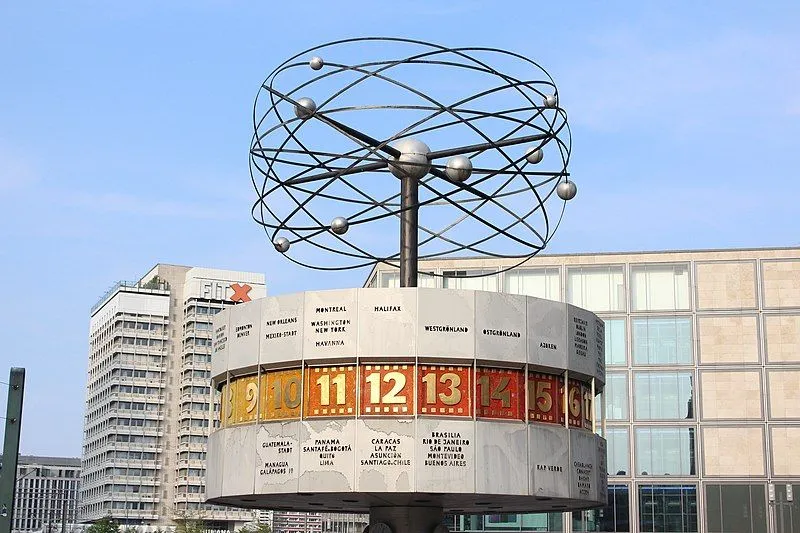
Why UTC?
As mentioned earlier, the ISS is a multinational venture involving five major space agencies located all around the world. Thus, UTC was the best choice, as it facilitates effective collaboration among all the participating agencies.
If you’re curious to know what time it is on the ISS right now, click here!
2. Controlling The Lighting On The ISS
During the early years of the mission, it was found that despite allocating 8.5 hours of time for sleep, the astronauts were unable to get healthy sleep. Hence, scientists decided to switch up the lights in the space station.
In fact, ‘The Effect of Lighting on Human Body’ was one of the experiments that NASA conducted on the ISS.
The ISS initially used ‘General Luminaire Assemblies’ with fluorescent lamps for lighting the space station.
In 2016, these modules were replaced by ‘Solid State LED Modules’ that are long-lasting, cheaper, and lighter compared to their former counterparts. The ability of these LED lights to emit different wavelengths at varying intensities made them the best alternative to simulate a day-night environment on the station.
A ‘Day’ In The Life Of An ISS Astronaut
A typical workday of an ISS astronaut starts at 6 am UTC and ends at 9.30 pm UTC.
During the initial hours, the lights are set at a high brightness to simulate daytime. When astronauts are involved in more challenging tasks, the lights emit bluer wavelengths to improve alertness.
Towards the end of the day, the lighting switches to warmer tones to promote sleep and repose.
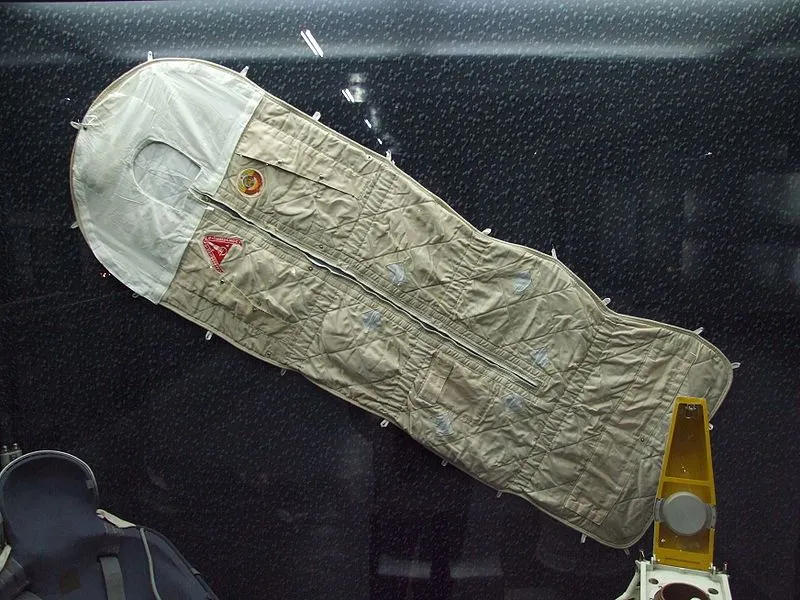
From 9.30 pm to 6 am, the lights are dimmed and set at very low brightness to replicate night. Thus, once the astronauts are done for the day, the crew members can comfortably slip into their sleeping bags to get a good night’s rest.
Studies later found that the lighting helped in improving the efficiency of astronauts, and these studies further aided the commercialization of LED products like ‘mood lights’ that are widely prevalent today.
How Long Is A Day In Space?
This question trips up a lot of people, and that is because the phrase “a day” can mean two very different things up on the ISS.
If you mean a solar day, one sunrise to the next, then a day in space lasts a mere 90 minutes. The station laps the planet roughly 16 times every 24 hours, so the crew technically races through 16 short “days,” each one about 45 minutes of light followed by 45 minutes of darkness. If, on the other hand, you mean the day the astronauts actually live by, that is an ordinary 24-hour day governed by the UTC clock we discussed earlier. Their schedules, work shifts, and sleep cycles all run on Earth time, even though the sun keeps popping up outside the window every hour and a half.
But there is a sneakier version of this question: “one day in space equals how many days on Earth?” The idea comes straight out of science fiction, where space travelers return home to find that decades have flown by. On the ISS, nothing so dramatic happens, though there is a genuine effect at work, just an astonishingly tiny one. According to Einstein’s special theory of relativity, time passes a little more slowly for a fast-moving object than for one sitting still. The ISS hurtles around Earth at about 28,000 km/h (17,500 mph), so its clocks really do tick fractionally slower than ours.

How much slower? NASA’s famous Twins Study put a number on it. Astronaut Scott Kelly spent about 340 days aboard the station while his identical twin, retired astronaut Mark Kelly, stayed on the ground as a comparison. Over that whole stretch, Scott aged only around 0.01 seconds (roughly 10 milliseconds) less than his brother. In other words, one day in orbit is shorter than a day on Earth by mere millionths of a second, not by days or years. Astronauts return home an imperceptible fraction younger than they would otherwise have been, never older.
What Do Astronauts See On Earth’s Night Side?
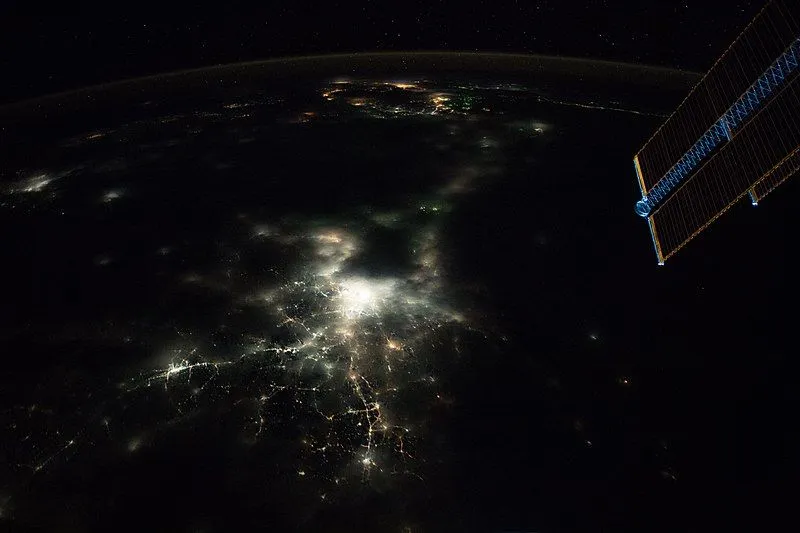
You might assume that when the ISS swings behind the planet into darkness, the crew sees nothing but a black void outside. Far from it. The night side of Earth is one of the most spectacular sights in all of human spaceflight.
For starters, the astronauts can clearly make out the glow of cities below. Large metropolitan areas appear as bright golden webs of streetlights, and photographs taken from the station routinely capture cities such as Portland, Seattle, and Vancouver shining up through the dark. So the popular quiz-style claim that you “can’t see city lights from the dark side of Earth” simply isn’t true; city lights are among the easiest things to spot.

Then there are the auroras. The shimmering green, red, and purple curtains of the northern and southern lights are produced when charged particles from the sun collide with gas molecules high in Earth’s atmosphere. From the ISS, the crew doesn’t merely look up at them the way we do from the ground; they often sail right past, and sometimes through, the upper reaches of these glowing veils. Add in lightning storms flickering inside distant thunderclouds and the faint golden arc of the atmosphere on the horizon, and the “night” outside the cupola turns out to be anything but empty.
Winding Down
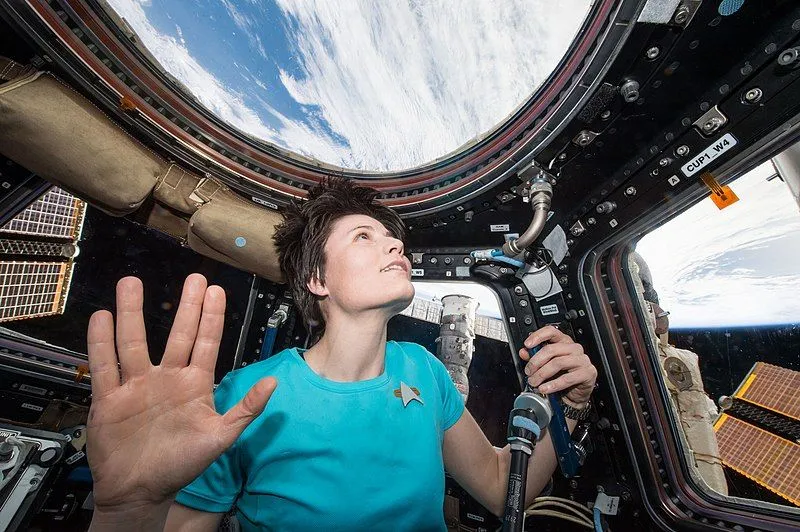
Various measures have been undertaken to ensure that the crew members of the ISS follow a normal routine. Still, if an astronaut wishes to enjoy the exotic views from space for a while, they can head over to the cupola of the ISS and treat themselves to a full “day” in just 90 minutes!
References (click to expand)
- International Space Station Facts and Figures - NASA. The National Aeronautics and Space Administration
- Station Science 101 - NASA. The National Aeronautics and Space Administration
- Experiment Details - www.nasa.gov
- Brainard, G. C., Coyle, W., Ayers, M., Kemp, J., Warfield, B., Maida, J., … Hanifin, J. P. (2013, November). Solid-state lighting for the International Space Station: Tests of visual performance and melatonin regulation. Acta Astronautica. Elsevier BV.
- Brainard, G. C., Barger, L. K., Soler, R. R., & Hanifin, J. P. (2016, November). The development of lighting countermeasures for sleep disruption and circadian misalignment during spaceflight. Current Opinion in Pulmonary Medicine. Ovid Technologies (Wolters Kluwer Health).
- Exploring the Twin Paradox: From Einstein's Theory to NASA's Twin Astronauts. PMC, National Library of Medicine.
- Twins Study - NASA. The National Aeronautics and Space Administration.
- A Northwest Night Awash in Light - NASA Earth Observatory.