Activated charcoal purifies water by adsorbing impurities onto its enormous porous surface — typically 500 to 1,500 m² per gram, with high grades reaching 2,000–3,000 m²/g. As water passes through the carbon bed, chlorine, organic chemicals (including many VOCs and pesticides), and the compounds that cause bad taste and odor stick to the pores. It does not remove dissolved minerals, salts, nitrates, most fluoride, or microorganisms, and once the pores fill up, the cartridge has to be replaced.
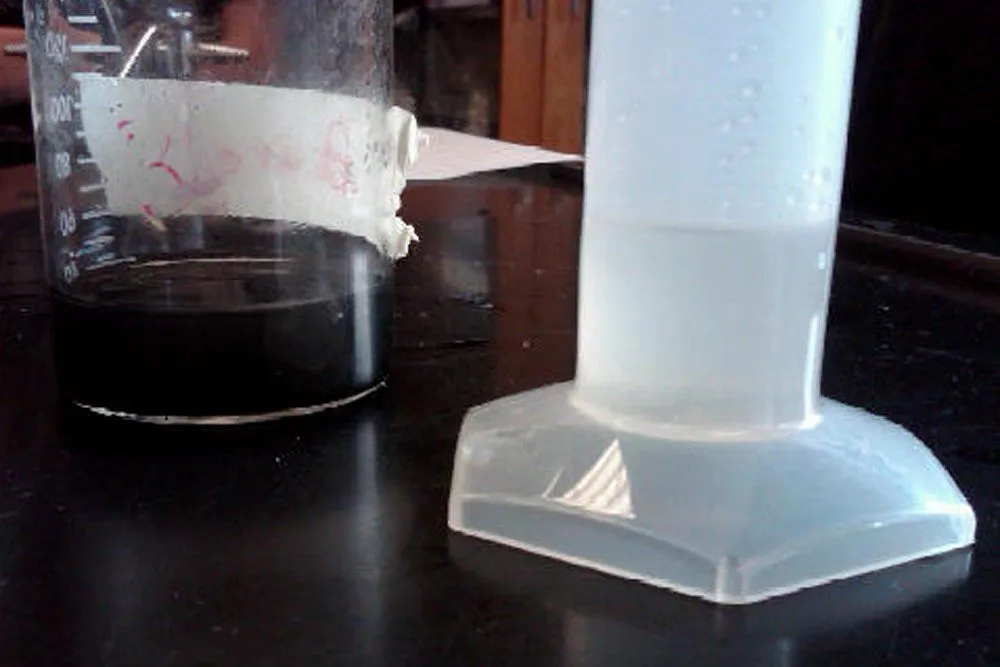
For those who haven’t witnessed charcoal work its magic, try this: First, fill two jars with water. To both jars, add food coloring and stir the mixtures thoroughly. Next, add 2-3 spoonfuls (or more depending on the size of the jar) of powdered charcoal to one jar. Let the jars sit for at least two days.
The result? After 2-3 days, you will find that the jar fed with charcoal to be nearly as transparent as it was after the first step. It would appear that the charcoal has absorbed the food coloring, thereby “purifying” the water. However, how does the charcoal achieve this?
Activated Carbon
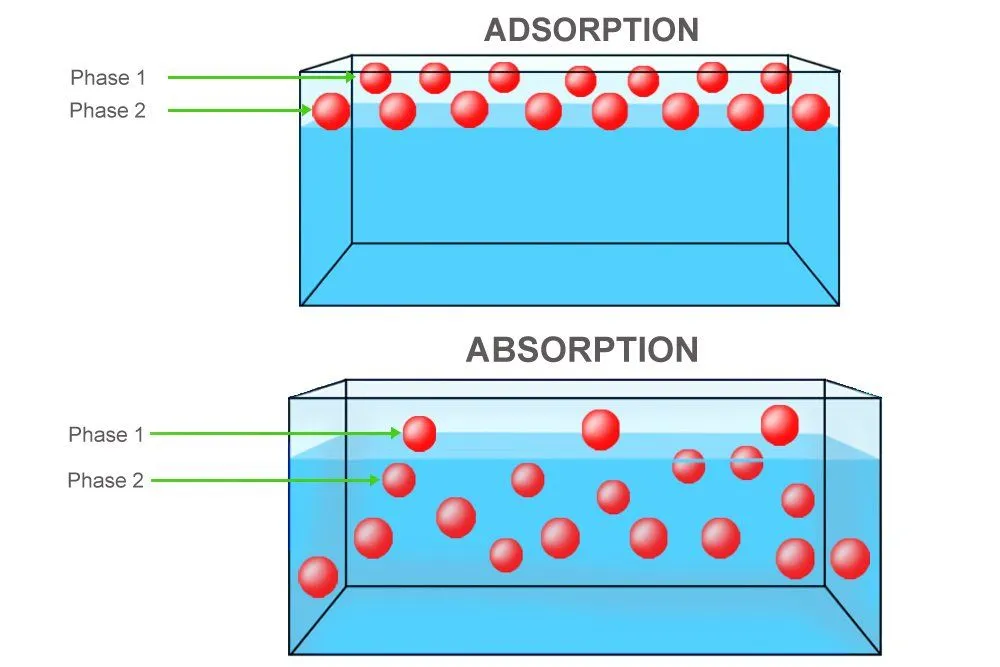
Firstly, charcoal doesn’t absorb, but adsorb impurities. There’s a crucial difference. While absorption is the process in which substances dissolve or are vacuumed in an absorbent’s volume, adsorption is the process in which substances merely adhere to an adsorbent’s surface. They don’t seep inside, but they are instead stuck and restricted to the adsorbent’s surface. Sponges absorb, charcoal and gel adsorb.
Charcoal's ability to purify and deodorize has been put to work for thousands of years. Egyptian medical papyri from around 1500 BC describe charcoal being used to adsorb odors from putrefying wounds and from the intestines, and ancient Phoenician sailors are said to have charred the inside of their wooden water barrels so the water would stay drinkable on long voyages. By around 400 BC, Hindu and other ancient texts mention charcoal-filtered water specifically.
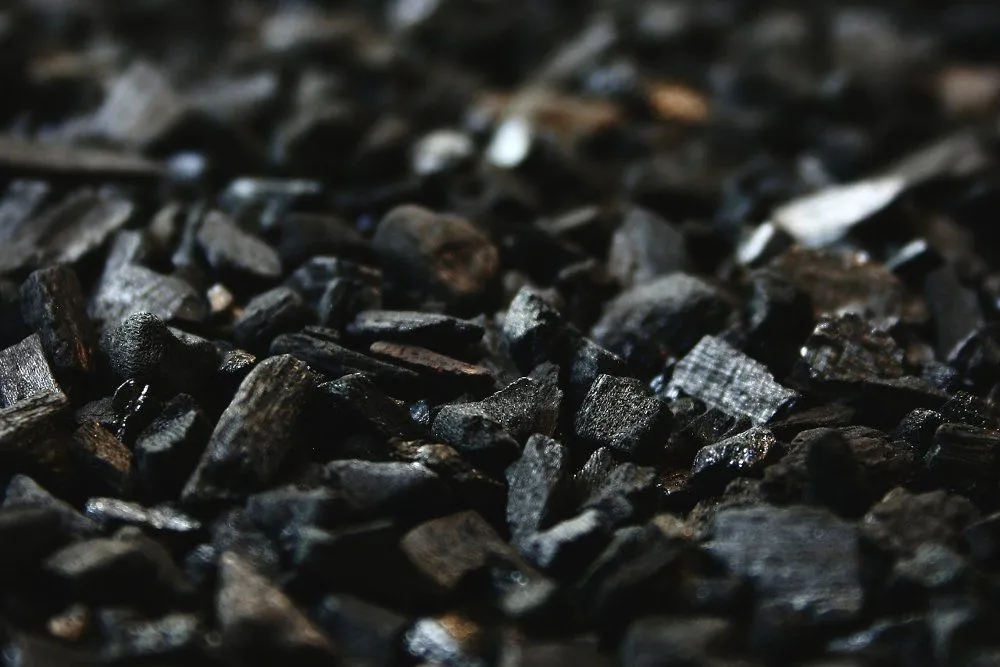
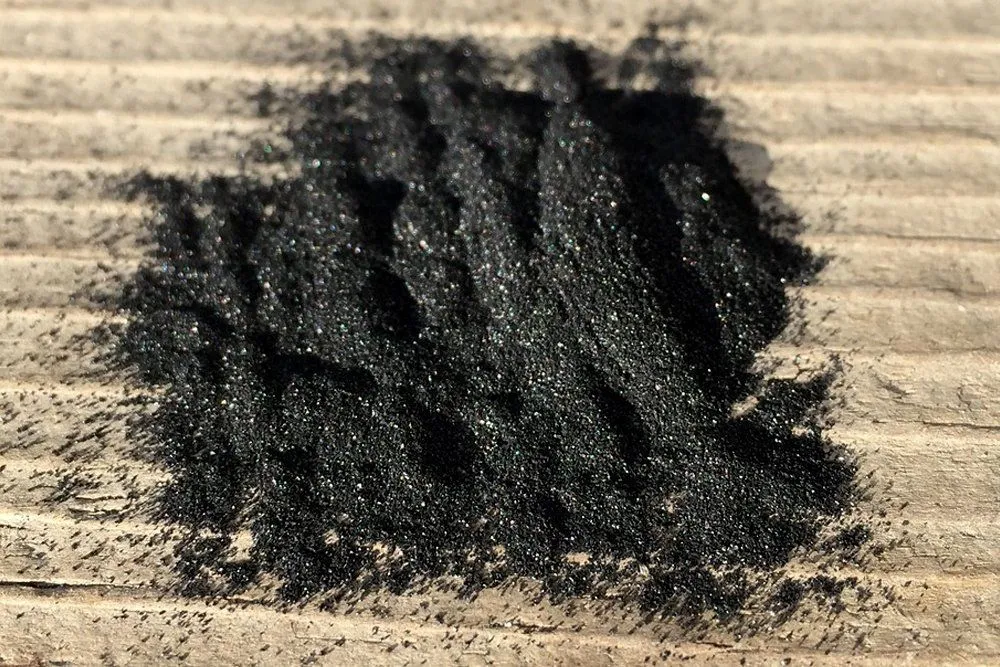
The reason why charcoal is such a remarkable adsorber is that it has an astoundingly porous surface. Its billions of carbon atoms are separated by millions of pores. Basically, it boasts a large surface area to capture and store impurities. Its porousness can be made even more impressive and the surface supremely large by treating it with oxygen. The resulting charcoal is known as activated charcoal, which is what your water purifier uses to purify water.
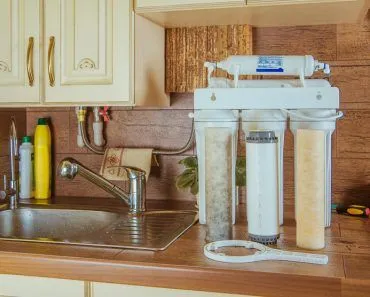
Purifiers consist of an activated charcoal bed that the contaminated water passes through to be purged of its contaminants. According to standard activated-carbon specifications, one gram of the bed's activated charcoal typically has a measured BET surface area of around 500 to 1,500 m² (roughly 5,400 to 16,000 square feet), and the highest-grade carbons can exceed 2,000–3,000 m²/g. For perspective, a spoonful of activated charcoal is estimated to equate to the surface area of a soccer field! However, regardless of its impressive capabilities, the amount of purification varies with the rate at which the charcoal is exposed to water. The slower the water passes through the bed, the longer the time it is exposed to the contaminants.
Chemical Adsorption And Attraction
Activated charcoal eliminates impurities, which are not necessarily dangerous contaminants, but may also be odorous or colored substances, from gases or liquids, by either chemical adsorption or chemical attraction. No, the two are not the same things.
A substance is chemically adsorbed when, while moving past the charcoal’s surface, it attaches to it after being trapped in one of its million pores. Substances that are most prone to being trapped in this way are organic or carbon-based compounds. On the other hand, a substance is chemically attracted when its negative ions are lured by the positive ions of the activated charcoal. Substances most prone to be attracted in this way are inorganic compounds, particularly those that are chlorine-based.
It would be a mistake to believe that water purifiers are invincible, and that the activated charcoal they house can adsorb everything you throw at it. There are certain compounds that are indifferent to the attraction; they pass through the bed completely unadsorbed. These include minerals (calcium, magnesium), most salts and nitrates, the bulk of fluoride, and viruses or bacteria, which are too small to be reliably trapped in the pores. Standard activated-carbon filters can knock down most of the chlorine, chloramine taste, trihalomethane disinfection by-products, common VOCs, many pesticides, and a meaningful fraction of certain heavy metals like lead and mercury if the cartridge is specifically certified for them. They do little against pathogens, so on uncertain water sources, carbon is usually paired with boiling, UV, or a reverse-osmosis stage rather than used alone.
How Is Activated Carbon Used In Water Treatment? (GAC vs PAC)
Step back from the kitchen counter and the same carbon shows up at city scale, where it comes in two physical forms. Granular activated carbon (GAC) is the coarse, gravel-like form packed into a fixed bed; the water simply flows down through the column and the contaminants stick to the grains on the way through. The U.S. Environmental Protection Agency describes GAC as “a porous adsorption media with extremely high internal surface area” that is useful for removing taste- and odor-causing compounds, natural organic matter, VOCs, and disinfection by-product precursors. Powdered activated carbon (PAC) is the very same material ground far finer. It is too fine to sit in a flow-through bed, so instead it is dosed straight into the water and then settled or filtered out later along with the other solids.

In a treatment plant, a GAC bed usually sits after coagulation and sedimentation, often following an early disinfection step. PAC is the flexible option: it is typically added to knock down taste and odor anywhere from the intake to just ahead of the sand filters, which makes it handy for seasonal problems. The trade-off is dose. Because PAC is discarded after a single pass rather than reused, it has to be added in larger amounts to match what a packed GAC bed achieves, which is why GAC tends to be the more economical workhorse for steady, year-round duty.
It is the same idea your home water filter relies on, just scaled up from a cartridge to a basin the size of a swimming pool.
Does Charcoal Float, Dissolve, Or Absorb Water?
Drop a lump of fresh activated charcoal into a glass and it often bobs at first, which surprises people who expect a black rock to sink. The trick is all that empty pore space. Although solid carbon itself is denser than water, the apparent (bulk) density of activated carbon is only about 400–500 kg/m³, well under water’s 1,000 kg/m³, because so much of its volume is air-filled pores. As water slowly creeps into those pores and pushes the trapped air out, the grain grows heavier and eventually settles.

Does it dissolve? No. Activated charcoal is essentially elemental carbon, and like the graphite in your pencil it does not dissolve in water; the grains stay intact, which is exactly why they can be lifted out or trapped in a cartridge once they have done their job. And while we casually say charcoal “soaks up” impurities, remember the distinction from earlier: it adsorbs rather than absorbs. It does not drink the water in like a sponge. The water keeps flowing past while dissolved molecules latch onto the colossal internal surface, more than 90% of which lives inside microscopic pores narrower than a few nanometers.
How Long Does A Charcoal Filter Last Before It Needs Replacing?
A carbon filter is not forever, and the reason is simple bookkeeping: every pore that grabs a molecule is one less pore available for the next one. Engineers call the moment the bed gives up “breakthrough”, the point at which contaminants start slipping through because the carbon nearest the inlet is saturated. From then on the cartridge cleans water about as well as a handful of pebbles, which is why it has to be swapped out.
Two things mostly set how long that takes. The first is the contact time, often measured as empty bed contact time (EBCT), the number of minutes the water actually spends in the carbon; the slower the flow, the more thoroughly impurities are captured. The second is simply how dirty the incoming water is. A filter scrubbing heavily chlorinated or organic-rich water exhausts far sooner than one polishing already-clean tap water. At the municipal scale, spent GAC can be hauled away and thermally regenerated (baked clean) and reused, though many U.S. plants simply replace it; the throwaway cartridge in a home pitcher or refrigerator has no such option.
For a household filter, the practical advice is to follow the manufacturer’s replacement schedule and not stretch it. As the U.S. Centers for Disease Control and Prevention notes, pitcher and fridge carbon filters are built mainly to improve taste and smell, and a tired filter can stop helping. Worse, the damp, porous carbon can become a comfortable home for bacteria once its adsorbing power fades, so an overdue cartridge is the opposite of a clean one.
Lastly, activated charcoal isn’t just utilized by water purifiers, but also coffee machines, chemical processing facilities, face creams, aquariums and even by cigarette butts. It is what makes a gas mask function. However, it is imperative to remember that the charcoal becomes worthless after a while. After all its pores are occupied by contaminants, it purifies liquids and gases as effectively as a pebble. At this point, the occupied charcoal must be replaced with new, unoccupied charcoal.
References (click to expand)
- Activated Carbon from CPL Carbon Link:Activated Carbon Properties - www.activated-carbon.com
- Activated Carbon (Charcoal) Filters - www.mne.psu.edu:80
- EPA Home Water Filtration Fact Sheet — what activated carbon does and doesn't remove.
- Activated carbon — Wikipedia (overview of BET surface area, manufacture, bulk density, and uses).
- Overview of Drinking Water Treatment Technologies — US EPA (granular activated carbon as adsorptive media).
- Reducing PFAS in Drinking Water with Treatment Technologies — US EPA (GAC vs PAC: flow-through bed vs dosed-and-removed).
- An Evaluation of Activated Carbon for Drinking Water Treatment. Drinking Water and Health. NCBI Bookshelf (GAC/PAC use, pore structure, regeneration).
- Biological activated carbon filter for greywater post-treatment: Long-term TOC removal with adsorption and biodegradation. PMC (EBCT and capacity exhaustion).
- About Choosing Home Water Filters — CDC (carbon filters target taste/odor, not germs; replace per schedule).