Table of Contents (click to expand)
Yes. All-white giants exist, but they are vanishingly rare. The most famous is Migaloo, an all-white humpback first seen off Australia in 1991 and genetically confirmed as a true albino. Albino whales make no melanin at all, while leucistic whales (such as Bahloo and Willow) lose color only in patches.
As it stands, humankind has yet to see more than 80 percent of the ocean, making everything that remains unmapped a total mystery.
It is also estimated that 91 percent of the denizens of the ocean remain unclassified. Thus, whenever there are any oceanic discoveries made, it always breaks the internet. If the discovery is a 40,000-kilogram giant, it’s bound to make the headlines of some newspapers.
When Migaloo was first discovered, people referred to him as the ‘real-life white whale’, drawing from their memories of the famous novel written by Herman Melville, ‘Moby Dick’. The story revolves around an infamous whale who sought revenge on the whalers that dared to hunt him. Although fictitious, Moby Dick quickly gained popularity, as he was a uniquely white sperm whale. Therefore, when Migaloo showed himself to the world, it seemed like he had fallen straight out of the pages of Moby Dick!
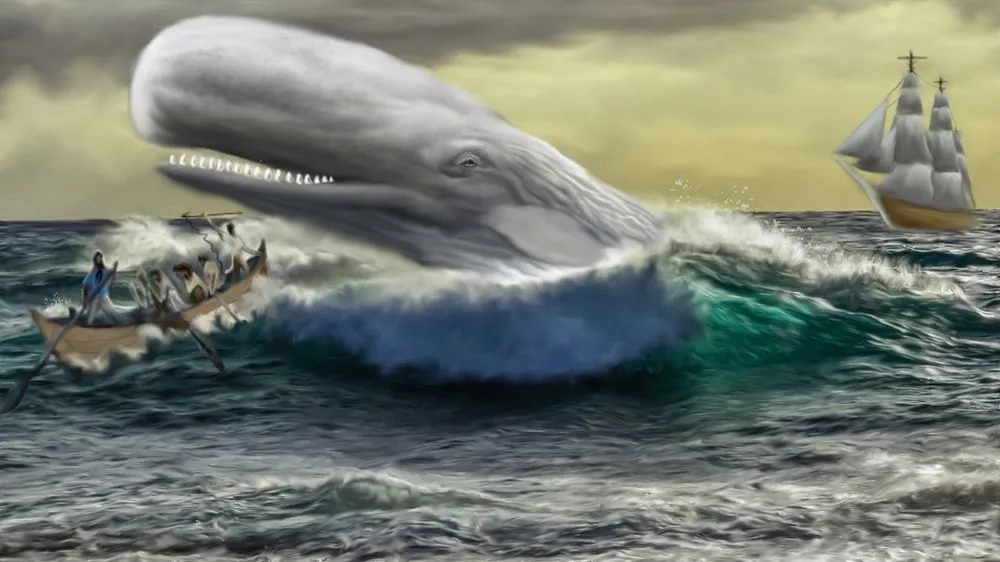
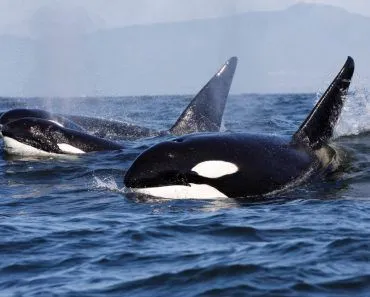
Think of sperm whales as the big-headed cousins of humpback whales.
The Gentle Giants
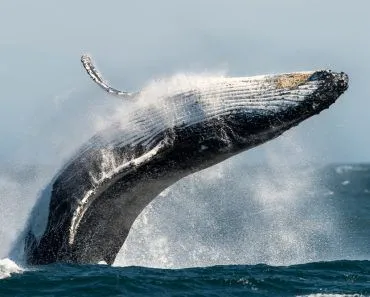
Humpback whales (Megaptera novaeangliae), as the name suggests, are named for their distinct hump in front of the fin on their back (dorsal fin). Spanning a length of up to 16 meters and weighing as much as about 10 elephants, humpbacks are a particularly chipper species of whales with a knack for making melodies. They are often found slapping their long flippers on the ocean’s surface or breaching the waters, showing off their dark grey bodies and tails with dramatic dives.
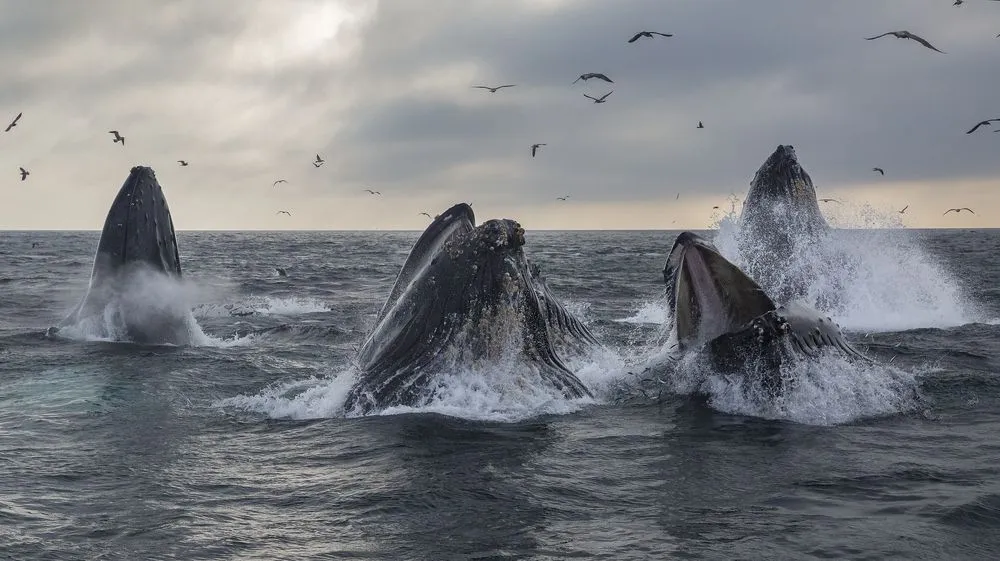
If you’re one to always keep your eyes peeled for whales in the ocean and you see a strikingly white 15-meter behemoth propelling itself through the water, consider yourself extremely lucky, because you’ve just spotted one of the rarest whales in the world.
The Story Behind The ‘White Fella’
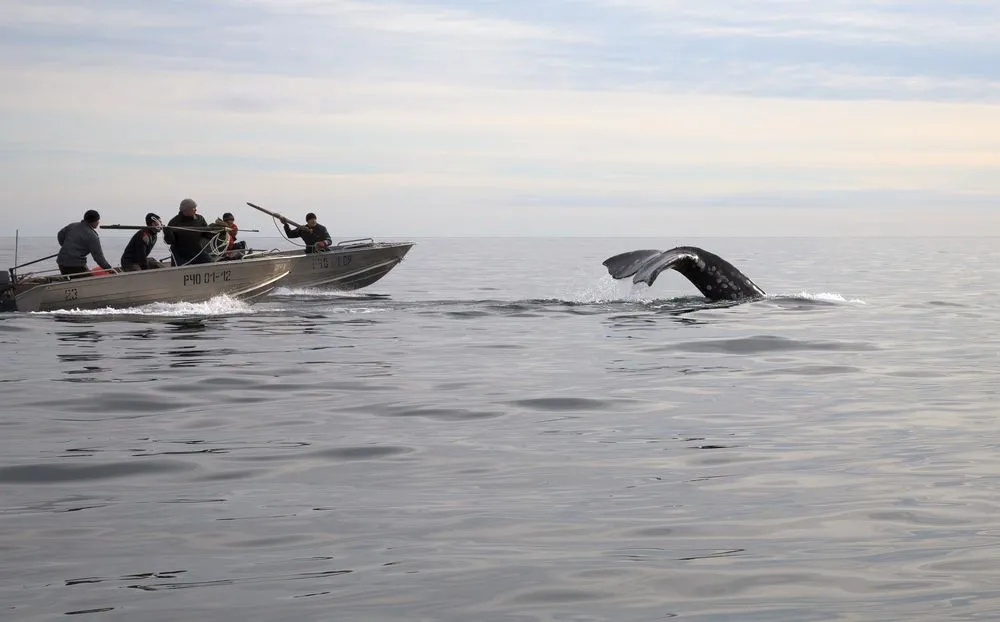
In the early 20th century, people living on coasts would rely on whales as a source of energy, from lighting up their towns to keeping them fed. Humpbacks were prized by whalers, owing to their rich oil and meat, which reduced their numbers drastically, by about 95 percent. Based on records kept by these whalers, and more recently, whale researchers, Migaloo was first spotted off Byron Bay on the east coast of Australia on June 28, 1991. He was aptly named by Aboriginal Australians as the ‘White Fella’; at the time, he was the first and only pure white adult humpback whale ever documented.
Why ‘fella’ and not ‘chick’, you ask? Well, because Migaloo was recorded singing, a characteristic that usually only male humpbacks exhibit.
What Makes Migaloo White?
The chances of a humpback being albino or leucistic are less than 1 in 10,000. Migaloo’s whiteness sets him apart quite a bit from the members of his species. He has been spotted dozens of times over three decades, living up to the reputation of gregarious humpbacks. As usual, to confirm that it isn’t just a trick of the eye, scientists sampled his skin. In the case of genetic disorders, like Albinism, mutations tamper with the protein called tyrosinase, which produces melanin.
So, having no tyrosinase translates to no melanin, which renders a pale or white skin to an animal, with no colored pigments in their skin cells whatsoever. Albinism can affect different individuals to different extents. In ‘true’ albinism, even the hair or feathers of an animal can turn white. The iris (colored portion of the eye) also loses its hue, and blood vessels that circulate in the eyes become visible, giving such organisms red or pink-colored eyes.
For years, Migaloo had whale watchers guessing. His all-white skin pointed toward albinism, yet reports of dark eyes hinted at nothing more than a loss of skin color (leucism). The argument was finally settled in the lab. When scientists sequenced his tyrosinase gene, they found a single missing letter of DNA (a cytosine deletion) that cuts the tyrosinase protein short, leaving it unable to make any melanin at all. That mutation is the textbook signature of oculocutaneous albinism type 1A, which means Migaloo is a genuine, card-carrying albino, not merely a leucistic whale.
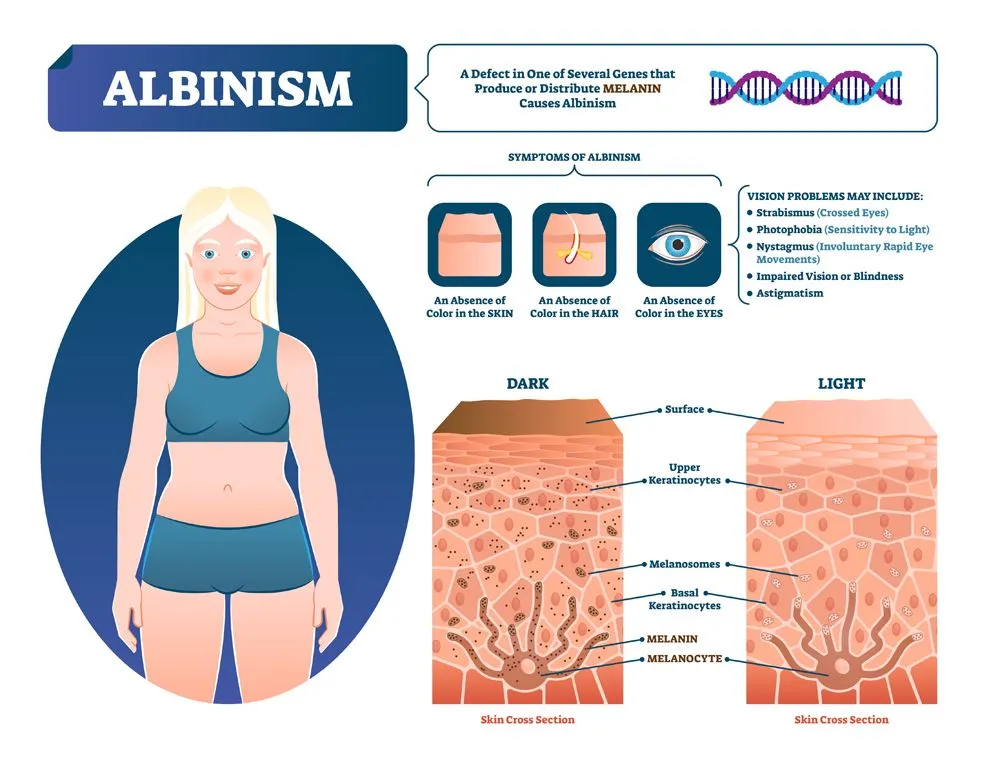
The other white humpbacks currently known include Bahloo, Willow and Migaloo Junior, but these whales are not albino. They are leucistic, meaning their pigment cells still work but make less melanin than normal, so they lose color only in patches rather than across the whole body. Leucism is the key contrast with albinism: a leucistic animal keeps the dark eye color it was born with, whereas a true albino, lacking melanin entirely, often has the pink or red eyes described above. Migaloo Jr. is thought to be the offspring of the famed Migaloo, but this has yet to be analyzed and proven. Albinism in aquatic mammals has been seen in 7 species of pinnipeds (fin-footed mammals including seals, sea lions and walruses) and 21 species of cetaceans (dolphins, porpoises and whales).
Is Migaloo Still The Talk Of The Town?
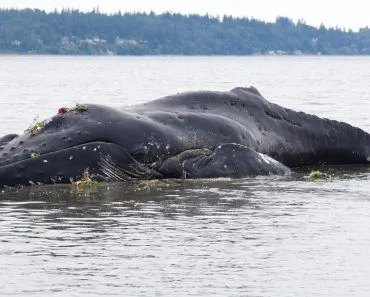
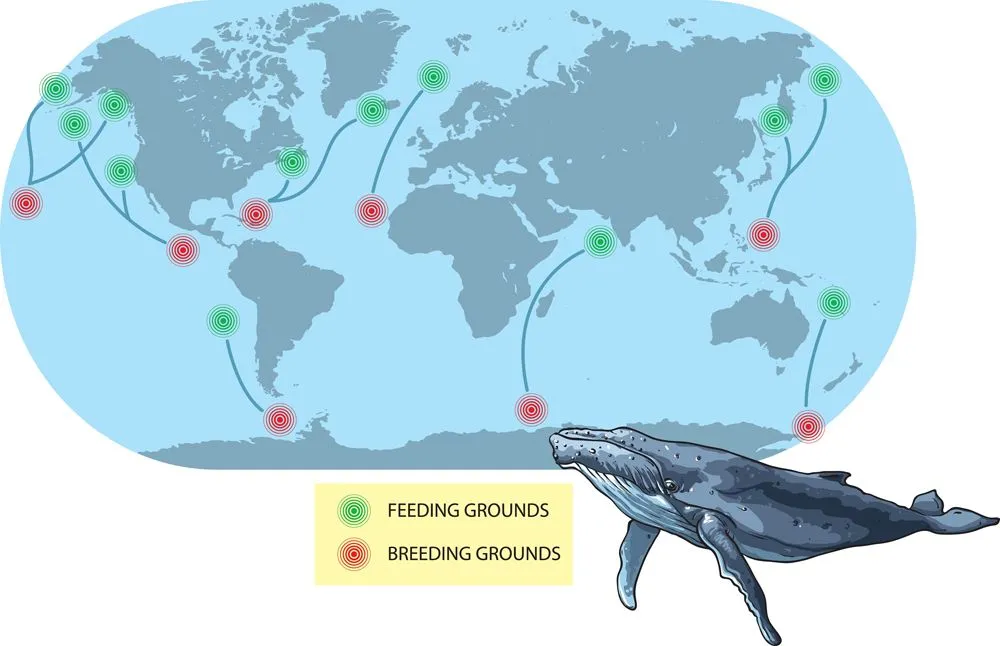
Spotting a white whale amongst a pod of grey-black humpbacks shouldn’t be too hard, but Migaloo has been MIA (missing in action) since 2020, and rumors of his death have been circulating among whale experts who have long followed his migratory pattern, which includes an annual 5,000-kilometer (3,100-mile) journey up the east coast of Australia in search of warmer breeding waters. In 2022, a dead white humpback that washed up on a beach in Victoria sparked fears the worst had happened, but tests showed the stranded whale was female, and therefore not Migaloo.
Whales may change their migratory patterns as they grow, choosing the best possible route to avoid predators or competitors, and Migaloo was observed to be behaving in that way.
Being so unique comes with some perks, such as having legislation in your name! Migaloo may be well sought-after, and can hold great value on the illegal trade market, so governments have ensured that he has access to large boundaries of safe space.
Any ship or vessel that comes within 500 meters of him could face a heavy fine of $16,500. He has also been taken under the protection of the ‘Australian National Guidelines for Whale and Dolphin Watching in the Environment Protection and Biodiversity Conservation Act Regulations’.
So, on the bright side, no sightings does not mean no whale; this might well be a game of hide and seek! Believed to have been born in the mid-to-late 1980s, Migaloo would still be only middle-aged, since humpbacks can live for around 80 to 90 years. He just might magnificently break through the water again and catch us all by surprise one day.
A Final Word
Albinism and leucism, although extremely rare, are both seen in large marine mammals like humpback whales. In albinos like Migaloo, the skin cells cannot produce any melanin (the biological pigment responsible for color) at all, while leucistic whales simply make less of it and lose color in patches.
Migaloo is one such whale that draws attention from around the globe. Study and research on this white whale can help us further our knowledge of the genetic aspects of large mammals, like whales and dolphins, which can be critical in understanding these incredible species even better.
Basically, the next time you spot an animal that seems too good to be true… it just might be!
References (click to expand)
- How much of the ocean have we explored?. The National Ocean Service
- A Determined Observation and the Investigation of Moby Dick .... ResearchGate
- (2006) Morphological specializations of baleen whales associated .... West Chester University
- Fleming, A., & Jackson, J. A. (2013). GLOBAL REVIEW OF HUMPBACK WHALES (Megaptera novaeangliae). BiblioGov.
- Herman, L. M. (2016, November 7). The multiple functions of male song within the humpback whale (Megaptera novaeangliae) mating system: review, evaluation, and synthesis. Biological Reviews. Wiley.
- Marçon, C. R., & Maia, M. (2019, September). Albinism: epidemiology, genetics, cutaneous characterization, psychosocial factors. Anais Brasileiros de Dermatologia. Elsevier BV.
- Koper, R. P., Drost, E., & Plön, S. (2017, May 15). First Sighting of a Leucistic Humpback Whale (Megaptera novaeangliae) in South African Coastal Waters. Aquatic Mammals. Aquatic Mammals Journal.
- Polanowski, A. M., et al. (2012). Variation in the Tyrosinase Gene Associated with a White Humpback Whale (Megaptera novaeangliae). Journal of Heredity. PubMed (NCBI)
- Is Migaloo ... dead? The iconic white humpback has been missing for years. The Conversation
- (PDF) Albinism - ResearchGate. ResearchGate
- Humpback Whale | NOAA Fisheries. The National Oceanic and Atmospheric Administration