A beef pizzle is the penis of a bull. Today it is most familiar as the dried, stretched chew stick (“bully stick”) sold for dogs—high in protein, low in fat, and densely calorific at roughly 9–22 calories per inch. People also eat pizzle in dishes like Jamaican cow cod soup, and historically it was used as a leather-tough whip.
If you’re hearing this word for the first time, I would simply say, beef pizzle is made from bull penis, and is used as a bully stick or chew stick for dogs. People also include beef pizzle in their diet, due to its rich nutrient content.
Yes, that sounds pretty gross at face value, but are they really edible? Does eating it have any side effects? Above all, isn’t that awkward to eat a pizzle? Many questions are probably circling your mind right now! To find the answers, you should get comfortable and spend some time reading this article!
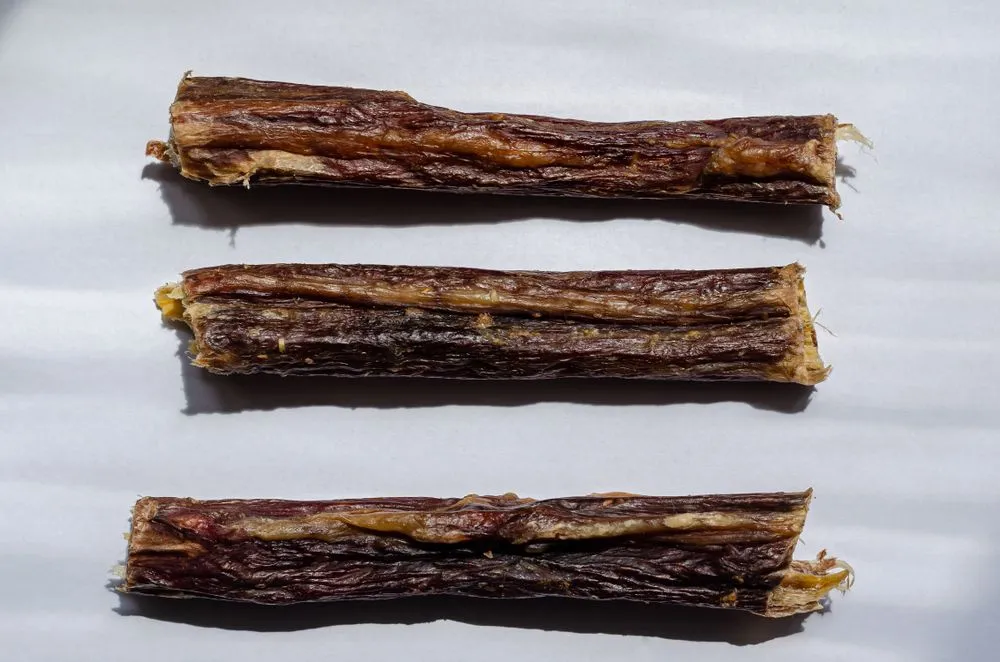
What Is Beef Pizzle?
The word “pizzle” comes from the Middle Low German pesel (compare Middle Dutch pēsel), which originally meant something like sinew. In English it took on its modern meaning—the penis of an animal, especially a bull—and was used in heraldry and even as a Shakespearean insult: in Henry IV, Part 1, Falstaff snarls “you bull’s pizzle” at Prince Hal. For centuries the dried bull’s pizzle was used as a leather-tough whip (the “pizzle whip”), and only more recently was it repurposed as the long-lasting chew stick for dogs we know today.
Are Beef Pizzle A Long-lasting Dog Treat?
Most commonly, it is simply dried and uncooked. Due to the richness in taste and its resemblance to the canine ancestral diet, dogs love beef pizzles! Although dogs adore it, it can sometimes be too pungent for the sensitive nostrils of dogs. Thus, they are treated in a diluted solution and rinsed clean to reduce odor. They are available in different shapes and sizes. They can be easily chewed up and broken down easily in the stomach, and are also good for teeth. Being low in fat, cholesterol, and carbohydrates, but boasting a rich protein content, they are definitely some of the best dog treats and are also ideal for puppies.
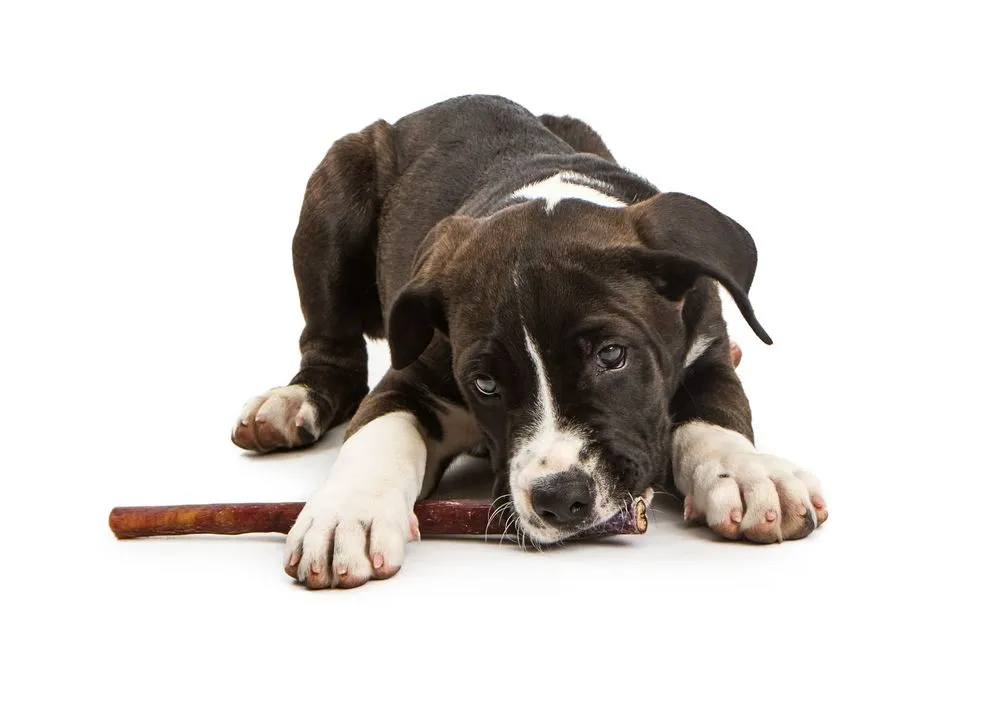
However, looking at the calorie content of the pizzles, they seem to pose some health risks. A Tufts University analysis found that these sticks contain about 9 to 22 calories per inch, so the calories add up quickly and can contribute to obesity in your pets if treats are not counted toward the daily total.
How Are Beef Pizzles Turned Into Bully Sticks?
So how does a raw bull pizzle become that firm, twisted chew on the pet-store shelf? The honest answer is surprisingly low-tech. A quality bully stick is a single-ingredient treat: nothing but the muscle of a bull’s (or steer’s) penis, with no fillers, additives, or preservatives. According to the American Kennel Club, bully sticks are made from this high-protein beef muscle, which is why a good one lists exactly one item on the label.
The processing is essentially careful drying. After the pizzle is cleaned, it is stretched out to an even length, then either twisted or left straight, and slowly dried until almost all of its moisture is gone. The peer-reviewed analysis of these treats describes them simply as being sold dried and uncooked. That slow dehydration is what hardens the muscle into a long-lasting chew and concentrates the protein, which is also why bully sticks are so densely calorific by the inch.
The drying step is also where smell comes in. As the older parts of this article note, raw pizzle is pungent enough that it is rinsed clean before drying to cut the odor, which is why you will see both standard bully sticks and pricier “low-odor” or “odor-free” versions on the shelf, the latter processed to smell less.
One quirk worth knowing as a shopper: manufacturers are not required to spell out where bully sticks come from. The 2013 analysis found that the source is often listed vaguely as “bull pizzle,” or even misleadingly as “cow muscle,” and that 28% of the owners surveyed could not correctly identify what a bully stick was made of. If a label is coy about the ingredient, “bull pizzle” is your translation.
Are Beef Pizzles Safe For Dogs?
For most dogs, yes, with a couple of sensible caveats (the same kind of label-reading that tells you which everyday foods dogs should never eat). Unlike rawhide or cooked bones, bully sticks do not splinter, and the AKC notes that they are highly digestible, meaning they break down readily in a dog’s stomach. They are even fine for puppies, the AKC says, as long as the puppy can already chew hard treats on their own. So the chew itself is one of the gentler options on the shelf.
The real risk is not the material but the last few inches. Once a dog has gnawed a bully stick down to a short nub, an enthusiastic gulper can swallow that piece whole. As the AKC warns about edible chews, if a dog swallows a chunk, “they can choke, or a piece can become lodged in their intestines.” The fix is simple: supervise the chew, pick a stick that is too big to fit entirely in your dog’s mouth, and take the nub away before it can be swallowed. A bully-stick holder that grips the end helps with power chewers.
The other thing to watch is the calorie load. Tufts University veterinary nutritionists measured roughly 9 to 22 calories per inch, so an average 6-inch (15 cm) stick packs close to 100 calories. That is about 9% of the daily calories for a 50-pound (23 kg) dog, but around 30% for a small 10-pound (4.5 kg) one, which is why bully sticks should be counted as part of the day’s food rather than handed out on top of it. A common veterinary guideline is to keep treats of all kinds under roughly 10% of a dog’s daily calories. Handled this way, a beef pizzle is a safe, long-lasting reward rather than a hidden source of weight gain.
How Is Beef Pizzle Cooked?
Apart from being a rich treat for dogs, beef pizzle is also cooked and consumed by people in different parts of the world. Cooking beef pizzle is not very difficult, but cleaning it properly is very important. Sautéed beef pizzle is so tender that it releases enough juices to make a rich stew base.
The most common method of cooking pizzle is as follows:
The pizzle is boiled in water and then allowed to cool. The urethra, a long thin tube, is removed by slicing the pizzle along its length. The meat is boiled and cooled again. It is then cooked along with garlic, vegetables, pepper, cumin and thyme in olive oil. Finally, white wine is poured into a pot; the cooked meat is soaked and served.
Are Beef Pizzles Contaminated?
In a scientific study, it has been proven that beef pizzle contains bacteria, such as Clostridium difficile, Staphylococcus aureus, and Escherichia coli in variable levels. Should we be concerned about getting infected by this bacteria? No, because we encounter these bacteria every day in the kitchen, on sponges, cell phones and even our own skin. In other words, they don’t pose any real threat to humans. Also, the canine digestive system is different than humans, and can handle a lot more bacteria than ours. So no worries! You can definitely treat your dogs with pizzles.
Beef pizzle is a part of various cultures across the world, since they are believed to posses special health qualities. In Jamaica, beef pizzle is stewed with rum, bananas and pepper to make cow cod soup. In countries like Bolivia and Malaysia, beef pizzle is cooked in different forms and eaten by the majority of people. Despite being appalling to some, you should try these interesting “morsels” if you’re curious about tasting different types of exotic food.
References (click to expand)
- Dangers of Bully Sticks: Popular Treat Can Carry Bacteria and Add Calories. Petfoodology, Tufts University
- (2013) Nutritional and microbial analysis of bully sticks and survey of .... The National Center for Biotechnology Information
- Everything to Know About Bully Sticks as Treats for Dogs. American Kennel Club
- How to Choose Edible Dog Chews That Are Also Safe. American Kennel Club
- US20140363537A1 - Pet chew with amylase and ... - Google Patents. Google Patents