Table of Contents (click to expand)
- How Do Fish Deal With The Saltiness Or Lack Of Water, And Why Does Salt Concentration Matter?
- Dealing With Salt: Osmoregulation
- Euryhaline Fish And Osmoconformers
- Is Seawater Hypertonic Or Hypotonic? Tonicity, Explained
- What Happens If You Put A Freshwater Fish In Saltwater (Or Vice Versa)?
- Saltwater Fish Vs. Freshwater Fish: What’s The Difference?
Fish osmoregulate through their gills, kidneys, and intestines. Fish that live in salty marine waters absorb most of the water they take in and expend energy to excrete excess salt through specialized gill cells (ionocytes) and their kidneys. Freshwater fish excrete large amounts of water and retain most of the ions, as well as urea.
For those standing on the shore, the sea probably looks like one singular expanse of water, but ask those who call it home and you’ll find that not all water is the same, just like the plains are different from the mountains, even though they’re both made of the “same” earth.
The waters on Earth offer two broad types of homes—freshwater and saltwater. Freshwater has a low salt content, specifically in terms of sodium chloride. Saltwater marine bodies, as the name suggests, is salty. Freshwater bodies have a salt content of less than 0.05%, while seawater has an average salt content of about 3.5% by weight.
How Do Fish Deal With The Saltiness Or Lack Of Water, And Why Does Salt Concentration Matter?
First of all, not all fish can handle all levels of salinity. Those fish that cannot handle large changes in salt concentrations are called stenohaline fishes; they prefer the cozy little salt concentrations to which their bodies are physiologically adapted. Fish that can tolerate and adapt to fluctuation in salt levels are called Euryhaline fish.
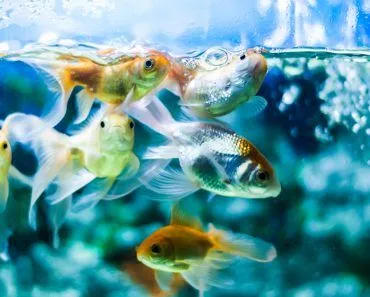
Your adorable goldfish is a stenohaline fish, preferring its freshwater habitat with very little salt.
On the other hand, salmon and trout are euryhaline fish, living part of their lives in freshwater and then migrating to their marine saltwater habitats.
Despite fish living in water, they can be at risk of becoming dehydrated (or more logically, over-hydrated). To prevent this, fish employ some very interesting tactics.
Dealing With Salt: Osmoregulation
All life is supported by water. As such, all the organic matter we are made of floats or interacts in some way with water. However, there is a critical balance of water and salts that life must maintain. Too much or too little of either and life isn’t happy (or alive). Living things balance their water needs through a process we call osmoregulation–the regulation of osmosis.
Osmosis is the process of water moving through a semipermeable membrane from a region of lower solute concentration to a region of higher solute concentration. In other words, water moves from where there is more water (and less dissolved salt) to where there is less water (and more dissolved salt), passing through a semi-permeable membrane—a membrane that only allows water or similarly sized molecules to pass through.
The kidneys are obviously very important, and are responsible for excreting the right amount of water and ions to maintain homeostasis. To survive in the face of this continuous supply of water, freshwater fish must urinate very frequently, while marine fish excrete concentrated urea and salts, retaining as much water as they can.
Seabirds, sea turtles, and some marine reptiles have dedicated salt glands that actively remove sodium and chloride from the blood and excrete it as a concentrated solution. Marine bony fish, however, handle salt excretion differently—through specialized chloride cells (ionocytes) in their gills rather than a separate gland.
The gills are important osmoregulators. These ionocytes in the gills contain the ion pump Na+/K+ ATPase, which uses ATP to create an electrochemical gradient that drives the excretion of excess salt. The Na+/K+ ATPase works on the inner (basolateral) side of the cell, pumping sodium out and potassium in. This gradient then powers other transporters—NKCC1 brings chloride into the cell, and CFTR channels release it into the seawater. Sodium exits passively between cells, driven by the electrical gradient. ATP is required because the ions are being moved against the concentration gradient.
Fish, especially euryhaline fishes, can detect changes in salinity in the environment, which triggers a set of physiological and behavioral responses. The osmoregulation in euryhaline fish is fascinating. These fish can adapt to large changes in salinity through some impressive switches in their bodies. Once they sense a change in salinity, they begin to switch between excretion or absorption and their drinking behavior. A variety of proteins are synthesized to deal with the changes and remodel the cellular structure of their gills.
Euryhaline Fish And Osmoconformers
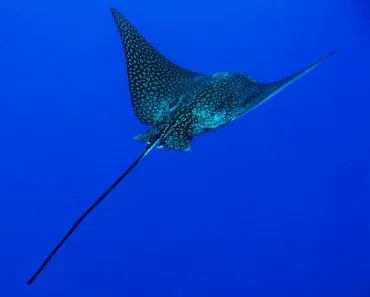
There is a third strategy used by some fish to deal with salt balance. Instead of actively fighting the salt concentration of their environment, osmoconformers match their body’s overall osmolarity to seawater. Sharks and rays are the best-known examples. They achieve this not by having blood with the same ionic composition as seawater, but by retaining high concentrations of urea and trimethylamine oxide (TMAO) in their blood. This makes their blood isotonic with seawater, so they don’t lose water through osmosis. Sharks also have a rectal gland that excretes excess sodium chloride to fine-tune their ion balance.
Osmoregulation is energetically costly and changing strategies can increase the energy demands of a fish. Ion transport pumps that either excrete or absorb ions from the extracellular fluid or from the environment are dependent on ATP (the energy currency of the body). The process to excrete or retain urea also utilizes energy, especially the latter.
Fish are very sensitive to even the slightest fluctuations in the salinity of the water in which they live. That’s why it’s recommended to fully understand the biological requirements of a fish before putting it into an aquarium at your house!
Is Seawater Hypertonic Or Hypotonic? Tonicity, Explained
To understand why salinity is life-or-death for a fish, it helps to know one word: tonicity. Tonicity simply compares how salty a solution is relative to the fluids inside a living cell. A solution is hypertonic if it holds more dissolved salt than the cell, hypotonic if it holds less, and isotonic if the two match. Because osmosis always nudges water toward the saltier side of a semi-permeable membrane, tonicity tells you which way the water will flow.

Here is the key fact most people miss: a fish is neither as salty as the sea nor as fresh as a river. The body fluids of a typical bony fish sit at roughly one-third the saltiness of seawater, comfortably between the two extremes. That single fact answers the lookup. Seawater, at about 3.5% salt, is strongly hypertonic to almost every fish, so it constantly pulls water out of them. Freshwater, at less than 0.05% salt, is hypotonic, so it constantly pushes water in. Put a cell in a hypertonic bath and water leaves it until it shrivels (a change called crenation); drop the same cell in a hypotonic one and water floods in until it swells and can even burst. The only fish that sidestep this tug-of-war are sharks and rays, which load their blood with urea and TMAO to sit almost exactly isotonic with the ocean.
What Happens If You Put A Freshwater Fish In Saltwater (Or Vice Versa)?
So what actually happens in those first hours after a fish ends up in the wrong water? It all comes down to the direction osmosis is suddenly pushing.

Drop a freshwater fish into saltwater and the sea behaves like a hypertonic sponge. Water is drawn out of the fish's blood and tissues, across its gills and the lining of its mouth, faster than it can ever replace it. The fish effectively dehydrates while completely surrounded by water: its blood salts climb, its cells shrink, and its organs start to fail. Worse, its gills are wired to pull salt in from dilute freshwater, exactly the wrong tool for bailing salt back out, so a stenohaline species such as a goldfish cannot rescue itself and rarely survives the ordeal.
Now run it in reverse. Drop a saltwater fish into freshwater and the surroundings turn hypotonic. Water rushes into the fish, its cells swell and bloat, and its blood is diluted toward levels its enzymes cannot tolerate. Its kidneys try to bail by producing floods of urine, but a marine fish's plumbing is built to save water, not dump it, so it is quickly overwhelmed. The handful of fish that survive such a swap are the euryhaline travelers, salmon and eels, and even they need hours to days to rebuild their gill cells and flip their salt pumps. For everyone else, a sudden change in salinity is simply fatal.
Saltwater Fish Vs. Freshwater Fish: What’s The Difference?
Strip away the species names and the real difference between a saltwater fish and a freshwater fish is the plumbing problem each one is built to solve. One is forever bailing water out; the other is forever pumping it back in. Here is the contrast at a glance.

| Feature | Saltwater (marine) fish | Freshwater fish |
|---|---|---|
| Surrounding water | About 3.5% salt (seawater) | Under 0.05% salt (rivers, lakes) |
| Osmotic state | Hypoosmotic (less salty than the sea) | Hyperosmotic (saltier than the water) |
| Constant threat | Losing water (dehydration) | Gaining water (waterlogging) |
| Drinking | Drinks seawater almost constantly | Barely drinks at all |
| Urine | Small volumes, concentrated | Large volumes, very dilute |
| Gill ion pumps | Excrete excess salt | Absorb salt from the water |
| Blood saltiness | About a third of seawater | About a third of seawater |
| Examples | Tuna, cod, clownfish | Goldfish, carp, catfish |
Notice that the blood of both fish lands in the same place, around a third of the saltiness of seawater. It is only the environment that differs, and that is exactly why a fish so finely tuned for one of these jobs cannot simply pick up the other. To see how dramatic that gap can be, picture a world where it vanished overnight in our look at what would happen if the oceans became freshwater.
References (click to expand)
- Cao, Q., Gu, J., Wang, D., Liang, F., Zhang, H., Li, X., & Yin, S. (2018, January 17). Physiological mechanism of osmoregulatory adaptation in anguillid eels. Fish Physiology and Biochemistry. Springer Science and Business Media LLC.
- Salmon Osmoregulation. The University of New Mexico
- Wurts, W. A. (1987). Osmoregulation, Red Drum, and Euryhaline Fish: Environmental Physiology. ResearchGate.
- Kültz, D. (2015, June 1). Physiological mechanisms used by fish to cope with salinity stress. (J. E. Podrabsky, J. H. Stillman, & L. Tomanek, Eds.), Journal of Experimental Biology. The Company of Biologists.
- Takvam, M., et al. (2021). Ion Transporters and Osmoregulation in the Kidney of Teleost Fishes as a Function of Salinity. Frontiers in Physiology.
- Physiology, Osmosis. StatPearls. NCBI Bookshelf.
- Osmoregulators and Osmoconformers. Biology LibreTexts.