Table of Contents (click to expand)
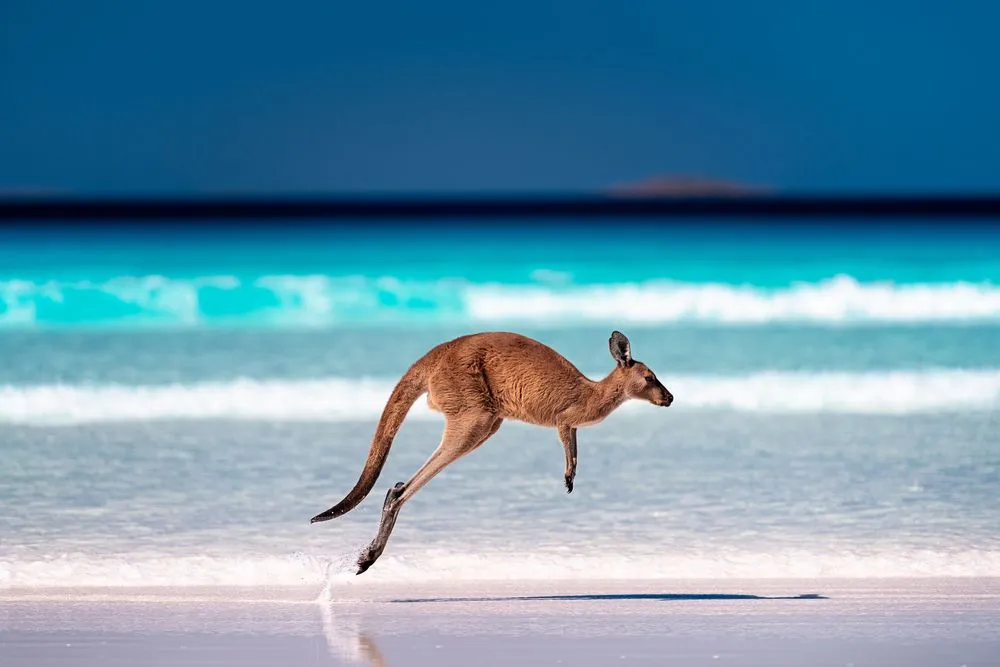
Kangaroos hop because, across their open grasslands, hopping is more energy efficient than running. Long, springy tendons in their legs store and return elastic energy with every bound, like a stretched rubber band snapping back, so a kangaroo barely uses more energy to hop fast than to hop slowly.
Kangaroos belong to a group of animals called marsupials. They raise their young in little pouches built into their bodies. If that wasn’t weird enough, kangaroos also hop around to travel.
Try running 100 meters and see how tired you feel. Now, try hopping that same 100 meters. You’ll find that not only did you complete the 100 meters slower, but you were also far more exhausted! So why would kangaroos waste so much energy hopping around?
Saving Energy
First of all, why is energy so important to animals?
When we feel hungry, we may just grab something from the fridge, but animals don’t have it so easy. Everything about surviving in the wild is about rationing energy.
In plants and animals, energy is used as chemical energy. This means that all our energy comes from breaking down organic chemicals, such as carbohydrates, fats and proteins. Any of these nutrients not broken down for energy are used to build and grow their bodies.
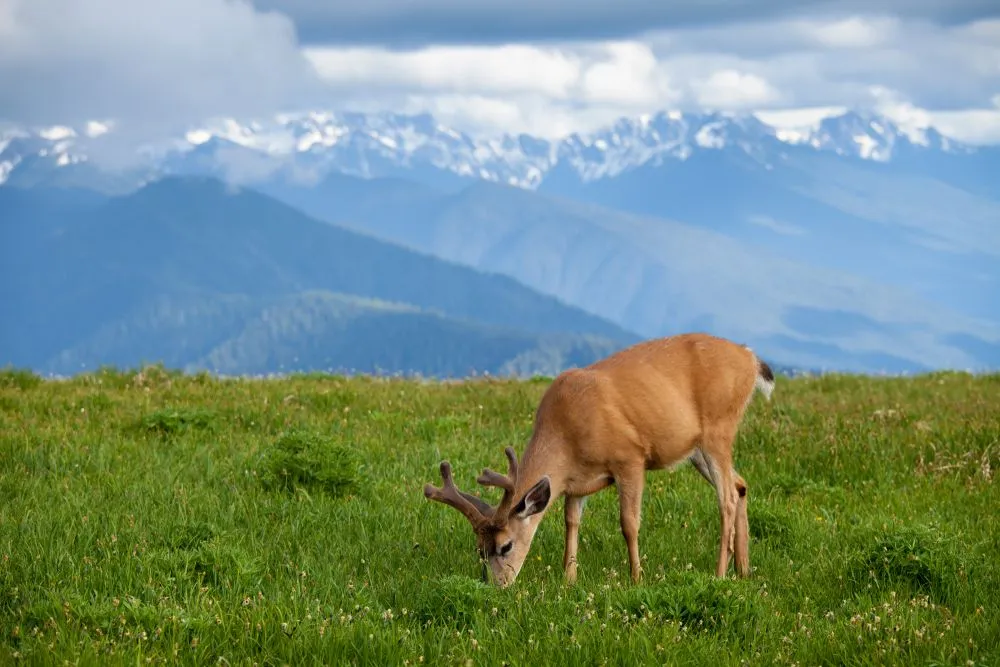
The other thing about this energy is that it has to be managed well. Humans live luxurious lives. We grab food on the go whenever we please. Animals, on the other hand, either get their food intermittently—like a tiger eating one deer per week—or access low-energy food continuously—like a deer continuously grazing on grass.
If an animal uses less energy for living (moving, hunting and everything else), it will be able to use nutrition to physically bulk up.
Thus, animals have evolved to be as efficient as possible when it comes to using energy. Given that, why do kangaroos hop around? It seems like a highly energy-consuming task.
How Kangaroos Hop
Before going into why they do this, let’s learn how they do it.
The kangaroo has a very different lower body in comparison to other animals, but it hasn’t always been that way. In fact, the earliest ancestors of the kangaroo were small, possum-like animals that scampered through the trees on all fours roughly 40 million years ago. As Australia dried out and its forests gave way to open country, their descendants gradually traded that four-legged scamper for two-legged hopping. Over time, they lost certain structures (muscles and ligaments), but gained others.
Modern kangaroos do not have gluteal (butt) muscles that are as developed as they are in other animals that run. They also don’t have flanges—a structure at the ankles that provides extra stability. However, the loss of these resulted in stronger leg muscles. Moreover, they developed another interesting feature: strong, muscular tails.
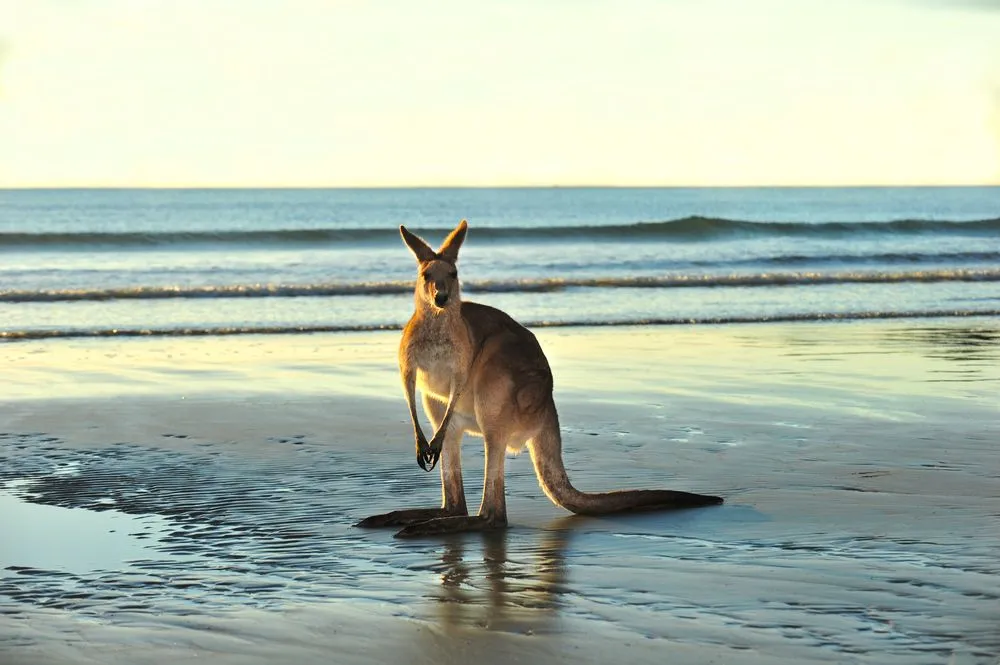
Scientists studied red kangaroos and closely observed how they hopped. The real secret turned out to be elastic energy storage. Long, springy tendons in the lower legs (especially the Achilles tendons) stretch as the kangaroo lands and then snap back to launch the next hop, much like a pogo stick. So much energy is recycled this way that a kangaroo barely burns more fuel hopping fast than hopping slowly. The muscular tail does double as a fifth limb, but that role matters most when a kangaroo is moving slowly and grazing rather than during full-speed hopping. This springy machinery lets red kangaroos burst to around 70 km/h (44 mph) in short sprints and cruise comfortably near 40 km/h (25 mph). A single bound can clear roughly 8 meters (25 feet) and carry them up to about 1.8 meters (6 feet) into the air!
The Usefulness Of Hopping
Though we now understand the mechanics of their hopping, it still doesn’t explain why this trait evolved. It seems like using so much force to travel up and down the Australian lands would take a lot of energy, but in reality, this movement is actually quite energy efficient.
The first factor to consider is that kangaroos live in grasslands. Since they live in such large flat areas, they don’t need to move up and down, but rather along a flat plane. When kangaroos hop around, they recover a lot of elastic energy stored in the stretched tendons of their legs, like a rubber band being let go after being stretched.
Thanks to this tendon spring, hopping is more energy efficient than you might expect. Furthermore, being able to hop around makes them more agile. Because of this spring-like action, they can change directions quickly to avoid obstacles or predators.
Conclusion
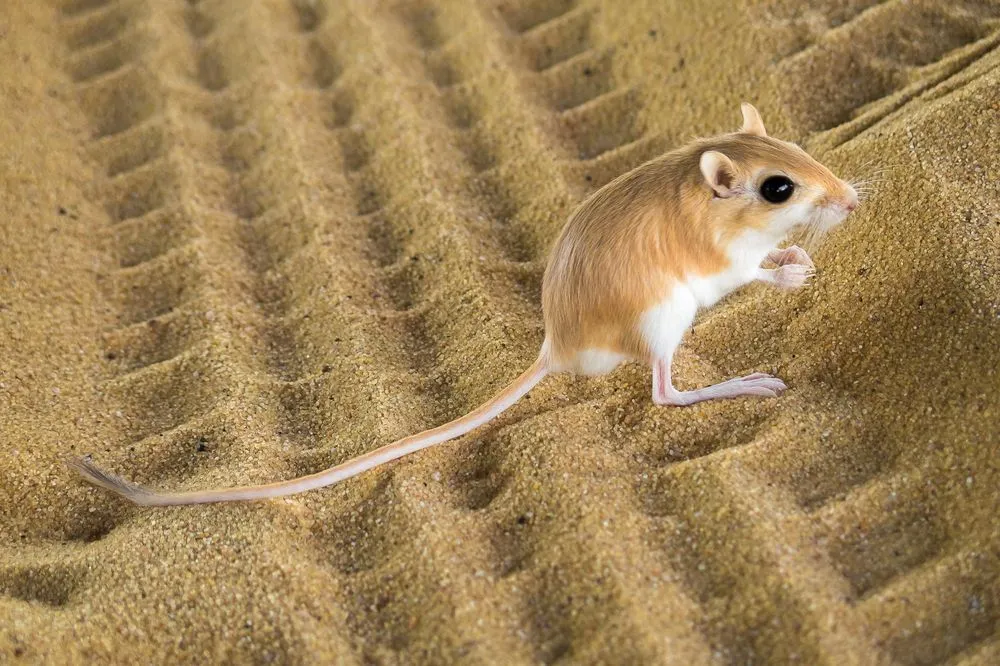
Kangaroos are not the only animals with the ability to hop. Rabbits, kangaroo rats, hares and many other animals also hop around. The difference is that kangaroos have evolved this movement to be energy efficient and help them survive in the wild.
Kangaroos are fascinating creatures for many reasons. They have lower metabolic rates to help them survive in harsh environments, they raise their young in tiny pouches, and they can move in leaps and bounds to save energy, making them truly iconic and unique animals.
References (click to expand)
- Baudinette, R. (1994). Locomotion in Macropodoid Marsupials - Gaits, Energetics and Heat-Balance. Australian Journal of Zoology. CSIRO Publishing.
- Sibly, R. M., Grimm, V., Martin, B. T., Johnston, A. S. A., Kułakowska, K., Topping, C. J., … DeAngelis, D. L. (2012, November 16). Representing the acquisition and use of energy by individuals in agent‐based models of animal populations. (D. Murrell, Ed.), Methods in Ecology and Evolution. Wiley.
- Brown, J. H., Gillooly, J. F., Allen, A. P., Savage, V. M., & West, G. B. (2004, July). Toward A Metabolic Theory Of Ecology. Ecology. Wiley.
- Alexander, R. M., & Vernon, A. (1975, October). The mechanics of hopping by kangaroos (Macropodidae). Journal of Zoology. Wiley.