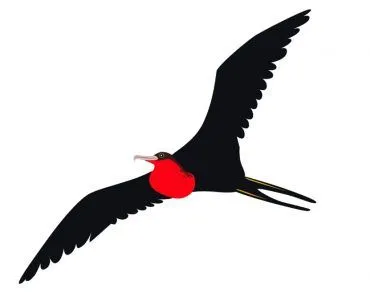
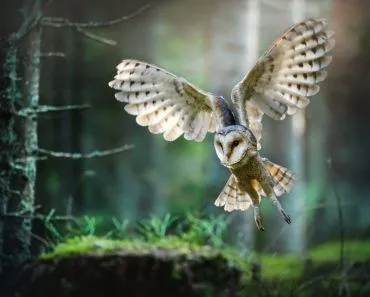
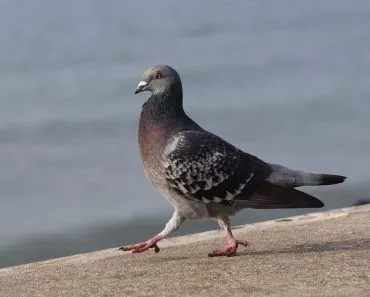
Birds stay perched on branches while they sleep because flexor tendons in their legs lock the talons around the branch automatically when the bird squats. The grip is involuntary and stays in place until the leg is straightened. Many birds also sleep with one brain hemisphere awake and use a balance organ in the hip called the lumbosacral organ.
Some of life’s simplest mysteries can prove the hardest to solve. One such mystery is how a bird sleeps, especially while it’s perched so precariously on a branch. Or for that matter, how do birds remain perched in the armpit of a giraffe, like the yellow-billed oxpecker, or hang upside down on a tree branch for a snooze like a parrot?
Why Birds Don’t Fall Off: Automatic Perching Mechanism
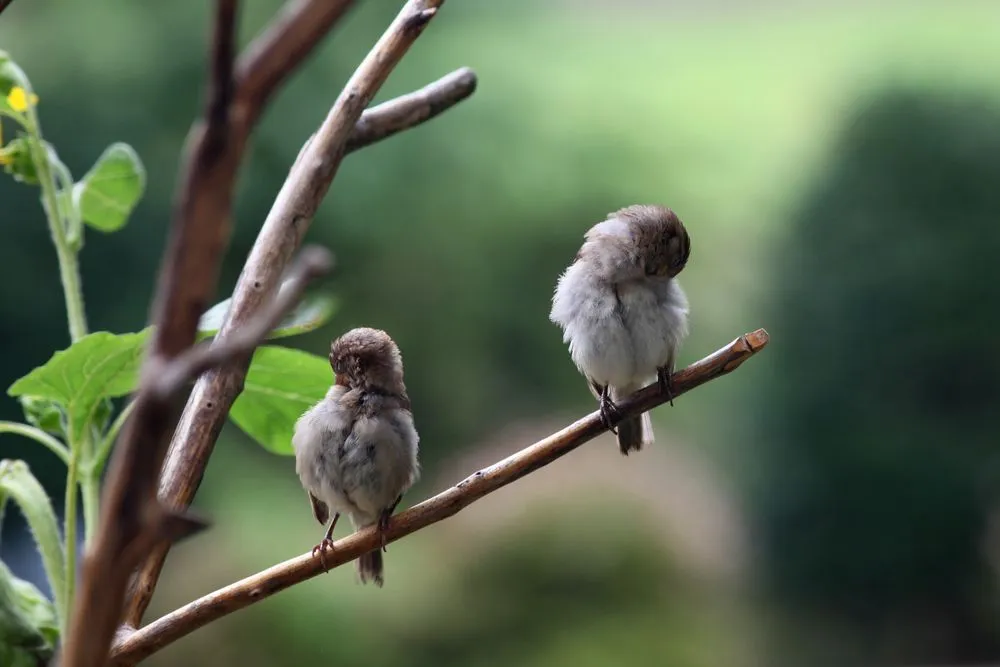
To stand perfectly balanced on a branch while the muscles become limp from sleep isn’t easy. Anyone who has tried to sleep standing on a train would know this. Birds manage to combat this limpness by locking their legs.
When a bird squats, its talons automatically and involuntarily bend and clutch tightly to the branch. Until the leg is straightened, the talons will not release. The key behind this mechanism is the bird’s flexor tendons.
Many perching bird’s feet have three toes in the front and one in the back. These toes are connected to a tendon that begins at the knee. A tendon is a tissue that connects muscles to bones. This tendon is called the flexor tendon. The locking mechanism happens as the knee and ankle of the bird bend, and the flexor tendon stretches, thus bending the bird’s toes.
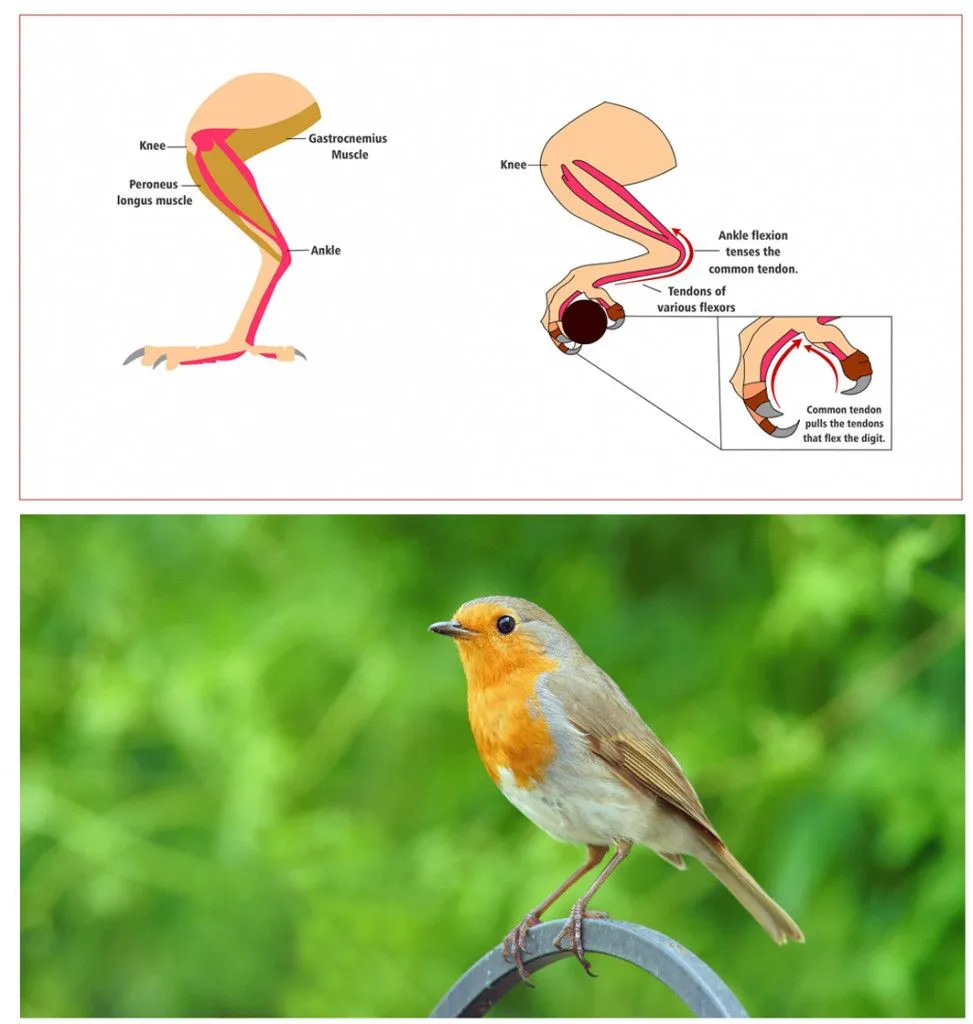
The locking mechanism also happens because the tissue covering the tendon has a rough surface, although it is smooth in most other animals. The rough surface creates friction between the tendon and the sheath, which helps lock the leg in place.
This so-called ‘automatic perching mechanism’ is a feature in most birds, allowing them to clutch to a branch without worrying about losing their grip and falling off. It is so good that parrots sleep hanging upside-down!
The locking mechanism comes in handy in other ways, too. For predatory birds, being able to firmly clutch their prey while flying to a safe place to feed is the difference between a full belly and starvation. It also helps birds to climb, swim, wade through water, and hang.
Exception To The Automatic Perching Mechanism
Dozens of papers found such a mechanism in different avian species, and the case seemed shut, but a paper published in 2012 found that sleeping European Starlings don’t use the locking mechanism when they sleep. The researchers observed that the birds bent their knees slightly, which was not enough for the locking mechanism to kick into action.
The bird’s toes, as a result, were largely unbent, and it balanced on the central pad of its feet while it slept. Additionally, they found that when the birds were anesthetized, they could not balance on the branch.
These results imply that there is more to how a bird balances as it sleeps than a simple brute-force grasp.
How Does A Bird Balance On A Branch?
Without the passive and automatic perching mechanism, the muscles of birds would need to be stiff. Birds can, when called for, not go completely limp. Research on geese, flamingos, and frigates shows that birds can maintain some muscle stiffness or tone when required. This might have something to do with birds being able to keep one brain hemisphere awake and the fact that they have short REM cycles. A minimal muscle tone is required for the bird to balance, sometimes even on a single leg.
However, besides muscle tone, several other systems might be at play to keep a bird perched and stable while they sleep.
One interesting discovery is that perching birds in particular have a unique balance organ in the hip, close to the buttocks. Called the lumbosacral organ, it sits around the spinal cord inside the synsacrum and has transverse fluid-filled canals that act somewhat like the semicircular canals of the inner ear. The original 2020 paper proposed that it could allow birds to keep their balance in addition to the vestibular system in their heads, so when a bird tucks its head away to sleep, the hip-balance system can take over. A follow-up 2025 study in the Journal of Morphology measured the lumbosacral organ across 36 bird species and found that strongly perching birds have proportionally larger ones than aquatic species do, which supports the balance hypothesis. It is no longer just conjecture.
How Do Birds Actually Sleep?
The perching lock explains why a bird does not tumble off its branch, but it says very little about what sleep itself looks like for a bird. As it turns out, bird sleep is nothing like ours. Perhaps its strangest feature is that a bird can send just one half of its brain to sleep at a time, a trick called unihemispheric slow-wave sleep. Because the two eyes feed into opposite sides of the brain, the half that stays awake can keep its eye open and watching while the resting half lets the other eye fall shut.

Niels Rattenborg and his colleagues showed just how handy this is. When they lined mallard ducks up in a row of clear tanks, the ducks on the ends spent far more of the night with one eye open than the ones nestled safely in the middle, and they kept that open eye pointed outward, away from the group, as though scanning for danger. Move a duck from the middle to the end of the row, and it promptly switched to sleeping half-awake. Birds can turn this vigilant, one-eyed sleep up or down depending on how risky their surroundings feel.
Most birds also sleep sitting or standing rather than lying down, which is exactly why the automatic perching mechanism earns its keep. Many go a step further and tuck one leg up into their belly feathers while burying the bill in the plumage of the back, just as flamingos famously do. This is not only about comfort. A bird's bare legs and feet shed a great deal of body heat, so folding one leg away and hiding the face shrinks the exposed surface and helps the bird hold on to warmth through a cold night.
How Do Parrots Grip A Branch And Sleep Upside Down?
This article has twice pointed out that parrots can sleep hanging upside down, which invites a fair question: how does a parrot get such a secure grip on a branch in the first place? Part of the answer is the same flexor-tendon locking mechanism that other perching birds rely on. The rest comes down to the unusual shape of a parrot's foot.

Most perching songbirds have anisodactyl feet, with three toes pointing forward and one pointing back. Parrots, along with woodpeckers and cuckoos, instead have zygodactyl feet: two toes (the second and third) face forward and two (the first and fourth) face backward. Biologists consider anisodactyly the ancestral pattern and think the two-forward, two-back layout evolved on its own several separate times, mostly in birds that climb and clamber.
Splitting the toes into two opposing pairs turns the foot into something closer to a pincer, or even a hand. It gives a parrot a powerful wrap-around grip, ideal for clinging to vertical trunks, shuffling along branches, and holding on tightly enough to doze while dangling. It is also why parrots are so dexterous with their feet, routinely lifting food up to the beak and turning it over the way we would use a hand. Combine that pincer grip with the involuntary tendon lock, and hanging upside down for a nap stops looking like a circus act and starts looking like sound engineering.
Conclusion
Studying bird sleep has its own challenges. For one, birds are a diverse and eclectic bunch, with different bodies, physiologies, and behaviors depending on which species, genera, or family one studies. Sleep cycles differ just as widely.
An ostrich, for instance, doesn’t sleep perched anywhere. The largest bird on Earth couldn’t climb a tree if its life depended on it. Most flightless birds sleep on the ground, hidden among the foliage, or with their head lowered close to it (the “head in the sand” image is a myth, as ostriches lower their heads to the ground when threatened or to turn eggs in the nest, but they do not bury them). Some other birds sleep standing on one leg in shallow water, like flamingos.
Even when we consider the automatic perching mechanism, the shape of a bird’s foot comes into play. Bird feet are adapted to different purposes, so the way they stand and the movement of their feet might also be different.
We may not know the whole story yet, but there is no denying how remarkable it is that birds manage this balancing act daily!
References (click to expand)
- GALTON, P. M., & SHEPHERD, J. D. (2012, April). Experimental Analysis of Perching in the European Starling (Sturnus vulgaris: Passeriformes; Passeres), and the Automatic Perching Mechanism of Birds. Journal of Experimental Zoology Part A: Ecological Genetics and Physiology. Wiley.
- Quinn, T. H., & Baumel, J. J. (1990, July). The digital tendon locking mechanism of the avian foot (Aves). Zoomorphology. Springer Science and Business Media LLC.
- Rattenborg, N. C. (2017, February 6). Sleeping on the wing. Interface Focus. The Royal Society.
- Chang, Y.-H., & Ting, L. H. (2017, May). Mechanical evidence that flamingos can support their body on one leg with little active muscular force. Biology Letters. The Royal Society.
- Stanchak, K. E., French, C., Perkel, D. J., & Brunton, B. W. (2020). The Balance Hypothesis for the Avian Lumbosacral Organ and an Exploration of Its Morphological Variation. Integrative Organismal Biology.
- Ecomorphological Analysis of the Bird Lumbosacral Organ in an Evolutionary Context (2025). Journal of Morphology. Wiley.
- Rattenborg, N. C., et al. (2016). Evidence that birds sleep in mid-flight. Nature Communications, 7, 12468.
- Rattenborg, N. C., Lima, S. L., & Amlaner, C. J. (1999). Half-awake to the risk of predation. Nature. Nature Publishing Group.
- McQueen, A., Barnaby, R., Symonds, M. R. E., & Tattersall, G. J. (2023). Birds are better at regulating heat loss through their legs than their bills. Biology Letters. The Royal Society.
- Botelho, J. F., Smith-Paredes, D., & Vargas, A. O. (2015). Altriciality and the Evolution of Toe Orientation in Birds. Evolutionary Biology. Springer.