Table of Contents (click to expand)
Yes, horses sleep standing up. A built-in “stay apparatus” of locking tendons and ligaments lets them doze on their feet so they can bolt from predators in an instant. But they only get true REM sleep lying down on their side, which is why horses also need to lie flat for short stretches each day. In total, an adult horse sleeps about 3 to 5 hours in 24 hours.
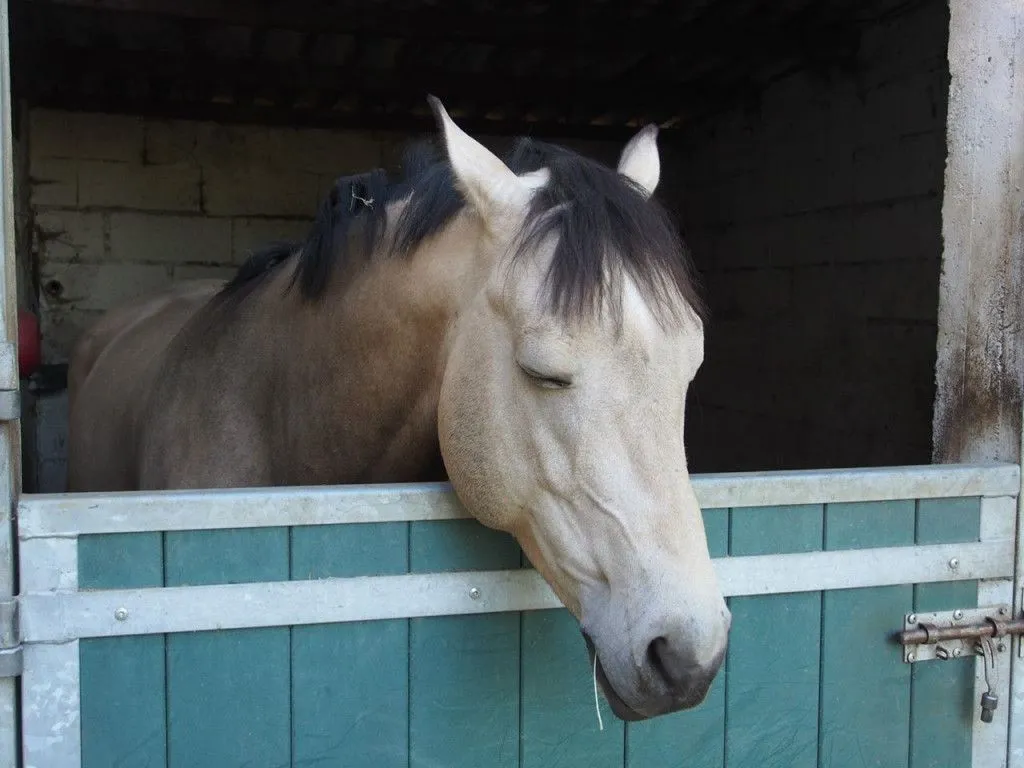
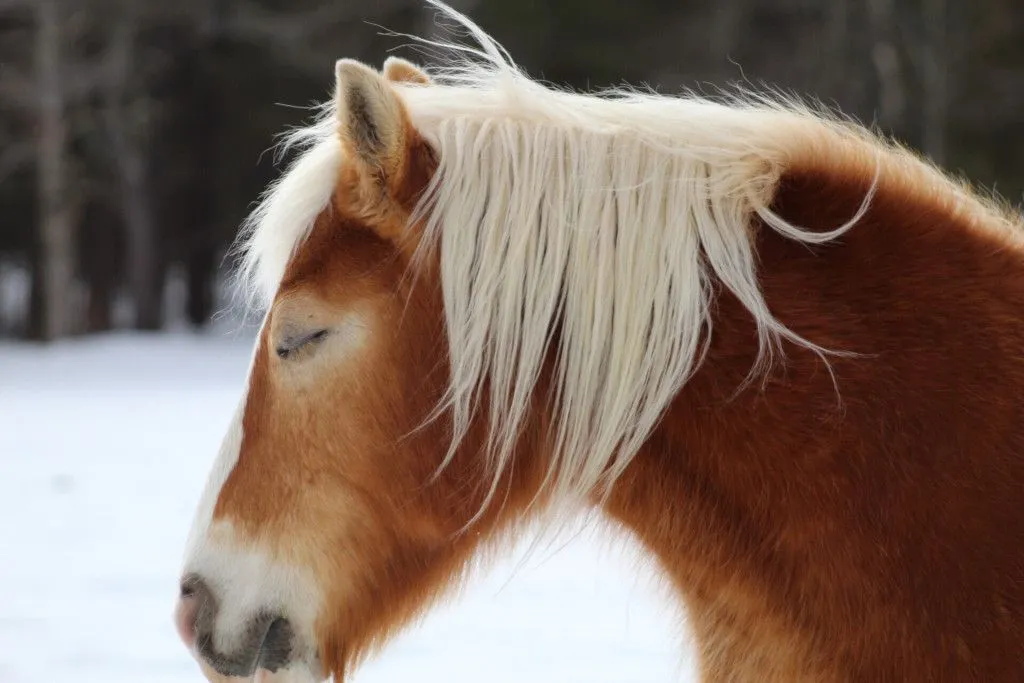
Horses are majestic creatures. If you’re lucky enough to have the time, the resources, and the opportunity to watch a horse for a day or two, you may notice that, in the middle of the day, while the sun is shining bright outside, the horse may doze off… while standing up straight. Eyes shut, head bowed down slightly. The horse seems to have escaped to horse dreamland. After several minutes, it opens its eyes and appears to rejoin reality.
This behavior has intrigued those who breed horses, as well as researchers who study sleep. Why do horse sleep while standing up straight and how do they manage to do so without falling over?
How Do Horses Sleep
Horses do sleep standing up, but that isn’t the whole story. There are, to put it broadly, two types of sleep: slow wave sleep (SWS) and REM sleep (also sometimes called paradoxical sleep).
Horses, just like many other mammals, lay down and curl up for a good deep sleep when they need it. This is most commonly observed at night, when it’s dark and the temperature is cooler. Lying down is also the only way a horse gets proper REM sleep, because during REM the body goes almost completely limp (the muscle “off-switch” that stops you from acting out your dreams), and a standing horse would simply topple over. A horse only spends about 30 to 60 minutes a day in REM, usually broken up into several short bouts of roughly 5 to 15 minutes each.
Slow wave sleep, as the name suggests, is when the brain waves are slow (and regular). Though the name has slow in it, it is a lighter form of sleep, akin to dozing off for a brief time. Horses can slip into SWS while standing, and they use this drowsy state to top up their daily quota of rest. Just as humans are recommended to have 7 to 9 hours of sleep per day, an adult horse needs only about 3 to 5 hours per day, with most of it in SWS and only a small slice in REM.
Horses take their slow wave sleep not as lengthy siestas, but rather like an overworked employee in a corporate job with impending deadlines and a mountain of student debt (in short bursts scattered across the day and night). This is when the horse’s unique standing behavior comes into play.
Horses take many of these short naps standing up!
Why Horses Sleep Standing Up
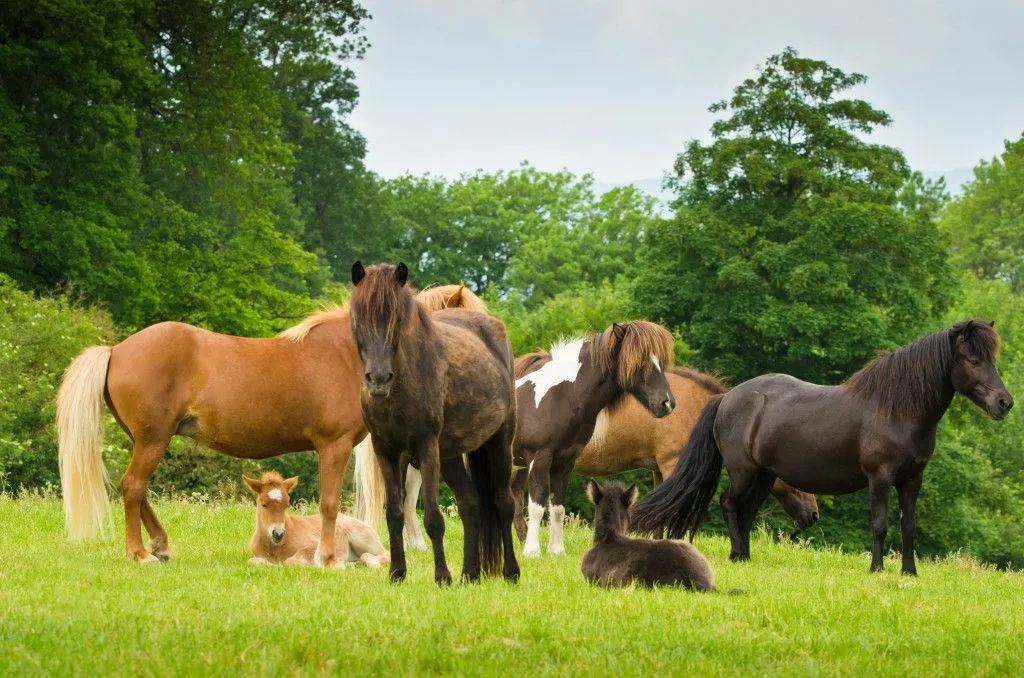
In the wild, horses are prey for big carnivores like wolves and cougars. Lying down to sleep, even for shallow slow wave sleep, leaves them vulnerable, and getting back up takes precious seconds. Even a split second is enough to tip the odds between life and death. Snoozing on their feet lets a horse rest while staying ready to bolt at the first hint of trouble.
Horses in herds don’t all sleep at the same time. One or two stand sentry, on the lookout for potential predators or other signs of danger, while the rest doze; constant vigilance is the name of the game. Only when at least one herd-mate is keeping watch will the others feel safe enough to actually lie flat for REM sleep.
In a stable, there isn’t much danger of a carnivore, but the behavior has persisted.
How Horses Sleep Standing Up
When sleep overtakes the senses, the muscles relax and one becomes limp. Standing up usually requires active effort from the muscles throughout the body, not only those of your legs to support you, but also muscles in the rest of the body to keep you balanced so that you don’t fall over.
Stay Apparatus Of Horse
However, the horse’s body has a feature that helps it sleep as it stands with minimal effort: the stay apparatus.
The stay apparatus is an arrangement of muscles, tendons and ligaments running through both the front and back legs of the horse, designed so that the leg can support the body’s weight with hardly any muscular work. In the front legs, ligaments brace the carpus (the horse’s “knee”) and fetlock. In the back legs, the horse can hook the kneecap (patella) over a small ridge at the top of the thigh bone, mechanically locking the stifle and, via a linked “reciprocal” apparatus, the hock joint as well.
When horses begin to doze off, they engage the locking mechanism in three of their legs and rest the fourth, usually a hind leg that you’ll see slightly bent and resting on the toe. The other three legs, with their joints locked, carry the weight of the horse as it snoozes. After some time, the horse will swap which hind leg is resting to prevent fatigue.
Do Other Animals Sleep Standing Up?
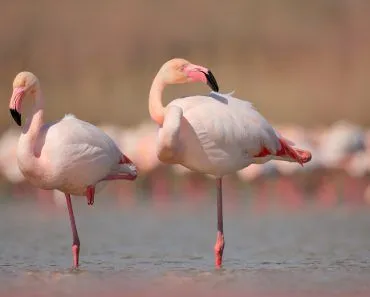
Horses aren’t the only animals that have short sleep durations and a vertical sleep position. They are part of a small group of animals that can sleep standing up. Other large mammals such as giraffes, elephants and cattle can also doze on their feet, although, like horses, they have to lie down to get any real REM sleep. Many birds sleep upright too, and even on one leg! The famous example is the flamingo, which can prop itself on a single leg with almost no muscular effort thanks to a passive, gravity-driven locking mechanism in its hip and knee. Many other birds use a unique perching mechanism to sleep on branches without falling off.
A Final Word
Researchers study such unique sleeping patterns to get a deeper insight into the purpose of sleep. Though we know much about the effects of sleep on the body (through what happens when one is sleep deprived), fundamental questions about why and how sleeping evolved remain to be answered!
References (click to expand)
- Schuurman, S. O., Kersten, W., & Weijs, W. A. (2003). The equine hind limb is actively stabilized during standing. Journal of Anatomy, 202(4), 355-362.
- Chung, E. L. T., Khairuddin, N. H., Azizan, T. R. P. T., & Adamu, L. (2018, July). Sleeping patterns of horses in selected local horse stables in Malaysia. Journal of Veterinary Behavior. Elsevier BV.
- Greening, L., & McBride, S. (2022). A Review of Equine Sleep: Implications for Equine Welfare. Frontiers in Veterinary Science.