Table of Contents (click to expand)
No, we cannot send our trash to the Sun. Counterintuitively, hitting the Sun is harder than leaving the solar system, because a probe must cancel Earth's ~30 km/s orbital speed first. Even at today's cheaper launch prices (roughly $1,000 to $1,500 per pound), disposing of our garbage this way would cost trillions of dollars.
There’s no denying that we have a trash problem on Earth – a big one. Over the past hundred years, the amount of trash that we have produced as a global culture is astonishing, and pretty disgusting!
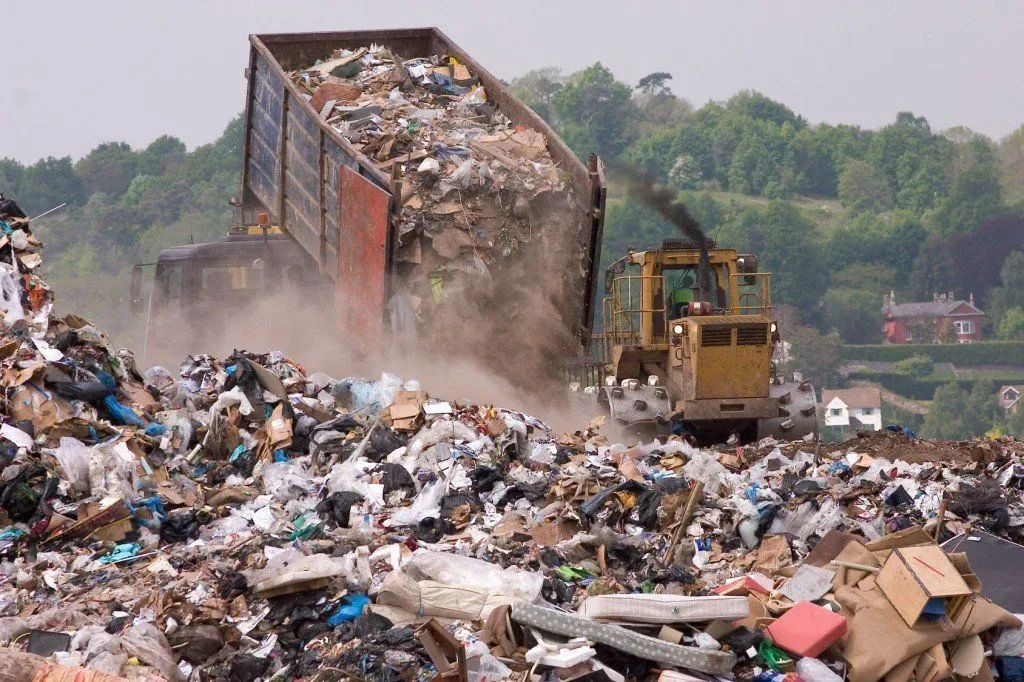
We’ve recognized the dangers of excessive landfills and the simple space issue of where to put it all. Some people suggest sending it to the bottom of the ocean, dropping it into a volcano, or even launching it into space.
We do have a superheated star at the center of our solar system that could disintegrate all of our trash, but would it even be possible for us to send our trash to the sun?
Problems Before We Even Get Off The Ground
The immediate issue that comes up after any suggestion of blasting trash into space is the incredible cost. For decades, the popular figure was that it cost about $10,000 per pound just to reach low orbit, the number quoted throughout the Space Shuttle era. Reusable rockets have since slashed that. SpaceX’s Falcon 9 now lists at roughly $2,700 per kilogram (about $1,200 per pound) to low-Earth orbit, and the heavy-lift Falcon Heavy comes in around $1,500 per kilogram. Even so, propelling something as small as a garbage can all the way to the Sun would still cost a fortune.

When we talk about our “trash problem” on Earth, it’s no laughing matter. On average, the United States generates close to 300 million tons of municipal solid waste every single year (about 292 million tons, per the EPA’s most recent figures), and that’s only ONE country (roughly 4% of the world’s population). If we legitimately wanted to send all of that to the Sun, it would cost hundreds of trillions of dollars to do so, given our current technology. US GDP is only about $29 trillion a year, nowhere close to the cost of such a massive endeavor.
There have been recent advances in launch fuel efficiency, as well as theoretical plans for a space elevator that would drop by the cost of launching things nearly a hundredfold. However, even the idea of spending $1 trillion on garbage disposal per year, when landfills and terrestrial solutions are considerably cheaper, is impractical.
In terms of getting to the Sun, is it even possible? Here’s the counterintuitive part: dropping something into the Sun is actually harder than flinging it out of the solar system entirely. The Earth, and everything launched from it, is already racing around the Sun at about 30 km/s (roughly 67,000 mph). To make a payload fall inward, you have to cancel out almost all of that sideways speed, otherwise the trash just settles into orbit and circles the Sun forever, exactly like the Earth does. Wiping out 30 km/s of orbital velocity takes far more fuel than the 11 km/s needed simply to escape Earth’s gravity, so a “trash can shot” at the Sun is one of the most demanding maneuvers in spaceflight.
It would be far less expensive and much more efficient to simply send our garbage straight out into empty space, or even to our nearby moon, rather than trying to calculate the precise movements and countless variables for an accurate “trash can shot”.
But Let’s Just Say We Did It…
Supposing that the cost of rocket launching continued to drop, and we eventually chose to eliminate waste and garbage from the planet by shooting it towards the Sun, there would still be major problems. Firstly, as we have seen in many rocket launches (most famously the Challenger disaster in 1986), tragedies can happen during any attempt to leave our atmosphere. You might think nuclear waste, one of our most dangerous forms of garbage, would be a logical candidate to fire off towards the Sun.
Disposing of unwanted refuse or nuclear waste could be tricky, particularly if the shuttle were to explode or crash, thus spreading trash or radiation into the atmosphere, which could be disastrous to the environment below. The risk simply wouldn’t be worth the payoff, considering that digging holes and burying things in them is something humans are quite skilled at.
The Good Side Of Garbage
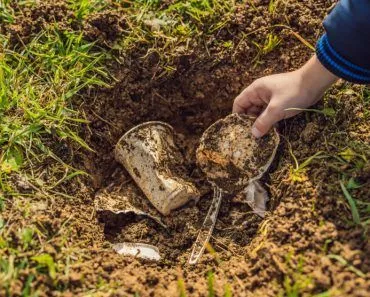
Since sending the trash to space is clearly a bad idea, the solution should be to improve how we handle and dispose of garbage on the planet. Recycling, for instance, should be as close to 100% as possible, because plastics and many other manmade materials do not decompose like organic matter. A banana peel can break down in a matter of weeks, while a plastic bottle can take roughly 450 years to degrade.

Furthermore, our organic garbage should be used efficiently, rather than thrown off the planet. Organic material slowly rots and breaks down, eventually becoming the soil that the Earth needs for cyclical growth and life.
Spreading Our Problems Into Space
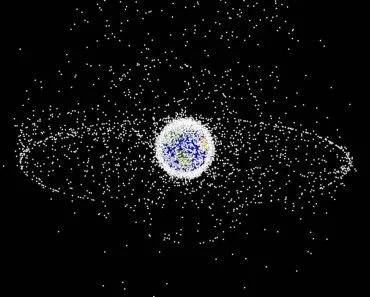
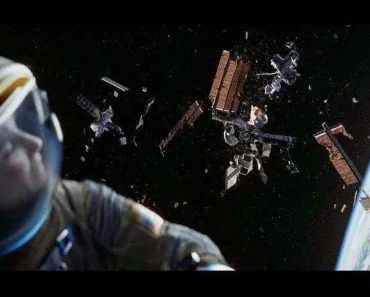
From a philosophical standpoint, chucking our trash into space is essentially passing the buck somewhere else. We would be pretty upset if an alien race began throwing its toxic waste into our solar system, and cluttering up our solar system and galaxy, despite the impossibly large scale of it, seems wrong on pure principle. Earth’s orbit is already filled with “space junk”. NASA tracks more than 25,000 objects larger than 10 cm and estimates there are over 500,000 pieces bigger than a marble, all constantly circling our planet and threatening to damage space stations and spacecraft because of their blistering speed (up to about 17,500 mph, or 28,000 km/h).
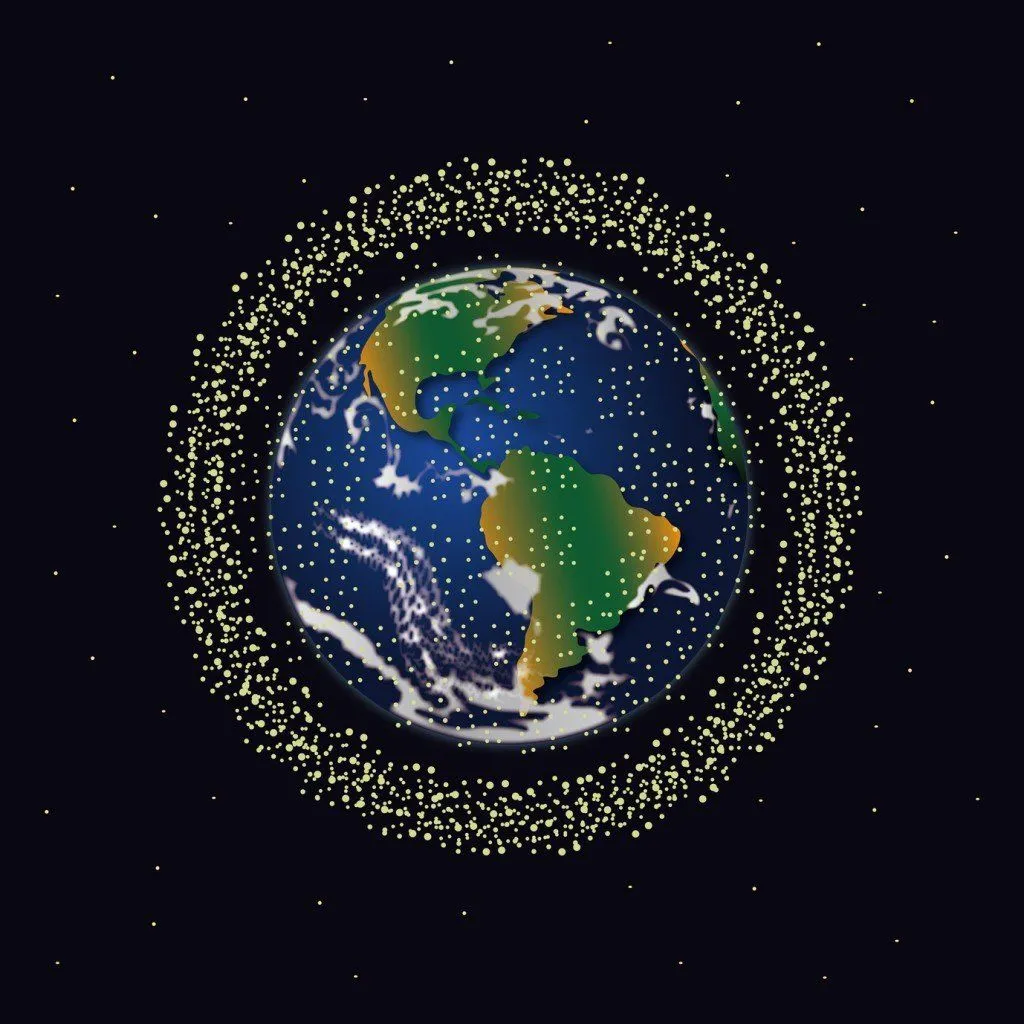
The more material we send up into space, the more cluttered our orbit becomes, making it more dangerous for every future launch and mission. We’ve already backed ourselves into a corner here on Earth with our garbage; let’s not do the same thing out in space!
References (click to expand)
- Here's Why We Can't Just Throw Our Garbage Into the Sun. Popular Mechanics
- Why don't we shoot garbage into the Sun? - BBC Future. BBC Online
- Launching a Rocket to the Sun. Physics Van, University of Illinois
- National Overview: Facts and Figures on Materials, Wastes and Recycling. US EPA
- Orbital Debris Program Office: Frequently Asked Questions. NASA