There is no single way to clean up space junk yet, but engineers are tackling it from two directions: stopping new debris (deorbiting dead satellites within five years) and removing what is already up there. Real missions like RemoveDEBRIS, Astroscale’s ADRAS-J, and ESA’s ClearSpace-1 are testing nets, magnets, and robotic capture, alongside concepts using lasers, drag sails, and tethers.
Human beings as a species are innately messy. To verify this, just step outside and look at what we’ve done. If it were just trashcans overflowing on the street corners, or garbage piles in every spare nook and cranny, we could just clean it up.
However, considering that there’s trash at the deepest point on Earth, the Marianas Trench, it’s clear that we’ve gone beyond a simple tidy.
Space Is Filled With Trash!
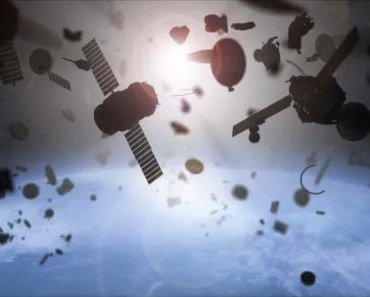
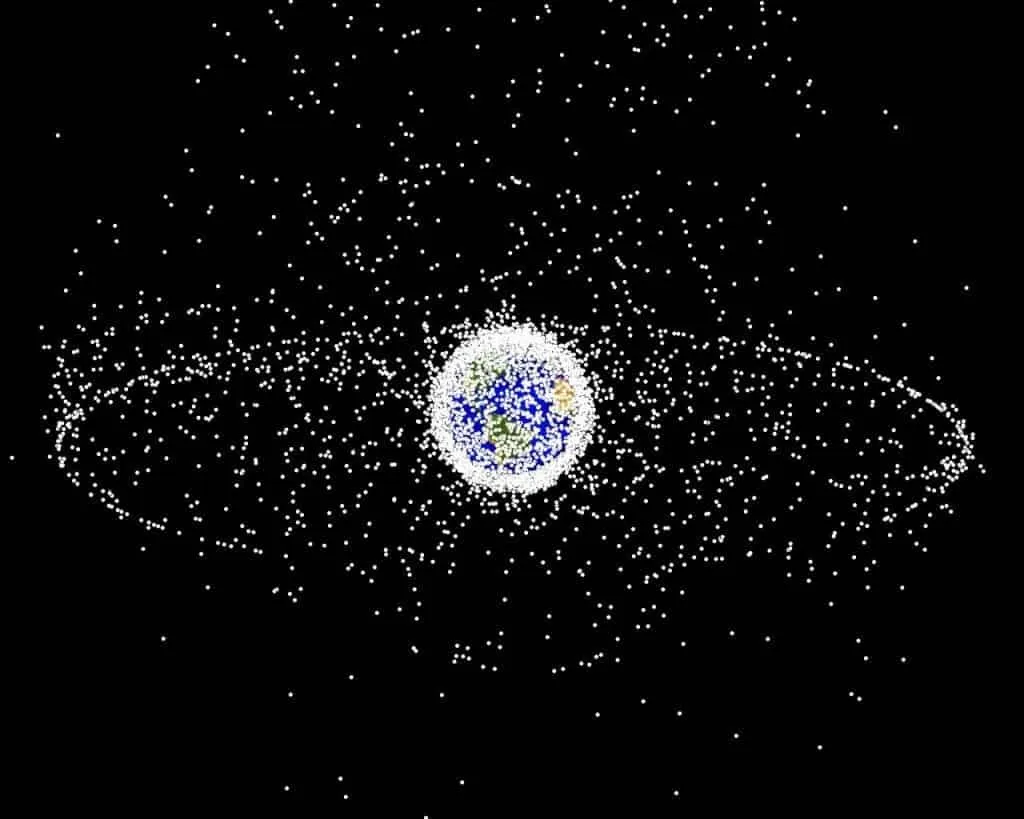
If you thought it couldn’t get any worse than that, we’ve also managed to use the space around our own planet as a dumping ground. Since the start of the space age in 1957, more than 25,000 satellites have been placed into orbit, of which about 17,600 remain in space (per ESA’s April 2026 figures). Only a fraction, about 15,200, are still working. Our planet is therefore orbited by thousands of dead satellites, along with spent rocket stages and fragments from all the launches and collisions we’ve racked up over the years. This is collectively known as ‘space debris’.
And those are just the big pieces. Space surveillance networks routinely track roughly 40,000 objects, but ESA’s models estimate there are around 54,000 debris objects larger than 10 cm (about 4 in), some 1.2 million between 1 and 10 cm, and a staggering 130 million fragments between 1 mm and 1 cm. All told, that’s over 13,000 tonnes (roughly 14,300 US tons) of human-made clutter circling Earth.

Is Space Junk Even That Big Of A Deal?
The answer is – YES.
The ghosts of our past explorations haunt the possibilities for our future. Sending satellites into Earth’s orbit requires building up a lot of speed, with objects in low Earth orbit moving at roughly 7-8 km/s (about 17,000 mph). At those speeds, even a stray paint fleck or a bolt the size of a marble carries the punch of a hand grenade, so a collision with one of the tens of thousands of tracked fragments could be catastrophic.
According to NASA, hundreds of thousands of untrackable objects in orbit around our planet jeopardize functioning satellites and even astronauts. And here lies the real nightmare: a runaway chain reaction known as Kessler syndrome. Named after NASA scientist Donald Kessler, who described it in 1978, it’s the scenario where one collision creates a cloud of fragments, those fragments smash into other satellites, and the debris keeps multiplying until certain orbits become a no-go zone, possibly for generations. The more crowded our orbit gets, the harder it becomes to navigate.
That crowding is no longer hypothetical. The rise of mega-constellations has packed low Earth orbit tighter than ever, with SpaceX’s Starlink alone operating roughly 9,000 satellites (close to two-thirds of all active spacecraft) and reportedly performing around 300,000 automated collision-avoidance maneuvers in 2025. More traffic means more near-misses, and every near-miss is a reminder of how little margin we have left.
How Can We Reduce This Space Junk?
Before looking at ways to pick up what we’ve left behind, the better way would be to understand how to minimize what we take with us in the first place, and thus look into ways of generating lesser debris. This requires extensive devising and implementing in the initial stages of planning a mission.
Instead of letting spacecraft die out at the end of their missions, operators should ensure they have enough fuel to send them into an alternate orbit or guide them back into Earth’s atmosphere to burn up. Regulators are pushing this too: in 2024 the US Federal Communications Commission’s new “5-year rule” took effect, requiring operators to deorbit low Earth orbit satellites within five years of mission end, a sharp tightening of the old 25-year guideline. Also, having a talk with astronauts to be a little less clumsy could be a good idea too.
Leaving things in space that they don’t plan on using again could put a wrench in the middle of our space plans (literally).

But What About The Junk That’s Already Out There?
With researchers and academics coming up with novel solutions to reduce this increasingly relevant problem, we’re also seeing some unique (and super cool) solutions pushed through on the forefront. These include taking defunct satellites out of orbit so they can burn up in the atmosphere.
International guidelines have long called for operators to remove satellites from orbit within 25 years of mission end, and as noted above, the US has since cut that window to just five years. Reducing the time a satellite lingers in space drastically lowers the chance of collisions!
There are two orbits that satellites move in, the Low Earth Orbit (LEO), a crowded orbit close to the Earth where thousands of satellites move, and the Geostationary Earth Orbit (GEO) at a higher altitude, where satellites remain stationary at a single point above Earth.
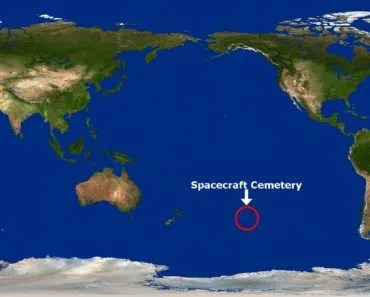
The satellites in GEO, at the end of their life, are moved into a ‘graveyard orbit’ at a much higher altitude, away from the functional orbits, where they are left to drift.
On the other hand, the satellites in the LEO are pulled back into Earth’s atmosphere. There are several methods of doing this. Various missions have been deployed by countries to de-orbit satellites and several more are in the testing stage.
- Space Recycling – The ‘graveyard orbit’ is a dumping ground of satellites where flashes of light are often spotted, most likely due to leftover fuel in satellites, which can potentially harm functioning satellites. By repairing, repurposing, and recycling satellites at a facility in Earth’s orbit, we could use what’s already floating out there to build future spacecraft or mission outposts.
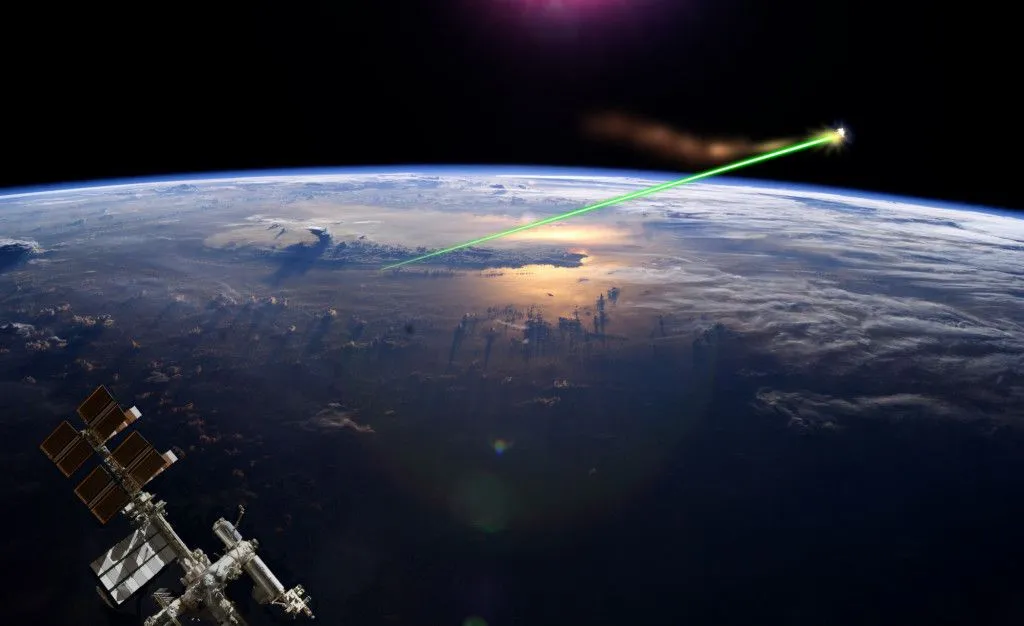
- Giant lasers – High-powered pulsed lasers can be used to fire plasma jets at the space debris from Earth to slow it down and let it re-enter, burn up in the atmosphere, or fall into the ocean.
3. Giant Space Balloons – The GOLD system (Gossamer Orbit Lowering Device) is a potential method using a lightweight, ultra-thin balloon the size of a football field. It would be attached to large pieces of debris to increase the air drag of the objects and allow them to re-enter Earth’s atmosphere.
4. Tungsten Dust Clouds – This involves sending tons of tungsten dust into space, enough to form a cloud around the planet, to which space junk would adhere, causing it to become heavier and fall back to Earth.
5. Space Pods – A Russian organization plans on building a special pod with a nuclear power core that would bring 600 satellites back to Earth, where they would either burn up or drop into the ocean.
6. Space Electric Vehicle – The Electrodynamic Debris Eliminator (EDDE) is a space EV with 200 giant lightweight nets to pick up space junk.
With several such plans like these in the works, we can ensure that the age of space exploration (which has only just begun) doesn’t come to a crashing halt (literally!). However, we’ve still got a long way to go, so if you have any bright ideas, speak up!
What Are We Actually Doing About It?
Plenty of those ideas have already left the drawing board. Over the past few years, a handful of real missions have started testing active debris removal (ADR) in orbit, and the results are encouraging.
The first big proof of concept was RemoveDEBRIS, led by the UK’s University of Surrey. Launched from the International Space Station in 2018, it fired a net to snare a test target in September 2018, then in February 2019 became the first mission to fire a harpoon at a target plate in space. It later deployed a drag sail to pull itself down. Crude, maybe, but it proved nets and harpoons can actually catch space junk.
Japanese company Astroscale has pushed things further. Its ELSA-d mission demonstrated magnetic docking with a client satellite before wrapping up in 2024, and its ADRAS-J spacecraft, launched in 2024, became the first to safely rendezvous with a real, uncooperative piece of debris (a discarded Japanese rocket upper stage), creeping to within about 15 meters (50 ft) to photograph and inspect it. You cannot remove what you cannot first get close to, so this inspection step is a genuine milestone.
The European Space Agency, meanwhile, is funding ClearSpace-1, billed as the world’s first mission to actually grab and deorbit a piece of debris with a robotic four-armed “claw.” In a twist that says everything about the problem, its original target (a leftover Vega rocket adapter) was itself struck by other debris in 2023, forcing the team to switch to a different target. After the resulting redesign, the launch has slipped toward the late 2020s. The very objects we want to remove keep getting harder to remove, which is exactly why cleaning up space is so urgent.
References (click to expand)
- ESA - Space debris by the numbers. The European Space Agency
- Space Debris: Understanding the Risks to NASA Spacecraft. The National Aeronautics and Space Administration
- Clearing space debris with lasers - SPIE. SPIE
- ESA Space Environment Report 2025. The European Space Agency
- Orbital Debris Frequently Asked Questions. NASA Orbital Debris Program Office
- Harpoon successfully captures space debris. University of Surrey
- Historic Approach to Space Debris: Astroscale’s ADRAS-J. Astroscale
- ESA commissions world’s first space debris removal. The European Space Agency
- FCC Adopts New 5-Year Rule for Deorbiting Satellites. Federal Communications Commission