Table of Contents (click to expand)
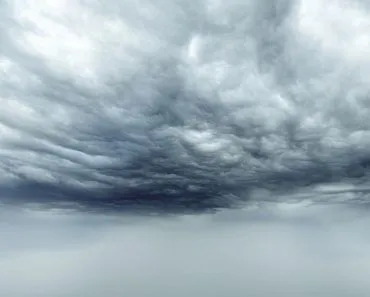
Clouds look dark because they are thicker and denser than the fluffy white clouds of a fair-weather day. As a cloud gathers more water droplets and ice crystals, it becomes thicker, scatters more light back upward, and lets less sunlight through to the underside. That under-lit base is what you see from the ground, and it can shade from grey to nearly black just before it rains.
Once when I was traveling in an airplane, I was sitting in a window seat (thankfully!) and I was looking out over the clouds. They were white and fluffy, as expected, but when the plane landed and I looked up again, the clouds were grey and ominous. I amused myself by imagining that the clouds were going through a mood swing.

Seriously though, why would this sort of color-shifting occur?
To answer that, we need to start with how clouds are formed.
Cloud Formation
Clouds are formed by the condensation of water vapor, which is actually packed into air all around us. When air near the ground warms up, it rises, taking the water vapor along with it. This warmed air begins to cool as it rises higher, causing the water vapor to condense on the dust particles present in the air.
When that vapor condenses, it results in the formation of water droplets and ice crystals, which then come together to form clouds!
Alright, so now that we understand how clouds get up in the air, let’s give them a bit of color.
The tiny water droplets and ice crystals that make up clouds are ideal for scattering all the colors of light (unlike the small molecules in the air that scatter blue light, causing us to see the sky as blue), which is why we see white clouds most of the time when we look above us.

Basically, when clouds are thin, they allow light to pass through in large amounts, so they appear white.
Why Are Some Clouds Dark?
That doesn’t explain the threatening presence of dark clouds, which usually signal a gloomy day or a bad storm. Clouds appear dark when they are thicker and denser than normal clouds of a day of mild weather.
As a cloud gathers more water droplets and ice crystals, it becomes thicker and allows less light to pass through it. The top part of the cloud still scatters light (as it receives more light from the sun above), which is why clouds still appear to be white when seen from an airplane. However, the bottom of the cloud receives less light to scatter. Therefore, when the airplane lands, the clouds look grey when seen from the ground. As the water droplets and ice crystals in the cloud thicken (when it is about to rain), they scatter much less light and appear almost black – and we know to run for cover!
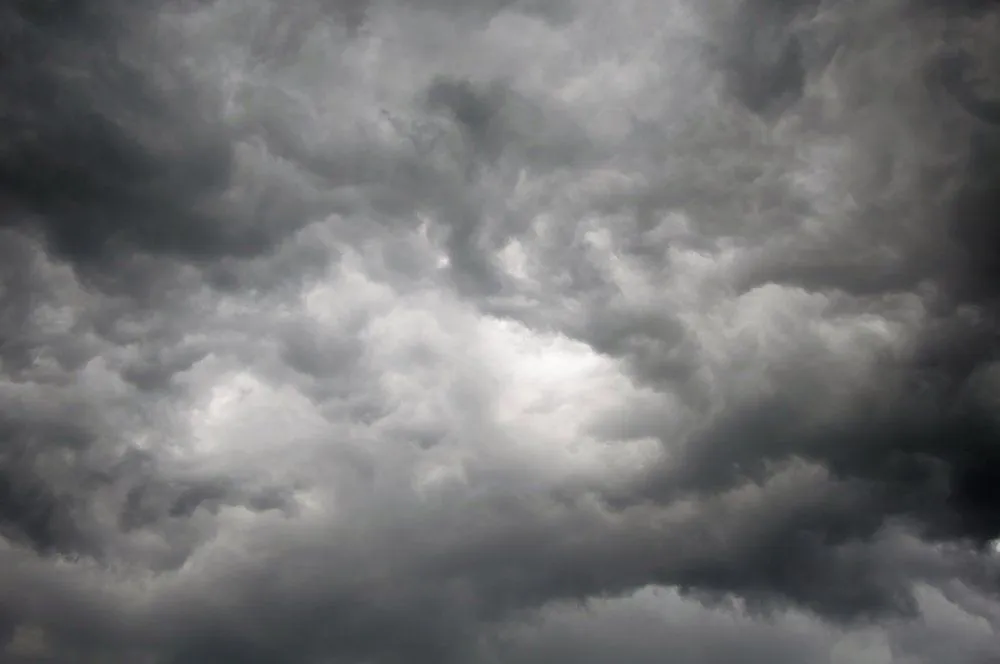
The next time you’re cloud-gazing, pay attention to the color variation: the bottom of clouds is usually more grey than the sides. When a cloud is thick in a certain area and light doesn’t reach all the way to the bottom, it simply escapes from the side.
The higher the cloud goes, the more grey and foreboding that its bottom appears to our eyes on the ground. However, there are a few other reasons why we see dark clouds from time to time. A cloud can also appear dark when there is another cloud overshadowing it. Clouds appear in many layers of the sky, so having multiple patches of clouds above one another is not uncommon. Also, the background of the sky can make clouds look dark. For example, a cloud will look much darker when it’s surrounded by a bright sky, as well as lighter when surrounded by a dark sky.

Have you ever experienced those eerie days when it feels like evening, despite it actually being the middle of the afternoon, or even the morning?
That happens when our bold and powerful sun is hidden behind the clouds. Once the clouds clear away, or are “burned off”, sunlight breaks through and we’re back to sweating and glowing in the afternoon heat.

Although the idea of clouds having mood swings is amusing, to say the least, as with most things, there is a legitimate scientific explanation for this peculiar phenomenon!
Do Dark Clouds Always Mean Rain?
Not always. A dark, brooding sky is a good hint that rain might be on the way, but it is not a promise. The grey we see tells us a cloud has grown thick and is holding a lot of water droplets and ice crystals. Whether any of that water actually reaches us on the ground depends on what is happening in the air beneath the cloud, and that part of the story is hidden from view.

Sometimes rain does fall from a dark cloud, yet it simply never makes it down to you. If the layer of air below the cloud is dry and warm enough, the falling droplets evaporate on the way down and vanish in mid-air. You can often spot this as soft, trailing streaks hanging from the cloud base that fade out before touching the ground. Meteorologists call those wispy curtains virga, from the Latin for "rod" or "branch". As the Met Office describes it, virga form when "falling rain or ice passes through an area of dry or warm air" and evaporates before reaching the surface. It is common on hot, dry afternoons, which is one reason you can stand under a menacing grey sky and stay completely dry.
So the next time the clouds turn ominous and the first drops never come, you are not being teased. The cloud was full, the rain did fall, and a thirsty layer of air below simply drank it before it could reach you.
Which Clouds Bring Rain, and Which Don't?
This is also why some clouds look so much darker than others sitting right beside them. Not every grey cloud is a rain cloud, and meteorologists actually sort clouds into types partly by how much water they carry and how thick they grow. A few names are worth knowing the next time you look up.

The classic heavy-rain cloud is the nimbostratus (the Latin nimbus means "rain"). The National Weather Service describes these as thick, dense layers that produce "steady rain or snow", and they grow deep enough to blot out the sun, which is exactly why they look so flat, grey and gloomy. The other big rainmaker is the towering cumulonimbus, the anvil-topped thundercloud that delivers short, intense downpours along with lightning and hail.
Plenty of dark-looking clouds, though, hardly rain at all. Flat stratus clouds form a uniform grey sheet that, in the words of the NWS, "may be precipitation-free or may cause periods of light precipitation or drizzle". Mid-level altostratus often greys out the whole sky ahead of a weather front yet drops little or nothing at the surface until it thickens. And the puffy fair-weather cumulus of a summer day, white on top with a flat grey base, usually just drifts past. So a grey ceiling overhead is really a question of which cloud you are standing under, not just how dark it looks.