Table of Contents (click to expand)
Yes. Organic farms are not chemical-free. Organic farmers regularly apply pesticides and fertilizers, both natural and some synthetic, that regulators permit. In the US, the USDA National List sets out exactly which substances are allowed, including copper sulfate, sulfur, and various copper, iron, magnesium, and potassium compounds. A few of these can be toxic in high enough doses.
This article is about organic food and its chemical-free claims.
Organic farming is one of the most popular types of alternate farming methods on a global scale. Among the reasons for its popularity is that people prefer not to consume chemicals in the form of pesticides, hormones and fertilizers along with their food. Organic farming has been introduced as a chemical-free sustainable farming method that is good for both the environment and the consumer.
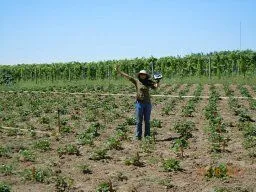
When we think about organic farms, we often think about small farming operations that grow a diverse set of crops with no chemical inputs like fertilizers or pesticides. The reality is that organic farms range in size from small family operations to large producers with global distribution.
Yet, a closer look at the requirements for organic certification will make it clear that organic food is not, in fact, free of all chemicals. For example, the organization Ecocert is an independent organization that issues organic certification to food products. Their website specifies that in order to get the ‘certified organic’ label, growers need to comply with the USDA organic agriculture requirements, and growers are allowed to spray only USDA-approved chemicals.
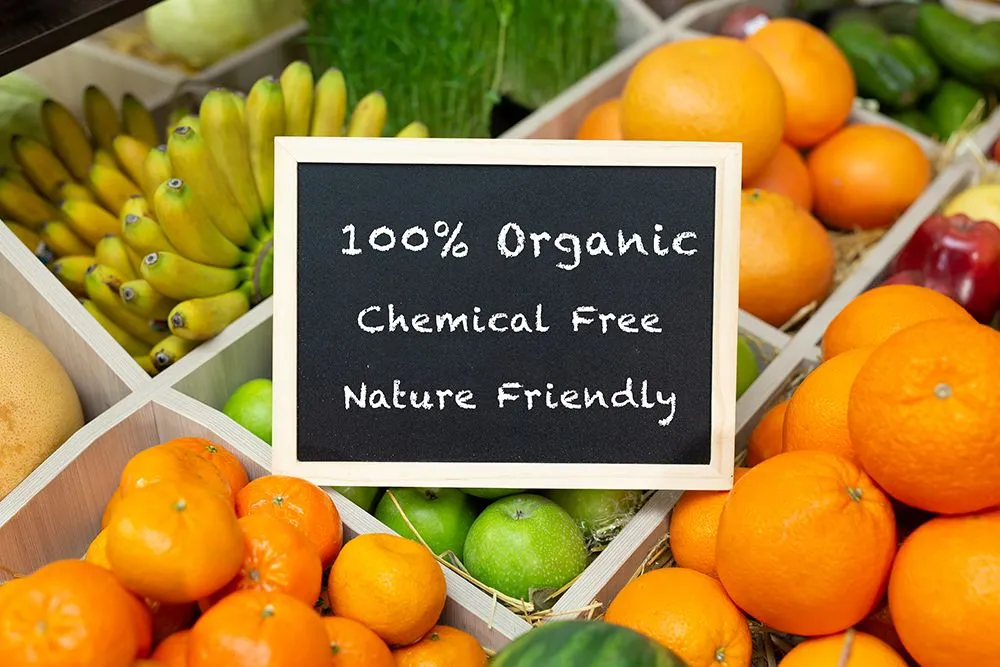
Organic Food Is Not Chemical Free
Organic farmers, like all other farmers, need to make sure that their crops have adequate nutrition, and are protected when diseases and pests attack the crops.
To ensure their crops return a decent yield, organic farming regulation programs allow organic farmers to add certain nutrients and spray pesticides on their farms. There are natural and some synthetic chemicals that organic growers are allowed to use, and there are exceptions.
For example, in the US, the US Department of Agriculture (USDA) maintains the National List of Allowed and Prohibited Substances, which spells out exactly which natural and synthetic chemicals organic growers can use. The USDA also publishes a grower-friendly guidance document summarizing these substances. A quick review of these lists shows they include chemicals such as sulfur, copper, iron compounds, magnesium compounds, potassium compounds, enzymes, and many more.
Similarly, the EU has a list of approved substances that organic growers are allowed to use. This list also includes chemicals like copper, sulfur, calcium hydroxide and various others.
Of particular interest on this list are sulfur and copper.
Is Copper Harmful?
Copper is used by organic farmers to kill algae, bacteria, fungi, and roots (of weeds). However, a lesser-known fact is that copper and copper compounds have wide-ranging toxic effects in humans and animals.
A technical fact sheet on copper sulfate states that low-dose exposure to copper sulfate can lead to vomiting, diarrhea, and abdominal pain, while chronic inhalation of Bordeaux mixture (a combination of copper sulfate, lime and water used as an organic pesticide) can lead to lesions and scarring in the lung tissue. Doctors even have a name for this occupational condition: "vineyard sprayer's lung."
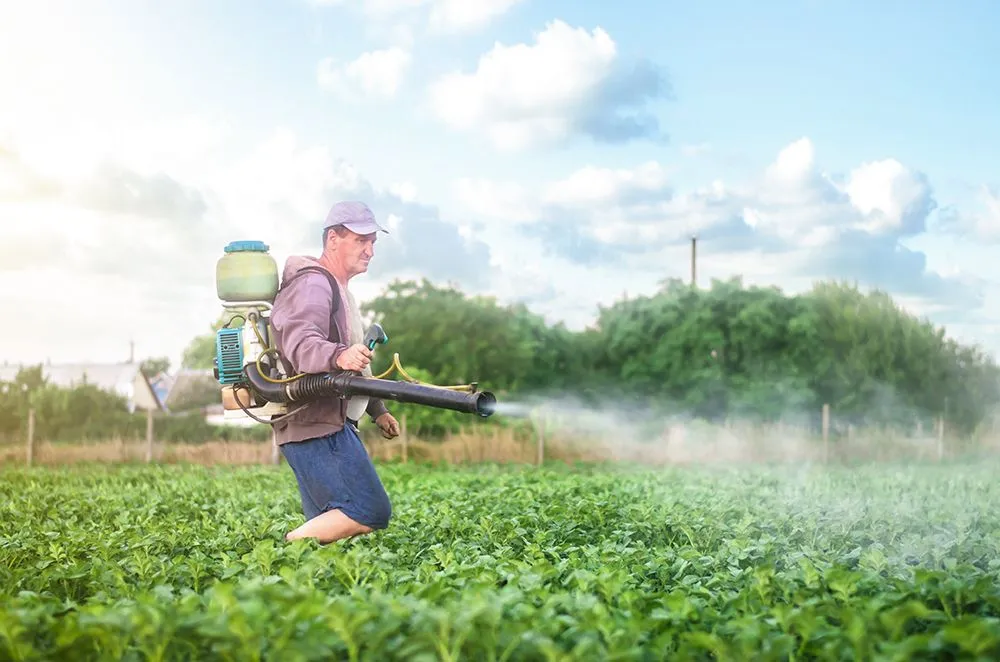
Is Sulfur Harmful?
Sulfur is another chemical that is permitted for use in organic farming as a nutrient, fungicide and pesticide. It is generally considered safe for humans and the environment.
However, a study of children in California's Salinas Valley found that when sulfur is used on farms close to residential areas, it can adversely affect children's respiratory health, resulting in asthma-like symptoms and reduced lung function. The study concluded that sulfur use on farms can contribute to respiratory problems in agricultural communities.
The Key Is How Much
A chemical is a chemical, whether it is naturally sourced or synthetically produced. Copper or sulfur from natural sources are as toxic as synthetically produced versions, if ingested in high quantities. The important thing to consider is how much we are consuming. How much of the chemical is left in or on the fruits and vegetables? How much of the fruit and vegetable do we eat?
Both organic and conventionally grown fruits and vegetables contain chemicals, but more often than not, these quantities are in such low doses that they are unlikely to cause physical damage.
A study analyzed the pesticide exposure resulting from consumption of the ‘dirty dozen’ fruits and vegetables.
The dirty dozen is a list of 12 fruits and vegetables that a US environmental advocacy organization, the Environmental Working Group (EWG), publishes each year as having the highest pesticide residues. (In the most recent edition, spinach and strawberries topped the list.)
The study concluded that pesticide exposure from all 12 fruits and vegetables was "well below established chronic reference doses (RfDs)". The authors further explained that even when there is pesticide residue, the consumer exposure risk is negligible. An RfD is defined as "an estimate (with uncertainty spanning perhaps an order of magnitude or greater) of a daily dose to the human population (including susceptible subpopulations) that is likely to be without an appreciable risk of deleterious health effects during a lifetime." In plain terms, it is a dose at which harmful health effects are unlikely, based on how much of that fruit or vegetable an average person eats.
Another extensive review comparing organic vs. conventional foods concluded that pesticide residues may be higher in conventional food, but there was no evidence that this residue has any harmful health effect. Again, this is because when it comes to residues, the dosage matters.
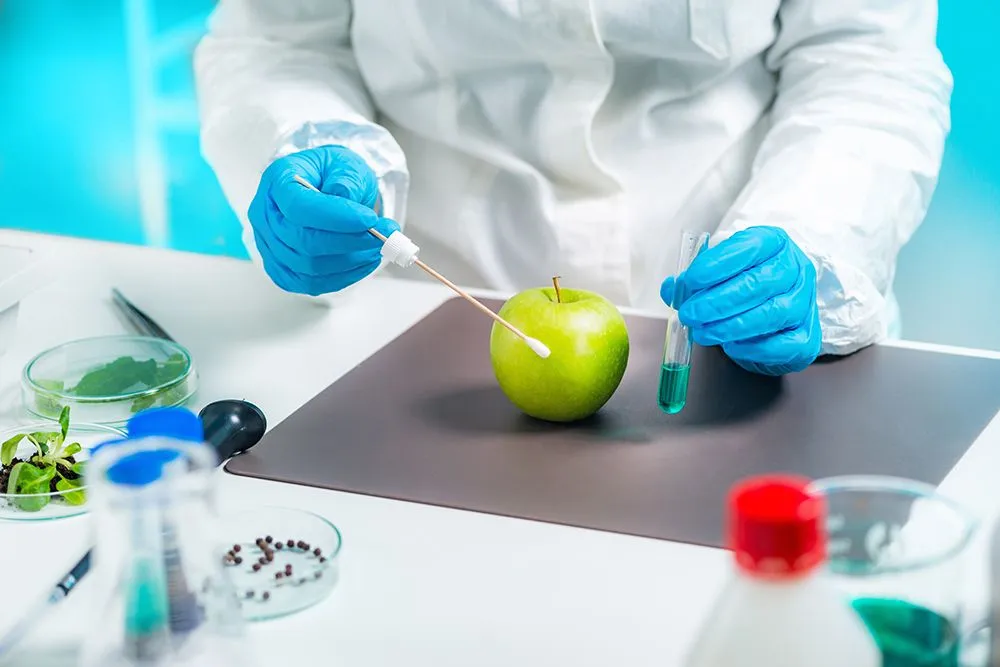
Should You Switch Organic Food?
The choice is yours. If you are consuming organic food because it is ‘chemical free’, then you know now that organic food also contains chemicals. You’ve probably noticed that organic fruits and vegetables are significantly more expensive than conventional products. If you are able to afford organic, go for it, but if the high price of organic food is preventing you from getting your daily nutrition from fresh fruits and veggies, please pick up the conventionally grown products. They are just as nutritious, and the risk of negative side effects from chemicals is low.
References (click to expand)
- Authority, E. (2018). Monitoring data on pesticide residues in food: results on organic versus conventionally produced food [JB]. EFSA Supporting Publications, 15(4).
- Winter, C. K., & Katz, J. M. (2011). Dietary Exposure to Pesticide Residues from Commodities Alleged to Contain the Highest Contamination Levels. Journal of Toxicology. Hindawi Limited.
- Raanan, R., Gunier, R. B., Balmes, J. R., Beltran, A. J., Harley, K. G., Bradman, A., & Eskenazi, B. (2017, August 16). Elemental Sulfur Use and Associations with Pediatric Lung Function and Respiratory Symptoms in an Agricultural Community (California, USA). Environmental Health Perspectives. Environmental Health Perspectives.
- The National List of Allowed and Prohibited Substances. Agricultural Marketing Service, US Department of Agriculture (USDA).
- Copper Sulfate Technical Fact Sheet. National Pesticide Information Center (NPIC), Oregon State University.