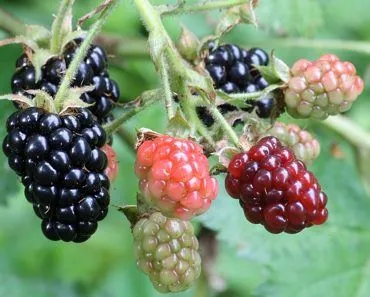
Fruits and vegetables look larger in the US than they do in India or any Southeast Asian or African country for a host of reasons, including customer preferences, transportation logistics and farming techniques.
Have you ever wondered why the vegetables and fruits on a US cooking show are so much larger and glossier than than the ones you see in your local grocery? Or perhaps you’ve wondered this as someone who lives in the US or has traveled there and noticed that the tomatoes, onions, lettuce and apples in the US seem to be larger, glossier and more perfectly uniform than in some other Asian countries.
How is it that fruits and vegetables in some countries are smaller and duller, yet those in the US look so different?
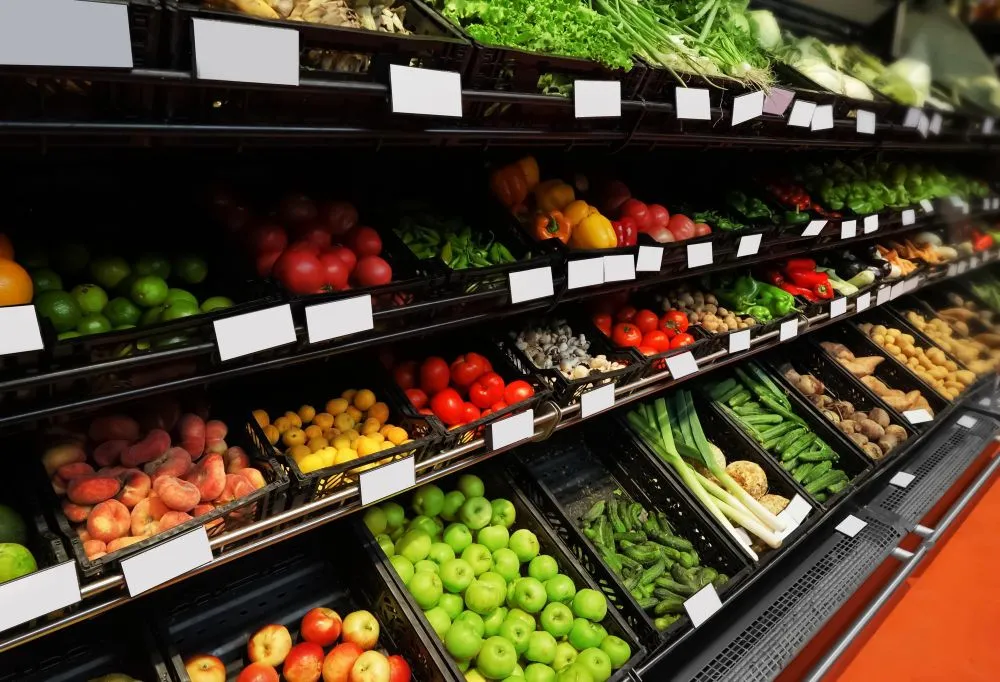
The reasons behind this difference range from customer preference to genetics. In the US, the largest share of produce is sold through large supermarket chains, which have a lot of say in terms of what kinds of fruits and vegetables the farmers should produce.
In contrast, in many Asian countries, sellers directly source their produce from farmers. The fruit and vegetable varieties grown in the US, along with the farming methods, are also quite different. Let’s look at some of the reasons for this difference.
Customer Preference
The customer is not always the person who will eat the fruit, which is ironic but true. The farmer’s real customer is the person who will buy their produce. In the US, this customer is usually a large supermarket chain with immense buying power, and thus a lot of influence over what is profitable for the farmer to grow.
Large supermarket chains, such as Walmart and Safeway in the US, have specific requirements for the fruits and vegetables they buy from farmers. Sometimes this has to do with the way the fruits will be packaged or the way they are displayed in the store.
For example, supermarkets sell romaine lettuce hearts packaged in plastic wrap, and this plastic wrap is of a certain size. The farmers have to produce romaine hearts of that specific size, or else the supermarket chains won’t buy their produce.
Similarly, watermelons are usually displayed in a large bin. Supermarkets measure size of watermelons based on how many fruits fit in the bins. The best (and largest) watermelons are those where 36 watermelons will fill the bin. This is called a 36-count. Less desirable varieties are 45 counts and 60 counts, wherein 45 and 60 watermelons fit in the bin, respectively.
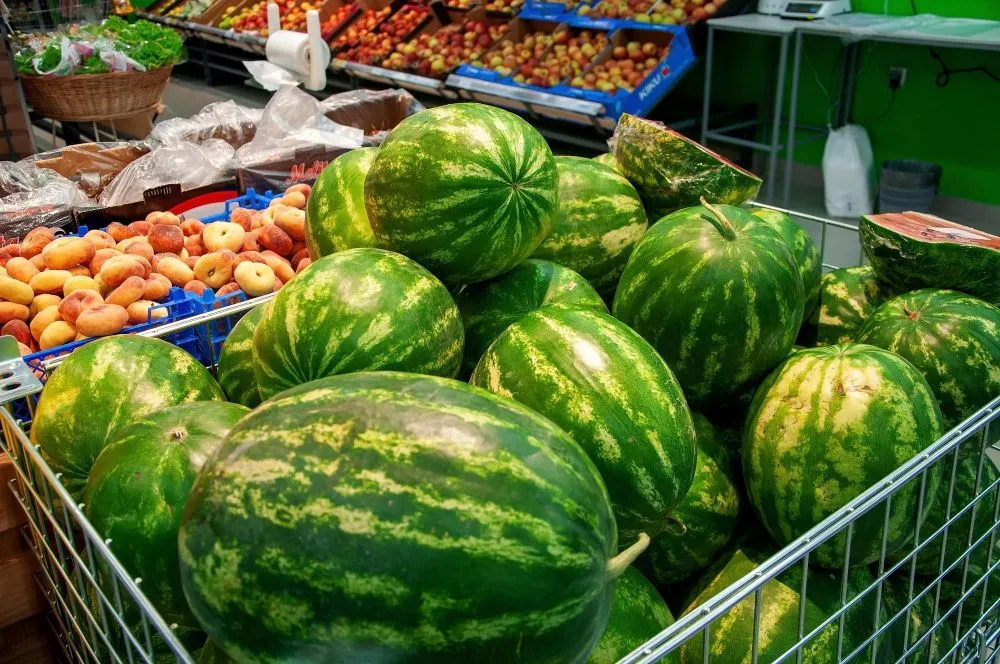
Plant breeders know about these supermarket specifications, so they develop varieties and evaluate hybrid trials based on these counts. A 36-count refers to a fruit size of 8-10 kg, a 45-count to 6-8 kg, and a 60-count to 4-6 kg.
In contrast, in India and some Asian countries, grocery stores do not have such standardized bins. Watermelons (and other vegetables) are often piled on the shelves, so they don’t have such size specifications. However, Indian grocers buy fruit based on consumer demand…
Consumer Demand
In the US, consumers are used to buying large and cosmetically perfect fruits and vegetables. They also have higher buying power than the average consumer in developing countries like India. The average consumer in India has limited buying power and will happily buy fruit that is smaller and not so perfect, so long as they can get a bargain price.
American consumers prefer their fruits and vegetables to be large, clean, glossy, uniform, and perfect. Indian roadside groceries are not nearly as picky when it comes to the cosmetic qualities of their produce. Finding vegetables that are polished with wax is rare in India.
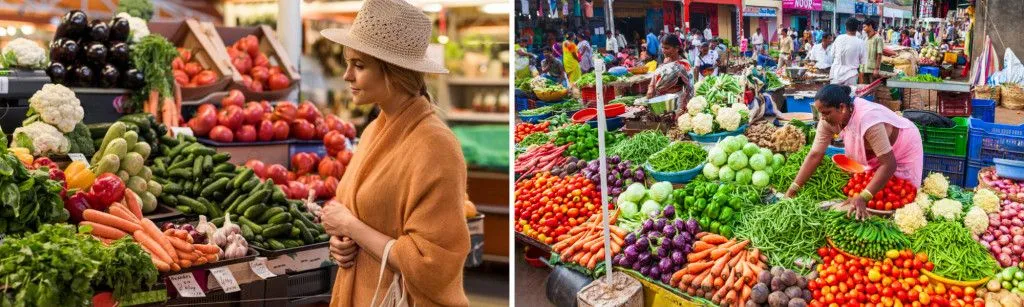
Another practical aspect is transportation. Bringing home a 10 kg watermelon, along with all your other groceries, is not exactly easy. Most US consumers go grocery shopping in their own vehicles so they can load up the groceries in their cars and simply drive home. In India, most people go shopping on foot or via public transport. In this way, they are limited in the amount of vegetables they buy. If they buy a 10 kg watermelon, they may not be able to buy much else in that shopping trip.
Going back to the example of watermelons, the Happy Family range of seedless watermelons developed for Asian markets are 3-4 kg each. On the other hand, Fascination watermelons, a popular seedless watermelon in the US, has average weight of 16-20 lb (7-9 kg).
When consumers demand ‘cosmetically perfect’ food, the farmers and retailers throw away a lot of fruits and vegetables that don’t meet this criteria. This results in a lot of food loss. According to the FAO, food loss and waste in industrialized countries worldwide adds up to roughly USD 680 billion per year, and per-capita food waste at the consumer level in Europe and North America runs at 95–115 kg per year, compared with just 6–11 kg per year in sub-Saharan Africa and South/Southeast Asia.

Varieties Developed For Local Markets
Seed companies develop varieties targeting local markets and keeping in mind local preferences. The crop varieties available in the US are genetically programmed to grow much larger than the varieties in India.
For example, in the US, the National Onion Association categorizes onions based on size into: small 2.5-5.7 cm, medium 5-8 cm, large ≥ 7.6 cm, colossal ≥ 9.5 cm, and super colossal ≥ 11.5 cm. On the other hand, in India 4-5 cm is considered medium size, and the IIHR categorizes onions as small < 4 cm, medium 4-6 cm, large 6-7.5, and oversized > 7.5 cm size.
Thus ‘oversized’ in India is only 7.5 cm in diameter, whereas oversized in the US translates to 11.5 cm.
Farming Methods
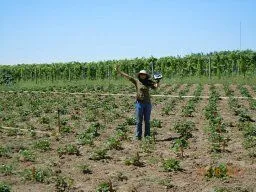
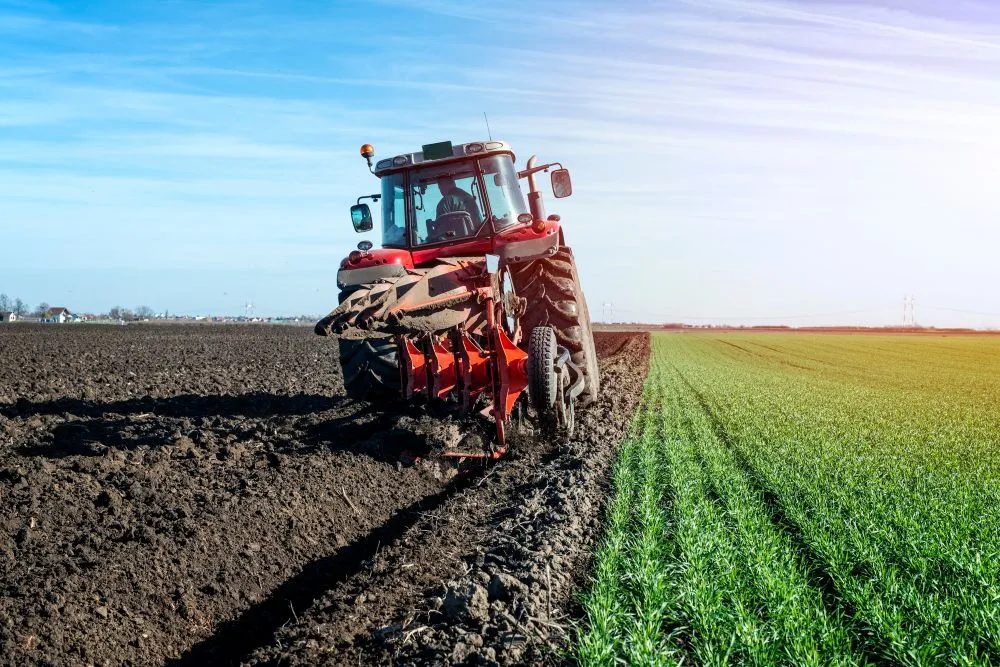
Another important factor to consider are the farming methods used. In the US, vegetable production is concentrated in very large specialized farms. These farmers use precision and mechanized farming methods so that their crop varieties are able to grow to their full potential. In contrast, farm sizes in India are much smaller and many farmers lack access to the best farming technologies and the best hybrid seeds.
Why Are American Onions So Big?
Onions are one of the most common searches that bring people to this question, and for good reason: an American "colossal" onion can dwarf the ones sold in many other countries. Yet the onion is not native to the US at all. Most researchers trace it back to central Asia, where it has been cultivated for 5,000 years or more. So why do the onions grown in the US end up so large?

The biggest single reason is daylight. Onions are photoperiod-sensitive, meaning a plant only begins to form a bulb once the days grow long enough. Growers sort varieties into three groups: short-day onions start bulbing at about 11 to 12 hours of daylight, intermediate-day onions at 12 to 14 hours, and long-day onions only once they get 14 or more hours. The long summer days of the northern US suit long-day varieties perfectly.
Here is the clever part. A long-day onion planted in the north spends the whole spring and early summer building leaves before the lengthening days finally trigger bulbing. Each leaf becomes one ring, or layer, inside the bulb, so the more leaves a plant grows first, the more layers (and the bigger the onion) it can produce. Plant a short-day variety that far north and it bulbs too early, locking in a small onion before it has grown much foliage.
On top of that biology, US growers in regions such as Washington, Oregon, Idaho, California, Georgia and Texas plant varieties bred specifically for size. Sweet onions like Walla Walla and Vidalia carry extra water and are selected to grow large and mild, while the Spanish-type storage onions of the Pacific Northwest are bred for heft too. American farms plant roughly 125,000 acres of onions a year and harvest around 6.75 billion pounds (about 3 million tonnes), much of it graded "colossal" (at least 9.5 cm / 3.75 in across) or "super colossal" (11.5 cm / 4.5 in or more).
Why Do Grocers Spray Water On Fruits And Vegetables?
If you have ever reached for a bunch of lettuce in a US supermarket and found it beaded with water, or watched a vendor sprinkle water over a tray of apples, you have seen another trick behind that fresh, glossy look. It is not just for show; it is plant physiology.
Once a fruit or vegetable is harvested, it is cut off from its roots but its cells keep losing water vapor to the air through a process called transpiration. With no roots to top up the supply, that water is not replaced. As the cells lose water they lose their turgor pressure, the internal firmness that keeps plant tissue rigid. The result is wilting, shriveling, softness and a dull, less appealing surface. Leafy greens are especially vulnerable because of their thin skins and large surface area: they can look visibly wilted after losing only about 3 to 5 percent of their weight in water.
Misting fights this. A fine spray raises the humidity right around the produce, which slows transpiration and keeps the cells plump and turgid. Turgid tissue stays crisp, springy and reflective, so the surface looks bright and fresh rather than limp. Grocers do have to be careful, though, because too much standing water encourages mold and decay, so produce sections mist in short bursts rather than soaking everything continuously. It works alongside the wax coating mentioned earlier: the wax seals moisture in and adds shine, while a light misting keeps the cells underneath firm and crisp.
How Did Farmers Make Produce This Big In The First Place?
Modern hybrids and supermarket size specs are only the latest chapter. The deeper reason fruits and vegetables can grow so large is thousands of years of artificial selection, the slow process of farmers saving and replanting seed from the biggest, best plants each season.

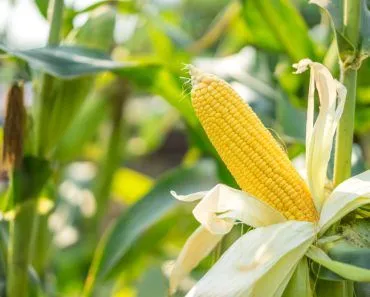
Corn is the classic example. Today's plump cob was bred from a wild Mexican grass called teosinte, starting around 9,000 to 10,000 years ago. A teosinte ear is small and hard, holding only a handful of stony kernels locked inside tough cases, nothing like the long, soft, many-rowed cob we eat today. Generation after generation, early farmers planted seed from plants with larger, better ears, and remarkably, only about five genes account for most of the differences between teosinte and modern maize.
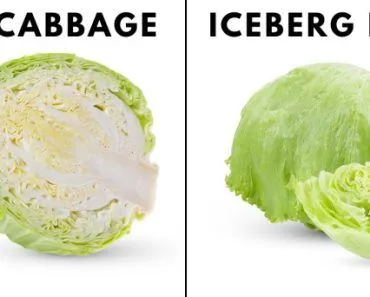
Vegetables tell the same story. Cabbage, kale, broccoli, cauliflower, Brussels sprouts and kohlrabi are all the same species, Brassica oleracea, bred from a single wild cabbage. Growers simply selected for different oversized parts: leaves became kale, a tight leafy head became cabbage, fat flower buds became broccoli and cauliflower, and a swollen stem became kohlrabi (we cover this in more detail in are kale and cabbage the same plant). So the giant, glossy produce on US shelves is the end of a very long human breeding project, one that today's farmers and seed companies are still pushing further.
Conclusion
The size and appearance of fruits and vegetables depends on customer and consumer demands, genetics of crop varieties, and specific farming methods. Consumer preference is also influenced by overall buying power and living conditions. Of course, this is a very generalized issue and does not apply to all fruits and vegetables.
References (click to expand)
- Young, L. R., & Nestle, M. (2002, February). The Contribution of Expanding Portion Sizes to the US Obesity Epidemic. American Journal of Public Health. American Public Health Association.
- Why Fruit Has a Fake Wax Coating.
- Selecting Onion Varieties.
- Sizing and Packaging Options.
- Vegetable Production Concentrated on Very Large Farms.
- The land challenge underlying India's farm crisis - Mint.
- Insistence on Cosmetically Perfect Fruits & Vegetables.
- Onions – Long Day, Short Day or Neutral? Nebraska Extension in Lancaster County.
- U.S. Production and Availability. National Onion Association.
- History of Onions. New Mexico State University Onion Breeding Program.
- Physio-Metabolic Mechanisms Behind Postharvest Quality Deterioration in Broccoli and Swiss Chard: A Review. PMC, NCBI.
- Water Relations in Harvested Fresh Produce. PEF White Paper No. 15-01. Postharvest Education Foundation.
- Corn and Its Untamed Cousins. Understanding Evolution, UC Berkeley.
- Evolution of Corn. Learn.Genetics, University of Utah.
- To Decode the Mystery of Corn. Smithsonian Magazine.
- Brassica oleracea. Plants 400, University of Oxford.