Table of Contents (click to expand)
Yes. Kale and cabbage are the same species — Brassica oleracea, the wild cabbage of Mediterranean and Atlantic European sea cliffs. So are broccoli, cauliflower, brussels sprouts, kohlrabi, and collard greens. All of them were bred from that one wild plant over thousands of years of artificial selection by farmers.
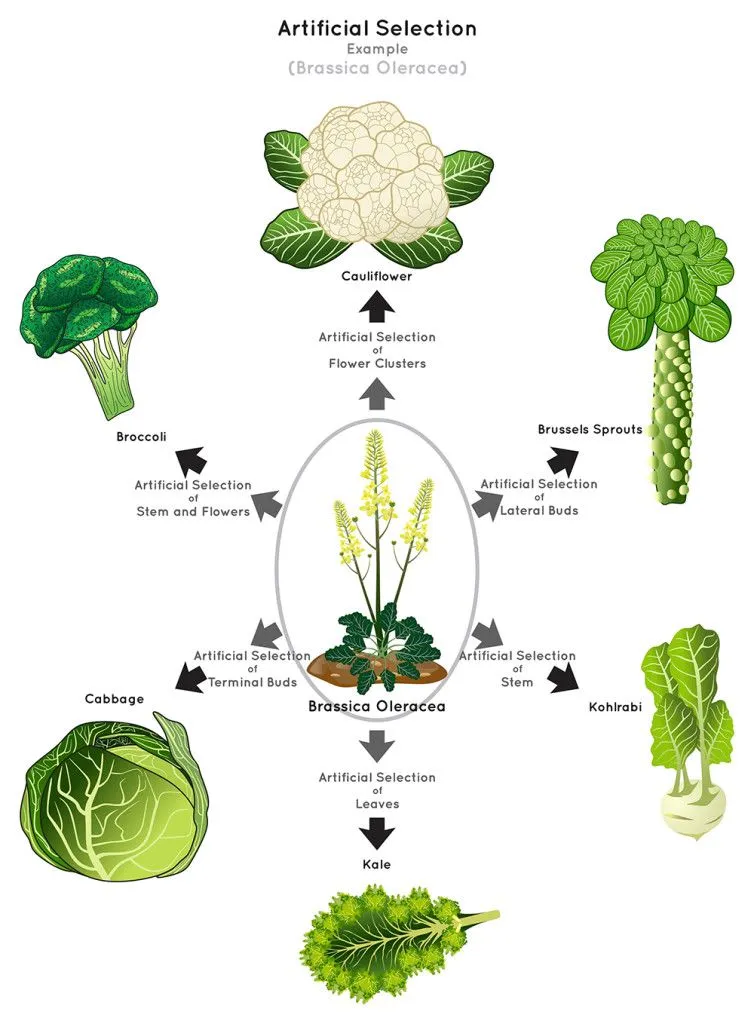
What do broccoli, cabbage, cauliflower, brussels sprouts, collard greens, kohlrabi, and kale all have in common? The answer is… their species! All these vegetables belong to the same species, Brassica oleracea, which evolved into different vegetables as a result of thousands of years of artificial selection and breeding by farmers and plant breeders.
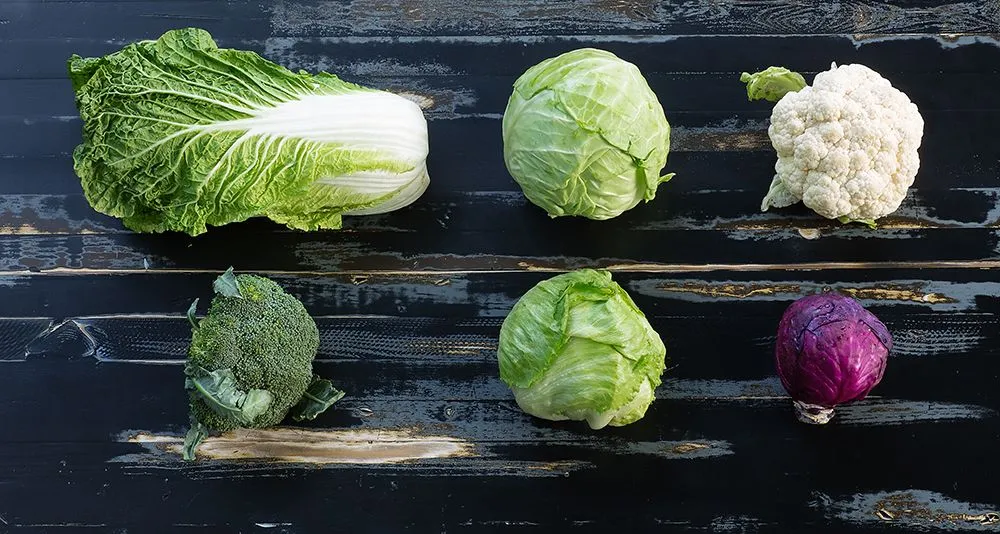
The wider Brassica genus has its centres of diversity in Central Asia and the Mediterranean, but B. oleracea itself is native to the limestone sea cliffs of the Mediterranean and the European Atlantic coast (France, Britain, Spain), where its wild form, simply called wild cabbage, still grows. It is a member of the Brassicaceae family, which also includes mustard, turnip, and radish. Ancient civilizations experimented with breeding and domesticating the different edible parts of this hardy plant. They took advantage of the phenomenon of phenotypic plasticity, which basically means that plants with the same genetics can develop into very diverse forms. As a result, diverse forms of Brassica vegetables were bred independently and in parallel to develop into modern forms of cabbage (including savoy and red cabbage), cauliflower, broccoli, Chinese broccoli, kale, collards, brussels sprouts, and kohlrabi.
The Many Forms Of Wild Cabbage
The different types of Brassica arise from selecting for either the vegetative parts, such as the leaves, buds or stems, or the reproductive parts, such as the flowers. Since they are all the same species, they can potentially interbreed.
Modified Vegetative Organs
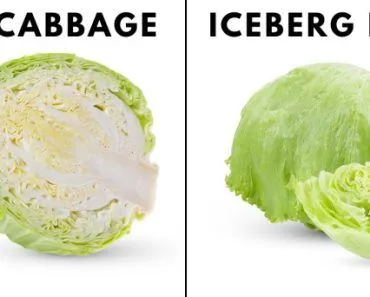
- Plants with enlarged leaf buds developed into cabbage (B. oleracea var. capitata). The leaves in cabbage have very short petioles and cup inwards to form a head.
- Plants with many enlarged buds in the axils of leaves formed brussels sprouts (B. oleracea var. gemmifera)
- Plants with enlarged stems just above the soil developed into kohlrabi (B. oleracea var. gongylodes)
- Wild cabbage plants that produced more and larger leaves were bred into kale and collard greens (B. oleracea var. acephala), as well as Chinese kale or gai lan (B. oleracea var. alboglabra). Collard greens have smooth leaves that form a rosette at the tip of the stem, while kale has crinkly leaves arranged along an upright stem.
Modified Reproductive Organs
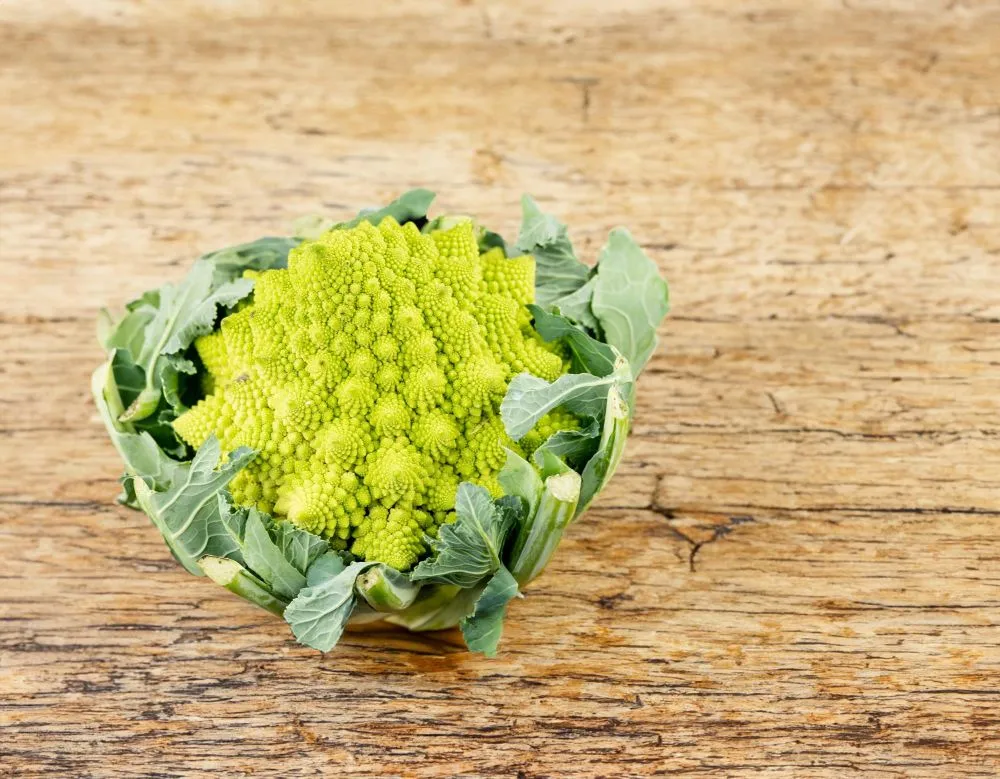
Variations in flower clusters (inflorescences) led to the development of broccoli (B. oleracea var. italica) and cauliflower (B. oleracea var. botrytis). Both have large heads composed of functional flower buds. Romanesco cauliflower also belongs to this group. It is a type of cauliflower (B. oleracea var. botrytis) with unique symmetrical geometric (fractal) patterns on the head.
Interestingly, Brassica oleracea is also a parent of rapeseed or canola (B. napus, a natural cross with B. rapa) and Ethiopian mustard (B. carinata, a natural cross with B. nigra). The relationship between the six cultivated Brassica species — three diploids and the three allotetraploids descended from them — is known as the Triangle of U, after the Korean-Japanese botanist Woo Jang-choon, who described it in 1935.
Natural Selection Vs Artificial Selection
All these forms of Brassica oleracea were the result of artificial selection by early farmers and plant breeders.
In natural selection, organisms develop random variants in response to their environment. For example, if there is water scarcity, a variant may develop that is better adapted to growing in less water. This makes it better suited to thrive in the environment, while the other non-variants may die off. Now, this drought-tolerant variant starts reproducing, and over several generations, a new variety of the species is established. This process, however, is very slow and can take tens of thousands of years.
Artificial selection works in a very similar way, except that it is facilitated by humans and can happen more rapidly. To do this, you need an observant and innovative farmer or plant breeder. While walking their field, they may notice a rare or unique variant of a plant. This could be something like a different texture of leaves, super-large buds, or different-tasting fruits. The farmer or breeder can then harvest the seeds of this plant and grow them out to again select for that unique trait. They will repeat this for a few generations until the trait is consistent and well-characterized. Thus, a new variety is born!
The difference between natural selection and artificial selection is that the new variety that arises from natural selection is better suited for survival in the environment. On the other hand, the variety obtained through artificial selection now has a trait, such as a unique fruit, higher yield or better taste, which the farmer finds economically viable.
Natural selection also takes a much longer time. Artificial selection only takes about 10-20 years (longer for perennial trees, shorter for annual plants) because the desired selection is done systematically and aggressively.
Newer Brassica oleracea Varieties
Farmers, breeders and scientists are still identifying and developing newer varieties of Brassica oleracea. Since all of the above varieties belong to the same species, they can be intercrossed to develop new varieties.
One such example is the broccolini, a hybrid of broccoli and Chinese broccoli (gai lan), in which the tender flower buds on long thin stalks are consumed, instead of the large flower head.
Caulilini (sometimes spelled "Caulini") is a newer sweet-stem baby cauliflower — trademarked by Mann Packing in 2017 — that is harvested while the flower buds are still small and tender, much like broccolini.
Kalettes (originally launched in the UK as Flower Sprouts) are a more recent example: a kale × Brussels sprouts hybrid developed by UK breeder Tozer Seeds over roughly 15 years of conventional crossing, with small open rosettes of curly leaves on a tall stem. Plant scientists have also been busy on the genomic side: a chromosome-scale assembly of wild Brassica oleracea was published in 2024, and a multi-species Brassica pangenome ("Brassica Panache") followed in 2025, both helping breeders pinpoint the genes underlying the differences between cabbage, broccoli, kale, and the rest.
Conclusion
Brassica oleracea is one species that comes in diverse forms, each with its own unique morphology, flavor, and culinary use. The species has developed and diversified over thousands of years through artificial selection by the earliest farmers, but their work of developing new varieties from Brassica oleracea continues to this day!
References (click to expand)
- Wang, Y., Ji, J., Fang, Z., Yang, L., Zhuang, M., Zhang, Y., & Lv, H. (2022, August 24). BoGDB: An integrative genomic database for Brassica oleracea L. Frontiers in Plant Science. Frontiers Media SA.
- Saban, J. M., Romero, A. J., Ezard, T. H. G., & Chapman, M. A. (2023, February 22). Extensive crop–wild hybridization during Brassica evolution and selection during the domestication and diversification of Brassica crops. (A. Sweigart, Ed.), Genetics. Oxford University Press (OUP).
- Treccarichi, S., Ben Ammar, H., Amari, M., Cali, R., Tribulato, A., & Branca, F. (2023, January 15). Molecular Markers for Detecting Inflorescence Size of Brassica oleracea L. Crops and B. oleracea Complex Species (n = 9) Useful for Breeding of Broccoli (B. oleracea var. italica) and Cauliflower (B. oleracea var. botrytis). Plants. MDPI AG.
- Brassicas » New York Botanical Garden.
- Brassica oleracea (Broccoli, Brussels Sprouts, Kohlrabi, Sea ....
- Delahaut, K. A., Newenhouse, A. C. (1997). Growing Broccoli, Cauliflower, Cabbage, and Other Cole Crops in Wisconsin: A Guide for Fresh-market Growers. United States: University of Wisconsin--Extension, Cooperative Extension.
- Chromosome-scale assembly of wild Brassica oleracea (Journal of Experimental Botany, 2024)
- Brassica (Encyclopaedia Britannica)