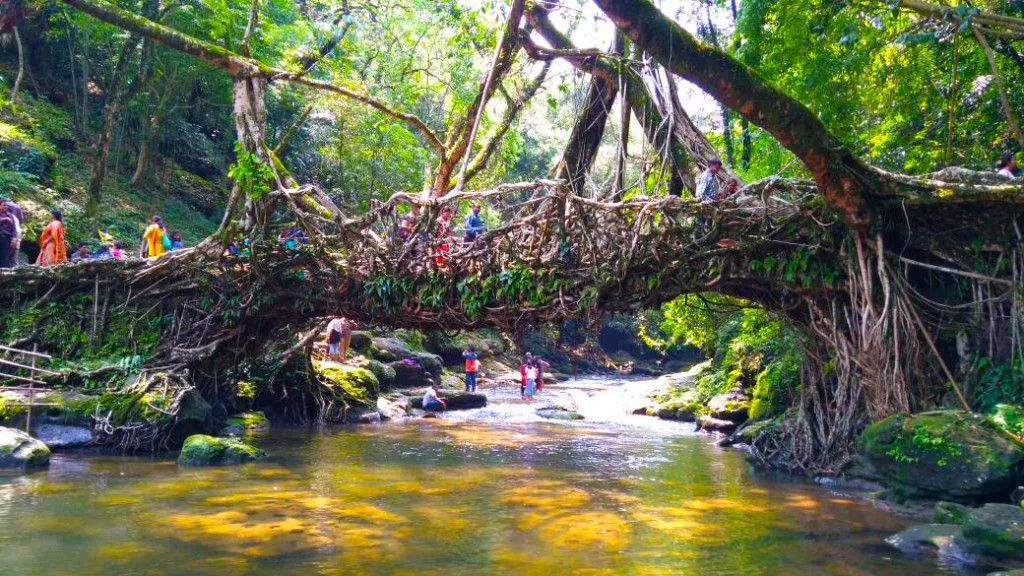
Living root bridges, like those in Meghalaya, India, are grown by training the aerial roots of the rubber fig (Ficus elastica). Locals guide the tree’s flexible aerial roots across a stream along a bamboo frame until they root in the far bank. Over decades the roots thicken, fuse together, and harden into a self-strengthening bridge that can last for centuries.
Indigenous villages in remote parts of the state of Meghalaya in India do not have modern bridges, but that doesn’t stop them from crossing rivers or canyons. What they lack in terms of infrastructure, they make up for with their ancient knowledge and wisdom. Most notably, they use the live roots of a local tree to build natural gap-crossings, or living bridges.
The local indigenous people of the Khasi and Jaintia tribes have developed a method of building bridges from the roots of a local variety of plant called Ficus elastica. It takes decades to build a bridge, but it keeps getting better and stronger over the years. Locally known as ‘Jingkieng Jri’, this unique system utilizes ancient botanical knowledge without the need for advanced engineering machinery.
Ficus Elastica Strangles Its Host
Ficus elastica grows in the rainforests and hills of Meghalaya, India. These forests are in the Garo and Khasi ranges in the foothills of the Himalayas.
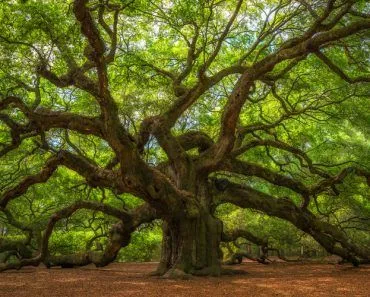
The plant is a hemiepiphyte, which means that it grows aerial roots that absorb moisture and nutrition from the air and rain. It does not depend on its host for nutrition.
It starts growing from a seed dispersed by a bird and then lands under the shade of a larger tree, which eventually becomes its host. In its initial days, it grows as an epiphyte on the host tree. When aerial roots start developing, they hang from the host’s branches and grow towards the soil. Some aerial roots may also merge together, gradually building a scaffold around the host tree.
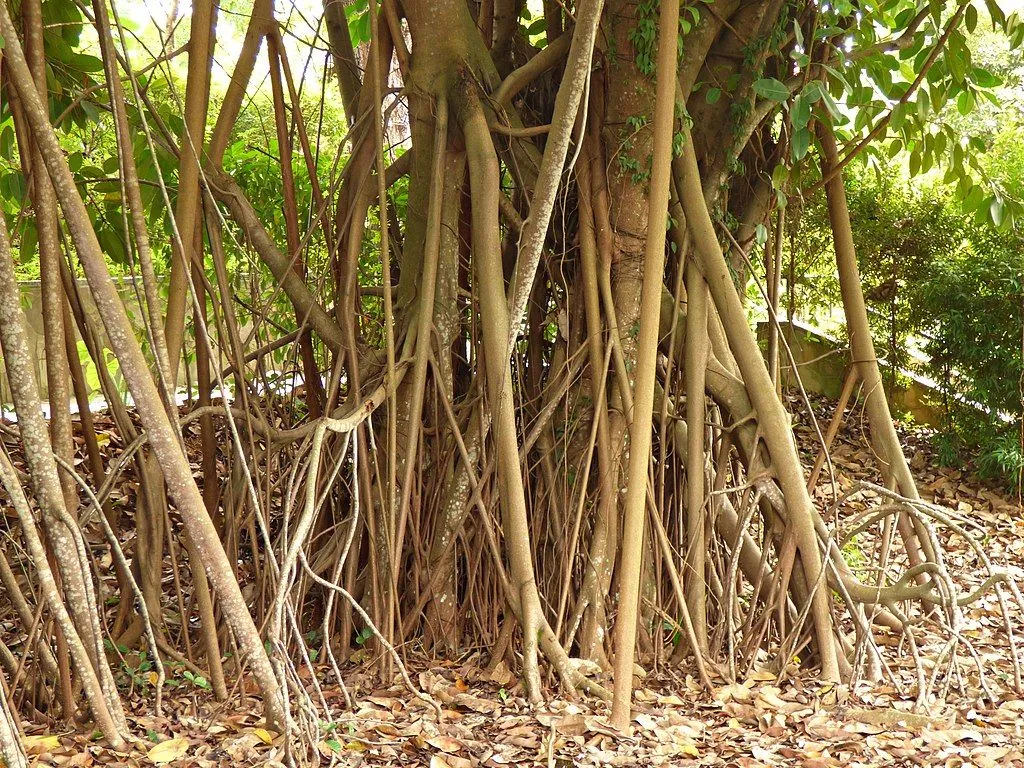
The roots now compete with the host’s roots and its leaves shade the leaves of the host. Finally, the network of aerial roots strangle the host tree by preventing the transport of nutrients and water through its vascular system. Over time, the host tree dies and the network of aerial roots develop a hollow in the center. This hollow cylinder will then support the Ficus elastica tree.
However, Ficus elastica can also grow without the support of a host when it germinates on rocks or cliffs.
Roots Of Ficus Elastica Are Used For Building Bridges
The first step in building a bridge is to find a Ficus elastica growing on the banks of a river or on the side of a canyon. These plants may be growing there naturally, or may have been planted for the purpose of building a bridge. They may be planted on one or both banks.
After about 10-15 years, the plant becomes an adult and starts growing out aerial roots. These roots naturally hang downwards. The locals ‘coax’ the roots to grow horizontally with the help of a bamboo or dead wood frame that is placed across the river. This bamboo structure also serves as temporary bridge for the locals.
When these aerial roots reach the opposite bank, the roots are buried in the soil so that they slow down in their elongation and instead grow side roots. The side roots are trained into the bridge-like structure by weaving and intertwining them.
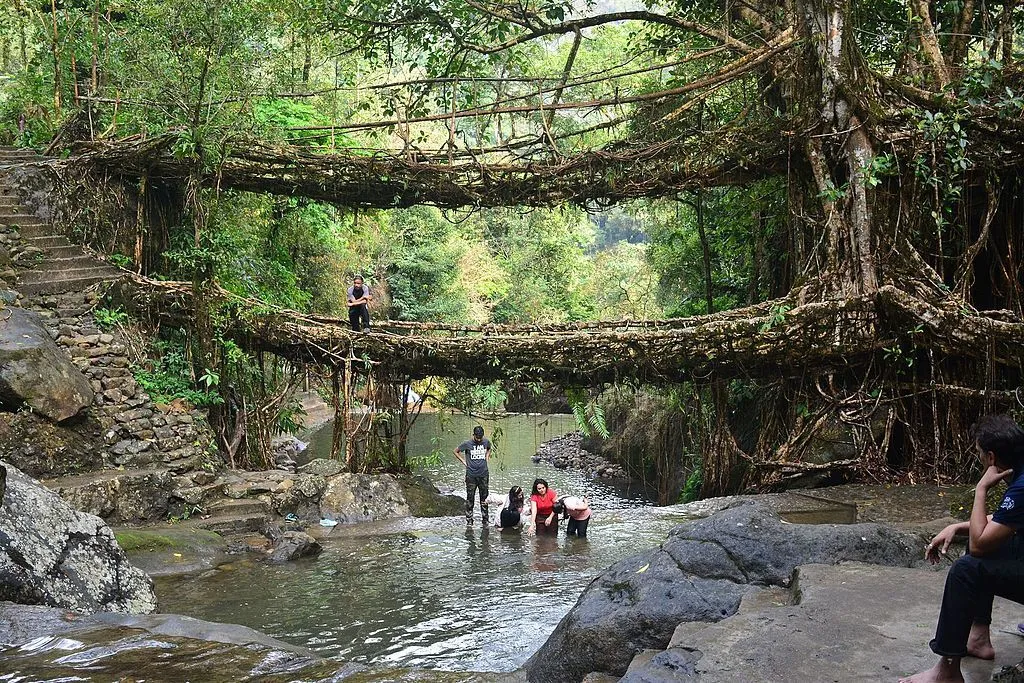
These roots continue to grow, even as they are shaped into the bridge; over time, the tree’s secondary growth makes the roots even stronger. The roots also join with each other over time (a phenomenon called inosculation), making the bridge even more stable.
The bridge utilizes inherent traits of these aerial roots. The first among these is their mechanical strength. The roots respond to mechanical load by becoming stronger through adaptive secondary growth. This is good news, as the bridge needs to be able to support the people walking across it. Second is the roots’ tendency to merge together and form stable structures through interlocking and twining, called inosculation. Inosculation happens naturally when adjacent roots press on each other.
In the initial years, 15-20 people can cross this bridge one at a time, but after a few decades of building, 50 or more people can use the bridge at one time.
Some Of These Bridges Are A Few Hundred Years Old
Building these bridges takes a very long time. Multiple generations of villagers work for decades (even centuries) to keep training the roots and strengthening the structure of the bridge. Generally, there is no clear ‘design’ for this type of bridge. Instead, the design is added on as and when new roots are formed and trained.
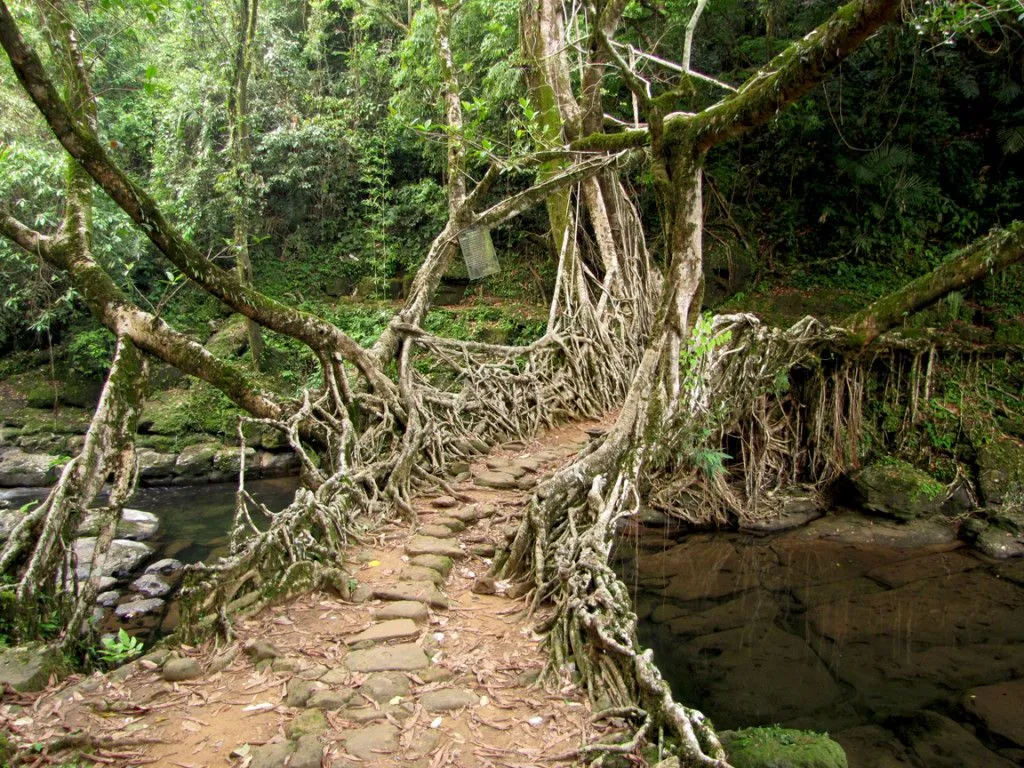
The time from when a Ficus elastica is planted to the time the bridge can be used can vary and depends on factors such as bridge length, available sunlight, soil quality, and how regularly the bridge is maintained.
These bridges need continuous maintenance, even after they become usable. Maintenance includes removing mosses growing on the surface of the roots, pruning, weaving and tying new roots, and laying stones or other material on the path to make it more stable. The locals also often stuff fallen leaves in the spaces between the roots so they can decompose into humus and nourish the bridge.
Recently, a group of researchers collected an inventory of all the living root bridges in Meghalaya and found some bridges that are a few hundred years old. These researchers documented the existence of 76 bridges, mapping the location of 72 of them. The bridges ranged in length from 2 to 52.7 meters (about 7 to 173 feet), although almost 80% are shorter than 20 meters (66 feet).
Their cultural value is now drawing international attention. The bridges, collectively known as the Jingkieng Jri cultural landscape, were placed on UNESCO’s tentative list of World Heritage sites in 2022, and in January 2026 India submitted the full nomination dossier for evaluation in the 2026–27 cycle.
Conclusion
The indigenous tribes of Meghalaya developed a natural and sustainable solution to their rural connectivity issues. These bridges are an example of regenerative design that last for generations if continuously maintained by the villagers. All that is needed to build these bridges is time and patience, with no budget required.
These natural bridges survive for centuries and only get better and stronger with age. In contrast, concrete bridges would be damaged by earthquakes, floods and landslides, which are common occurrences in the region.
References (click to expand)
- Ludwig, F., Middleton, W., Gallenmüller, F., Rogers, P., & Speck, T. (2019, August 22). Living bridges using aerial roots of ficus elastica – an interdisciplinary perspective. Scientific Reports. Springer Science and Business Media LLC.
- Middleton, W., Habibi, A., Shankar, S., & Ludwig, F. (2020, April 17). Characterizing Regenerative Aspects of Living Root Bridges. Sustainability. MDPI AG.
- ‘The knowledge of our elders’: India’s living root bridges. The Guardian.
- Jingkieng jri: Living Root Bridge Cultural Landscapes. UNESCO World Heritage Centre.
- PHOTOS: Living Tree Bridges In A Land Of Clouds.