Table of Contents (click to expand)
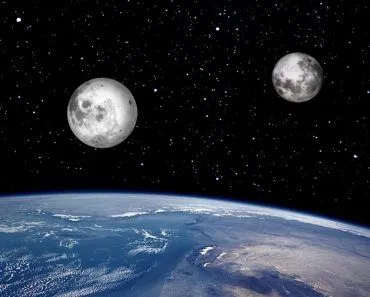
Yes, theoretically a moon can have its own moon (informally called a “submoon” or “moonmoon”). Every celestial body has a region around it called its Hill sphere, where its gravity dominates over any larger but more distant body, and a submoon can in principle orbit inside that sphere. In practice, tidal forces inside the host moon usually drag any submoon out of orbit, which is why none have been confirmed in our solar system.
Yes, theoretically a moon can have its own moon. Around every celestial body, there’s a well-defined region (its Hill sphere) within which the gravity of that body dominates the gravitational pull of a bigger and more massive but distant celestial body.
The moon revolves around the Earth, which revolves around the sun. Most people know this much, but many might not know that the sun also revolves around something. In fact, not just the sun, but also our entire solar system, revolves around the center of the Milky Way – our home galaxy.
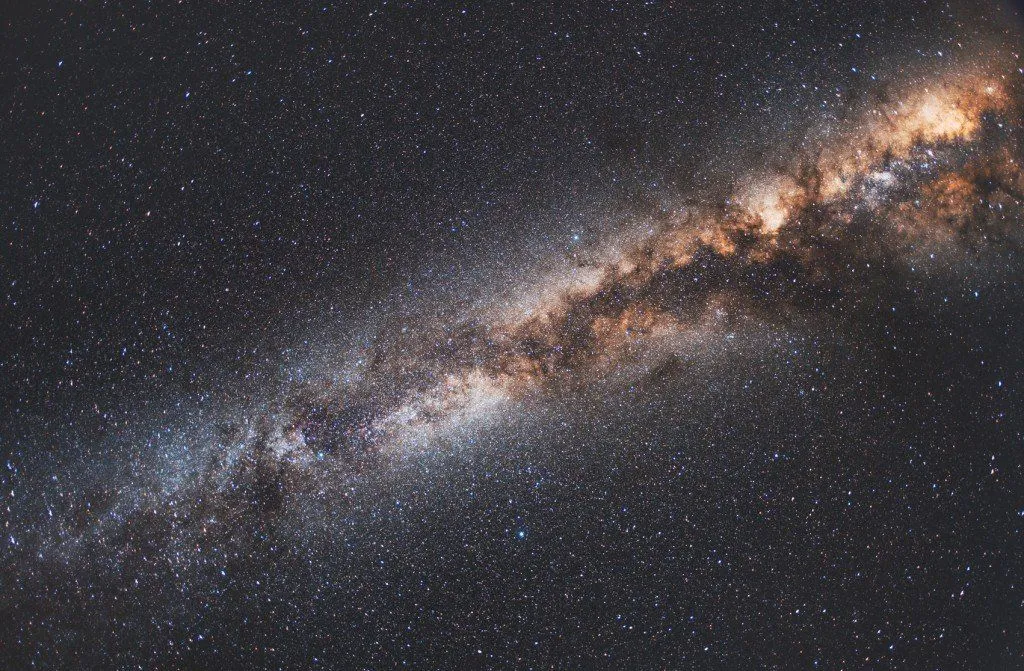
Beyond the Milky Way, around 80 other galaxies (most of them dwarf galaxies) form a gravitationally bound cluster called the Local Group. Unlike a planetary system, the Local Group has no single central body; the Milky Way and Andromeda dominate its mass, and the group’s barycenter sits somewhere in the space between them. All of this is to say that as far as we can tell, all celestial bodies revolve around something else.
Now, if the conventional definition of a moon is considered, it’s a natural satellite that revolves around a bigger celestial body in a well-defined orbit. In that sense, it could be said that every celestial body has a moon. The sun’s moon is Earth and the Earth’s moon, is… the moon!
However, our beloved moon is deprived of a natural satellite of its own. In fact, all known moons of various celestial bodies of the solar system do not have a natural satellite going around them. Why is that? Can’t a natural satellite have its own sub-satellite?
Can A Moon Have Its Own Natural Satellite?
From a theoretical standpoint, yes, a moon, or in other words, a natural satellite can indeed have its own sub-satellite. Around every natural satellite, there’s a region where a sub-satellite of the former can exist. This region, in astronomers’ circles, is referred to as the Hill sphere.
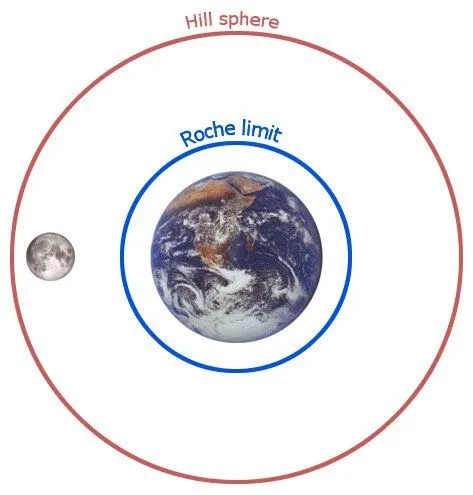
The Hill sphere of an astronomical object is a region around it where its gravitational pull is stronger than another body, which is bigger than the first body, but too far away.
Take, for example, the Sun-Earth-Moon system. The Sun’s satellite is Earth and therefore it revolves around the former as Earth falls within the Hill sphere of the Sun. This means that Earth only experiences the gravity of the Sun and not some other distant star.
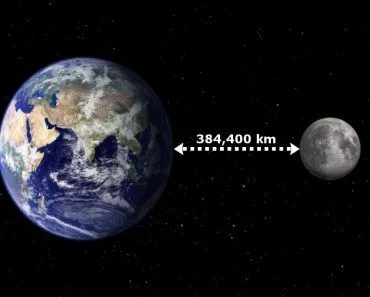
Similarly, Earth’s satellite is the Moon. Since our planet’s Hill sphere extends up to about 1.5 million km in all directions, the Moon, which is roughly 384,400 km away from Earth, comfortably falls under the gravitational tug of Earth.
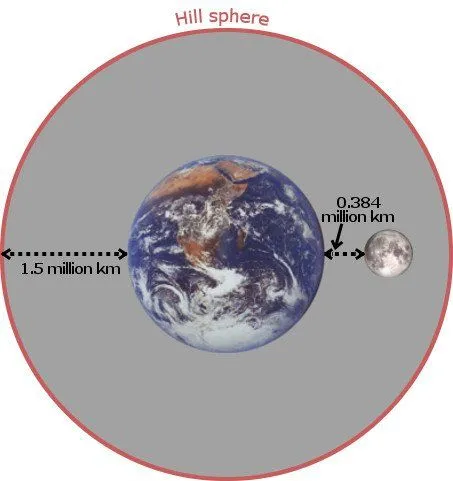
Another way to look at Earth’s Hill sphere is that within those 1.5 million km, Earth’s gravity dominates over the gravity of the Sun, which is why the Moon orbits Earth and not the Sun. Hypothetically speaking, if the Moon were to break away from its orbit and escape Earth’s Hill sphere, it would indeed end up orbiting the Sun, just as so many other members of our solar system do.
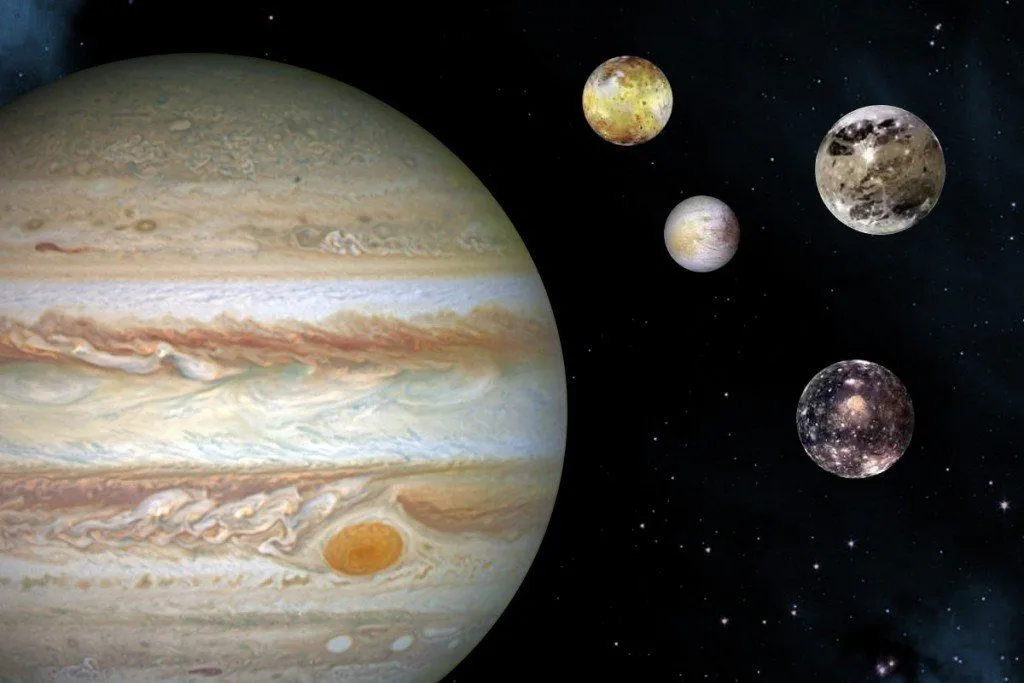
Note that the heavier a celestial body, the bigger its Hill sphere. Take, for instance, Jupiter. Its Hill sphere extends up to about 0.36 AU (roughly 53 million km) in all directions, which is one of the reasons why it has so many moons and why it so strongly influences the trajectory of comets that pass it by.
Why Doesn’t The Moon Have Its Own Moon (Natural Satellite)?
While the Moon can, theoretically, have a sub-satellite of its own within a distance of about 60,000 km from its center (and within roughly half that for a long-term stable orbit), it doesn’t have one. Why is that?
In one word: tides.
You see, the Moon follows a synchronous motion around Earth; it takes the same amount of time to complete one revolution around Earth and to rotate once on its own axis. This causes the moon to always show the same side to us.
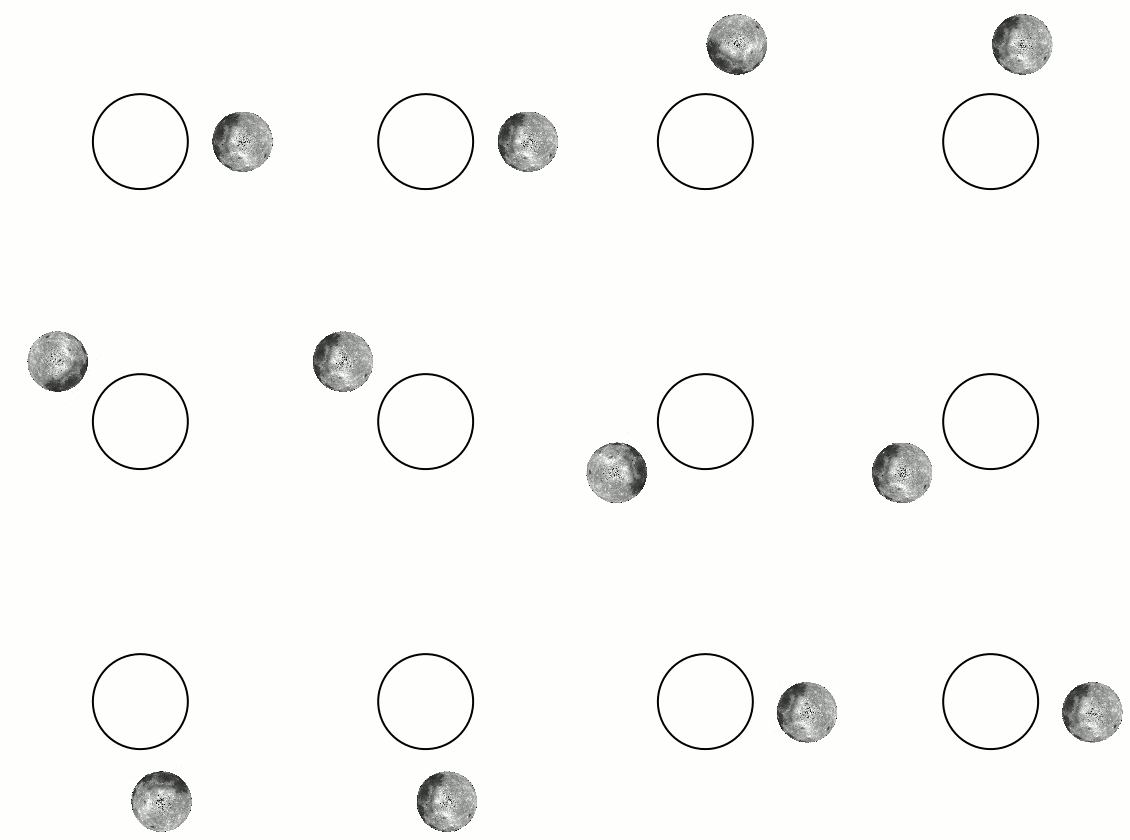
This kind of locking is a direct upshot of the tidal forces between the Earth and the Moon, which are responsible for causing the tides in Earth’s oceans.
If there’s a sub-satellite within the Hill sphere of the Moon, it will experience a gradual decay in its orbit due to tides. Over time, the orbit of the sub-satellite will keep getting smaller and smaller, until it either crashes into the Moon itself or is shredded to smithereens due to tidal forces.
Note that such decay of a sub-satellite is gradual, and very slow. It may take thousands of years for an orbiting body to crash into its parental celestial body.
In a 2019 paper aptly titled “Can Moons Have Moons?”, astronomers Juna Kollmeier and Sean Raymond calculated that only four known moons in the solar system could realistically host a long-lived submoon of about 10 km in size: Saturn’s Titan and Iapetus, Jupiter’s Callisto, and our own Moon. For every other moon, tidal dissipation inside the host bleeds energy out of any submoon’s orbit too quickly for it to survive over geological time.
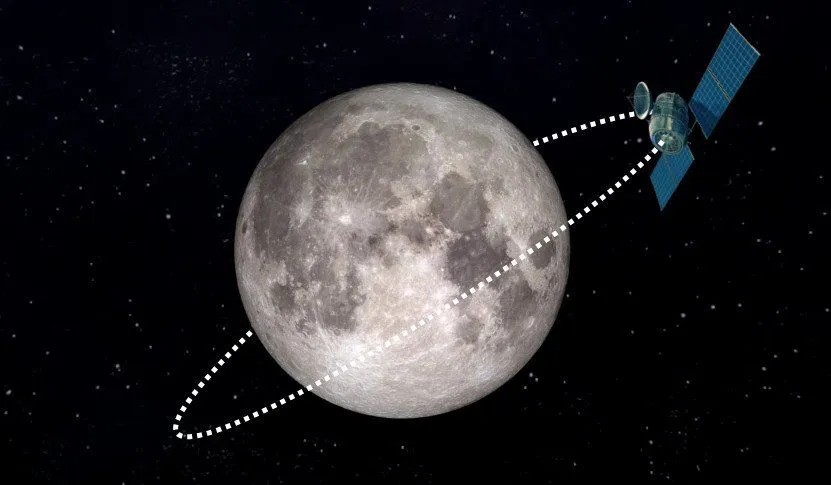
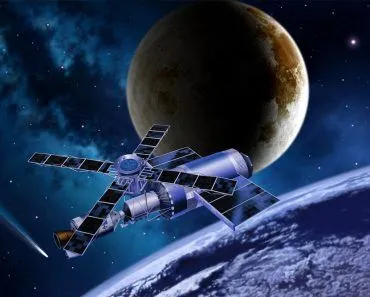
That’s the reason the artificial satellites we send to the moon stay up there for quite some time, do their work (which usually consists of taking pictures of its surface and making various other observations), and then finally crash into the lunar surface.
References (click to expand)
- (1965) On the Dynamical Limites of the Solar System - NASA/ADS. The SAO/NASA Astrophysics Data System
- Astakhov, S. A., Burbanks, A. D., Wiggins, S., & Farrelly, D. (2003, May). Chaos-assisted capture of irregular moons. Nature. Springer Science and Business Media LLC.
- Ask an Astronomer - coolcosmos.ipac.caltech.edu
- Formation of Stars. jgiesen.de