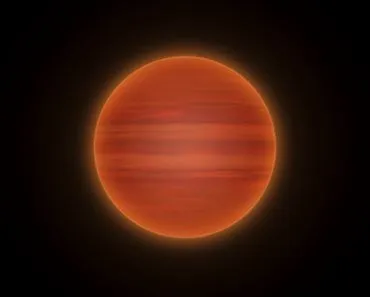
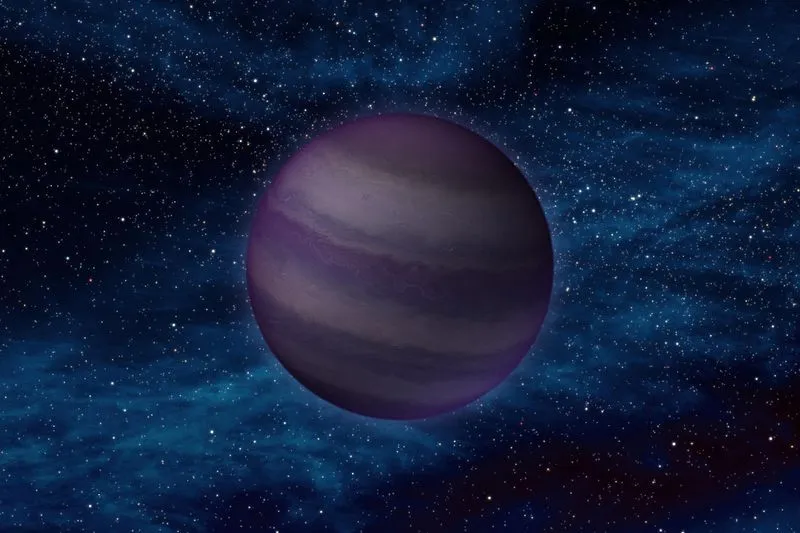
Brown dwarfs are “failed stars” between planets and stars, too light (about 13–80 Jupiter masses) to sustain hydrogen fusion, with temperatures from under 300 K to roughly 2,800 K.
Not all stars are born equal. Some stars are gigantic, emitting enormous amounts of heat and light, but living a relatively shorter life. Some stars are smaller in size, emitting less heat and light, but living much longer than giant stars.
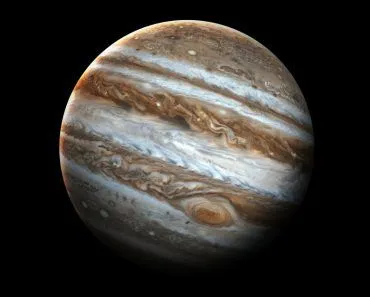
However, some have a completely different outcome. Their formation starts like any other star, but the object fails to become dense enough in their core to sustain nuclear fusion, which would make them emit heat and light. Such sub-stellar objects are far heavier than gas giant planets, like Jupiter, but too light to be true stars, which makes their classification lie somewhere between planets and stars. Most carry roughly 13 to 80 times the mass of Jupiter, yet (oddly enough) they end up only about the size of Jupiter, because their interiors are squeezed by the same electron degeneracy pressure that props up much denser objects.
Such objects are called brown dwarfs, which astronomers have also come to call “failed stars”. Let’s try to understand their significance a bit more in the cosmic realm.
Discovery And Formation Of A Brown Dwarf
Shiv S. Kumar first theorized the existence of sub-stellar objects called brown dwarfs, although he initially classified them as black dwarfs. He classified these objects as celestial bodies that didn’t have enough mass to sustain nuclear fusion. As black dwarfs were already classified as the later stage of a cooled off white dwarf, Jill Tarter recommended the use of “brown dwarf” for differentiation.
Stars are born in stellar nurseries, which appear as a giant or small molecular clouds. These interstellar clouds have incredible density and size. Their masses could be more than a million times that of our Sun. Their size allows molecules to form within them and the most common type of molecule found is hydrogen.
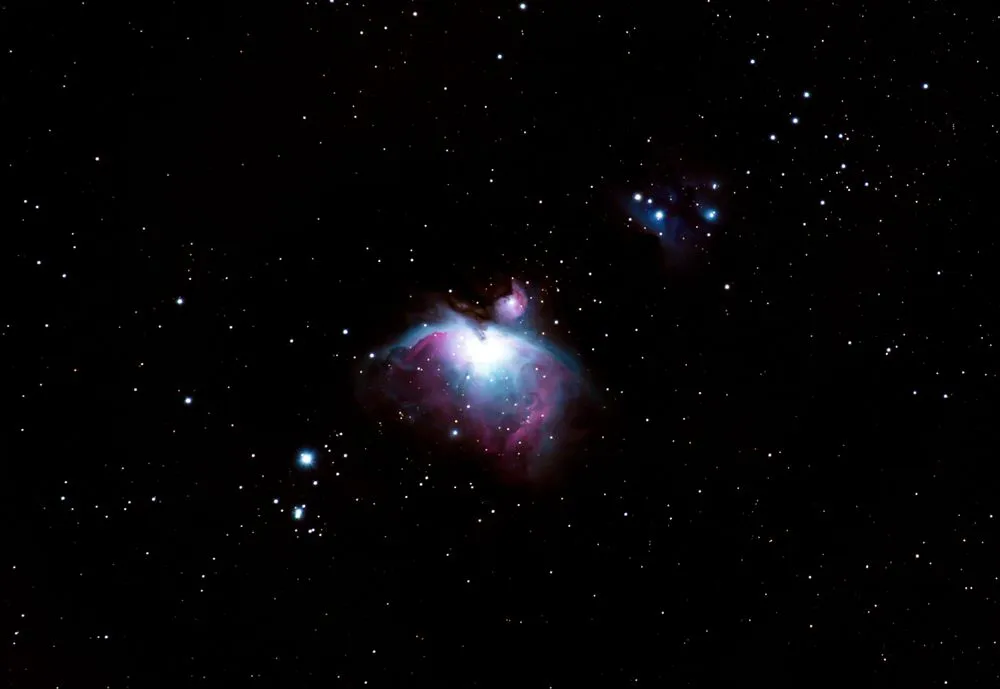
Inside these molecular clouds are individual regions with higher densities, where the accumulation of a large amount of dust and gas occurs; these regions are called clumps. Star formation starts from these clumps, and gravity must overcome the high forces and density for the accumulation of dust and gas to collapse into a “functioning” star.
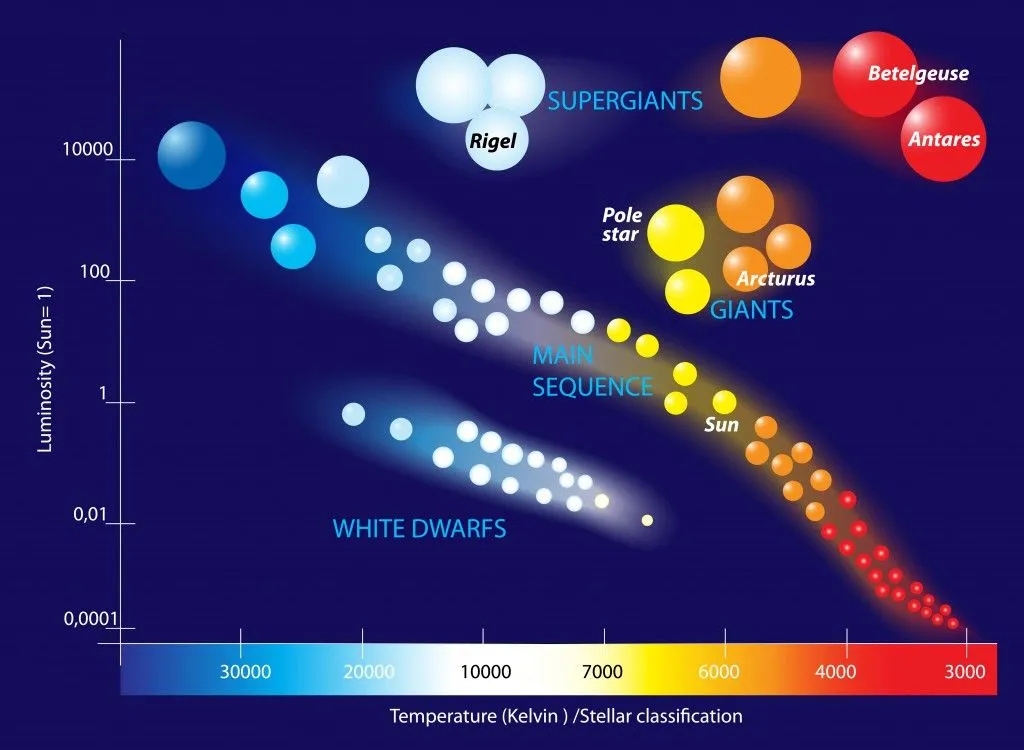
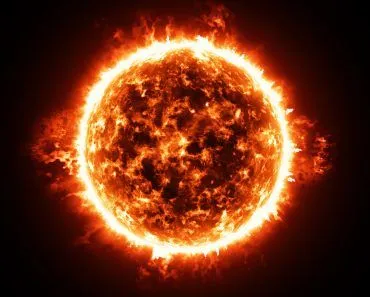
When the gravity overcomes the other forces, and when the molecules are subjected to sufficient pressure and heat, they ionize to become a protostar. The protostar must gain mass and become very dense at its core to sustain nuclear fusion, which enables it to burn and be luminous. The stars that are successful in doing so become a main-sequence star, the diagonal area in the Hertzsprung–Russell diagram, which plots the brightness of the star versus its color index to differentiate between different stars. Low-mass stars, like our sun, live for a very long time, eventually burning off their fuel and turning into a white dwarf surrounded by a nebula of gas. High-mass stars are immensely powerful, live relatively shorter lives and eventually turn into supernovae.
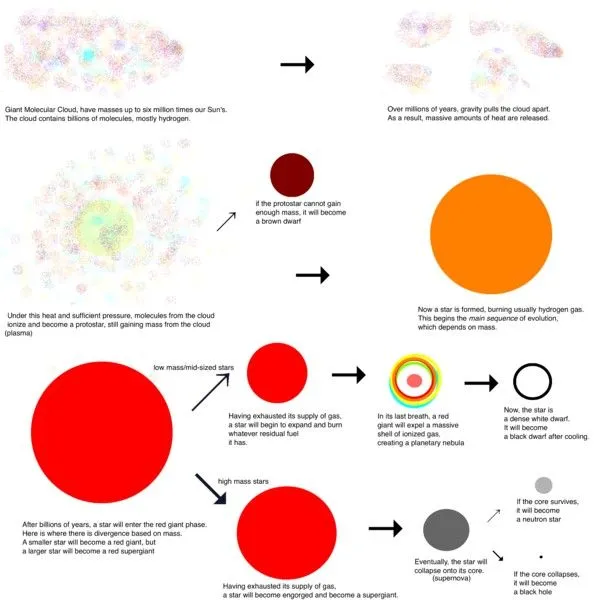
Some stars are unable to gain enough mass and are not dense enough in their core to sustain a fusion reaction. These stars are known as brown dwarfs. To be more precise, the “fusion” they fail at is steady hydrogen burning, the reaction that powers the Sun and every ordinary star. That requires a mass of about 80 times that of Jupiter (roughly 0.08 times the mass of the Sun); anything lighter than that simply can’t get its core hot and dense enough. Brown dwarfs do, however, manage a brief consolation prize: those above about 13 Jupiter masses are hot enough to fuse deuterium (heavy hydrogen) for a few million years, and the heaviest can even burn a little lithium. That 13-Jupiter-mass figure is the rule of thumb astronomers use to draw the line between a giant planet and a brown dwarf.
Characteristic And Classification Of A Brown Dwarf
In the Hertzsprung–Russell diagram, brown dwarfs occupy the lower right-hand corner. Another way to classify stars is through their spectral characteristics in a system called Morgan-Keenan (MK). In this system, the stars are placed in one of the types, denoted by the letters O, B, A, F, G, K, M. These letters are arranged from the hottest, O, to the coolest, M.
Brown dwarfs span the cool end of the M class and the L, T, and Y classes of the MK system, with their upper limit sitting just below the lowest-mass red dwarfs. Compared to ordinary stars they are remarkably cold: surface temperatures run from roughly 2,800 K (about 4,600 °F) for the warmest examples down to less than 300 K (about 80 °F, close to room temperature) for the coldest. To put that in perspective, the Sun’s surface is about 5,800 K. The characteristics of these types are:
- Spectral Class M – These objects have temperatures of roughly 2,300 to 3,500 K (about 3,700 to 5,800 °F). They sit almost in red dwarf territory, and many scientists believe they belong in that classification. Most consider only the very coolest M dwarfs, around M6.5 and later, to be brown dwarfs. The spectra of this class show titanium oxide (TiO) and vanadium oxide (VO) molecules.
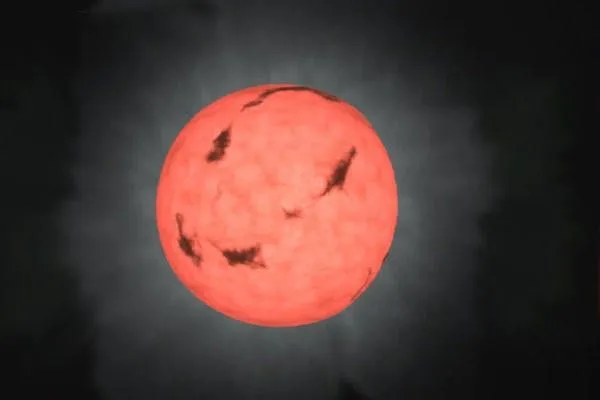
- Spectral Class L – With temperatures of about 1,300 to 2,400 K (roughly 1,900 to 3,800 °F), this class holds both sub-stellar objects and the very lowest-mass stars, all known as L dwarfs. Their spectra show metal hydride bands (iron hydride, chromium hydride, magnesium hydride, calcium hydride) and neutral alkali metals (sodium, potassium, cesium, rubidium). Hundreds of L dwarfs have been cataloged, with surveys having identified well over 900 by the early 2020s.
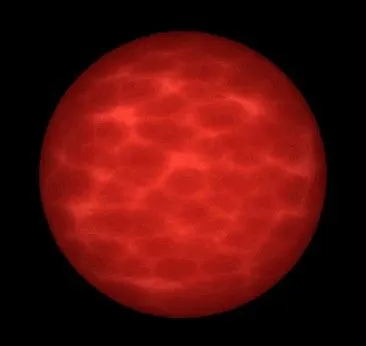
- Spectral Class T – Cooler still, at about 600 to 1,300 K (roughly 600 to 1,900 °F), this class consists mainly of brown dwarfs and sits firmly in the “not a star” zone. Their atmospheres show strong methane absorption. Despite the name, a T dwarf would actually look magenta to the human eye rather than brown, because sodium and potassium soak up the green part of its spectrum. Hundreds have been identified, on the order of 350 in early-2020s catalogs.
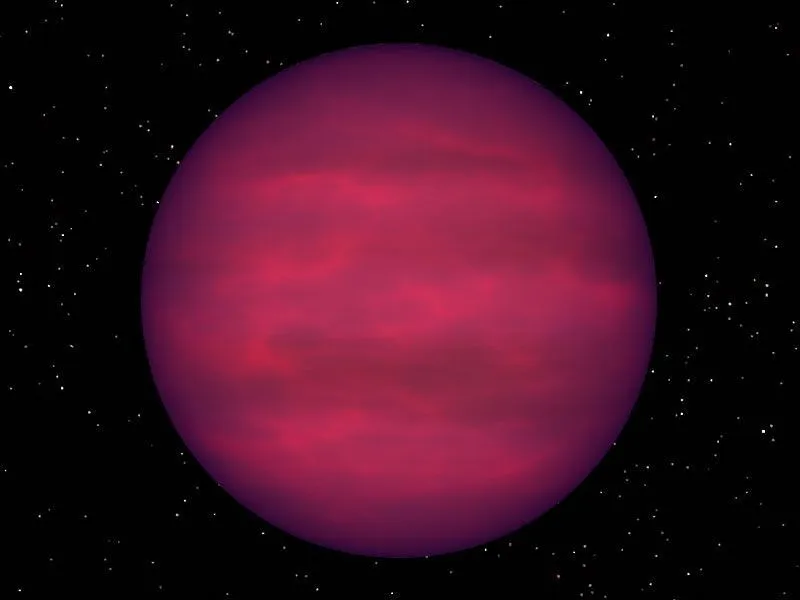
- Spectral Class Y – The coldest known brown dwarfs, Y dwarfs are much cooler than their T dwarf cousins, with temperatures below roughly 500 K (about 440 °F). The very coldest, such as WISE 0855−0714, dip to around 250 to 300 K (near or even below the freezing point of water), comparable to a winter day on Earth. This class was added after NASA’s WISE infrared survey began turning up these frigid objects around 2011.
Planets Orbiting Around Brown Dwarfs And Their Habitability
In radius, a brown dwarf is comparable to a large gas giant (roughly the size of Jupiter), even though it can pack many times Jupiter’s mass into that volume. Although it is unusual for a Jupiter-sized planet to orbit a brown dwarf, there could be two sub-brown dwarfs, rather than a planet, existing together. The size of the planets orbiting a brown dwarf are much smaller and the better part of them are likely to be terrestrial ones, rather than gas giants. Brown dwarfs also show the appearance of disks around them, much like other planets and stars.
Computer models have been made to study whether there could be habitable planets orbiting brown dwarfs. The criteria seem very stringent and these planets have a very low band of a “goldilocks zone” for any chance to foster life. Due to the cooling of these brown dwarfs, this band will keep decreasing. This would also subject the planet to a very strong gravitational pull from the neighboring brown dwarf. The planets will then need to have very small eccentricity in their orbits to avoid the strong tidal forces, which will accelerate the greenhouse effect, making it impossible for life to develop.
References (click to expand)
- What is a brown dwarf? - StarChild - NASA.
- http://web.archive.org/web/20200627023838/http://coolcosmos.ipac.caltech.edu:80/cosmic_classroom/cosmic_reference/brown_dwarfs.html
- L, T, and Y Dwarfs - spider.ipac.caltech.edu
- Discovery of Brown Dwarfs - UC Berkeley Astronomy w.
- Brown dwarf - Encyclopaedia Britannica.
- The Deuterium-Burning Mass Limit for Brown Dwarfs and Giant Planets - The Astrophysical Journal.
- Wide-field Infrared Survey Explorer (WISE) - NASA.