A faster-spinning Earth would shorten our days, push ocean water toward the equator (flooding coasts like New York, Venice, and Mumbai), strengthen winds and storms via the Coriolis effect, and gradually reduce our effective weight at the equator. At about 17,000 mph rotational speed, centrifugal force at the equator would cancel gravity entirely. In reality, Earth has been quietly spinning faster since 2020, with July 9, 2025 logging the shortest day in modern timekeeping records.
Sitting at home on your sofa, have you ever considered that you’ve never actually been at rest? Yes, it’s true. The earth is always in relative motion with respect to the universe, revolving around the sun and rotating on its axis.
Many natural phenomena that happen around us, such as changes in weather, winds, tides and many other natural events, occur because of these two relative motions of our planet, especially its rotation. That being said, have you ever wondered what would happen if Earth started to rotate faster? Let’s take a look!
Why Does The Earth Rotate?
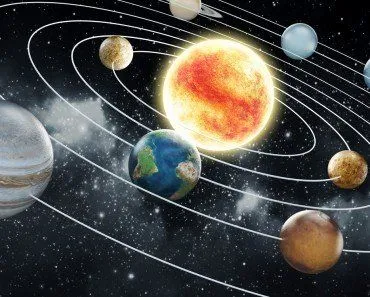
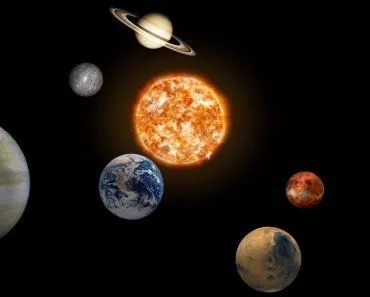
To answer this question, we must return to the time when our solar system first began taking form. At the very beginning, our solar system was composed of a massive cloud of dust and gases. Once the cloud began to collapse, it flattened into a giant disk with a bulge in the center, which eventually formed the sun. As the planets and other celestial bodies (e.g., comets, asteroids and moons) started taking shape apart from the original disk, the overall angular momentum of the disk needed to be conserved. Hence, these heavenly bodies inherited their rotation from the overall movement of the solar system.
Without any unbalanced forces in play, the inertia of the Sun and the planets has maintained that spinning for billions of years and will keep doing so for billions more, slowed only very gradually by effects like tidal friction with the Moon.
Consequences Of Earth’s Rotation
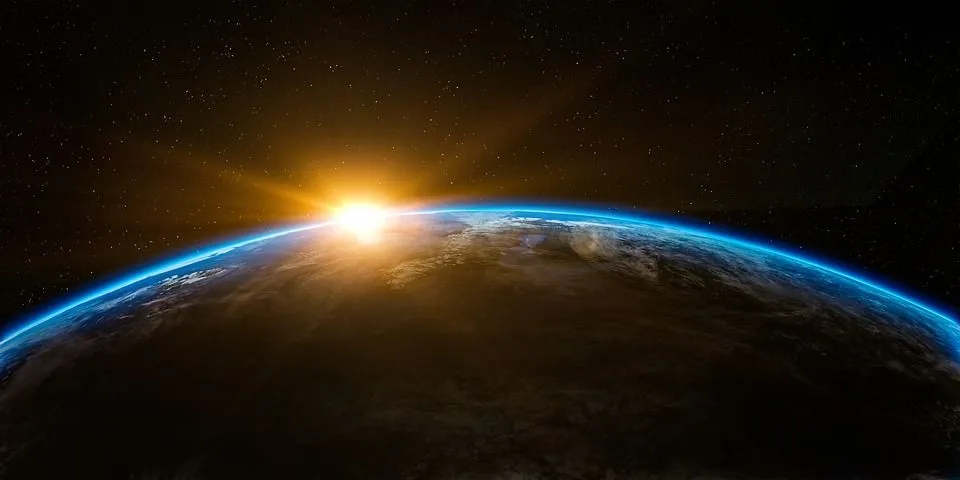
Earth's graceful 24-hour rotation rate is very amenable to life. It keeps the temperature of Earth ambient, as the surface is bathed in sunlight during the day for just the correct amount of time and then cools down in the darkness at night.
The atmosphere experiences an inward drag towards the earth because of its rotation (along with the gravitational pull of planet) and maintains an appropriate distance from the surface. Tides, the daily rise and fall of sea levels are a result of both the Earth spinning on its axis and the effects of gravity from the earth and the moon.
Coriolis Force Into Play
Rotation causes a deflection of the air and ocean currents. The earth rotates much faster than the winds or currents, which leads to Coriolis forces that deflect the wind and change its direction, creating high- and low-pressure regions on Earth’s surface.
What Is Chandler’s Wobble?
Chandler’s Wobble is the name given to the movement at the Earth’s pole by 0.7 arcseconds (1 degree=60 arcminute; 1 arcminute=60 arcseconds), the angular measure of an object, over a period of about 14 months.
It is believed to be primarily caused by the natural resonances in the body of the spinning Earth due to the detailed and variable mass distribution on its surface, interiors, oceans and atmosphere.
How Fast Is The Earth Spinning Right Now?
Here is the part that surprises most people: you are hurtling through space at airliner speed while sitting perfectly still. At the equator, the surface of our planet sweeps around the axis at roughly 1,670 km/h (1,040 mph), which works out to about 465 meters every single second. That figure comes straight from the size of the planet: divide the equatorial circumference (just over 40,000 km) by the length of one rotation (about 23 hours 56 minutes), and you land at 465 m/s.

That headline number only applies at the equator, though. The rotation speed shrinks as you move toward the poles, scaling with the cosine of your latitude. Stand at about 45° (think the latitude of Minneapolis or Milan) and the ground beneath you is moving at roughly 1,180 km/h (735 mph); stand right on the North or South Pole and you simply turn on the spot at almost zero speed. This is also why we never feel any of it, as the speed barely changes from one moment to the next, so there is no lurch to sense (we unpack this in our piece on why we don’t feel the Earth spin).
One quick myth to clear up: spinning faster would not change Earth’s mass. Mass depends on how much matter the planet contains, not on how quickly it turns, so a speedier Earth would still hold exactly the same amount of stuff. What would change is your apparent weight, as we will see below. And rotation is only half the story of our motion, because Earth also races around the Sun at a blistering 29.78 km/s (about 107,000 km/h).
What Happens If The Earth Rotates Faster?
Weightlessness
Currently, if you weigh about 150 pounds at the Arctic Circle, you might drop to 149 pounds at the equator. That’s because of the extra centrifugal force being generated, as the Equator spins faster to cover more distance, in comparison to the poles. Notch up the speed even more, and your weight would drop even further.
‘Odenwald’ revealed that if the Equator revved up to 17,641 miles per hour, the centrifugal force would overcome gravity and we would be virtually weightless!

Length Of The Day
The rotation of our planet principally determines the length of the day. A faster rotation speed would mean a shorter day, so the number of days in a year would increase (provided that Earth still revolves at the same rate).
Excessive Flooding
The extra speed at the Equator would mean that the water in the oceans would begin to amass there. At just one mph faster than its regular velocity, the water around the Equator would become a few inches deeper within a few days. The centrifugal force would pull thousands of gallons of water towards the Earth’s waistline. Many low-lying areas of the world, including New York City, Venice, Mumbai and many others would be completely submerged underwater if the speed ratcheted up by a few more mph, along with displacing millions of people from their homes.
Increased Wind Speed
The rotation of Earth is NOT the dominant force driving the atmosphere: convection and winds are predominantly caused by the uneven heating of the surface of the planet, but the Coriolis Effect influences the directional shifting of these winds. With the Earth’s rotation speed increased, the circles of convection would tighten, and the weather would potentially include more cyclones, hurricanes and tornadoes.
What If Earth Spun Twice As Fast (Or 30 Times)?
So far we have talked about nudging the speed up by a mile or two per hour. But search the web and you will find plenty of people asking about far wilder jumps, so let’s run the dial all the way up. Double the rotation speed and the most obvious change is the clock, as a full day would last roughly 12 hours instead of 24. Your apparent weight at the equator would also dip noticeably, and, as we saw, the oceans would start to pile up around the planet’s waistline.

Crank it up to about 17 times today’s speed (around 28,400 km/h, or 17,641 mph, at the equator) and something dramatic happens: NASA astronomer Sten Odenwald calculates that the outward centrifugal force would exactly cancel gravity at the equator, leaving anyone standing there completely weightless. Loose objects would no longer stay put on the ground.
Now imagine 30 times faster, roughly 50,000 km/h at the equator. That is well beyond the break-even point, so gravity could no longer pin the equator down. Water and air there would be flung outward, with the oceans effectively hurled into space and the atmosphere thrown off the planet’s middle. The relentless outward pull would also flatten the planet further, stretching it at the equator and pressing on the poles (every rotating planet already bulges slightly this way, which is why Earth is about 43 km wider across the equator than from pole to pole). Long before reaching that extreme, the mounting stress would set off catastrophic earthquakes as the crust reshaped itself. A day, by the way, would be over in under an hour. It is a good thing our planet is firmly stuck at its current, life-friendly pace.
A Final Word
Clearly, an increase in Earth’s rotational speed could have various impacts, ranging from increased earthquakes and tsunamis to shortening the length of the day. People could be floating through the air, weightless in central Africa, while the polar ice might melt extremely fast, submerging many populated parts of the world.
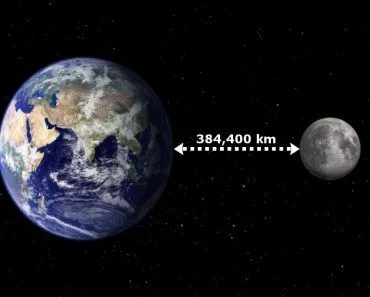
On the long timescale, the rotation of Earth is being slowed by tidal interaction with the Moon, which gains a little angular momentum from us every year and drifts about 3.8 cm farther away. Astronomers estimate that lunar tidal braking lengthens the day by roughly 2.3 milliseconds per century, which would add a full second to the day length every ~50,000 years.
Interestingly, over the last few years Earth has bucked that long-term trend and started speeding up. Since 2020, the IERS has clocked one shortest-day record after another, most recently July 9, 2025, which came in about 1.66 milliseconds short of a 24-hour day. Researchers blame a mix of core–mantle coupling, shifting atmospheric mass, and the redistribution of meltwater toward the equator. If the trend holds, the world’s timekeepers may have to subtract a negative leap second from Coordinated Universal Time, possibly as early as 2029, the first such adjustment ever.
For the speed of Earth to increase drastically, it would have to be hit by a large enough object, which would bear plenty of other consequences, such as dismantling the crust and massive earthquakes that could easily kill us all. Let’s just be happy that, for now, our planet appears to be spinning at just the right speed!
References (click to expand)
- Why is Earth rotating? Did it always have the same rotation period? Will it always have the same rotation period? - spaceplace.nasa.gov
- What would happen if the earth's rotation was faster or slower? Socratic
- Gross, R. S. (2007). Earth Rotation Variations – Long Period. Treatise on Geophysics. Elsevier.
- Earth Rotation - International Earth Rotation and Reference Systems Service (IERS)
- Leap second - Wikipedia
- The Rotating Earth - NASA Goddard Space Flight Center
- Earth Fact Sheet (NASA/NSSDCA) - University of Colorado Boulder
- What if the speed of Earth's rotation suddenly got faster? - Popular Science
- Equatorial bulge - Wikipedia