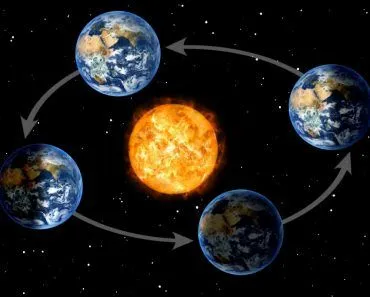
If Earth stopped revolving around the sun, it would either fly out of its orbit and into outer space, or it would fall into the sun. If it flew out of its orbit, everything on Earth would be moving at 30 km/s and would fly off the planet. If it fell into the sun, it would take around 65 days for the planet to crash. During this time, the Earth would experience an intense heat wave, and most of life as we know it would be destroyed.
In one of our articles, we discussed the consequences of a sudden halt in Earth’s rotation. Whether it suddenly stops turning on its axis or does so gradually, it’s bad news for life on Earth. However, what would happen if Earth continued to rotate on its axis, but stopped revolving around the sun instead?
What if a giant, invisible wall stops Earth in its tracks while revolving around the sun?
First off, let me make one thing clear – such a thing can’t and won’t happen. There’s absolutely no external force that could stop the planet in its tracks like that. Therefore, don’t you worry about this happening in real life. However, there’s nothing wrong with investigating the consequences of a hypothetical question…
Earth’s Orbital Velocity
Right now, Earth revolves around the Sun at a staggering average speed of 29.78 kilometers per second (about 67,000 miles per hour, or 107,000 km/h)! (Source) Of course, we don’t realize we’re going so fast because everything on Earth is moving at the same speed. That means there is no relative speed that could possibly give us any idea of our orbital velocity.
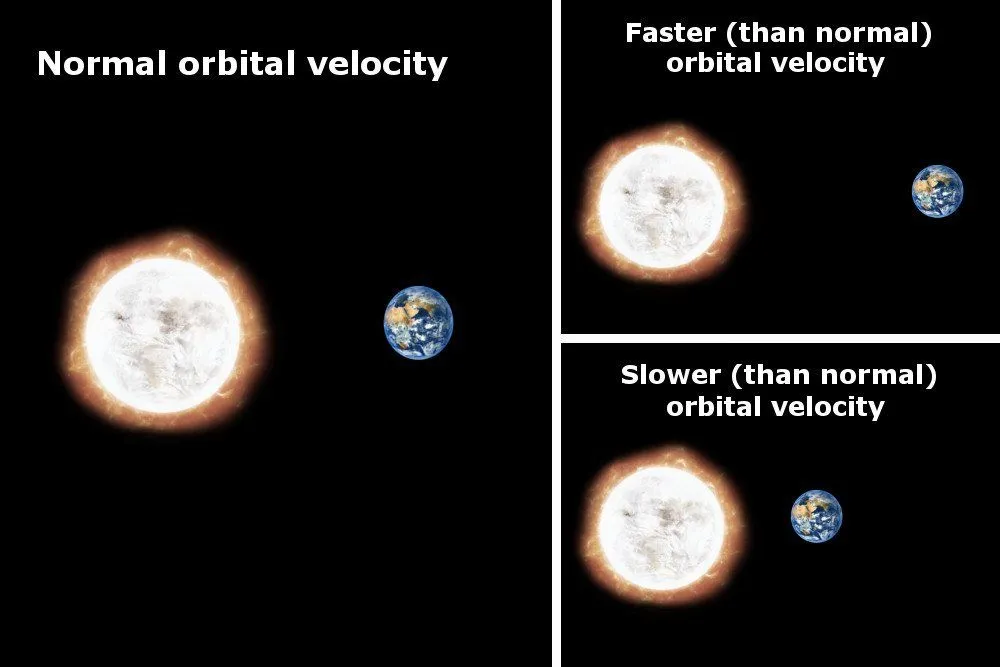
The Sun, given how mind-bogglingly massive it is, exerts a strong gravitational force on every member of the solar system, including Earth. Therefore, a high orbital velocity is the only thing that keeps us from crashing into the Sun. If the Sun were to disappear all of a sudden, Earth would continue traveling at 30 km/s and shoot out of its orbit to keep going into outer space. If the orbital velocity somehow increased, Earth would attain a higher orbit to compensate for the Sun’s gravitational tug. Similarly, if Earth’s orbital velocity decreased, it would fall to a lower orbit and come closer to the Sun.
Why Doesn’t Earth Fall Into The Sun In The First Place?
Here’s a question that flips the whole thing around: the Sun is pulling on us constantly, so why aren’t we already plummeting toward it? The honest answer is that we are. Earth is forever falling toward the Sun. It just keeps missing.

Isaac Newton explained this with a famous thought experiment. Imagine a cannon on top of an impossibly tall mountain, firing a cannonball horizontally. Fire it gently and it arcs down and lands nearby. Fire it harder and it lands farther away. Fire it hard enough, and the ground curves away beneath it just as fast as the ball drops. At that point the cannonball never hits the ground. It falls around the planet forever. That, in a nutshell, is an orbit (Source: NASA).
Earth is doing exactly this around the Sun. Our planet is barreling along at roughly 30 km/s (about 67,000 mph), almost entirely sideways relative to the Sun. The Sun’s gravity does pull us inward, but by the time we’ve fallen a little closer, our enormous sideways speed has carried us along the curve of our orbit so that we keep missing. Gravity supplies exactly the inward (centripetal) tug needed to bend our otherwise straight-line path into a near-circle. Take that sideways speed away and the missing stops, which is the whole premise of this article.
This also settles a worry plenty of people have: could the Sun come crashing into us? No. Gravity is a two-way street, but the Sun is over 300,000 times more massive than Earth, so it barely budges in response to our pull. Nothing is going to fling the Sun at us, and nothing is going to switch off Earth’s sideways motion. If you ever doubt how stubborn that sideways speed is, consider that NASA’s Parker Solar Probe needed repeated gravity-assist flybys of Venus just to shed enough of it to skim the Sun. Reaching our star is one of the hardest trips in the solar system, precisely because everything launched from Earth inherits that same 30 km/s sidestep (Source: NASA).
What If Earth Suddenly Stopped Revolving Around The Sun?
In the case of a sudden halt of Earth’s revolution around the heat giant, everything would fall into complete disarray on the planet. You see, since Earth has an orbital velocity, everything on Earth is moving at the same velocity. In the case of a sudden stop, everything on Earth would still have 30 km/s worth of inertia.
To put it in perspective, think of what inertia does to you when a bus driver suddenly applies the brakes. In this case, Earth is the bus, and everything that it hosts (including all mountains, seas, rocks and every single lifeform) represents the passengers. Note that Earth’s escape velocity is 11.2 km/s (Source). With an inertia of 30 km/s, things on the leading side would fly off into space, while everything on the trailing side would be crushed against Earth’s surface by an incredibly powerful force. In short, complete destruction in a matter of seconds is what I’m talking about.
What If Earth Gradually Stopped Revolving Around The Sun?
The effects would be less dramatic, but equally devastating, in this alternative case. With no outward centripetal force to compensate for the strong inward tug of the Sun’s gravity, Earth would begin to fall towards the Sun.
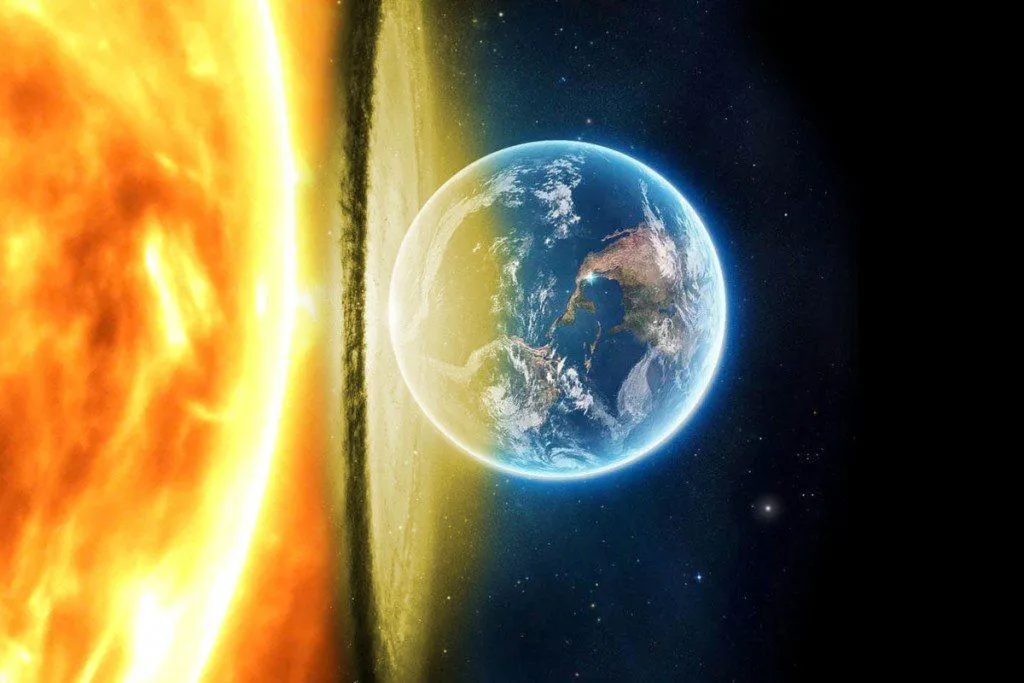
Calculations indicate that it would take around 65 days for Earth to crash into the Sun. During this two-month journey, the Earth would start to show some effects. By the end of the first week, Earth’s average temperature would only rise by about 0.8 degrees, but by the 20th day into the plunge, the planet would already be experiencing an intense, unbearable global heat wave.
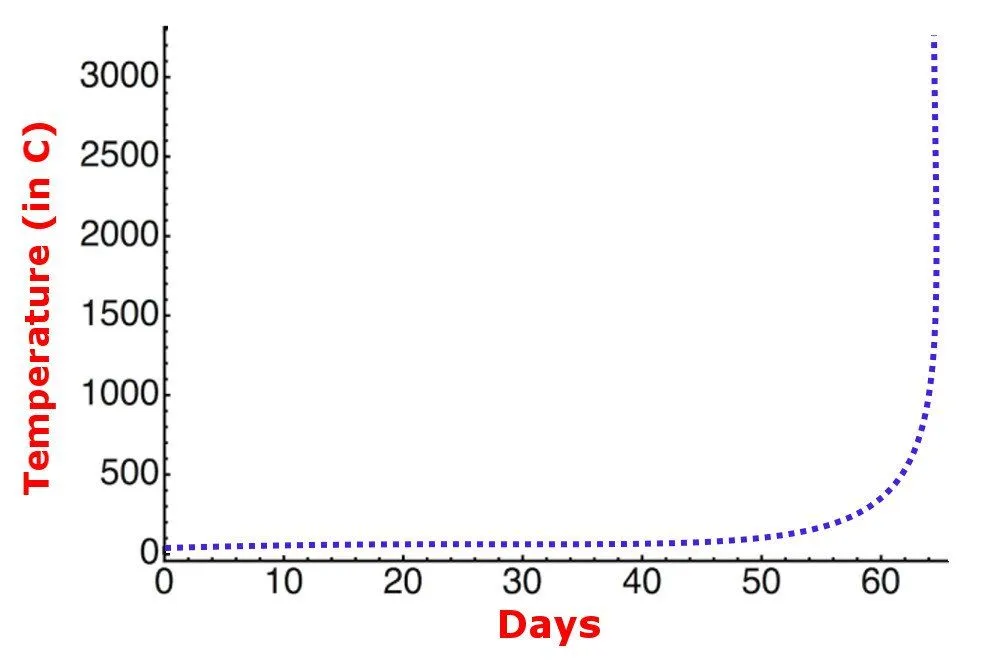
The global temperature would increase drastically as the planet closed in on the sun. Wildfires would ravage and scorch the land, oceans would boil and most of life as we know it would be destroyed long before Earth even crossed the orbit of Mercury. Beyond that, Earth would become the closest planet to the Sun (but only for around 7 days) before disintegrating into small bits of magma and melting rock.
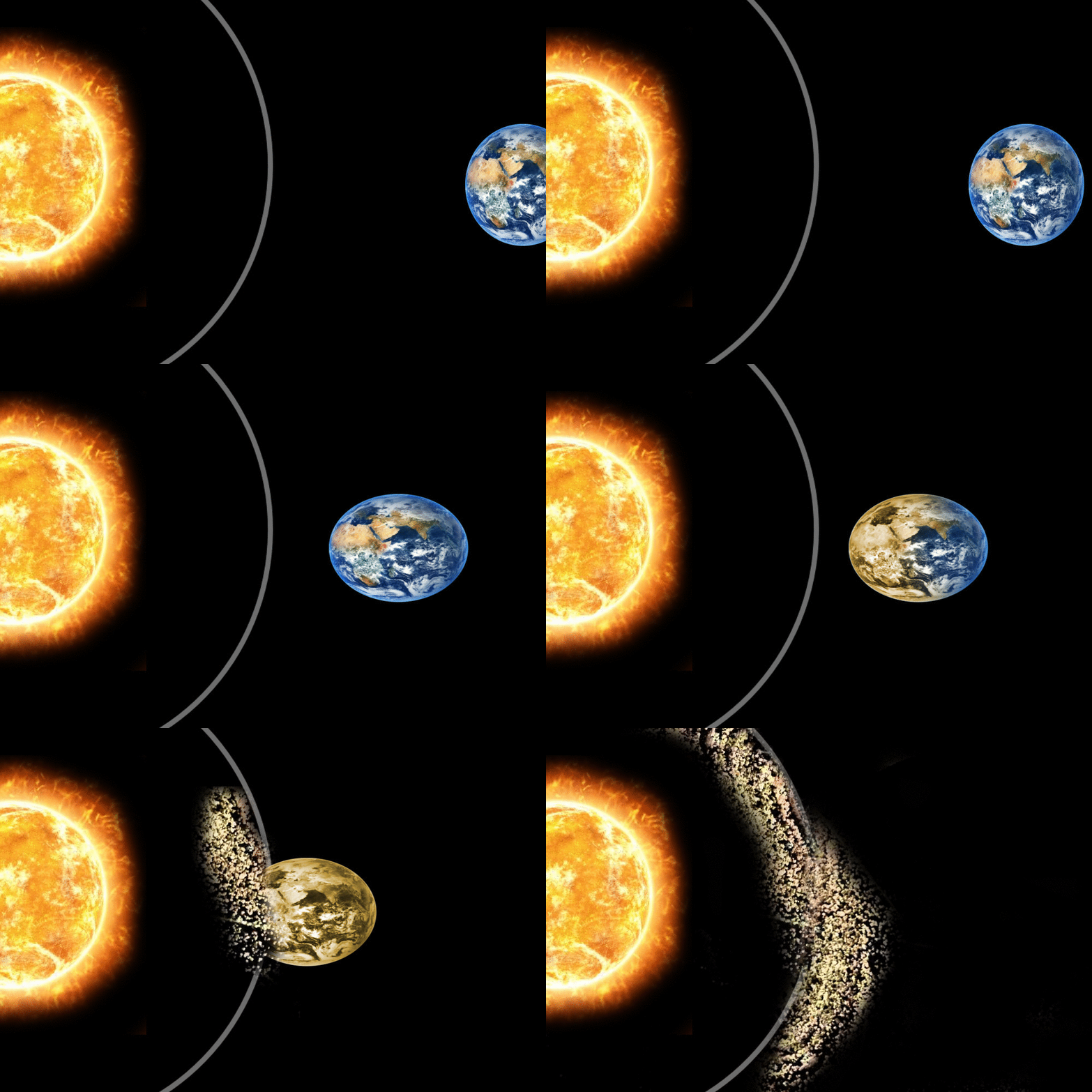
But, and this is a big but, as I mentioned earlier, all of this is purely HYPOTHETICAL. Therefore, you can go about doing what you were doing before the idea of a sudden halt of Earth’s revolution was planted in your head by this article. We apologize for any apocalyptic nightmares in advance!
How Long Would Earth Take To Fall Into The Sun?
We’ve thrown around “about 65 days” a couple of times. So where does that number actually come from? You don’t need a supercomputer; a 17th-century insight does the job.

The trick is to treat the plunge as half of a very skinny orbit. If Earth’s sideways speed suddenly dropped to zero, it would start dropping straight toward the Sun and then (in principle) loop back out. That path is a wildly stretched-out ellipse, squashed so flat that it’s almost a straight line. Its long axis is the distance Earth would fall, so this collapsed ellipse is exactly half as wide as Earth’s normal orbit. The fall itself is just the first half of one trip around that skinny ellipse.
Now Kepler’s Third Law takes over. It says the square of an orbital period scales with the cube of the orbit’s semi-major axis, so a smaller orbit means a shorter year. Shrink the orbit to half its size and the period drops by a factor of 21.5, which is about 2.83. A normal Earth year of 365.25 days becomes roughly 129 days for one lap of the skinny ellipse. We only need the inward half of that trip, so we halve it again, landing on about 64.6 days, which everyone rounds to 65 (Source: Universe Today). Put more simply, the fall time works out to Earth’s orbital period divided by 4√2.
That two-month free fall has clear milestones. Earth would cross the orbit of Venus around day 41 and the orbit of Mercury near day 57, briefly becoming the closest planet to the Sun before it was torn apart (Source: Wired). The neat part is that none of this depends on Earth specifically. Drop any planet’s orbital speed to zero and the same recipe gives its fall time, which is why physics teachers love this as a Kepler’s-Law puzzle.