Table of Contents (click to expand)
Astronauts on the ISS talk to each other in English, the working language of space. They communicate with people on Earth using radio signals relayed through NASA's Tracking and Data Relay Satellites in high orbit, which pass the calls and data to ground stations and mission control. Astronauts can also reach amateur (ham) radio operators on Earth using the radio onboard the station.
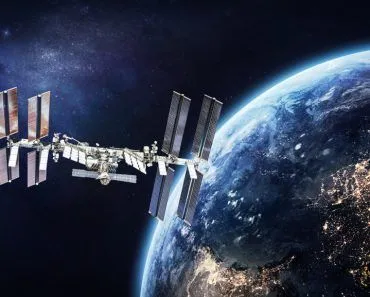
If you’re an avid stargazer, or someone that knows their way around a telescope, you’ve likely spotted fast-moving spots in the sky, somewhere between a stationary point of light, a shooting star, and a trick of the eye. What you’ve probably witnessed in that case is a satellite, and when it comes to manmade satellites orbiting our planet, none of them are as impressive or significant as the International Space Station.
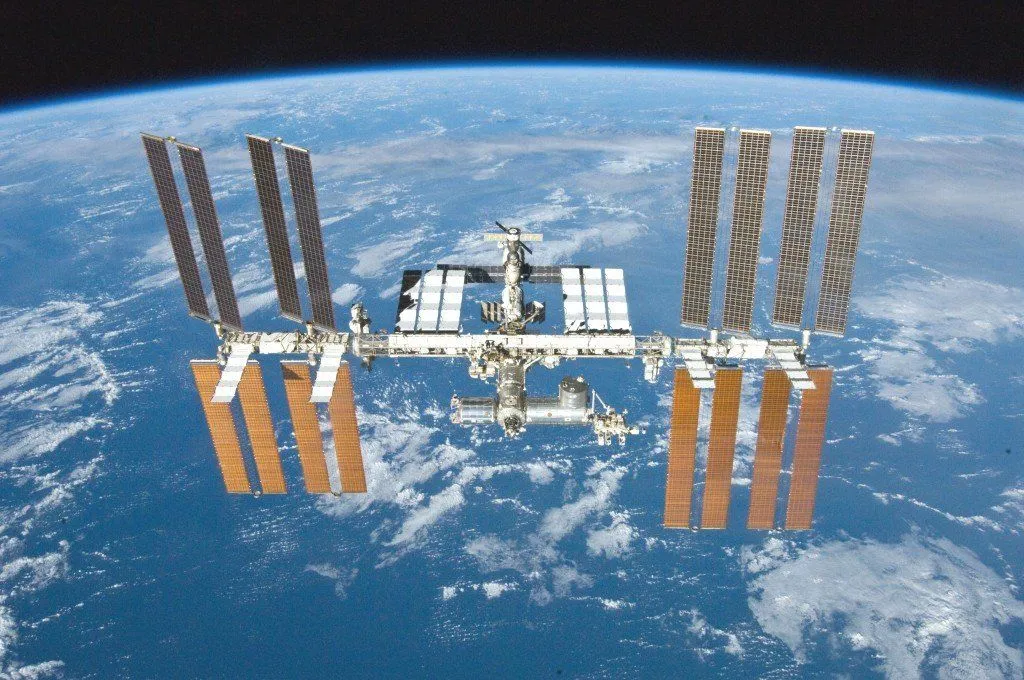
It is the most expensive object ever built, as well as one of the most complex, and can even be seen from Earth with the naked eye. People have thousands of questions about this international collaboration, which has been continuously inhabited since November 2000 (more than 25 years), but the most common ones relate to communication. More specifically, how do astronauts from different countries talk to one another? And how do they communicate with those people back on Earth?
Let’s take a closer look at these different questions and subjects in a bit more detail.
Communicating On The ISS
Astronauts and cosmonauts from more than two dozen countries have been a part of the ISS crew. The station is run by five partner agencies: NASA (United States), Roscosmos (Russia), the European Space Agency or ESA (representing member states across Europe), JAXA (Japan) and the Canadian Space Agency. Obviously, that means many different languages coming together in a setting where clear communication is critical to safety and survival. In the early days of the ISS, it was decided that English would be the international language of space, per se. Thus, any astronaut going to the ISS must have some level of fluency in English, not only to be able to communicate with others onboard, but also to read the signage onboard, much of which is in both Russian and English.

For many years, Russia held a good deal of control over the comings and goings to the ISS, because the Russian Soyuz was the only rocket system that could deliver and return astronauts to the station. That changed in May 2020, when SpaceX's Crew Dragon began carrying astronauts to the ISS, ending the years when the Soyuz was the only ride to the station. Even so, the Soyuz still flies crews, and its controls and labeling are all in Russian, which is why astronauts are also expected to have a working knowledge of the language. In other words, an astronaut from Japan moving in onboard the ISS would need to learn both Russian and English (not an easy task, since both belong to language families very different from Japanese) before joining the crew and launching up to the station.
Communicating Outside The ISS
If you’ve seen the movie Gravity, then you may have a deep-seated fear of spacewalks, i.e., leaving the safety of a space shuttle to fix something outside, with nothing around you but the infinite expanse of space. Even the thought of such an experience is enough to send a shiver up most spines, but astronauts do need to step into the void once in a while. Maintaining communication in that situation is extremely important.

You may have heard the phrase, “In space, no one can hear you scream”, and that’s because sound waves can’t propagate without an atmosphere. So, how can astronauts talk to one another if they’re on a joint spacewalk? Well, even though sound waves can’t move without an atmosphere, electromagnetic waves can. Astronauts’ helmets are equipped with a transmitter that converts the sound waves of their voice into radio waves, which can travel through the vacuum of space. Although we tend to associate radio with “sound”, radio waves are actually part of the electromagnetic spectrum, so they travel in the same way as light, with no atmosphere required.
Connecting With Earth
People who pay attention to the goings-on of the ISS may assume that the astronauts and cosmonauts stay in constant contact with mission control during a mission, but that wasn’t always the case. In the years leading up to the ISS launch, it became clear that near-100% coverage was required to adequately support spacecraft in low Earth orbit. NASA's Tracking and Data Relay Satellite system, which still serves the ISS today, consists of a fleet of seven satellites, several of which have been in geosynchronous orbit around our planet for more than 20 years. (NASA is gradually moving to commercial relay services and, as of late 2024, no longer assigns new missions to TDRS, but the existing satellites are expected to keep operating for years.)

With these satellites in place, those onboard the ISS are able to maintain contact and communication with ground control at all times. Although the ISS typically operates like a well-oiled machine, there are countless variables and potential risks in the emptiness of space that could become a serious problem. For example, if the ISS were to be struck by a large piece of space debris and suffer severe damage to a solar panel or the main compartments of the station, immediate action would need to be taken. Any lag or lack of communication with ground control could be disastrous. While the high concentration of low Earth orbit satellites is worrying (due to the growing issue of space debris and safe launch paths), these tracking and data relay satellites are essential for keeping the ISS safe.
Connecting With The World
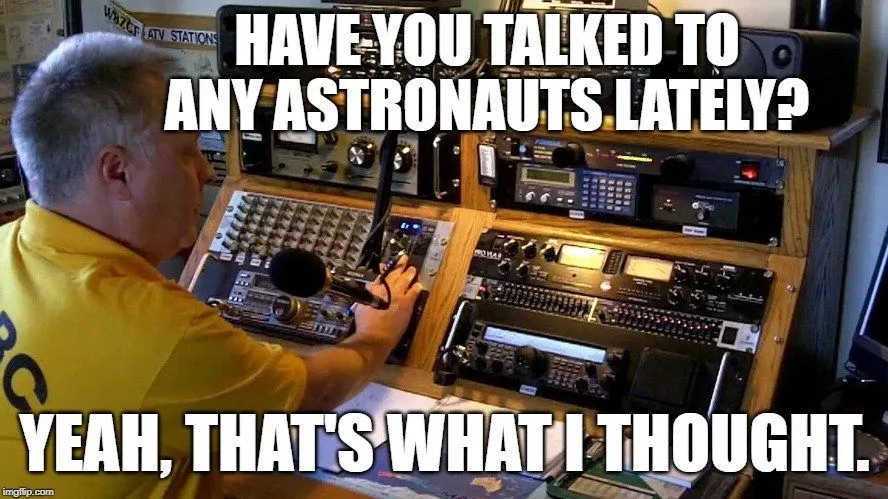
If you’ve ever wanted to talk to an astronaut and learn what life is like for those distant adventurers, you actually can! As mentioned earlier, radio waves are the best way to communicate between astronauts, but they are also useful for communicating with regular people just like you! There is a ham radio onboard the ISS, and for amateur radio operators on Earth, this means you can speak directly to the astronauts onboard!
Granted, it isn’t like having Mark Kelly on your speed dial; the ISS is traveling at roughly 7.7 km/s (almost 5 miles per second), so in any given area, the station will only be within ham radio range for about 10 minutes per pass. Considering what a unique and cool opportunity this is for kids and adults alike, the ISS partners run a program called Amateur Radio on the International Space Station (ARISS), which helps engage young people with the marvels of science and space, while also providing information on how and when you can reach out and speak right to the astronauts onboard!
A Final Word
While it may seem like speeding around the planet at nearly 8 km/s (about 5 miles per second), roughly 400 km (250 miles) above the surface, would be alienating, there are a surprising number of ways that astronauts can communicate, both with their fellow space travelers and the world far below. Utilizing everything from rudimentary tools to the most cutting-edge equipment, the ISS remains a testament to past collaborations and a template for joint progress towards global goals in the future.
References (click to expand)
- Amateur Radio on the International Space Station (ARISS) - NASA. The National Aeronautics and Space Administration
- What Is The Most Expensive Object Ever Built? - zidbits.com
- The Challenge of Communication in Space. The National Air and Space Museum of the Smithsonian Institution
- Tracking and Data Relay Satellite (TDRS) Fleet Characteristics - NASA. The National Aeronautics and Space Administration
- International Space Station Facts and Figures - NASA. The National Aeronautics and Space Administration
- Thirsk, R., Kuipers, A., Mukai, C., & Williams, D. (2009, June 1). The space-flight environment: the International Space Station and beyond. Canadian Medical Association Journal. CMA Joule Inc.
- Teles, J., Samii, M. V., & Doll, C. E. (1995, January). Overview of TDRSS. Advances in Space Research. Elsevier BV.