Table of Contents (click to expand)
Humans have left over 200,000 kg (440,000 lb) of objects on the Moon: spent spacecraft, lunar rovers, six American flags, the Apollo 11 plaque, golf balls, a tiny “Fallen Astronaut” statue, bags of waste, and Gene Shoemaker’s ashes (the only human remains there). Laser retroreflectors from Apollo are still used today.
When we look up at the night sky, beyond the billows of clouds and the haze of smoke, we can usually spot a glowing orb suspended in the middle of nothing. It’s something we’ve grown up watching with sparkling eyes of wonderment and tinges of curiosity, and it likely sprouted an aspiration of astronomy in many of us. It moved the masses long before the age of Twitter and continues to influence religions and folklore across the globe.
The moon is a timeless symbol of awe for all of mankind. It only makes sense then that man reaching that pinnacle would be a *pretty* big deal for us. Being humans, we tend to leave a mark of our existence wherever we go, so it’s no surprise that we’ve left some on the literal moon, both trash and treasure alike.
How Much Have We Left Behind?
In July 1969, Neil Armstrong and Buzz Aldrin were the first humans to step foot on the moon on Apollo 11, changing the scope of space exploration forever. The Apollo program went on for five more missions, stretching until 1972, along with several unmanned missions by the Soviet Union. In over five decades of space missions, we have amassed roughly 200,000 kg (around 440,000 lb) of human-made material on the moon, and the pile keeps growing. A new wave of robotic landers has touched down in just the last couple of years: India’s Chandrayaan-3 (August 2023), Japan’s SLIM (January 2024), and the US Intuitive Machines lander Odysseus (February 2024), the first American craft to make a soft landing on the moon since the Apollo era.
The things we’ve left behind fall broadly into three categories: the memorabilia, the remnants from missions, and the astronauts’ waste.
Memories And Memorabilia
1. The Plaque: At the site of the Apollo 11 landing, a plaque signed by the crew and then US President Richard M. Nixon was placed with the inscription, “Here men from the planet Earth first set foot upon the Moon July 1969, A.D. We came in peace for all mankind.” This achievement was huge enough to surpass the ongoing Cold War; American astronauts left behind two medals honoring late Soviet cosmonauts Yuri Gagarin and Vladimir Komarov, who had died before the landing (Komarov in the Soyuz 1 crash, Gagarin in a 1968 jet accident).

2. Ashes: American astro-geologist Gene Shoemaker spent his career studying cosmic impacts and even trained the Apollo astronauts in geology. After he died in 1997, a capsule holding an ounce of his ashes launched aboard NASA’s Lunar Prospector probe in January 1998. When the mission ended in July 1999, the spacecraft was deliberately crashed into a crater near the lunar south pole, making Shoemaker the only person whose remains rest on the moon. So if you have ever wondered whether there is a dead man on the moon, this is the closest answer: not someone who died there, but someone laid to rest there.
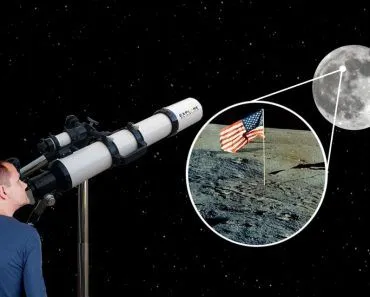
3. American Flags: All six Apollo manned missions carried an American flag with them and successfully placed them on the lunar soil. However, due to the direct exposure to UV light, the flags have most likely been bleached white by now.

4. Disc of goodwill messages: The first manned mission of Apollo 11 carried along with it a small cylindrical case the size of a half-dollar bill, containing a scroll with greetings from the Heads of State of 73 countries (including the now non-existent countries of Yugoslavia and the Republic of Dahomey). The text written on the scroll was reduced 200 times, given the size of the case, and could only be read using a magnifying glass. The outside carried the engraving “From Planet Earth – July 1969”.

5. Olive Branch: A golden trinket shaped like an olive branch was left behind by the Apollo 11 astronauts as “a wish for peace for all mankind.”
6. Golf Balls: Apollo 14 commander Alan Shepard smuggled a golf club along with him in his suit, which he used to hit 3 golf balls on the surface of the moon, and 2 of them are still there. The club was later brought back to Earth and is now stored at the United States Golf Association Museum.
7. Astronaut Badge: Astronaut Alan Bean on Apollo 12 removed his lapel pin and tossed it into the vast unknown. He described it as looking like a shooting star across the surface of the moon.
8. Bible: Apollo 15 commander David Scott left a red paper copy of the Bible on one of the lunar rovers.
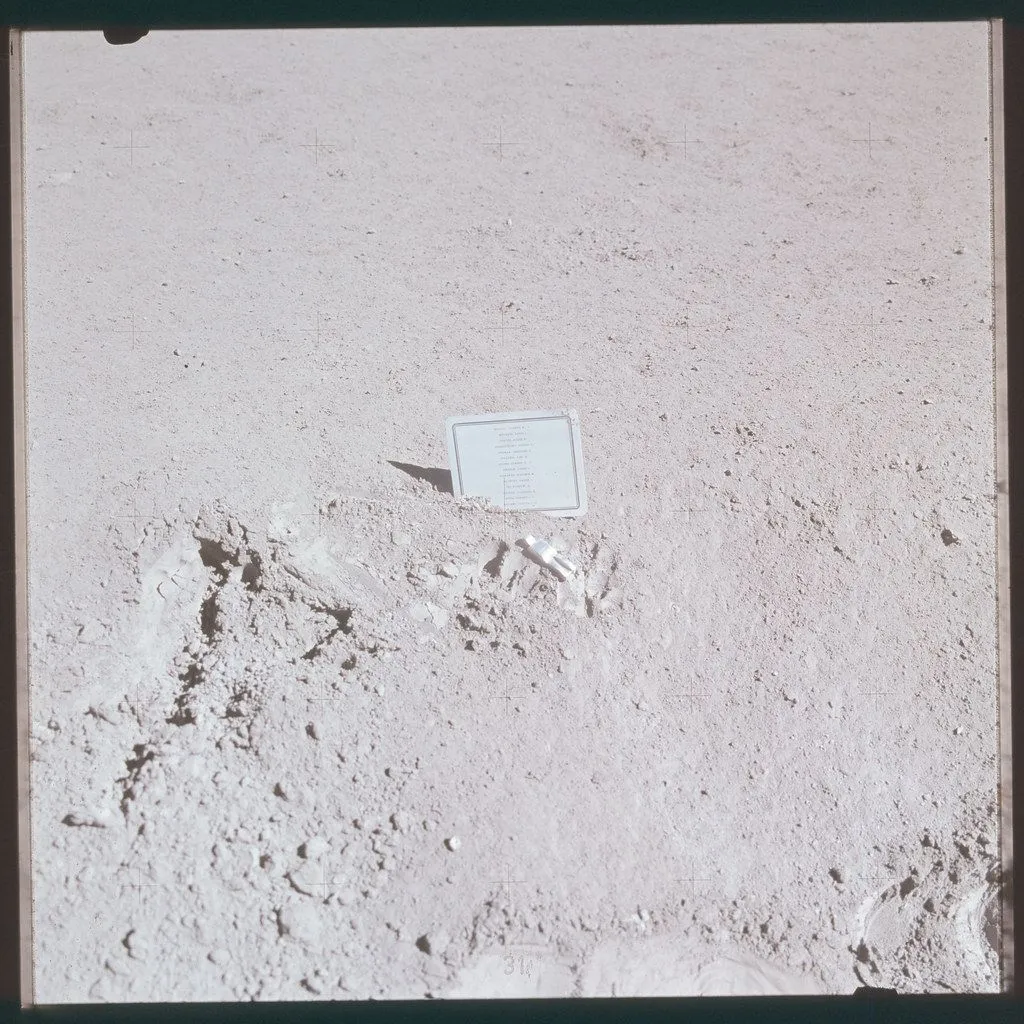
9. Fallen astronaut sculpture: The same commander also left a memorial in the form of a tiny aluminum statue called the “Fallen Astronaut,” sculpted by Belgian artist Paul Van Hoeydonck, along with a plaque carrying the 14 names of the space explorers, both from the US and the Soviet Union, who had lost their lives up until that point. It remains the only piece of art on the moon.
10. Family on the Moon: Apollo 16 astronaut Charles Duke left a photo of himself beside his wife and two children. However, under UV light, it is most likely to have faded away by now, just like the American flags.
Remnants From Missions
Most of what we’ve left behind is equipment from lunar missions, including over 70 spacecraft vehicles that were too tedious to bring back to Earth. The Apollo missions were largely focused on understanding lunar geography, with several machines and instruments being left behind by the crew upon mission completion.
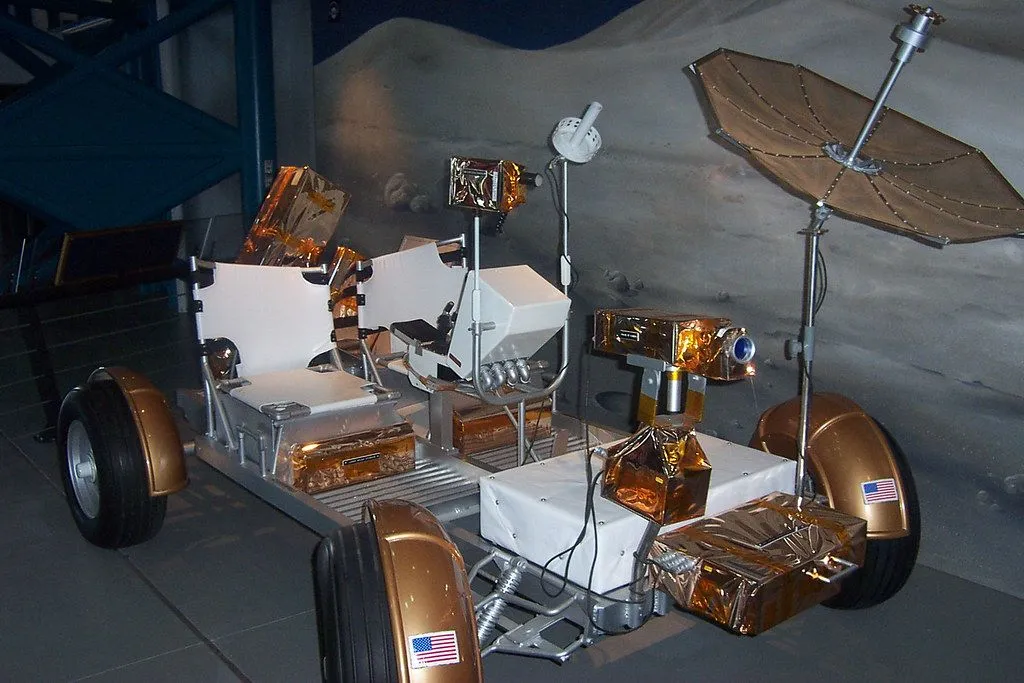
To make space for the lunar samples they brought back to Earth, the astronauts also dumped gear and camera equipment they no longer needed. In exchange for the weight left behind, they brought back 382 kg (842 lb) of rocks and soil from the moon across the six landings. They also left things that carried Apollo 11’s legacy, like the television camera used to telecast the historic moon landing to billions back on Earth.
Apart from this, there are several unmanned space probes, ascent/descent stages, and moon buggies that have been left behind.
Astronaut Poop
A NASA document lists that there are several urine and defecation collection devices, along with other trash, which was dumped on the moon to lessen the weight of returning spacecraft.
However, even those bags of excrement can provide us with invaluable knowledge of how the lunar atmosphere will affect human bodies and byproducts over the years.
Is This Stuff Of Any Use To Us Now?
Some of it absolutely is. The Apollo 11, 14 and 15 crews each left behind a laser retroreflector, a panel of mirrored prisms, and these are still working more than half a century later. Observatories on Earth fire a laser at them and time how long the pulse takes to bounce back, which lets us measure the Earth–Moon distance to within a few centimeters and keep testing Einstein’s theory of gravity. They are, in fact, the only experiments from the Apollo era still returning fresh data today.
Even though the physical utility of the things on the surface could be ascertained to some extent, it is what most of them represent that is of real value to us. Apart from symbolizing the hopes and aspirations of humanity, and being the product of our determination, they also set the tone for our future expeditions. Also, we gotta admit… it’s pretty damn cool to leave your mark on the moon!
References (click to expand)
- Memorial to Fallen Astronauts on the Moon. NASA Science. National Aeronautics and Space Administration
- Artifact List - Space Grant Lunar Legacy Project. New Mexico State University
- Memento Moon: Some of What We've Left Behind. The National Air and Space Museum of the Smithsonian Institution
- The Apollo 15 Lunar Laser Ranging Retroreflector: A Fundamental Point on the Moon. NASA Science. National Aeronautics and Space Administration
- Laser Ranging Retro-Reflector, Apollo. The National Air and Space Museum of the Smithsonian Institution
- Lunar Prospector. NASA Science. National Aeronautics and Space Administration