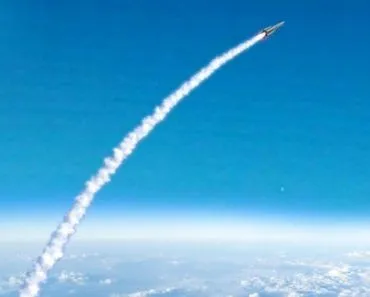
Rockets work in space because they carry their own oxygen. Their tanks hold a fuel (such as liquid hydrogen, kerosene or methane) along with an oxidizer (usually liquid oxygen), so combustion never relies on air in the atmosphere. Burning these together produces high-pressure gases that are ejected from the engine nozzle, and by Newton’s third law the rocket is pushed in the opposite direction—forward. Some engines skip oxygen entirely, using hypergolic propellants that ignite on contact.
Commercial aircraft and fighter jets burn their fuel using the oxygen that is present in the atmosphere, but what about rockets that go into space? Since there is practically no air up there, how do rockets ignite their engines and burn that critical fuel in space?
Short answer: Rockets work in space because they carry their own oxygen. A liquid- or solid-propellant tank holds both fuel (hydrogen, kerosene or methane) and oxidizer (liquid oxygen), so combustion never needs air—Newton’s third law does the rest. Furthermore, you don’t necessarily need fire to provide thrust to a rocket; you can obtain thrust by simply ejecting ‘mass’ out of the rocket.
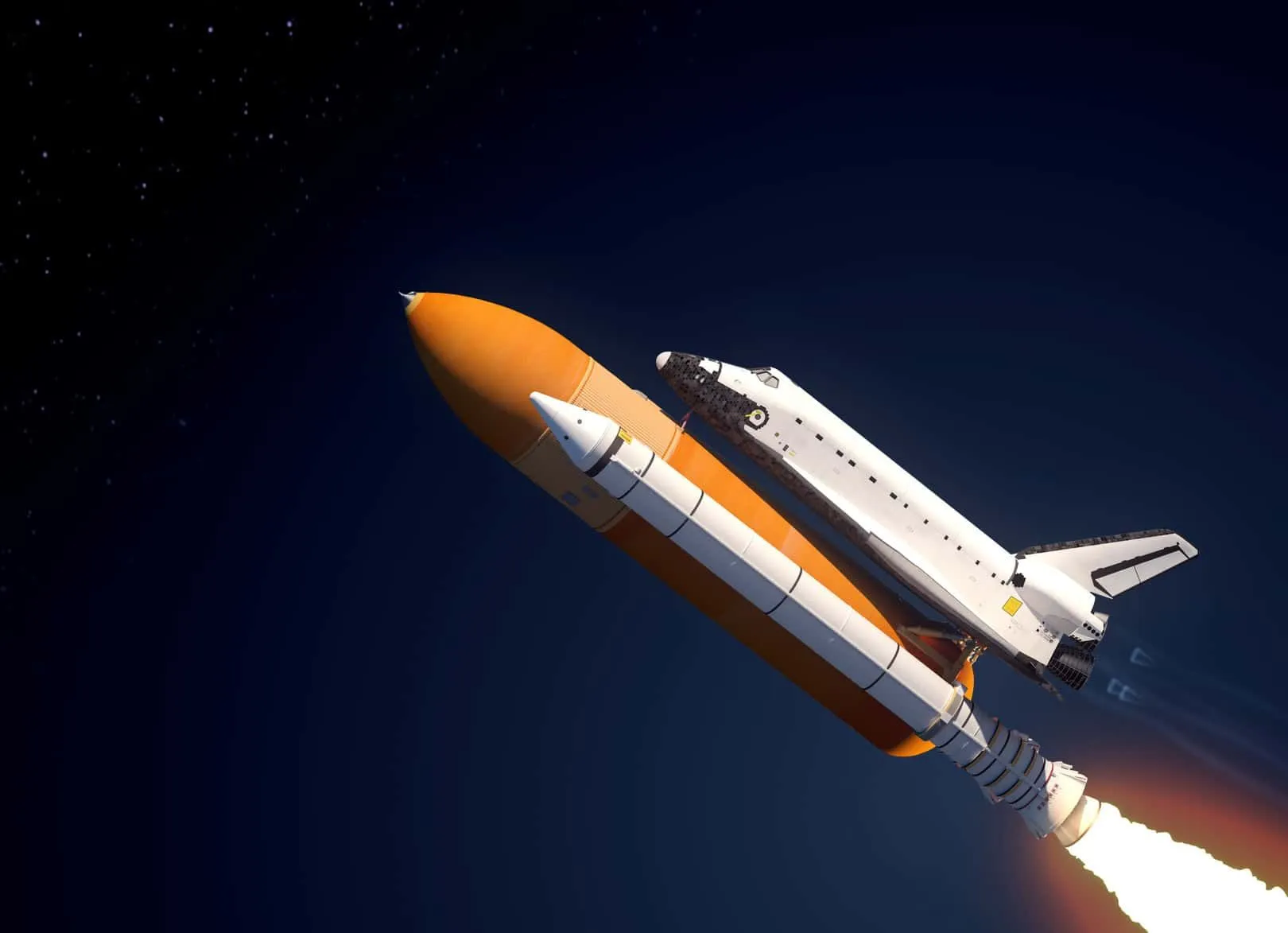
How Rockets Work In Space
There is virtually no atmosphere in space, so how do rockets work over there? Since they have no air to push against, how do they accelerate or change their course?
You almost certainly read about Newton’s laws of motions in high school. Every form of motion in this world is believed to be governed by the three main Newtonian laws of motion; rockets are no exception.
Let’s consider the most basic form of movement – walking. In order to do walk, we plant our feet firmly on the ground, and then push the ground backwards, which, in turn, propels us forward.

Of course, it seems absurd to think that we, with our puny legs, could ‘push’ the ground back, but that’s precisely what happens. Since the mass of Earth is staggeringly greater than our own individual mass, the ground isn’t actually pushed back. This sort of action-reaction motion is governed by Newton’s third law of motion, which states that ‘to every action, there is an equal and opposite reaction’.
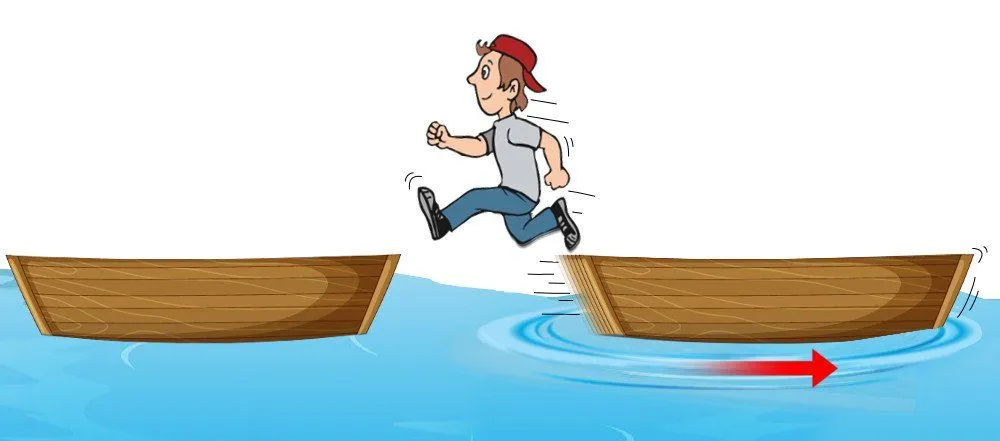
You can observe the third law in action in countless situations. For instance, suppose there are two small boats in a lake. If a person leaps from one boat to another, the first boat will be pushed slightly backwards the moment he jumps away.
This same law is what helps rockets travel and turn in space. In order to move forward, a rocket releases high-pressure gases (produced as a result of a combustion reaction) from its rear section. Therefore, an action (the ejection of gases) triggers a reaction (i.e., the rocket moves forward).
However, as mentioned above, gases are released from a combustion reaction, and fire, a traditional combustion reaction, needs oxygen to burn. Finally, we all know that there is an acute dearth of oxygen in space.
So… what’s the workaround for that one?
How Do Rockets Work In Space Without Oxygen?
Fire cannot burn without two critical elements: a fuel (the thing that burns) and an oxidizer (which starts the burning process and keeps it going). So, you need fire to propel your rocket, but you don’t have enough oxygen (an oxidizer) in space. What can be done?
Bingo!
It’s quite straightforward actually: if you go to a painting competition where they don’t provide you with paints, what do you do? Bring your own. Simple!
That’s precisely what most spaceships do. Many rockets carry a tank of liquid oxygen, which acts as the oxidizer needed to sustain the combustion reaction. The most commonly used fuels in such rockets are liquid hydrogen or kerosene.
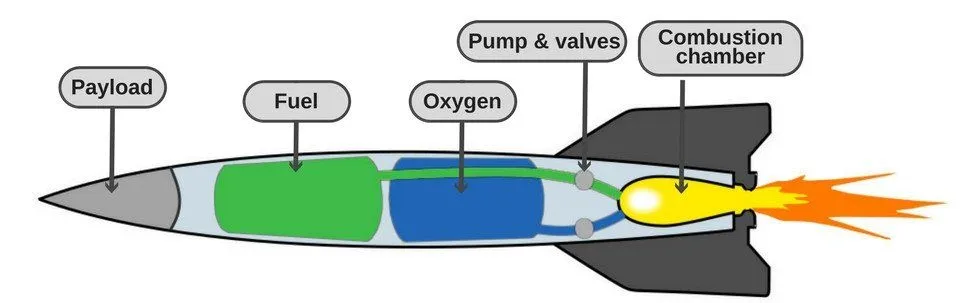
Practically thousands of fuel-oxidizer combinations have been used in space rockets over the years, but liquid hydrogen and liquid oxygen remain one of the most efficient mixtures (Source). A new generation of engines—SpaceX’s Raptor (which powers Starship) and Blue Origin’s BE-4 (which flies on Vulcan and New Glenn)—instead burns liquid methane (CH4) with liquid oxygen, because methane is cheaper, easier to store, and can in principle be manufactured on Mars from the local atmosphere.
Solid Propellants
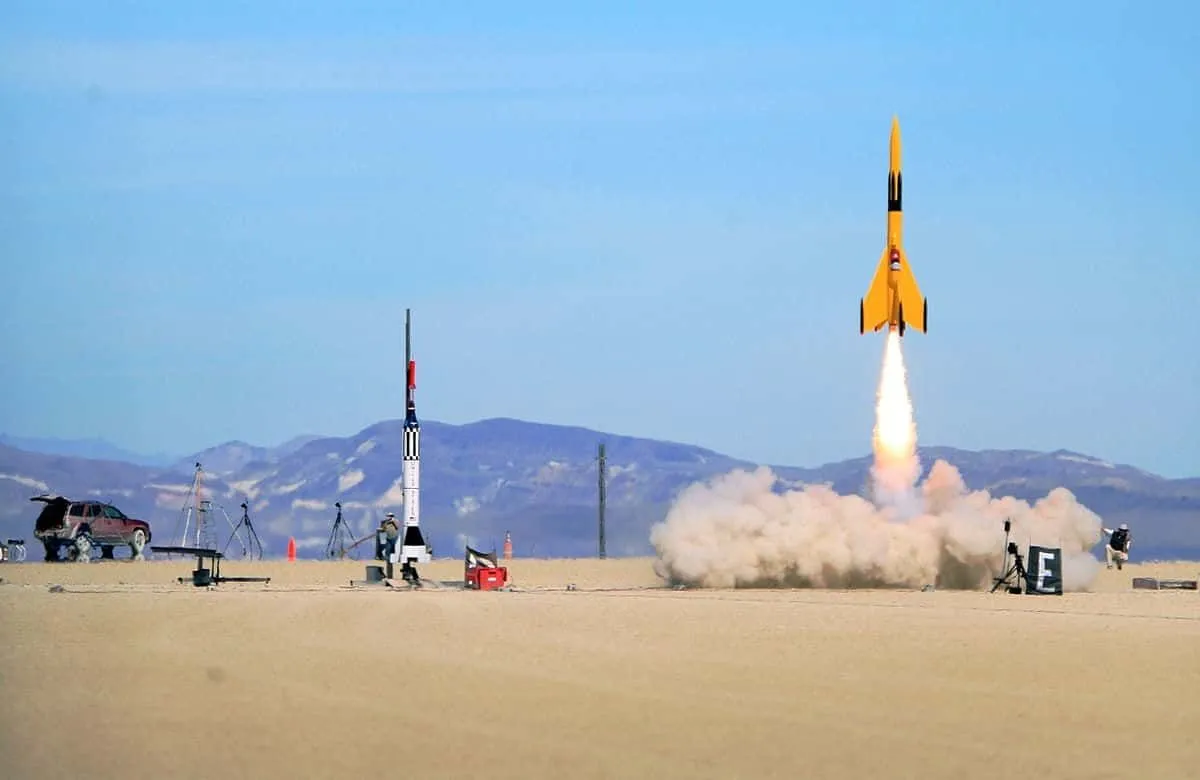
Note that you don’t necessarily have to use oxygen as the oxidizer. Almost all solid propellant rocket engines use aluminum powder as the fuel and ammonium perchlorate as the oxidizer.
Hypergolic Propellants
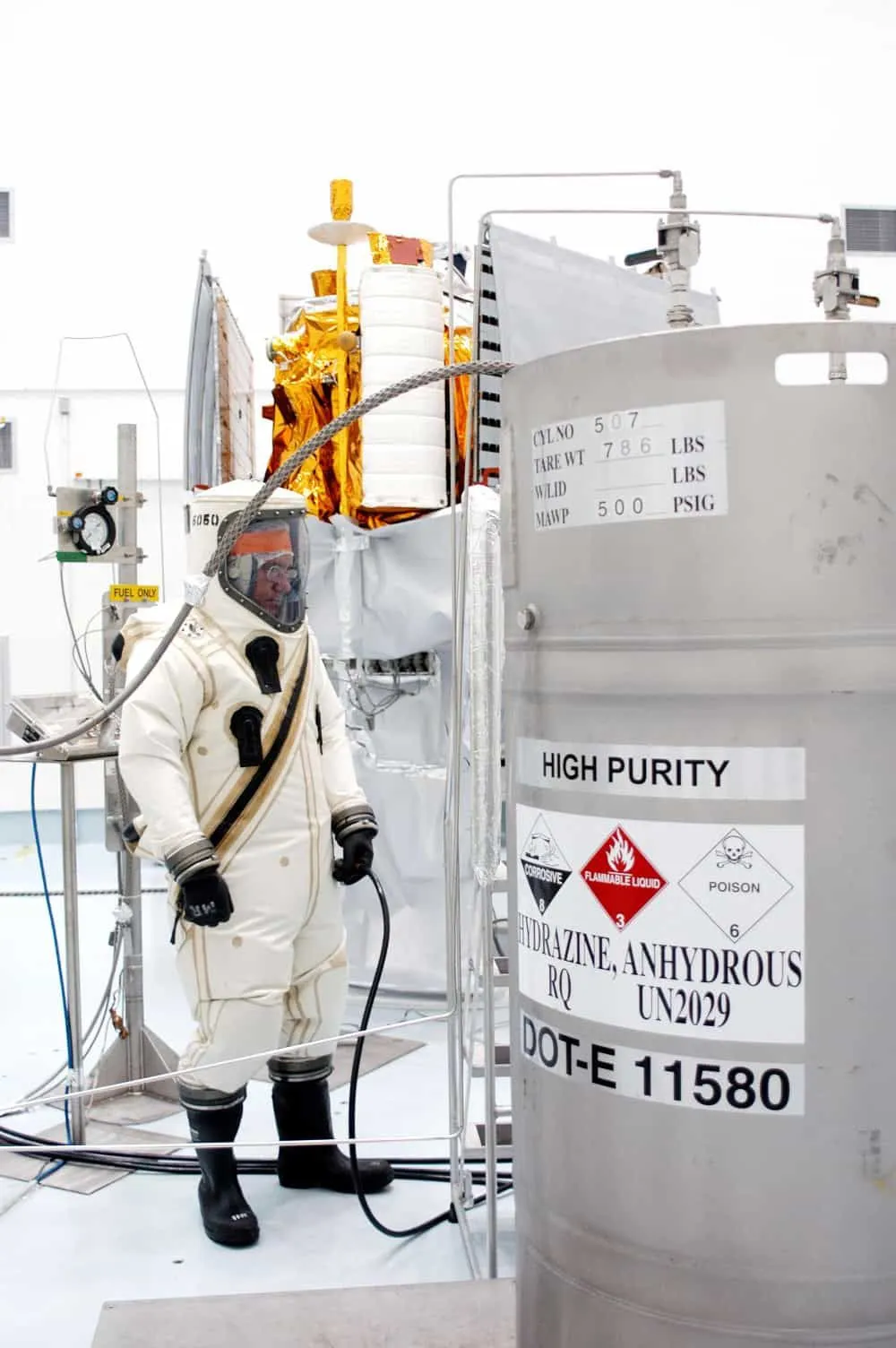
As mentioned earlier, you don’t always need oxygen to start a fire inside a rocket; there are certain chemicals that – when brought in contact with each other – ignite spontaneously. The propellants that use such chemicals are called hypergolic propellants.
The most popular hypergolic fuels include hydrazine, monomethylhydrazine and unsymmetrical dimethylhydrazine, which are typically used along with nitrogen tetroxide (the oxidizer) to trigger a spontaneous ignition, which means you don’t need oxygen at all.
Monopropellants
These propellants consist of chemicals that release energy and eject mass after chemical decomposition. Such propellants usually consist of chemicals like hydrazine or concentrated hydrogen peroxide that are exposed to an iridium catalyst. Monopropellants are commonly used in reaction control thrusters that are used to provide attitude control (orientation, not altitude).
All of this is to say that, while oxygen is undoubtedly the primary oxidizer back on Earth, you don’t necessarily have to use oxygen to propel rockets through space. There are quite a few other options too!
How Does A Rocket Engine Actually Produce Thrust?
So the rocket carries its own oxidizer and the fuel burns. But burning chemicals in a tank doesn't move anything on its own. The real work happens in the engine, and specifically in its oddly shaped exhaust nozzle.

Inside the combustion chamber, the fuel and oxidizer react to create an intensely hot, high-pressure gas that is, surprisingly, still moving fairly slowly. That gas then rushes into the nozzle, which pinches inwards to a narrow throat before flaring back outwards. This convergent-divergent shape is called a de Laval nozzle. The throat "chokes" the flow and fixes how much gas can pour through every second, with the exhaust reaching the speed of sound right at that narrowest point.
Past the throat, the widening bell lets the gas keep expanding. As it does, its pressure and temperature fall while its speed climbs to several times the speed of sound. In effect, the nozzle converts the chemical and thermal energy of the burn into raw kinetic energy, flinging the exhaust out of the back at enormous velocity. According to NASA, the thrust an engine produces is set by three things together: how much mass flows out each second, how fast it exits, and the pressure at the nozzle's mouth.
And because the rocket pushes against its own exhaust rather than the air around it, none of this needs an atmosphere. That is also why engines built to fire only in the vacuum of space wear those enormous bell-shaped nozzles: the bigger the bell, the more the exhaust can expand, and the more thrust you wring out of every kilogram of propellant. It is the same action and reaction that lets a rocket steer and turn in space with no air to push on.
Can Fire Actually Burn In Space?
Here is a question that trips people up: if a rocket has to haul its own oxygen into space, does that mean fire simply cannot exist out there? The answer is a satisfying "it depends".

Out in the open vacuum of space, a stray flame has no oxidizer around it to feed on, so an ordinary fire goes out almost instantly. That is precisely why a rocket has to bring its own oxidizer along, as we saw above. But seal yourself inside an oxygen-filled environment like the cabin of the International Space Station, and fire burns quite happily, just in a way that looks deeply strange.
On Earth, a candle flame is a flickering teardrop that points upward. That shape comes from buoyancy: the hot gas is less dense than the cooler air around it, so it rises and pulls fresh oxygen up from below. In the microgravity of orbit there is no "up", so that convection never gets going. Instead, oxygen can only seep in slowly by diffusion from every direction at once, and the flame settles into a near-perfect, dim blue sphere that burns cooler and slower than its earthly cousin.
NASA studies this directly with its Flame Extinguishment Experiment (FLEX) aboard the station, igniting tiny droplets of fuel that burn as glowing balls about the size of an olive. The work even turned up "cool flames", flames that keep reacting at very low temperatures after the visible fire seems to die out, and which are nearly impossible to create in Earth's gravity. Beyond simply being beautiful, the research helps engineers design safer fire suppression for spacecraft and cleaner-burning engines back home.
References (click to expand)
- Liquid-propellant rocket - Wikipedia. Wikipedia
- Ammonium perchlorate composite propellant - Wikipedia. Wikipedia
- Monopropellant - Wikipedia. Wikipedia
- Cold gas thruster - Wikipedia. Wikipedia
- Spacecraft electric propulsion - Wikipedia. Wikipedia
- Hypergolic propellant - Wikipedia. Wikipedia
- Nozzle Design. Beginner's Guide to Aeronautics. NASA Glenn Research Center.
- Why NASA Is Studying Flames in Space. NASA Science.
- Cool Flames Created During a First for International Space Station Research. NASA.