Table of Contents (click to expand)
Explosives like TNT, RDX, and nitroglycerine are packed with nitrogen because nitrogen forms an extremely strong triple bond (N≡N) when it returns to N2 gas. Detonation rips apart a relatively unstable nitrogen compound and lets those atoms recombine into the rock-solid N2 molecule, releasing a huge burst of energy and gas in microseconds. (Note: pure nitrogen gas itself is inert, not explosive.)
The use of nitrogen in an explosive is ironic because a molecule of nitrogen gas (N2) represents one of the most stable bonds we have ever discovered. If nitrogen is explosive, why hasn’t the atmosphere, which is mostly nitrogen, ever succumbed to devastating explosions?
Still, if it weren’t for nitrogen, TNT or dynamites would have been about as explosive as cheese or sand. So, what then makes nitrogen the magic ingredient?
How Do Explosives Work?
At the heart of any explosive are chemicals mixed in a perfect ratio participating in what is called an exothermic redox or a reduction-oxidation reaction. A redox reaction is a type of chemical reaction that requires its reactants to exchange electrons. The reactant losing its electrons is said to be ’oxidized’, while the reactant that gains these very electrons is said to be ‘reduced’. In the case of an explosive, this transaction is exothermic, meaning that it releases heat upon completion.
For instance, the mixture of potassium nitrate, carbon and sulfur in the perfect ratio constitutes what is popularly known as gunpowder. A chemical reaction is triggered when the mixture is exposed to heat or even a mere spark. The oxidized species are carbon and sulfur, while the potassium nitrate is reduced. The reaction, being exothermic, also releases a burst of energy in the form of heat and light.
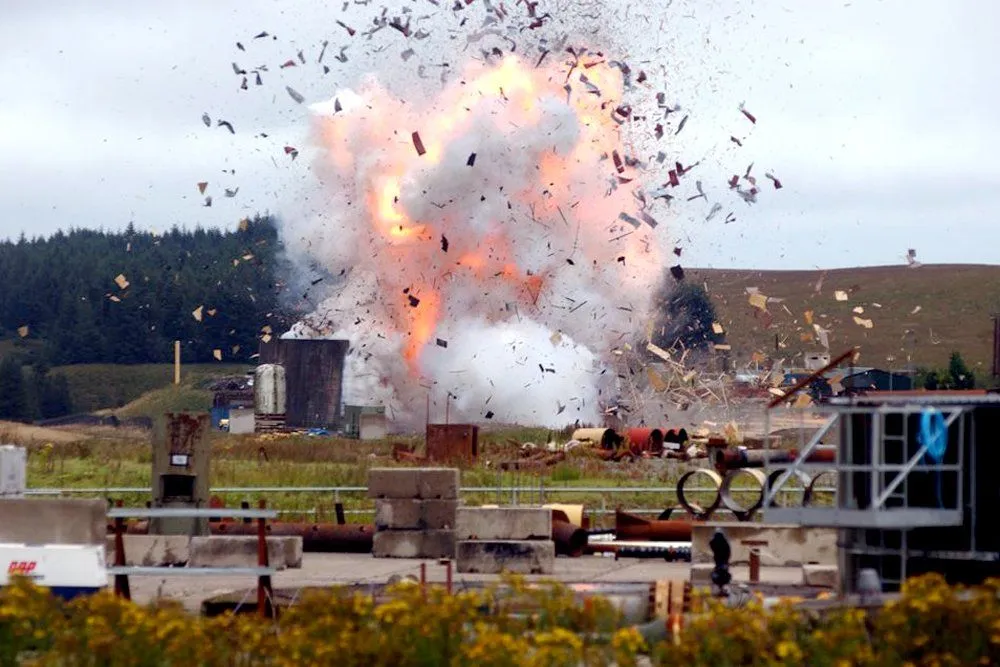
However, an exothermic reaction does not guarantee an explosion. The rusting of iron is also caused by an exothermic redox reaction, but I have yet to see a corroded nail abruptly explode. The key to causing an explosion is not just any exothermic reaction, but a very quick one. Rusting does not cause iron to explode because it is an extremely slow and prolonged process.
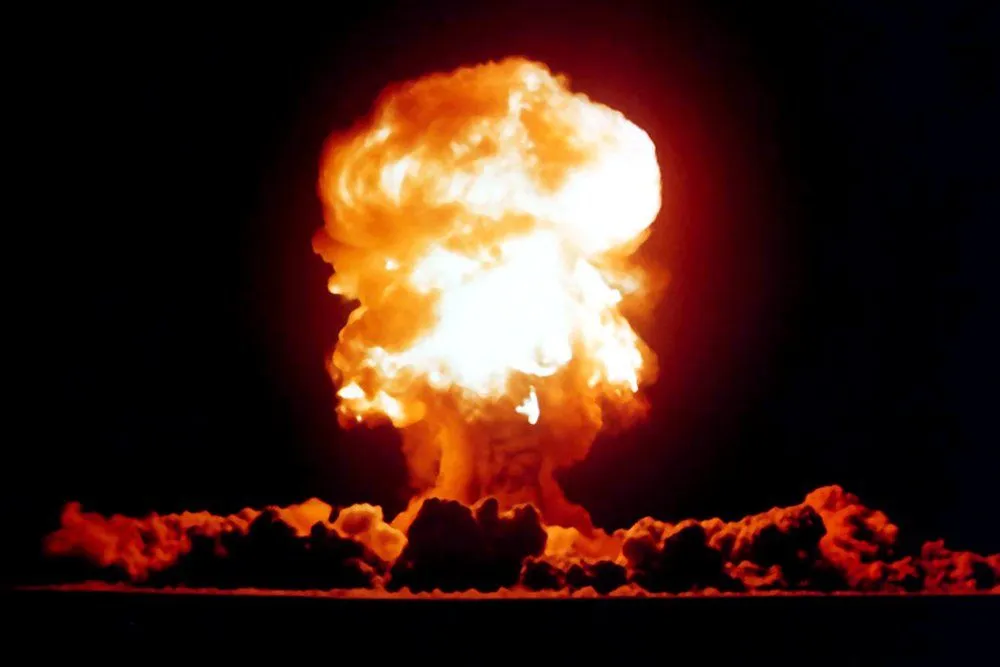
When a detonator triggers the reaction either physically, chemically or electronically, the mixture undergoes a phase transition from solid or liquid to gas. The heat released in the reaction increases the temperature of this gas. However, the quick nature of this reaction means that the transition and consequently the expansion of this gas is tremendously rapid.
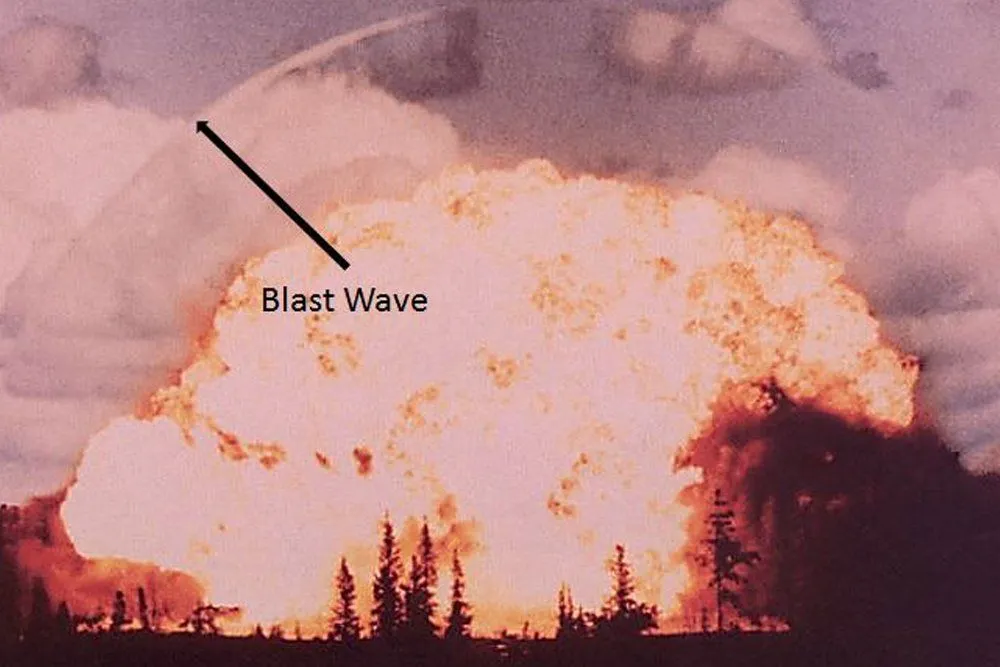
A single gram of TNT produces almost one liter of gas in seconds, which is a thousand-fold increase in volume! Therefore, the energy and pressure that is released, almost instantaneously, propagate outwards as a swift shock wave that is powerful enough to sweep people, trees and cars right along with it.
Immense Stability
Nitrogen is a crucial constituent of an explosive for the simple reason that its highly unstable compounds, when incited, will rapidly decompose into nitrogen gas, a ridiculously stable compound. However, why should the production of a stable compound from an unstable compound release such a staggering amount of energy?
Well, before synthesizing nitrogen compounds such as nitroglycerine, the major ingredient of dynamite, or trinitrotoluene, popularly known by its initials TNT, we must first break the nitrogen compound into individual nitrogen atoms. Separating a stable compound such as nitrogen into its constituents is like separating two wet pages that have gotten stuck together: it requires a lot of energy to do so. Thus, when the process occurs in reverse, that is, when the atoms recombine to form nitrogen gas, the same amount of energy is produced.
Thus, a reaction is more exothermic when it produces more stable compounds. This is why, while oxygen is obviously necessary for combustion, explosives are replete with it because its compounds, like nitrogen’s, rapidly decompose to form oxygen molecules, an equally stable molecule. Another explosive favorite is carbon.
Even though gasoline, which also fosters these elements, boasts more potential energy than TNT, the latter explodes because, first of all, it is highly unstable, and second, as mentioned, because of the reaction’s rapidity, because of the high velocity with which the energy and gases are released.
You can see a tamer version of this expansion with liquid nitrogen, which is just N2 in its liquid phase rather than an unstable compound. As liquid nitrogen warms from −196 °C up to room temperature, it expands by roughly a factor of 700 into nitrogen gas. A sealed plastic bottle of it cannot stretch fast enough to hold that volume and ruptures with a violent Kaboom!, driven entirely by pressure, not combustion. Nitrogen does not burn, but it absolutely does shred a container that tries to bottle it up.
Is Nitrogen Itself Flammable Or Explosive?
Here is the twist that trips up almost everyone who reads about TNT and dynamite: the nitrogen gas all around you, the N2 that makes up about 78% of the air in your lungs, is not flammable, not combustible, and not explosive in the slightest. The US National Oceanic and Atmospheric Administration's chemical hazard database classes nitrogen as noncombustible and nontoxic, a "not chemically reactive" gas, flagging it instead as a simple asphyxiant. It will not catch fire, and it will not detonate. In fact, industry pumps nitrogen into tanks, pipelines and grain silos precisely to prevent fires and explosions, because flooding a space with inert N2 starves any flame of the oxygen it needs.
So why does an element that refuses to burn end up at the heart of the most violent chemistry on Earth? The answer is everything we covered above. It is never the bottled N2 that explodes; it is an unstable nitrogen compound (nitroglycerine, TNT, RDX) tearing itself apart and snapping its nitrogen atoms back into that rock-solid triple bond. Pure nitrogen is the calm, finished product the reaction is racing toward, not the fuel.
What about the danger people sense when they hear "liquid nitrogen explosion"? That is real, but it is purely physical, not chemical. There is no genuine "nitrogen bomb" in the sense of a chemical warhead made of plain nitrogen. As we saw, a sealed flask of liquid nitrogen ruptures because the liquid expands roughly 700-fold into gas as it warms, building pressure until the container fails. No combustion, no flame, just brute pressure. The quieter, deadlier hazard is the opposite of fire: because nitrogen is odorless and displaces oxygen, a leak in a confined space can drop the oxygen level below the 19.5% that life depends on and silently asphyxiate someone before they realize anything is wrong.
Why Is Ammonium Nitrate So Dangerous?
If one nitrogen compound deserves its own warning label, it is ammonium nitrate (NH4NO3). It is the workhorse nitrogen fertilizer that feeds a large slice of the planet, and it is also, under the wrong conditions, one of the most destructive substances humans store in bulk. By mass it is about 35% nitrogen, packing both an ammonium (NH4+) fuel and a nitrate (NO3−) oxidizer into a single molecule, which is exactly the built-in fuel-plus-oxidizer recipe an explosive wants.

In a bag in a barn, ammonium nitrate is remarkably placid; it needs heat, confinement and often a shock or a fuel to set it off. But when it does decompose explosively, it follows the now-familiar pattern, racing to ultra-stable products in a heartbeat: 2 NH4NO3 → 2 N2 + O2 + 4 H2O. Every product is a small, stable gas molecule, so a modest pile of solid erupts into an enormous, hot volume of gas almost instantly. Mixed with about 6% fuel oil, the same fertilizer becomes ANFO (ammonium nitrate / fuel oil), the cheap blasting agent that moves most of the rock in mining and quarrying; neither ingredient is dangerous alone, and the mix is insensitive enough to need a separate booster charge to detonate.
History keeps underlining the point. On April 16, 1947, about 2,300 tons of ammonium nitrate fertilizer caught fire aboard the SS Grandcamp in Texas City, Texas, and detonated, killing an estimated 500 to 600 people in what remains the deadliest industrial accident in US history. More recently, on August 4, 2020, roughly 2,750 tonnes stored unsafely at the Port of Beirut exploded with a force one study put at the equivalent of about 0.8 to 1.1 kilotons of TNT, devastating the city. It is why regulators watch the stuff so closely: in the UK, solid ammonium nitrate with a nitrogen content above 28% by weight cannot be supplied without a certificate proving it resists detonation. The same triple-bond chemistry that lets a fertilizer enrich the soil is what makes a careless warehouse a potential bomb.
References (click to expand)
- TNT. ch.ic.ac.uk
- Chemical Explosives. The Federation of American Scientists
- The instablility of nitrogen compounds - digipac.ca. digipac.ca
- Nitrogen. CAMEO Chemicals. NOAA Office of Response and Restoration
- Liquid Nitrogen Safety. Compressed Gas Association
- The 1947 Texas City Disaster. NOAA Office of Response and Restoration
- Texas City Disaster. Handbook of Texas. Texas State Historical Association
- Yield estimation of the 2020 Beirut explosion. Scientific Reports (Nature)
- Explosives - ANFO (Ammonium Nitrate - Fuel Oil). GlobalSecurity.org
- High nitrogen content ammonium nitrate. UK Health and Safety Executive