Table of Contents (click to expand)
A wormhole is a hypothetical shortcut through spacetime that connects two distant points. The scientific consensus is that wormholes are valid solutions to Einstein's general relativity, but none has ever been observed and there is no evidence they exist in nature. If they do, they may have formed as microscopic wormholes in the first instants after the Big Bang.
So, are wormholes real? Here is the honest answer: no one knows. Wormholes are perfectly valid solutions to Einstein's equations of general relativity, so the math allows them, but not a single one has ever been observed, and there is no evidence that they exist anywhere in nature. As physicists like to say, “the math works out”, meaning that they are possible, even if they remain entirely theoretical. If wormholes do exist, one leading idea is that they began as microscopic wormholes in the first instants after the Big Bang and were then stretched as the universe expanded.
Popular fiction and Hollywood seem to be obsessed with space and time. From recent blockbuster smashes like Interstellar and The Martian to the recent surge of incredible discoveries in our galaxy and beyond, all eyes seem to be on the vast ocean of space. While our search to understand the cosmos will never be finished, there are some puzzling propositions that have piqued our interest throughout history. One of the most famous examples of this is the idea of wormholes.
Some people refer to them as shortcuts through the universe, while others claim they may be a means of traveling through time. The fact is, they are fascinating and complicated and very confusing for some people, even if they have seen Interstellar.
Still confused? Well, let’s take a deeper look at one of the greatest mysteries – and most exciting suppositions – in the entire universe.
The Science Of A Wormhole
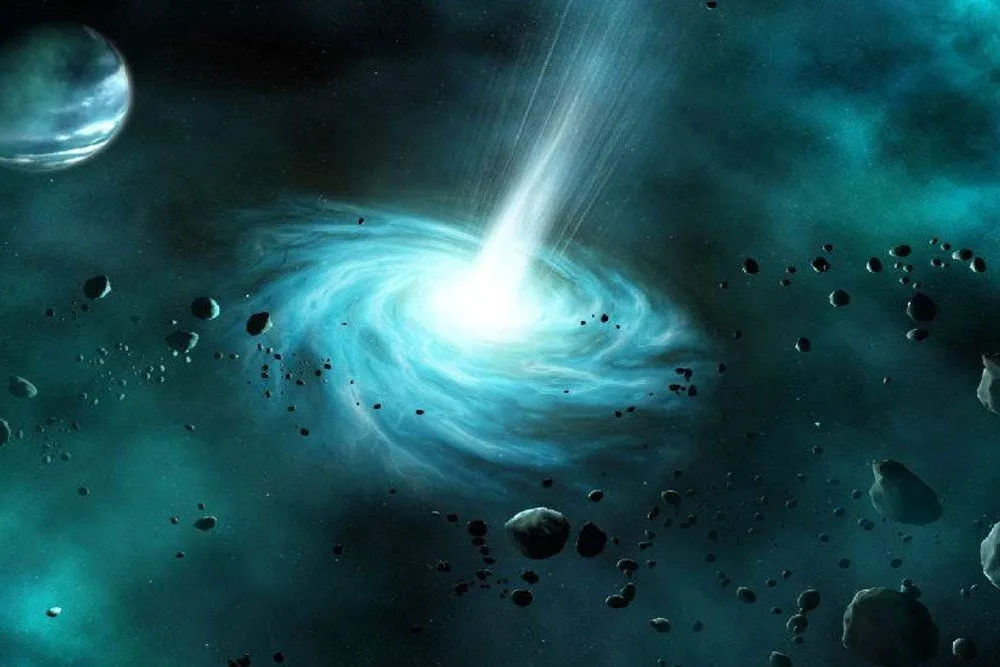
Without delving too far into the depths of the theory of general relativity and extremely high-level astrophysics, let’s try to understand a wormhole in its most basic form – a bridge. In fact, wormholes are more technically referred to as Einstein-Rosen bridges, after the 1935 paper in which Albert Einstein and Nathan Rosen described such a bridge in the equations of general relativity. (The catchy word “wormhole” itself came later, coined by physicist John Wheeler in the 1950s.) These bridges across spacetime are believed to be possible due to the bending effect that all massive objects have on spacetime.
The proposition is that two hugely massive objects (mouths) could bend spacetime to such a point that they would connect to one another via a bridge (throat). In theory, of course, this would significantly reduce travel time between those two points in the universe, which could be billions of lightyears away, or merely a few feet. Another, even more exceptional explanation, is that wormholes can not only connect two distant places in our present universe, but can actually link to entire other universes!
This throat could be a direct route, or a curved path that crosses through a higher dimension to the very distant “other side”. A curved two-dimensional plane is usually the best way to imagine this scenario. When two objects of significant mass bend that plane towards the opposite side, a connection could theoretically be made. We say “theoretically” because, despite the fact that wormholes fit within the principles of general relativity, no wormhole has yet been discovered.
Now you might be thinking, “If we’ve never found one, then how do we know that they could exist?” Well, that’s a good point, and the honest answer is that we don’t know they do. Plenty of ideas in astrophysics and theoretical physics start out on paper long before (or without ever) being observed, but, as they say, “the math works out”, meaning that they are possible. One hypothesis is that if wormholes exist, they began as microscopic wormholes in the first instants after the Big Bang and were stretched as the universe expanded.
Alright, so operating on the assumption that wormholes can and do exist, the question on everyone’s mind is…when can we start using them? Well, the peculiar and exotic nature of wormholes makes the idea of using them very far off in the future. There are a number of basic problems with finding, utilizing, or even exploiting wormholes.
The Problem With Wormholes
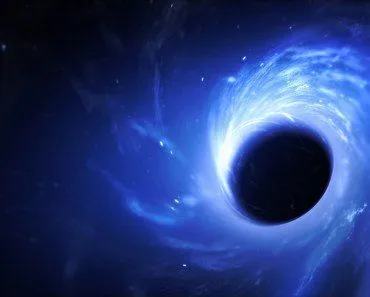
One of the most popular theories of how wormholes would form centers on the fact that a wormhole could form with two black holes as the “mouths” of the wormhole, and the unknown centers of those black holes, and possibly their singularities, forming the throat. The trouble with this proposition, of course, is the seeming impossibility of ever being able to study the interior of that wormhole, or ever see the opposite side, since nothing can escape the pull of gravity within a black hole – not even light itself.
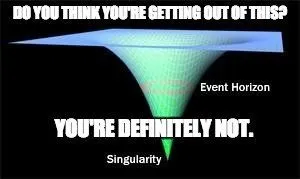
Einstein-Rosen bridges present a real problem because they collapse and disappear extremely quickly, so detecting, identifying and studying them is nearly impossible. Furthermore, some theoreticians argue that wormholes might be happening on a microscopic scale, snapping in and out of existence at a quantum level of existence that we presently cannot observe.
That being said, whenever there is a problem or a roadblock in theoretical physics, someone thinks up a solution. If the primary problem with studying and using wormholes is their size and short duration, if that issue could be countered, then progress could be made. With that in mind, there is a theory that “exotic matter” could possibly stabilize a wormhole so that it could be used for a longer period of time, and provide more stability. Exotic matter is not the same thing as dark matter, but it does contain a huge amount of negative pressure and negative energy density. This type of matter has only been seen in limited, vacuum-state experiments, but if it were naturally or artificially added to a wormhole, it is theorized that the wormhole could be made wider – and even kept open – so that space travelers or equipment could be sent through.
Beyond that, it is predicted that there would be massive amounts of radiation at the mouth and singularity of certain wormholes, which would prove to be instantly fatal and would destroy anything that approached it. The intense gravitational forces would also likely rip any ship or human to shreds before they could pass through the wormhole. If a black hole can rip apart a star, I don’t want to imagine what it could do to a human.
Are There Different Types Of Wormholes?
There are a number of different types of wormholes that could exist, some of which we would want to use as humans, and others that would mean certain death. It’s probably important to know the difference.
Traversable Wormholes: This is the type of wormhole where human beings could travel through the spacetime bridge multiple times, in both directions, without coming to any harm. Exotic matter would be required for this type of wormhole to remain stable and open, as the exotic matter will resist the wormhole’s natural tendency to instantly contract.
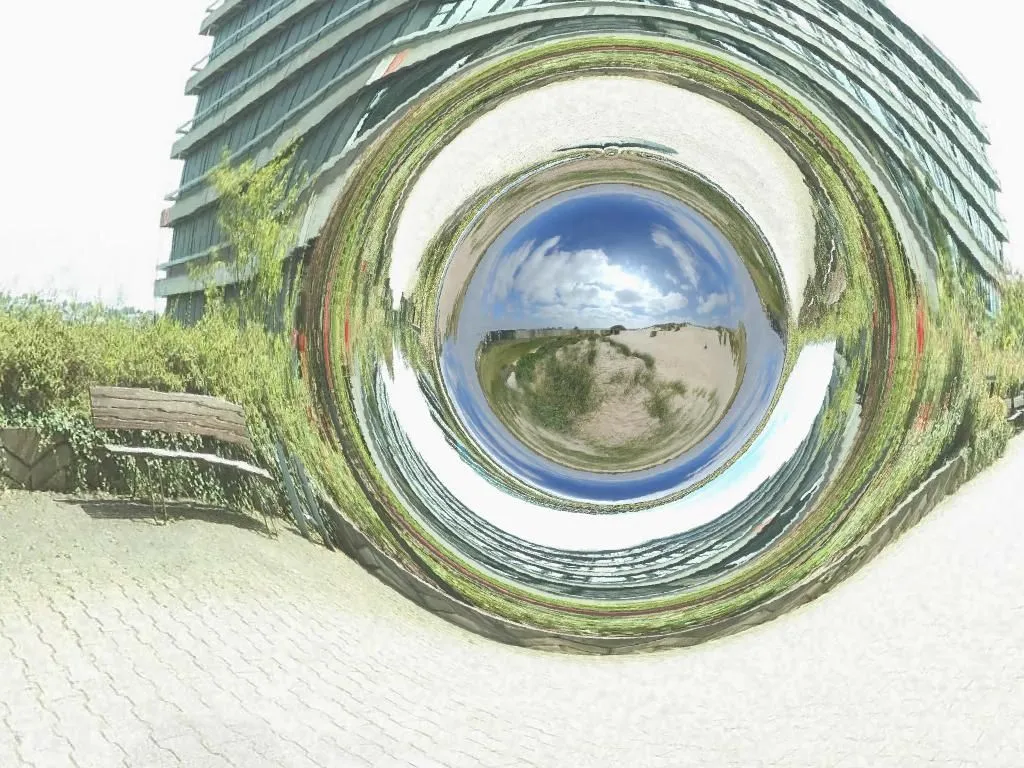
Schwarzschild Wormholes: These are the classic Einstein-Rosen bridge, and they are not traversable at all, in either direction. The throat collapses, or "pinches off", so quickly that not even a beam of light can make it through; any traveler who tried would simply be crushed at the singularity as the wormhole closed. In other words, the original 1935 bridge is a fascinating piece of geometry, but it is useless as a tunnel.
Is Time Travel Possible Through A Wormhole?
Here things get genuinely strange. Back in 1988, physicists Kip Thorne, Mike Morris and Ulvi Yurtsever showed that if you could build a stable, traversable wormhole, you could in principle turn it into a time machine by moving one of its mouths at high speed, creating what relativists call a “closed timelike curve”, a loop that returns to its own past. So, within the boundaries of general relativity, time travel through a wormhole appears to be mathematically possible. The catch is that nature may not allow it: Stephen Hawking's “chronology protection conjecture” proposes that quantum effects would destroy any such time machine the instant it formed, neatly keeping the past safe from meddling visitors.

Wormholes do keep creeping closer to the lab, at least on paper. In 2022, a team using Google's Sycamore quantum processor reported that they had simulated the dynamics of a traversable wormhole, watching quantum information pass from one set of qubits to another in a way that mirrors how it would behave near a wormhole's throat. It made for spectacular headlines, but it is worth being clear: no actual spacetime tunnel was created. It was a tiny toy model running on nine qubits, a clever way to study the deep links between quantum entanglement and gravity, not a real shortcut through space.
While discovering a genuine wormhole would be an incredible moment in the history of astronomy, the many other problems and idiosyncrasies of wormholes will likely prevent humans from testing any of our time-travel theories for decades to come, if ever.