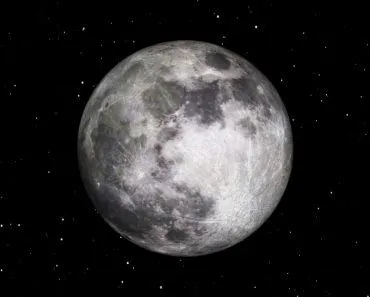
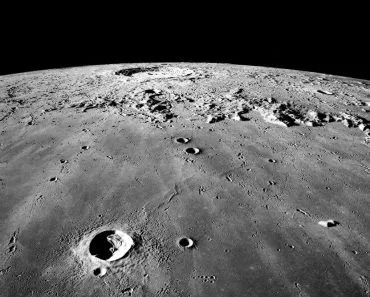
Lunar regolith, the loose moon soil that blankets the surface, is made of crushed rock, glassy agglutinates, and fine dust. Its composition differs by region: aluminum-rich plagioclase in the bright highlands, and iron- and titanium-rich basalt minerals in the dark maria. This soil records the Moon’s 4.5-billion-year history and its violent, collisional birth.
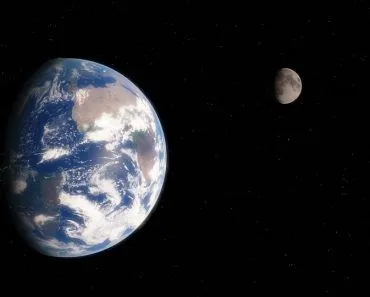
Our planet’s long-time celestial companion, “the Moon,” has been a source of intrigue for scientists for over six decades now. The birth of the moon has been theorized differently by many scientists, but the most accepted theory worldwide is the giant-impact hypothesis. It states that the moon was formed when a massive collision between a Mars-sized object (named Theia) and the early Earth flung out a cloud of debris that coalesced into the moon roughly 4.5 billion years ago.
Certain specificities about this theory are still unknown, including the velocity of the impact, the exact angle at which Theia struck Earth, and how much of the moon came from Theia versus our own planet. The fact that lunar and terrestrial rocks share nearly identical isotopic “fingerprints” is one of the strongest clues that the two bodies have a common origin.
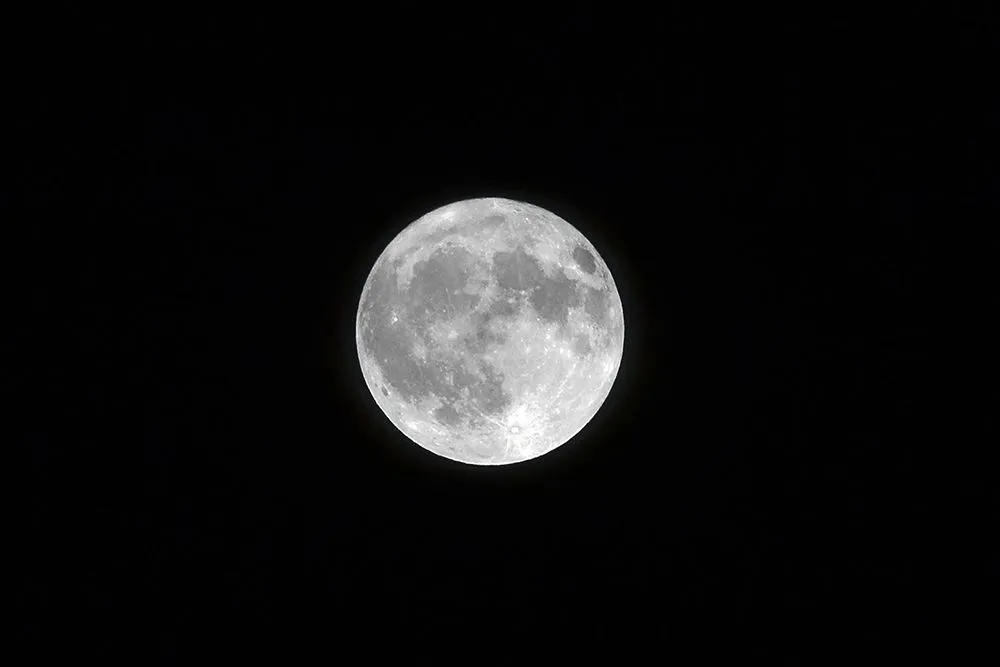
Based on recent research, the finding of water molecules on the lunar surface also raises questions about how water came into existence if the object itself was formed by a collision. Whether water had existed right from the beginning or was introduced later… we want to figure out a way to find answers to these questions.
Recent scientific endeavors have focused on collecting and analyzing moon dust and soil as a means of gaining insight into the formation of the moon and its early history. After a decades-long pause following Apollo, fresh samples are flowing again: China’s Chang’e 5 (2020) and Chang’e 6 (2024) brought back new lunar soil, and NASA’s Artemis program is preparing to put astronauts back on the surface later this decade.
Impact Of The Moon’s Birth On Earth
While we often focus on how the Moon was created, it is also important to think about the huge impact that caused it. This impact didn’t just make the Moon; it also changed things on Earth. It likely caused massive earthquakes and changed the way the Earth’s surface looked.
The impact may have even made parts of Earth’s outer layer turn into vapor and mixed things up in the air. This impact’s effects go beyond just making the Moon; they help us understand how Earth started out and how different parts of space can affect each other.
What’s So Special About The Moon Dust?
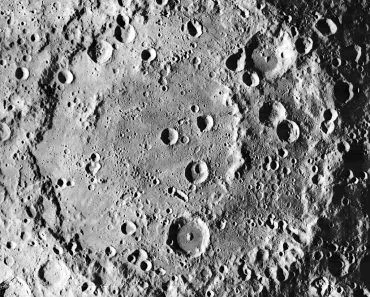
Moon dust is also known as lunar regolith, and it holds a lot of information about the origin and evolution of this celestial body. This regolith is a mixture of fine dust particles, small rocks, and large boulders that cover the entire surface of the moon. The crewed Apollo missions returned the first samples in 1969, when Apollo 11 brought home about 22 kg of rock and soil. Since then, robotic missions have continued the work, including China’s Chang’e 5 in 2020 and Chang’e 6 in 2024 (the first ever to sample the far side), giving scientists unprecedented access to the moon’s geological history.
The mineralogy of lunar dust is affected by UV light exposure, cosmic radiation, and solar radiation. It is continually being modified by minor impacts of asteroids and meteorites. The constant micrometeorite bombardment shatters and welds the surface grains, which leads to complex shapes and sharp edges. The primary chemical composition of lunar dust comprises oxides like silicon oxide, calcium oxide, aluminum oxide, iron oxide and magnesium oxide, with minor amounts of sodium, potassium, titanium and others.
What Is Lunar Regolith Made Of?
If you scooped up moon soil in two different places, you would not get the same thing. The mineralogy depends entirely on where you are. The bright, ancient highlands that cover most of the moon are made largely of an aluminum-rich feldspar called plagioclase (specifically anorthite). Rock that is almost entirely plagioclase is known as anorthosite, and it is why the highlands look so pale.
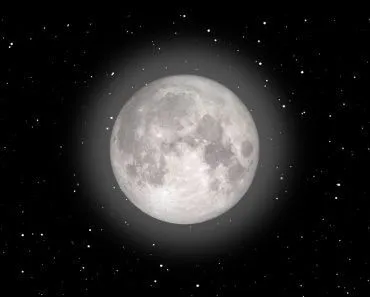
The dark patches that form the “face” of the Man in the Moon are something else entirely. These are the maria (Latin for “seas”), vast plains of solidified lava. Their regolith is rich in basalt and the minerals that make it up: pyroxene, olivine, and ilmenite, an iron-titanium oxide that gives some maria their especially dark, metallic sheen.
Layered over both terrains is a uniquely lunar ingredient: agglutinates. When a micrometeorite slams into the surface, it melts a tiny splash of soil into glass that instantly welds nearby grains and metal specks together. These glassy clumps can make up 20% to 50% of mature lunar soil, and because there is no wind or water on the moon to round them off, the grains stay jagged for billions of years. Scientists also prize the regolith for two things it traps from the solar wind: helium-3, a possible future fuel for nuclear fusion, and a peculiar chemical signature called KREEP (potassium, rare-earth elements, and phosphorus) that helps map the moon’s volcanic history.
Why Is Moon Dust So Dangerous?
Here is the catch with all those sharp, glassy grains: moon dust is nasty stuff. On Earth, dust gets weathered into smooth, rounded particles. On the moon, it stays as fine as flour but as abrasive as sandpaper, and it clings to everything. Sunlight knocks electrons off the grains by day while the solar wind charges them by night, so the dust becomes electrostatically charged and sticks to spacesuits, visors, and seals like static-charged packing foam.
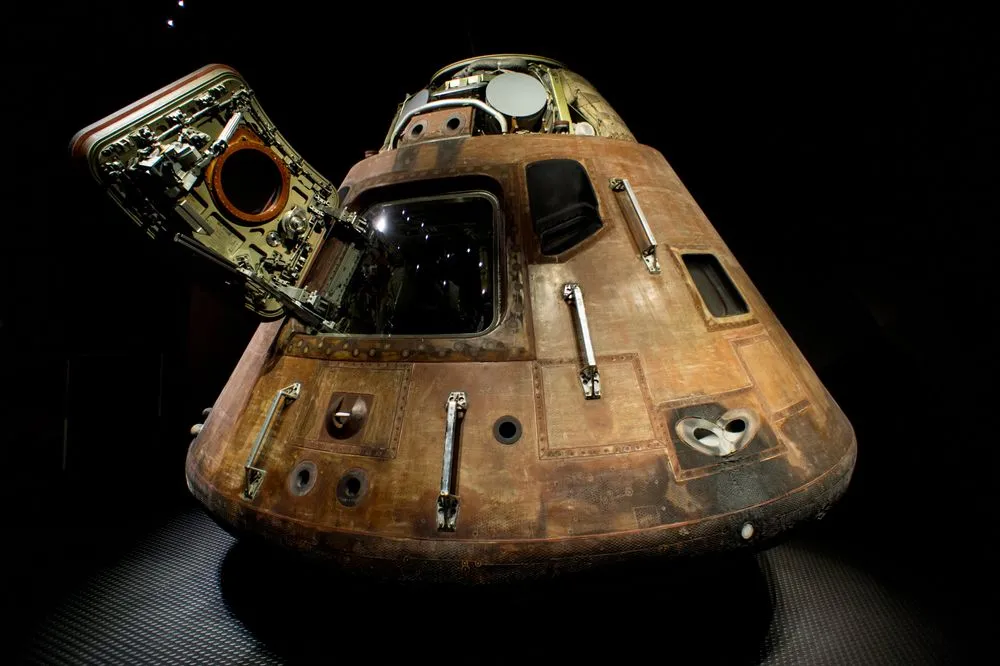
The Apollo astronauts learned this the hard way. The dust ground through layers of Apollo 17 astronaut Harrison Schmitt’s boots and gummed up the joints of their suits. Once tracked back inside the lunar module, it irritated their eyes and throats, a reaction Schmitt nicknamed “lunar hay fever.” Because the grains are so sharp and never weathered, researchers worry they could damage lung tissue if inhaled, which is a serious concern as NASA’s Artemis program prepares to send crews back to the surface.
Can We Determine The Age Of The Moon?
One the key questions that moon dust can help answer is the actual age of the moon. By unlocking the isotopic composition of lunar soil, scientists can estimate the time that has elapsed since its formation. This estimation is critical in refining our understanding of the early solar system. Some of the approaches used by scientists to identify the age of the moon include radiometric dating, analyzing the basalt rocks, understanding the chronology of impact craters and many more.
These methods provide valuable insights into the moon’s age, but they can also be uncertain, as there are no means to identify the moon’s exact age as of yet. Different samples might show different results due to variations in the parent isotope. However, by integrating various dating techniques and by careful analysis of multiple samples, scientists have been able to narrow down the range of possible ages, and it currently sits at around 4.5 billion years. This is similar to the age of the Earth. Newer samples keep refining the picture: the basalt that Chang’e 5 scooped up in 2020 dated to about 2 billion years old, the youngest moon rock yet found, which means the moon stayed volcanically active far longer than anyone expected.
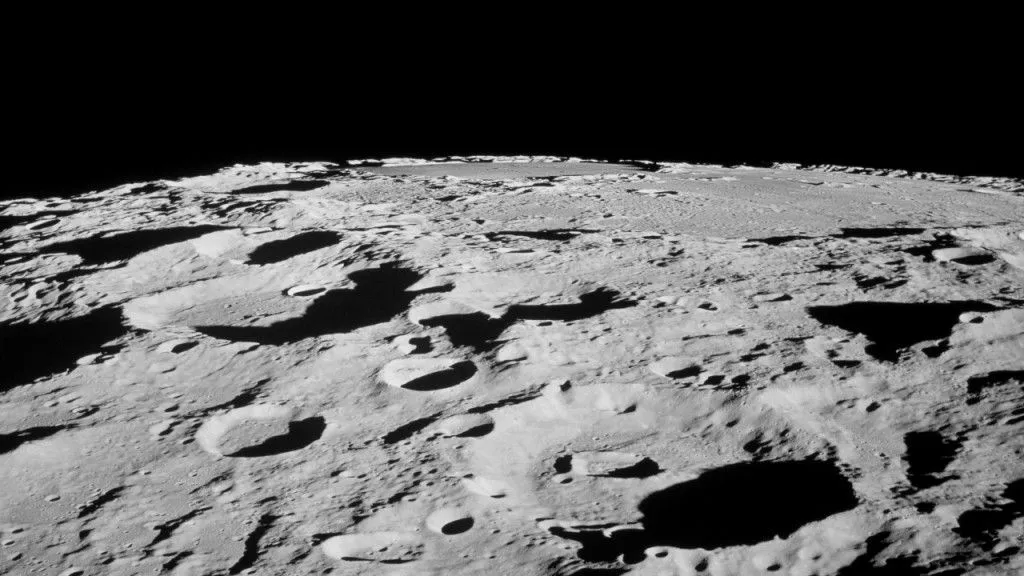
Understanding The Moon’s Interior
Moon dust isn’t limited to the surface; it can also provide indirect insights into the Moon’s interior structure. Understanding the Moon’s interior is a complex puzzle that requires a combination of seismic analysis, sample studies, and theoretical modeling.
Seismic data collected from moonquakes and impact events provides crucial information about the composition and layering of the Moon’s subsurface. Integrating this seismic data with analyses of lunar samples helps scientists refine their models of the Moon’s internal structure, shedding light on its mantle, core, and potential geological processes. With the current technology available for data analysis, astronomers have gained expertise in various software programs to understand and model the interior structures of moon.
A Final Word
Collecting and studying moon dust and soil is critically important for figuring out how the Moon started and what it was like in its early days. By looking at the tiny parts that make up the Moon’s surface, the marks left by impacts, and the shaking that the Moon has felt, scientists are slowly learning more about how the Moon has inexorably and radically changed over time. As we learn more about how the Moon formed, we are also developing a better idea of how planets are born and grow in our solar system. With far-side soil from Chang’e 6 now in the lab and Artemis astronauts set to scoop up fresh samples of their own, the humble handful of moon dust still has plenty of stories left to tell.
References (click to expand)
- Nunn, C., Nakamura, Y., Kedar, S., & Panning, M. P. (2022). A New Archive of Apollo’s Lunar Seismic Data. The Planetary Science Journal, 3(9), 219.
- History | Exploration – Moon: NASA Science.
- The Lunar Soil.
- Nature of the lunar far-side samples returned by the Chang’E-6 mission. National Science Review (2024). PMC / NCBI.
- Chang’e: Missions & Facts. Encyclopaedia Britannica.
- The toxic side of the Moon. European Space Agency (ESA).
- Moon to Mars: NASA’s Artemis Program. NASA.