Table of Contents (click to expand)
Mars lost its water because its global magnetic field shut down about 4 billion years ago. Without that shield, solar winds slowly stripped away the planet's thick atmosphere, so its water either escaped to space or froze into the ground, leaving the cold, dry Mars we see today.
Mars has always received a lot of attention, and that has only intensified, thanks to Elon Musk’s long-running push to send crewed SpaceX missions to Mars and NASA still aiming to land humans on the Martian surface by the 2040s.

Although these developments have opened up a new era of exploration of our closest planetary neighbor, sending humans to Mars remains daunting for a number of reasons, one of them being a glaring scarcity (to the point of non-existence) of liquid water on the Martian surface. However, Mars hasn’t always been devoid of water…
Signs Of The Early Presence Of Water On Mars
Mariner 9, a spacecraft sent by NASA in 1971 to orbit Mars and gain some insight about its surface, found the remains of ancient riverbeds on the otherwise dusty and dry planet. This was very surprising, since before this discovery, most scientists thought that Mars had always been a barren planet.
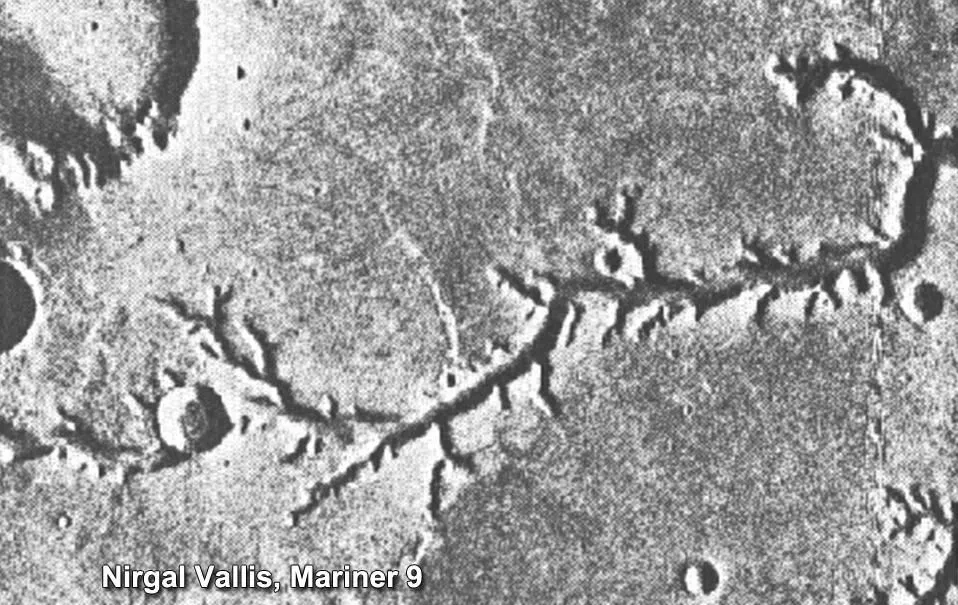
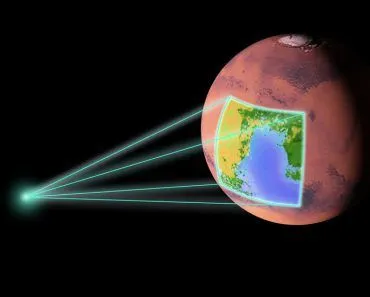
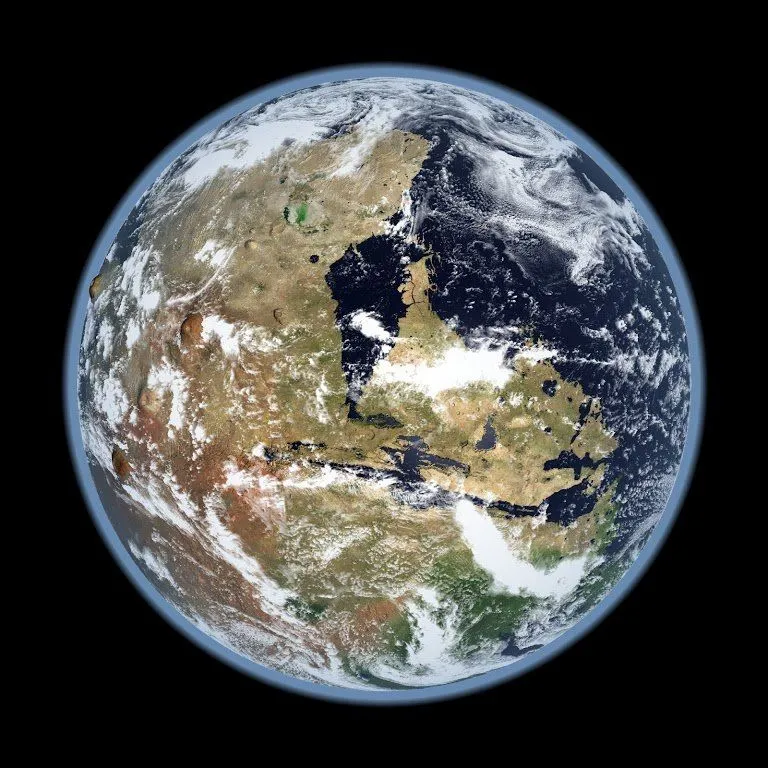
Another claim concerning the early presence of water on Mars came from Tim Parker, a research geologist at NASA’s Jet Propulsion Laboratory and one of the originators of the ‘Mars ocean hypothesis’. In the late 1980s, studying Viking Orbiter images, he interpreted certain formations on the Martian surface as ancient shorelines and basins that had once been filled by oceans and lakes. In 2000, Mars Global Surveyor scientists Michael Malin and Kenneth Edgett reported gullies that looked recently carved by liquid water, another feature pointing towards a watery Martian past. All of these clues indicate that Mars might have actually possessed a significant amount of water a few billion years ago.
Why Did Mars Dry Up?
After Mariner 9 first sent images that suggested Mars’ watery past, astronomers proposed several hypotheses to explain where all that water went. One of them points to a drastic climate shift that began roughly 600 million years after the planet formed, possibly accelerated by volcanic activity, which gradually turned a once warmer, wetter world into an unforgiving wasteland over hundreds of millions of years.
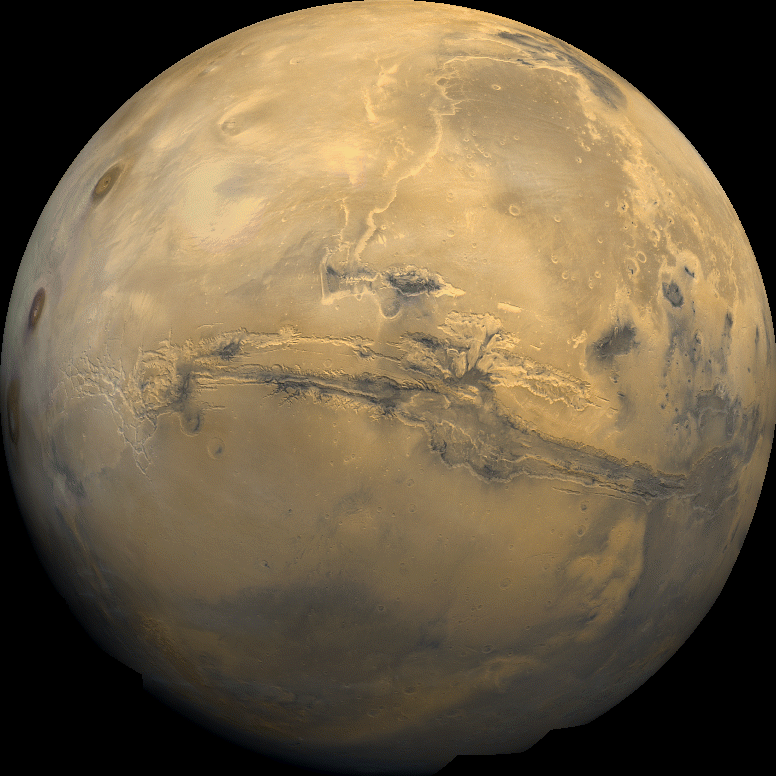
But what actually drove that climate shift stayed a puzzle until the Mars Atmosphere and Volatile Evolution mission, or MAVEN – a spacecraft sent to monitor Mars’ upper atmosphere – began transmitting its observations to NASA in 2014.
Here’s a short video that NASA made prior to the launch of MAVEN:
Looking at the data sent by MAVEN, scientists determined that Mars lost its atmosphere, and with it most of its water, to solar winds, compounded by the absence of a substantial planetary magnetic field. MAVEN even measured the present-day rate of escape: roughly 100 grams of gas (about a quarter of a pound) is stripped away into space every second, a rate that spikes during solar storms and was likely far higher billions of years ago, when the young Sun was much more active.
Effects Of Solar Winds
As you might already know, the atmosphere of a planet not only provides the vital gases necessary for life, but also keeps the planet protected from intense solar winds, which contain charged particles (electrons and protons) emitted by the sun. Now, Mars did have an atmosphere at one point, but when it started losing its magnetic field 4 billion years ago, its atmosphere also became quite vulnerable.
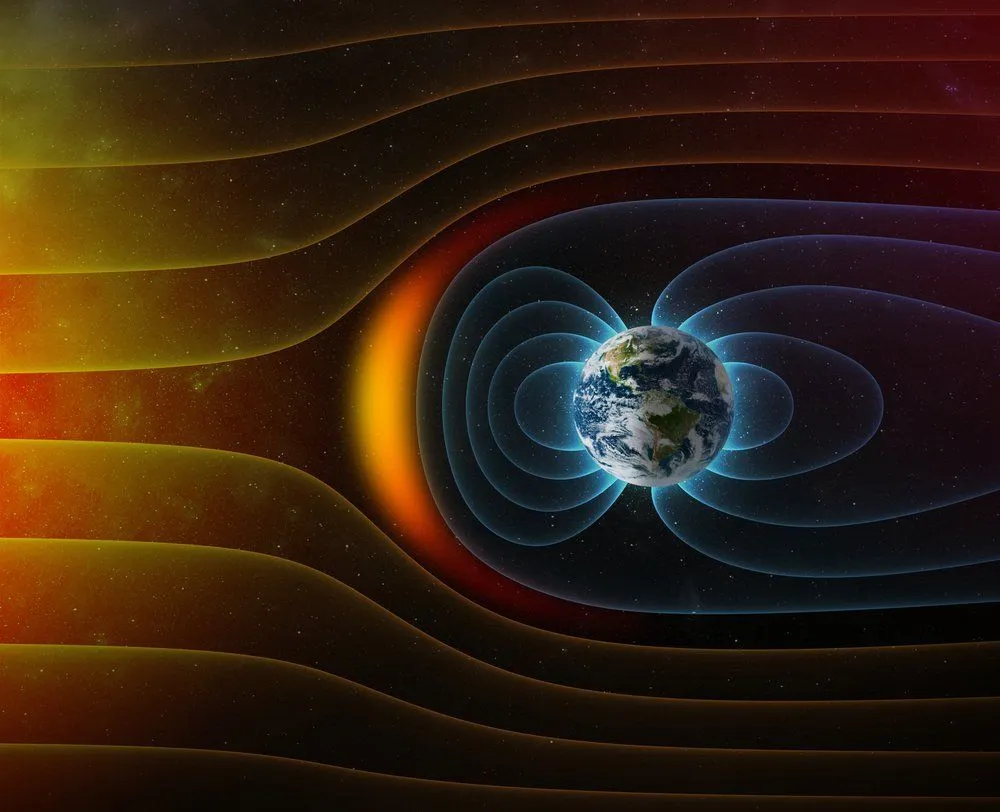
You see, the magnetic field of a planet deflects most of the charged particles present in the solar wind heading towards the planet, thereby shielding the atmosphere. If not for the magnetic field, the atmosphere would quickly be stripped off the planet by the solar wind, which is exactly what happened to Mars a few billion years ago. With its shield gone, the thinning atmosphere could no longer hold liquid water at the surface. Some of that water escaped to space (sunlight split the water vapor and the lightweight hydrogen drifted away), while the rest froze into the polar ice caps and the soil, leaving the parched Martian surface that we see today.
MAVEN has not only helped to unravel the mystery of Mars’ wet past, but it has also led to some very exciting discoveries about our red neighbor. These findings have been particularly helpful for understanding our closest neighbor in the solar system. It’s incredibly important for us to understand Mars better, now more than ever. If the plans to colonize Mars ever come to fruition, we could one day have an entire community living on the red planet, ideally one that has learned from the cautionary tale of a planet that lost its air and its water.
References (click to expand)
- NASA Mission Reveals Speed of Solar Wind Stripping Martian Atmosphere. NASA
- MAVEN - NASA Mars Exploration. NASA
- Evidence for Recent Groundwater Seepage and Surface Runoff on Mars. Malin & Edgett, Science (2000)
- How Mars lost its atmosphere and became a cold, dry world. Ars Technica
- Mars' Lost Atmosphere: MAVEN Probe Scientist Explains. Space.com