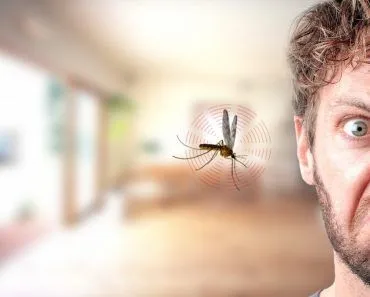
If mosquitoes went extinct, the immediate effect would be a dip in the populations of birds, fish, and insects that eat them, rippling along the food chain. The disruption would be sharpest in the Arctic tundra. Over time, though, most predators would switch to other prey, so the long-term ecological impact of mosquito extinction is expected to be modest.
Have you ever been annoyed by having to swat and clap aimlessly to ward off the biggest (and probably, the most irksome) threat ever posed by a singular winged-creature? Of course you have. Mosquitoes definitely make our lives a wee bit more difficult (and itchy), especially when they have the chance of afflicting you with lethal diseases or causing you to perform some weird dance steps like these…
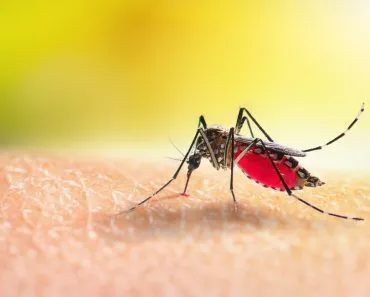
There are more than 3,500 species of mosquitoes on the planet, but only a small slice of them, a few hundred at most, actually bite humans. The real troublemakers belong to just three genera: Anopheles, Culex and Aedes. Each carries its own menu of diseases. Anopheles alone transmits the malaria parasite, Aedes spreads yellow fever, dengue and Zika, and Culex ferries West Nile virus and several forms of encephalitis. Between them, these tiny insects make the mosquito the deadliest animal on Earth.
Have you ever thought about what would happen if mosquitoes just went extinct?
Mosquitoes’ Role In The Grand Scheme Of Things
Because they have been on the planet for millions of years, mosquitoes have carved out a rather vital spot in the ecological cycle and have become an important component of the food chain. There are a number of creatures that feed on mosquitoes. For example, mosquitoes are distinctly abundant in the Arctic tundra, where they hatch in vast summer swarms and migratory birds feed upon them. Writing in Nature, entomologist Bruce Harrison estimated that without mosquitoes to eat, the number of birds nesting in the tundra could drop by more than half. Not everyone agrees, though. Wildlife biologist Cathy Curby has noted that mosquitoes rarely show up in Arctic bird stomachs in large numbers, and that midges may be the more important meal, so the real impact on bird populations is genuinely uncertain.
Some researchers claim that certain fish species would also be impacted by the extinction of mosquitoes, as they would have to make adjustments to their diet, especially those like mosquitofish. Other insects’ (that feed upon mosquitoes) numbers would also reduce if mosquitoes disappeared from our planet, and as a result, the fish that feed upon these insects would suffer too, which would obviously have an impact on the entire food chain.
Extinction? Not So Bad…
However, the good thing about the possible extinction of mosquitoes is that it wouldn’t have any long-term or extreme impacts on the environment. Sure, there will be aftereffects of a sudden extinction of these pesky insects, but those wouldn’t be disastrous by any means. This is because the many different species that feed upon mosquitoes would eventually be able to make adjustments in their diets and continue to sustain their lives.
Willful Eradication Of Harmful Species
In fact, scientists have been trying to eradicate mosquitoes using certain innovative methods for a long time. One of these involves making targeted changes to the genetic code of mosquitoes so that they produce far more male offspring than female ones. The technique uses an enzyme that cuts the X chromosome during sperm production, so that almost none of the surviving sperm carry an X. Because it takes a male and a female to breed, a population skewed heavily toward males simply cannot sustain itself, and a harmful species’ ability to build large colonies collapses.
This is no longer just theory. Researchers at Imperial College London inserted a DNA-cutting enzyme called I-PpoI into the malaria-carrying mosquito Anopheles gambiae, producing a strain whose broods were about 95% male. In a 2020 follow-up, the team paired the X-shredder with a CRISPR-based gene drive that forces the trait to spread through nearly every offspring. When these engineered mosquitoes were released into caged wild-type populations, the cages crashed to zero within a handful of generations for lack of females.
Given all the research being thrown at the mosquito problem, it seems only logical that there will eventually be fewer of the harmful species, as these not only attack other creatures, but also afflict humans with deadly diseases like malaria and dengue fever.
Furthermore, living in a world free of aimless swatting will be much more comfortable. At least, it will be for me!
Do Mosquitoes Do Anything Useful? Yes, Some Even Pollinate Flowers
It is tempting to think of mosquitoes as pure pests with no redeeming qualities, but that is not quite the full story. Blood is not actually their staple food. Both male and female mosquitoes spend most of their lives sipping flower nectar, and only the females of certain species take a blood meal, and even then only to get the protein they need to develop their eggs. Sugar from nectar is what fuels their flight and keeps them alive day to day.

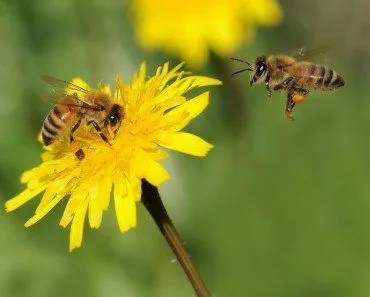
As they move from bloom to bloom for that nectar, mosquitoes pick up and carry pollen, which makes them genuine (if minor) pollinators. The best-documented case is a small northern wildflower called the blunt-leaf orchid (Platanthera obtusata), which grows in the cool bogs of North America and Eurasia. In a 2020 study published in PNAS, Chloé Lahondère and colleagues showed that this orchid gives off a nectar scent rich in a compound called nonanal that draws snow-melt Aedes mosquitoes in, and that the orchid’s sticky pollen sacs latch directly onto the mosquito’s eyes to hitch a ride to the next flower. A 2024 review by entomologist Woodbridge Foster in Transgenic Research concluded that while the disease-carrying species contribute little or nothing to pollination, mosquitoes as a group do visit and pollinate a range of plants. So they are not wholly useless. They are simply far less useful than they are irritating.
Will Mosquitoes Ever Actually Go Extinct?
This is the question a lot of people really want answered, and the short version is: almost certainly not, at least not on their own. Mosquitoes are one of nature’s great survivors. Mosquitoes preserved in Cretaceous amber show the group has been buzzing around for at least 99 million years, there are more than 3,700 species worldwide (per the CDC), and they breed astonishingly fast. In warm conditions a fresh generation can take wing within a couple of weeks, hatching from nothing more than a puddle, a clogged gutter or a discarded bottle cap full of rainwater.

If anything, the broad trend points the other way. A long-running surveillance study published in Scientific Reports in 2020 tracked mosquitoes across Connecticut from 2001 to 2019 and found that the average catch per trap rose by roughly 60%, while the number of species recorded climbed about 10%. Warmer temperatures, more standing water and global travel that ferries species into new regions all tend to help mosquitoes, not hurt them. A handful of local mosquito species are rare or threatened, but the family as a whole is thriving. So the realistic path to fewer mosquitoes is not natural extinction but the kind of deliberate control and gene-drive engineering described above, and even those efforts aim only at the few species that actually spread disease, not at wiping out mosquitoes altogether.
References (click to expand)
- Fang, J. (2010, July). Ecology: A world without mosquitoes. Nature. Springer Science and Business Media LLC.
- Malaria mosquitoes eliminated in lab by creating all-male populations. Imperial College London.
- Simoni, A. et al. (2020). A male-biased sex-distorter gene drive for the human malaria vector Anopheles gambiae. Nature Biotechnology. NCBI PMC.
- About Mosquitoes. Centers for Disease Control and Prevention (CDC).
- Lahondère, C. et al. (2020). The olfactory basis of orchid pollination by mosquitoes. PNAS.
- Foster, W. A. (2024). Mosquito pollination of plants. Transgenic Research. NCBI PMC.
- Petruff, T. A. et al. (2020). Increased mosquito abundance and species richness in Connecticut, 2001-2019. Scientific Reports. NCBI PMC.
- Rare fossil find reveals early evolution of mosquitoes (99-million-year-old amber). Phys.org / LMU Munich.