Table of Contents (click to expand)
Yes. A magnetohydrodynamic (MHD) drive moves a ship by running an electric current through seawater inside a magnetic field. The resulting Lorentz force pushes the water backward, and the reaction thrust drives the ship forward, with no propeller or moving parts. Japan's Yamato-1 proved it works in 1992, reaching about 15 km/h (9 mph).
If you place two magnets with their like poles facing each other, pushing one towards the other causes the second to repel. While the basics of magnetism have been instilled in us since childhood, we often overlook its implications and potential benefits. Take for example, the case of ships.
Conventional practices involve the use of bladed contraptions, such as propellers and turbines, to make them move. What if I told you that you could move ships in water with nothing but magnets and some electricity? The secret lies in MHD drives.
Magneto-hydrodynamic Drives (MHD Drives)
That’s quite a mouthful for a name!
However, magneto-hydrodynamic or MHD drives are a simple application of electromagnetism. When a conducting fluid is subjected to both electric and magnetic fields, the fluid experiences motion that is perpendicular to the two fields. This is known as Lorentz’ force and can bring about motion without the need for moving components. Let’s examine this concept in detail.
Lorentz’ Force & Fleming’s Left-hand Rule
A force acts upon a charged particle, or an electric current, when it moves through a magnetic field. This force pushes the charge in a direction that can be predicted by Fleming’s left-hand rule.
Fleming’s left-hand rule maps three-dimensional space, with the outstretched thumb, index and middle finger pointing in mutually perpendicular directions.
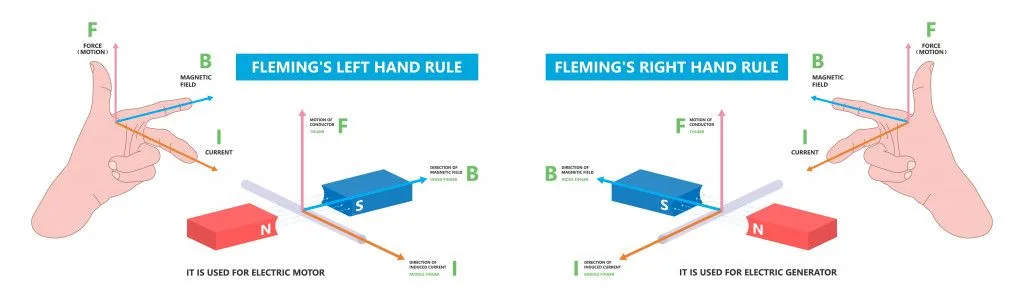
With the index finger pointing along the magnetic field and the middle finger pointing along the current, the Lorentz force acts in the direction of the thumb. (The current is what an applied electric field drives through the conducting fluid.)
This Lorentz force can be used to propel ships, as we shall demonstrate further.
Design And Construction Of MHD Drives
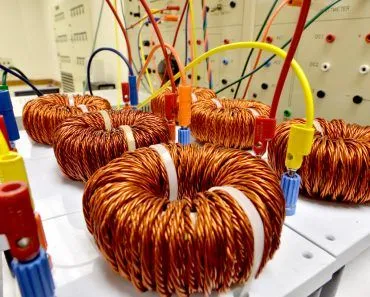
In order to achieve propulsion using Lorentz’ force, the conducting fluid must be constantly subjected to an electromagnetic field. This electromagnetic field can be generated through the use of electromagnets and superconductors. The Lorentz’ force acts on this fluid, which by equal and opposite reaction, pushes the magnet in the direction opposite to that of Lorentz’ force.
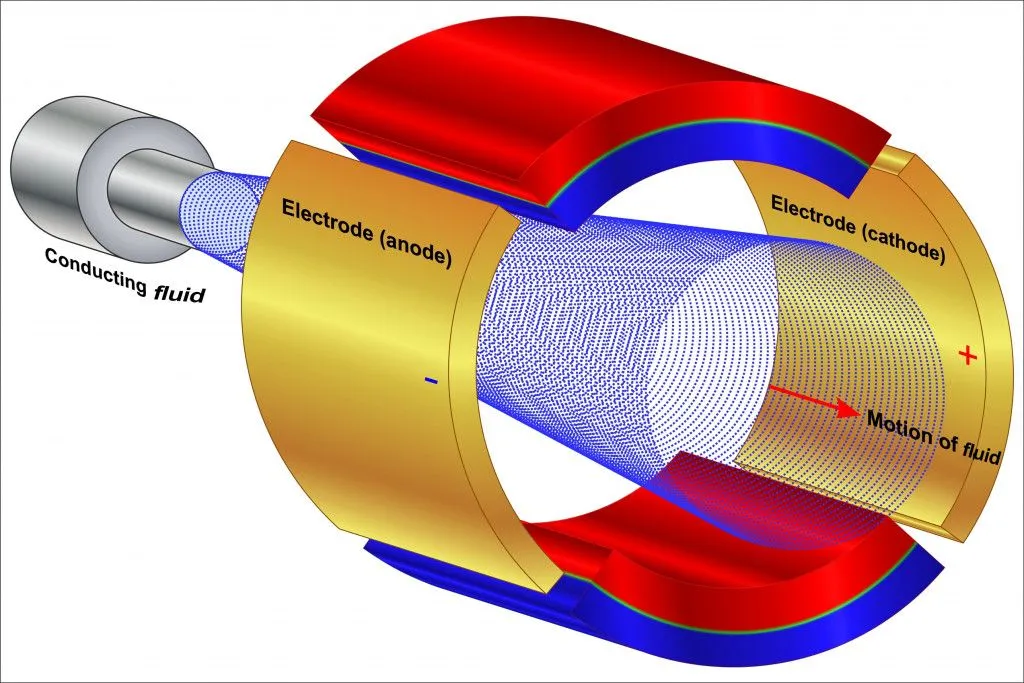
MHD-propelled ships make sense at sea because seawater, thanks to its dissolved salts, conducts electricity well enough to carry a current (far better than fresh water, even if it is still a modest conductor compared to a metal). However, conventional ships sail ‘over’ water. Because of this, it isn’t possible to subject seawater to a set of mutually perpendicular fields that would bring about propulsion in a third direction. That only works if water flows ‘through’ the ship, rather than under it.
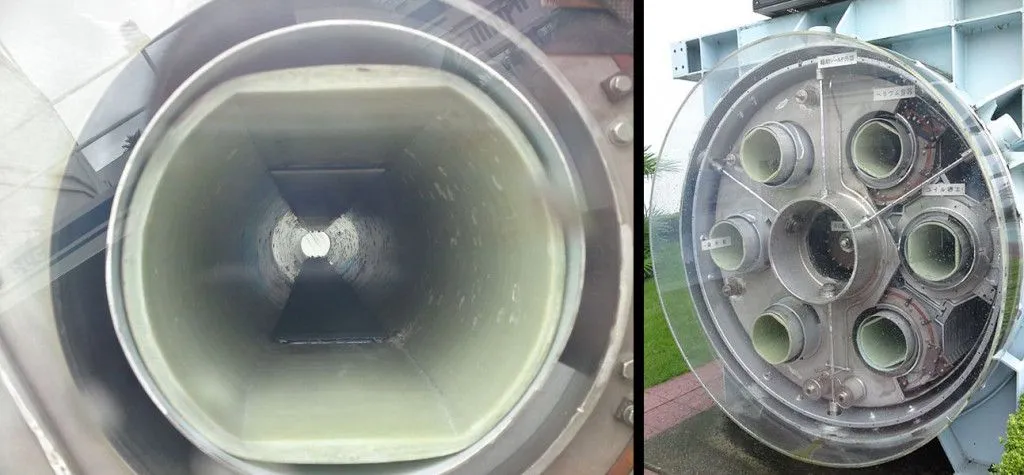
Thus, ships can be designed with water ducts that channelize water through the hull of the ship, where it is subjected to both electric and magnetic fields. These fields are generated by means of strong electromagnets and superconductors built into the hull of the ship.
When they are activated, the Lorentz force pushes seawater aft of the ship. As these magnets are fixed to the ship’s structure, the seawater casts an equal and opposite force, propelling the ship forward.
Advantages And Disadvantages Of MHD Drives
In theory, MHD drives present a lot of advantages that make them suitable for widespread use. To begin with, the absence of a conventional propeller system eliminates the need for large engines needed to power it.
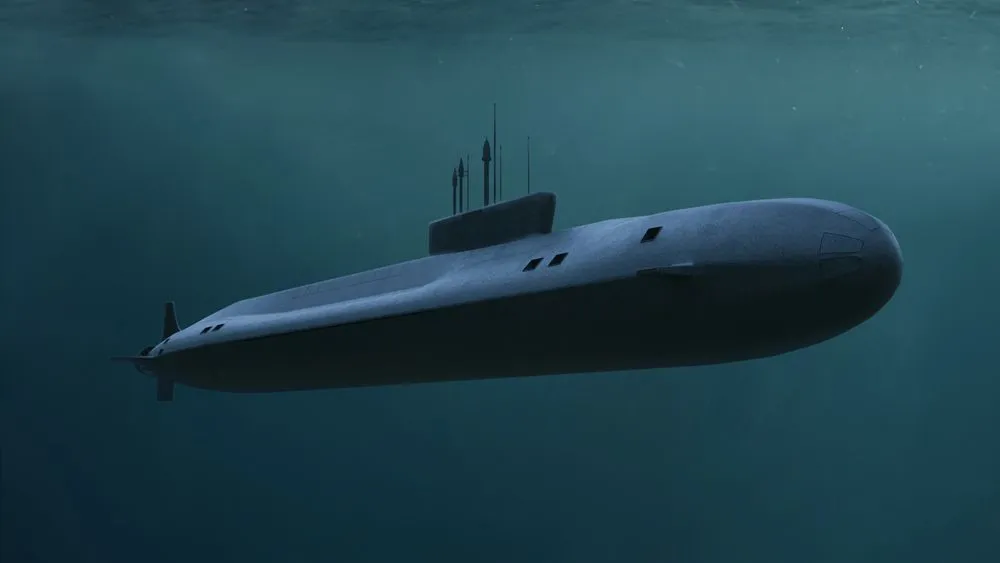
Eliminating the propeller and associated moving components makes for lighter watercraft, thus reducing frictional losses, thereby inherently improving efficiency. Another important advantage of such an MHD drive is the significant reduction in noise, which otherwise causes ships to be easily detected in vast oceans. This can come in handy for stealth operations, as the movement of water through the ship’s ducts makes no noise.
However, most of these advantages are overshadowed by the disadvantages of such a system. The clearest proof comes from the Yamato-1, the world’s first full-scale MHD ship. Built by Mitsubishi Heavy Industries for Japan’s Ship & Ocean Foundation, it first ran in Kobe harbor in June 1992, propelled by two thrusters with superconducting magnets generating fields of about 4 teslas. To keep those magnets superconducting, they had to be chilled with liquid helium to roughly −269 °C (−452 °F). Even with all that hardware, the 30 m (98 ft) vessel topped out at only about 15 km/h (9 mph, or 8 knots).
The catch is the generation of electromagnetic fields strong enough to propel large ships at functional speeds. Seawater is actually a fairly poor electrical conductor, so producing useful thrust demands enormous magnetic fields sustained for long periods, which is very energy intensive. The Yamato-1 converted only around 15% of its input energy into propulsion. Because of this, ships powered by MHD drives have proven far slower than theoretical models promised.
At the same time, increasing magnetic fields beyond threshold values had debilitating effects on the electric fields, bringing about undesirable fluctuations in the thrust. The environmental impact of strong electromagnetic fields is also suspect. For these reasons, we’re unable to progress to MHD drives as our primary mode of marine propulsion.
Application Of MHD Drives
The beauty of MHD drives lies in the absence of any moving components. In fact, it would not be incorrect to think of MHD drives as being aquatic cousins of maglev trains. As the presence of a conducting fluid is necessary in MHD drives, they would be very useful in maritime applications, such as ships and submarines. Another potential application of MHD drives is being investigated for space flight.
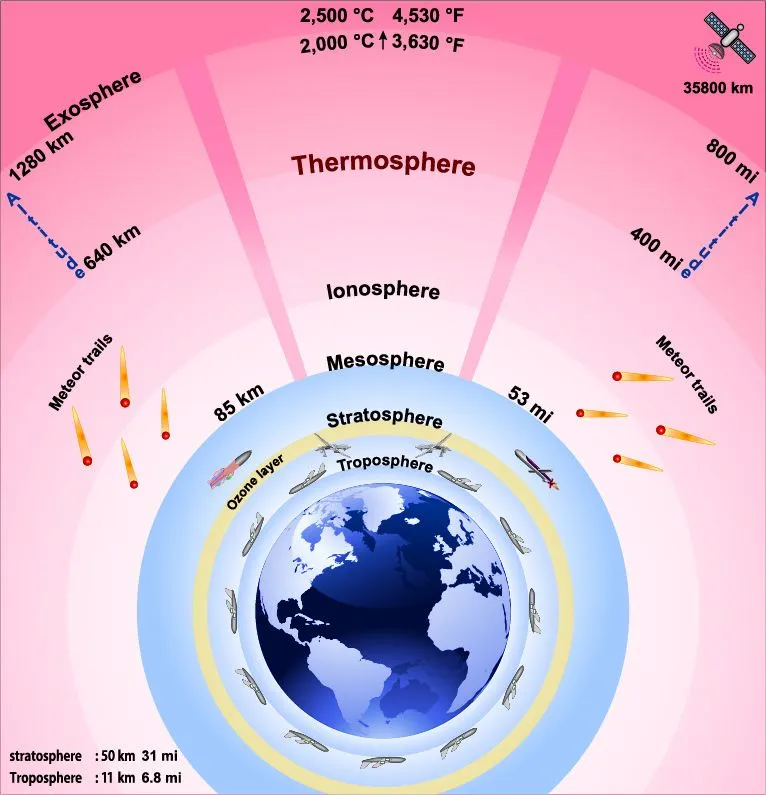
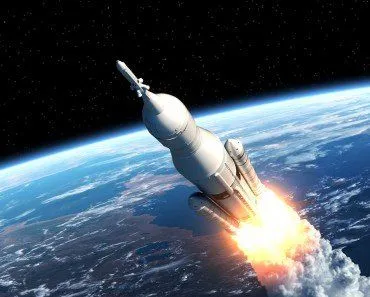
The upper atmosphere and outer space hold ionized gas, or plasma, which conducts electricity much like seawater does. The same Lorentz force principle can in theory accelerate that plasma to produce thrust, an idea echoed in real electric thrusters already used on satellites. If perfected, such systems could ease the reliance on heavy chemical boosters that today haul spacecraft off the ground.
So What Exactly Is Magnetohydrodynamics?
The name looks intimidating, but it simply bolts together three familiar ideas: magneto (a magnetic field), hydro (a fluid) and dynamics (motion). Magnetohydrodynamics, or MHD, is the branch of physics that studies how an electrically conducting fluid and a magnetic field push and pull on each other. Crucially, the fluid does not have to be water. Anything that can carry an electric current qualifies: a plasma (an ionized gas), a liquid metal such as molten iron or mercury, or a salty electrolyte like the seawater flowing through our ship’s ducts.

The whole subject rests on the same Lorentz force we met earlier, except that it now acts on an entire flowing fluid rather than a single wire. Set a conducting fluid moving through a magnetic field and it develops internal electric currents; those currents feel a force and get shoved sideways; and they spawn magnetic fields of their own. Fluid flow and magnetism become locked in a two-way conversation, which is why MHD stitches the Navier-Stokes equations of fluid motion together with Maxwell’s equations of electromagnetism. One striking result is that inside a very good conductor the magnetic field lines behave as though they are ‘frozen’ into the fluid, dragged along wherever it flows.
The field was pioneered by the Swedish physicist Hannes Alfvén, who in 1942 predicted that a magnetic field threading a conducting fluid could carry an entirely new kind of wave, known today as an Alfvén wave. His work proved so foundational that he shared the 1970 Nobel Prize in Physics for his discoveries in magnetohydrodynamics. Every application in this article, from ship drives to the examples below, traces back to the physics he set out.
Magnetohydrodynamics Beyond Ships: Cores, Stars And Reactors
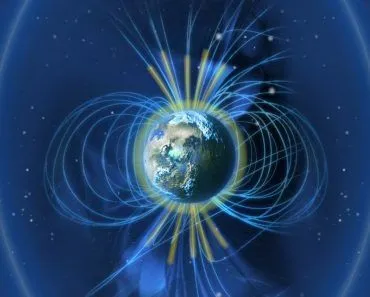
Ship propulsion is honestly one of the smallest stages MHD plays on. The same physics runs the magnetic field of our entire planet. Deep beneath our feet, the liquid iron of Earth’s outer core churns and convects, and, stirred by the planet’s rotation, it behaves as a self-sustaining dynamo that generates Earth’s magnetic field, the very field that steadies every compass and deflects harmful radiation from space. Geophysicists call this buried engine the geodynamo, and it is magnetohydrodynamics working on a planetary scale.

Look up, and MHD only gets bigger. The Sun is a colossal ball of plasma, and magnetohydrodynamics governs almost everything it does: sunspots, looping solar flares, the million-degree corona and the solar wind that gusts out across the whole solar system are all MHD phenomena. The same equations describe how magnetic fields shape distant stars and the swirling disks of gas that feed newborn suns and black holes.
Back on Earth, engineers try to bottle the same behavior. Inside doughnut-shaped tokamak fusion reactors, powerful magnetic fields hold hydrogen plasma hotter than the Sun’s core so that it never touches the walls, and whether that plasma stays neatly confined or writhes loose is decided by its MHD stability. Run the idea in reverse and you get the MHD generator, which fires hot gas, seeded with a pinch of ionizable salt, through a magnetic field and taps electricity straight off the electrodes, with no spinning turbine at all. It works in the laboratory, but the brutal temperatures and materials involved have so far kept it from replacing conventional power stations, the very same practical wall that has stalled MHD ships.
In Sum
Machines with moving components can only be optimized for frictional losses to a certain extent. Traditional methods of reducing frictional losses include the use of bearings and lubricants.
However, electromagnetism shows great potential for improving efficiency by completely eliminating moving components. So far, the verdict has been sobering: the Yamato-1 was retired and eventually scrapped in 2016, and no commercial MHD ship has followed it. Still, as with so many bits of cutting-edge science, only time will tell how this technology progresses!
References (click to expand)
- The Superconducting MHD-Propelled Ship Yamato-1. Ship & Ocean Foundation
- N Schmelzer. Magnetohydrodynamic Salt Water Drive. The College of Saint Benedict
- Magnetohydrodynamics (MHD). The University of Warwick
- Magnetohydrodynamics. Wikipedia
- The Nobel Prize in Physics 1970. NobelPrize.org
- What Causes the Earth’s Magnetic Field? U.S. Geological Survey
- Tokamak Magnetohydrodynamic Equilibrium and Stability. OSTI, U.S. Department of Energy
- Magnetohydrodynamic Generator. Wikipedia