Yes. Flying an aircraft hard enough overstresses it, bending or damaging the airframe. Every plane has a limit load factor it can take without permanent deformation (about +2.5g for airliners, up to 9g for fighters). Push past it and the structure yields; pass the ultimate load (1.5 times the limit) and it can fail outright.
Movies give us a lot to live for. Fandoms exist just to discuss and debate even the most mundane bits of dialogue, scenarios and conspiracy theories. While many films are just that, an occasional movie comes by that is steeped in scientific accuracy, forcing you to scout for facts.
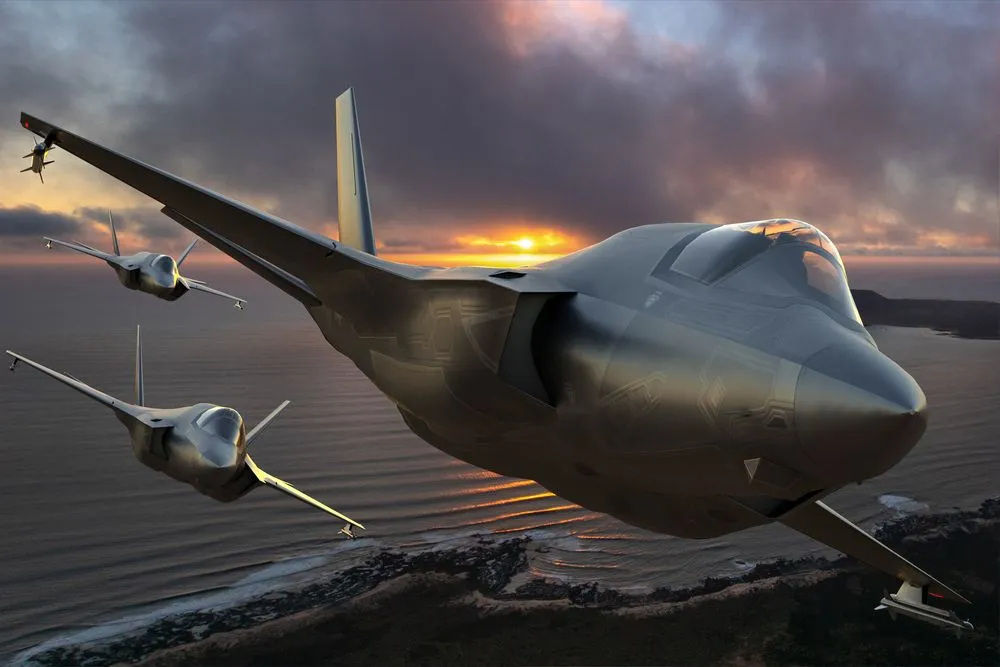
Top Gun: Maverick is one such movie. Apart from being an accurate depiction of the Air Force, it makes some pretty wild assertions. Take for instance, Tom Cruise mentioning bending an airframe. It refers to pilots flying their aircraft so hard that it deforms.
Can the descendants of apes really bend a bunch of well-engineered metal while they’re sitting in it? Turns out, they can!
Can You Really Bend An Aircraft If You Fly Hard Enough?
It is indeed possible to bend your aircraft if you fly hard enough. This can range from anything as simple as a visit to maintenance, to something as serious as the total loss of an asset. The damage to an aircraft resulting from this kind of hard flying is known as overstressing. Before going any further, it’s important to understand the forces acting on an airplane in flight.
Forces Acting On An Aircraft
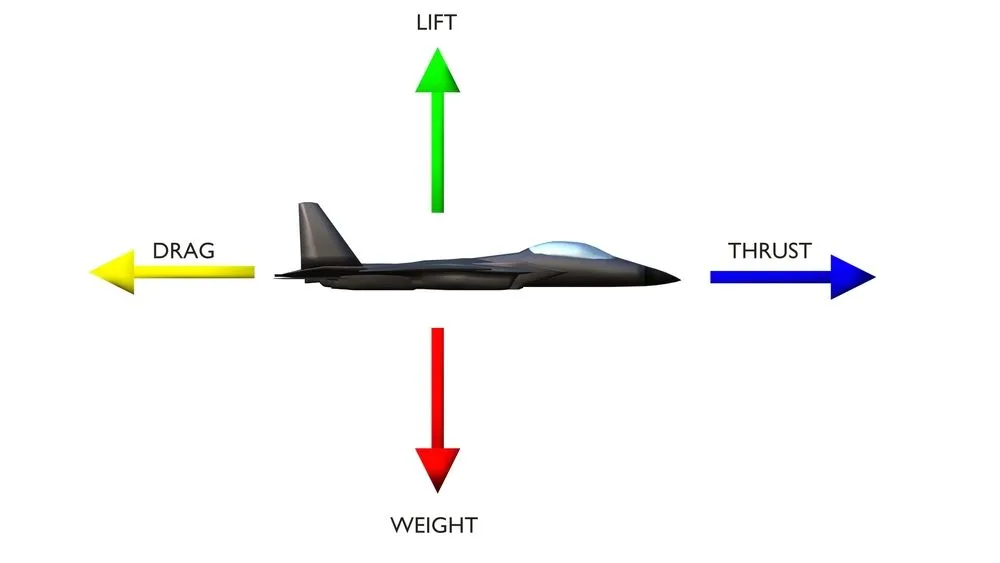
An aircraft in flight experiences various stresses in various measures, owing to the four forces that keep it in flight. These forces are:
- Lift (generated by the wing acting upwards),
- Weight (due to the aircraft’s own weight, acting downwards)
- Thrust (generated by the engines, pushing the aircraft forward)
- Drag (generated by airflow over the body, preventing it from going forward).
Aircrafts are capable of moving in all three dimensions. Consequently, the aircraft will be stressed in all 3 dimensions. These loads can be classified under any of the 5 types:
- Tension (elongating stress)
- Compression (crushing stress)
- Torsion (twisting stress)
- Shear (separating stress)
- Bending (deforming stress)
An aircraft is rated for all of these stresses acting on it. In other words, there is a maximum permissible load limit; exceeding that, the components will show signs of failure. This condition is known as overstressing.
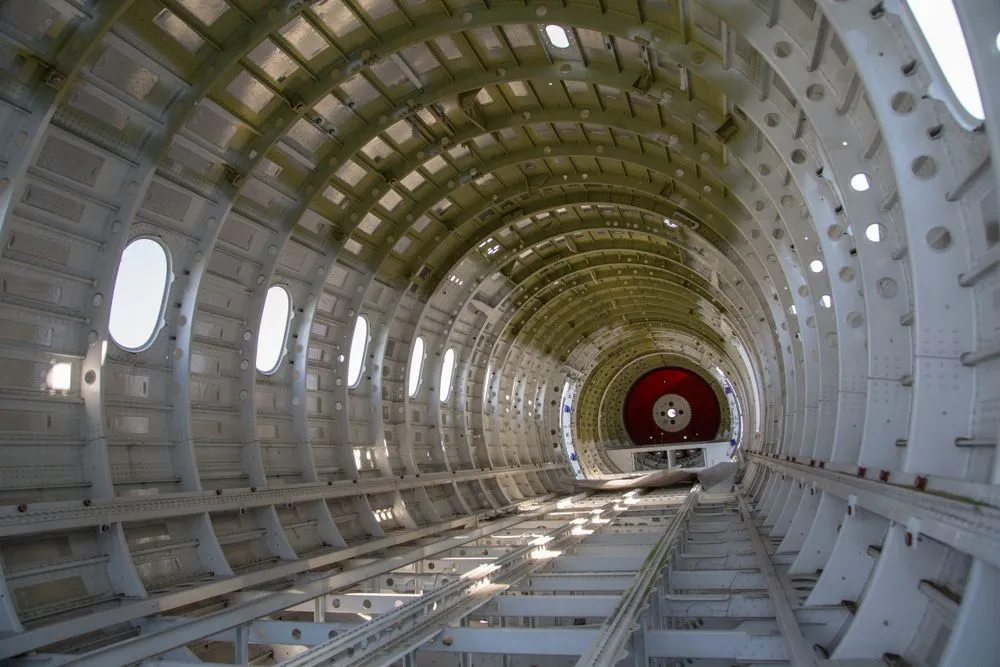
However, stress does not act in isolation. For structural damage due to flying, aircraft are rated in multiples of G-force, or load factor. Load factor is simply the lift the wings are producing divided by the aircraft’s weight, expressed as a multiple of 1g (the pull you feel just sitting still, equal to 9.8 m/s2, or 32 ft/s2). In a 2g turn, every part of the airframe (and the pilot) effectively weighs twice as much as it does on the ground.
Engineers draw two lines in the sand here. The limit load is the heaviest load an aircraft should ever see in normal service; stay below it and the structure springs back with no permanent deformation. The ultimate load is set higher still, at 1.5 times the limit load (a factor of safety baked into the certification rules by the FAA and EASA). The airframe must survive the ultimate load without breaking for at least 3 seconds, even if it ends up bent for good. Overstressing simply means pushing past that limit load and creeping into the danger zone.
When Does An Aircraft Get Overstressed?
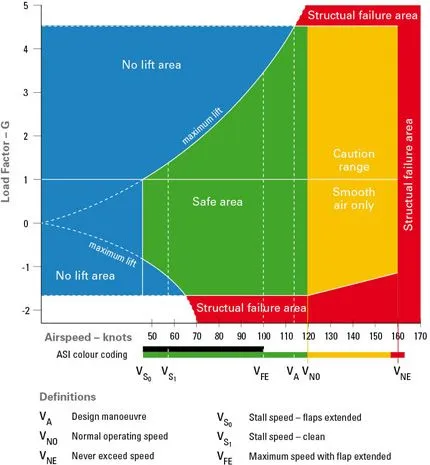
An aircraft gets overstressed whenever the load factor climbs past its limit, and a pilot can rack up Gs in a hurry. Hauling back on the stick to pull out of a dive, snapping into a tight turn, or punching through a sharp gust of turbulence all spike the load factor well above 1g. Engineers map every safe combination of speed and load factor on a chart called the V-n diagram (velocity versus load factor); fly outside its boundary and you are overstressing the airframe.
Weight distribution matters too. Airplanes have a dynamic center of gravity (CG), which can shift both laterally and longitudinally as fuel burns off and the plane maneuvers. If the CG drifts outside the range the manufacturer certified, the airframe is loaded in ways it was never designed for.
For instance, a badly loaded aircraft with the CG too far to one side forces the pilot to make constant control adjustments that disrupt the normal streamlined flight path. At high speeds, this puts an abnormal level of stress on various control surfaces. If those stresses exceed the threshold values, the result is deformation.

Similarly, an aircraft’s structure is also stressed when it takes a turn. In order to turn, an aircraft must bank to one side, and turn within the permissible speed limit available for that banking angle. Higher speeds require higher banking angles, but this puts tremendous stress on the aircraft frame. This is why older planes cannot perform extreme maneuvers as well as newer aircraft!
For military applications, such as low-altitude flying, it is essential to conform to the contours of the earth’s surface. This can often result in pilots diving and flaring at extreme angles, putting serious stress on the aircraft.
Modes Of Failure Due To Overstressing
Common indications of overstress include stress cracks, hairline fractures, sheared rivets and deformed airframes. As more manufacturers use composite materials over metals, overstressing becomes harder to spot, since composites can hide internal damage behind a perfectly normal-looking surface. That raises the risk of failure due to creep (extended periods of stress on a component) or fatigue (cyclic stressing of a component, the same effect that snaps a paperclip after you bend it back and forth a few times).
This is also why exceeding a limit, whether a G overshoot or an overspeed past VNE (the never-exceed speed), is not something a pilot can simply shrug off. The aircraft is typically grounded for a structural inspection before it flies again, because damage may be lurking out of sight. It helps to remember that those limits are conservative by design. Before a new airliner is certified, manufacturers load a complete airframe in a test rig and bend it until something gives. In Boeing’s famous 2010 test, the 787 Dreamliner’s wings were flexed to 150% of their limit load, lifting the wingtips roughly 7.6 m (about 25 ft) before the structure was allowed to fail. Real flying almost never comes anywhere near that.
Do All Aircraft Overstress At The Same G Values?
Not at all. The limit load factor depends entirely on what the aircraft is built to do, and the certification rules spell it out. Large transport jets (the airliners most of us fly on) are designed to a positive limit of about +2.5g and a negative limit of −1.0g, a deliberately tight envelope that keeps passengers comfortable and the structure light. Smaller general-aviation aircraft get more headroom by category: roughly +3.8g for normal-category planes, +4.4g for the utility category, and +6.0g for aerobatic-category machines cleared for loops and rolls. Modern airliners even use computerized flight controls to gently resist a pilot who tries to exceed these numbers inadvertently.
Military fighters sit in a league of their own. An F-16 or similar combat jet is stressed for around +9g, roughly the point at which a trained pilot in a G-suit starts to gray out from blood draining away from the brain. In these aircraft, the human is usually the weak link long before the airframe is.
However, some jobs require aircraft to be flown right up to their very limit, where they may experience forces capable of causing significant structural damage.
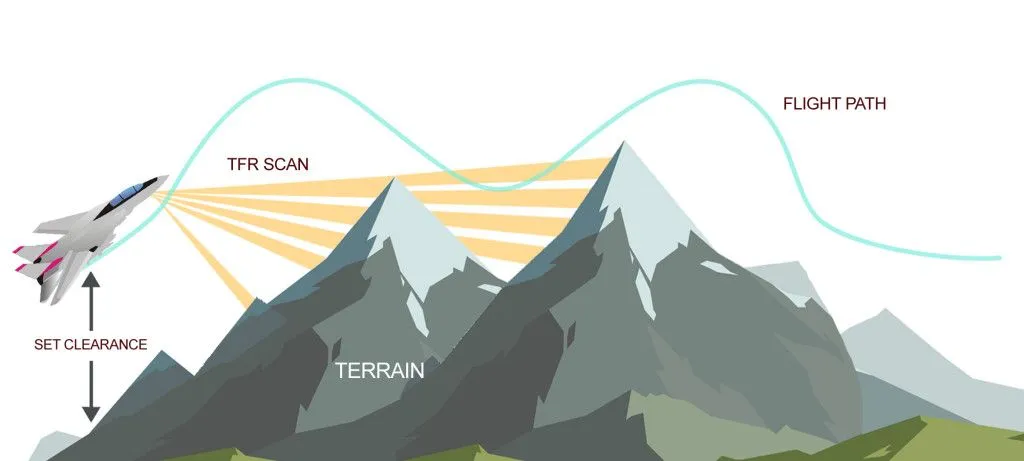
Military and stunt aircraft earn their higher G ratings for a reason: they have to abruptly change direction, which exposes them to extreme loads far more often than their commercial counterparts ever see in a lifetime of gentle airline turns.
Conclusion
You may be wondering… why pull maneuvers at speeds that cause airframes to bend? While there is no questioning the dangers involved, there is another perspective to this.
Manufacturers will always seek that edge which brings their machines to failure, and improve upon that limit in the next iteration. Every iteration therefore pushes this envelope, resulting in the ongoing development of aircraft that are very reliable, and capable of moving at mind-boggling speeds (even multiple times the speed of sound!).
References (click to expand)
- Chapter 10: Weight and Balance. Pilot's Handbook of Aeronautical Knowledge. faa.gov
- Karuskevich, M., Maslak, T., Gavrylov, I., Pejkowski, Ł., & Seyda, J. (2022). Structural health monitoring for light aircraft. Procedia Structural Integrity. Elsevier BV.
- Acceleration in Aviation: G-Force. faa.gov
- AIRCRAFT BASIC CONSTRUCTION. Indian Institute of Technology Kanpur
- Chapter 5: Aerodynamics of Flight (load factors and the V-g diagram). Pilot's Handbook of Aeronautical Knowledge. faa.gov
- 14 CFR 25.337 - Limit maneuvering load factors. Electronic Code of Federal Regulations. ecfr.gov
- Ultimate Load (limit load, factor of safety of 1.5, and the 3-second rule). SKYbrary Aviation Safety
- Technical Discipline: Fatigue and Damage Tolerance. faa.gov
- Boeing completes 787 ultimate-load wing flex test. FlightGlobal
- Maximum rate turns | aviation.govt.nz - CAA. The Civil Aviation Authority of New Zealand
- Steep turns | aviation.govt.nz - www.aviation.govt.nz