Copper does not behave like other reactive metals, such as Sodium or Potassium, when it comes in contact with water. It reacts slowly with water in the presence of oxygen, carbon dioxide, and other pollutants to form an aesthetically appealing patina by a process called corrosion. Water in this kind of corroded copper container will have a distinct metallic taste.
Copper being universally called a noble metal is debatable. It is true that in a test tube or an atmosphere free of pollutants, copper does not react with water.
However, in an atmosphere filled with pollutants, copper reacts slowly with water to form a layer of complex copper salts through a process called copper corrosion.
Water stored in such corroded copper pipes does have a metallic taste. The first flush of water from unused copper pipes has a stale and metallic taste, but why is that the case?
Reactivity Of Metals
The position of a metal on the reactivity series determines its behavior in chemical reactions. Metals placed above hydrogen are considered reactive, while those beneath hydrogen in the series are relatively non-reactive.
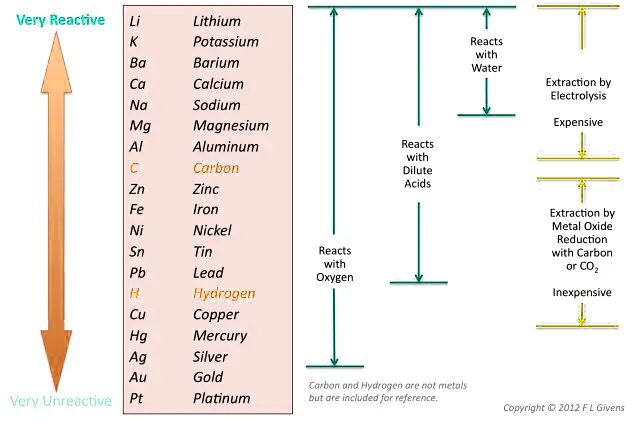
Copper is not a broadly reactive metal, and is therefore sometimes falsely grouped as a noble metal. The reactivity of metals with oxygen and water decreases as you move down the series. Copper placed below hydrogen cannot displace hydrogen from water under standard conditions. Copper does not react with water via displacement reaction, but it can undergo a redox/electrochemical reaction with water, oxygen, and pollutants to form copper complexes.
Does Copper Rust?
No, copper does not rust. Rusting is specific to iron and steel: rust is hydrated iron(III) oxide (Fe2O3·nH2O), the flaky orange layer that forms when iron meets water and oxygen. Since rust is by definition an iron oxide, a copper surface never produces it. Copper instead tarnishes and, with time, develops a blue-green patina.

When copper is exposed to humid air, it slowly grows a thin, dull-brown film of copper(I) oxide (Cu2O). With continued exposure to moisture, carbon dioxide and trace pollutants like sulfur dioxide, this film evolves into the familiar blue-green patina seen on old copper roofs and the Statue of Liberty, a layered mix of copper carbonates, copper sulfates, and copper chlorides.
There is one important difference between the two processes. Rust is porous and flakes off, exposing fresh iron underneath, so iron continues to corrode until the object is gone. Copper’s tarnish layer, by contrast, sticks tightly to the surface and shields the metal beneath, which is why copper roofs and statues survive for centuries while iron roofs would not.
So when someone asks whether copper rusts in water, the chemist’s answer is straightforward: copper itself does not rust, and pure water alone barely touches it. Copper only develops its tarnish or patina once oxygen and atmospheric pollutants enter the picture.
Corrosion Of Copper
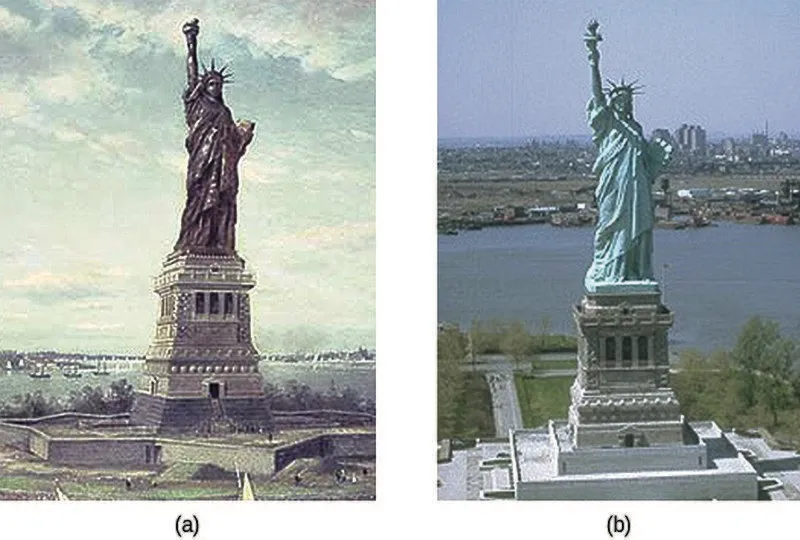
Due to the transformation from a shiny red metallic statue when the French gifted it in 1886 to the green crust now covering its surface, the Statue of Liberty, if not so iconic, would be unrecognizable. This dramatic transformation is attributed to the process of oxidation.
Copper corrosion is negligible in unpolluted air, but it is susceptible to an attack when exposed to moisture mingled with oxygen and carbon dioxide, oxidizing acids, oxidizing heavy-metal salts, sulfur, ammonia, etc.
Understanding Corrosion
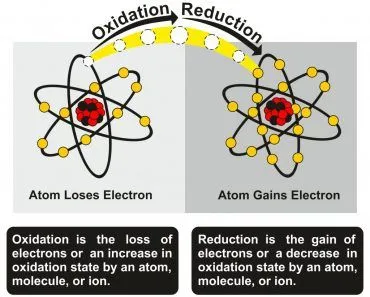
Corrosion is both a redox and an electrochemical reaction. In these reactions, electrons are transferred between two ions or elements.
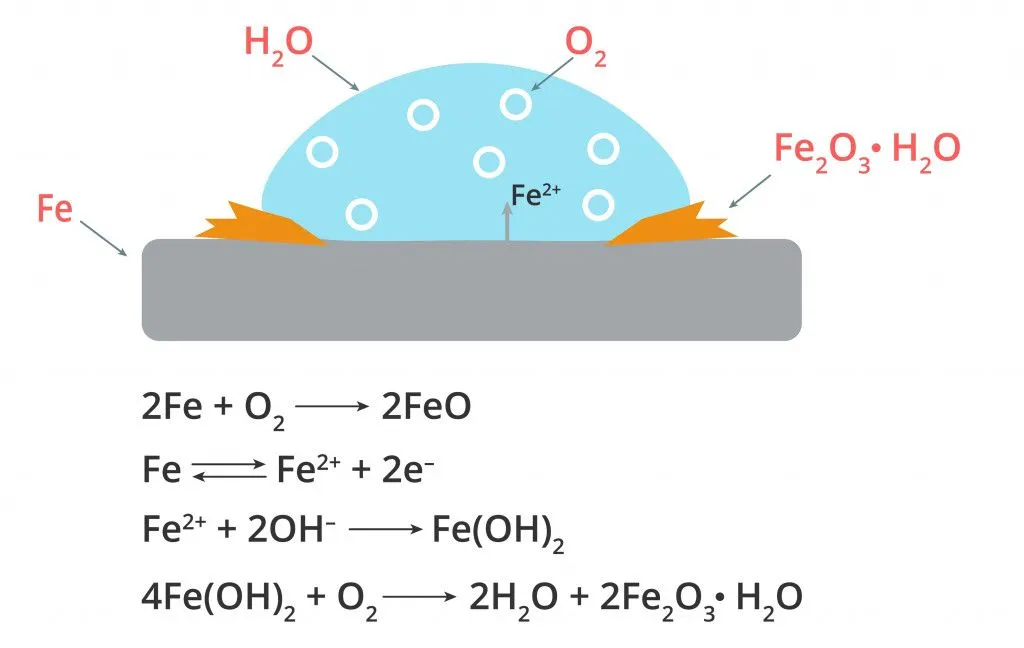
For example, the electrons from iron move to the more electronegative oxygen in the presence of water, forming negatively charged hydroxyl ions. The positively charged iron first reacts with the negatively charged hydroxide ions to form ferric hydroxide, which subsequently reacts with oxygen to form a brown flaky hydrated ferric oxide called rust.
Here, the rusting process first involves a reaction with water, followed by a reaction with oxygen.
Consequences Of Corrosion
All forms of corrosion are due to redox reactions, but the reaction products are interestingly variable: hydrated ferric oxide in the rusting of iron, silver sulfide in the tarnishing of silver, and copper carbonate in the patinating of copper. The common denominator is the transfer of electrons from metals to electronegative atoms.
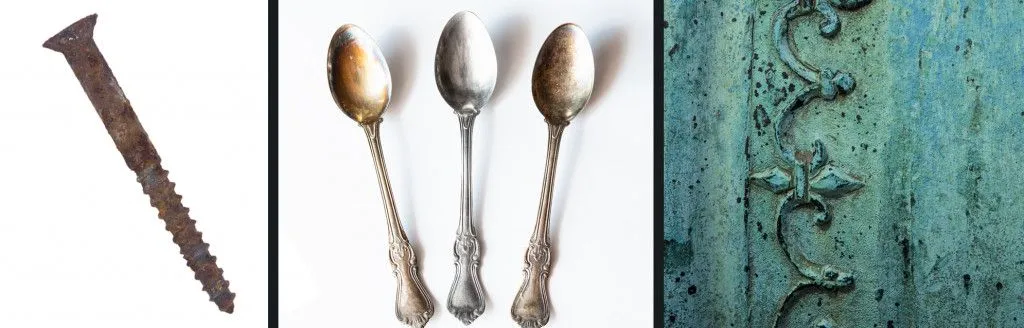
Copper Corrosion (Tarnishing) Forms Green Copper Carbonate Patina
The slow, atmospheric corrosion (or tarnishing) of copper described above leaves behind the colored film known as the patina. The chemistry unfolds in five steps.
Copper patinas are generally regarded as charming, having the feel of an antique, but this beautiful architectural and sculptural aspect is based on a patina being formed on the copper surfaces. However, a patina of copper carbonate in containers will impart a metallic taste.

Step1: The electrons move from the interior of the metal to the moisture outside. The region where the metal loses the electron is the anodic region;
Cu(s) →Cu2+ + 2e–
Step 2: The electrons react with oxygen and moisture to form hydroxide;
O2 (g) + 2H2O+ 4e– →4OH– ;
Step 3: The hydroxide anion moves inside to react with Cu2+ to form copper hydroxide;
Cu2+ + 2OH– →Cu(OH)2
Step 4: CO2 reacts with copper hydroxide to form copper carbonate, which is one of the components of patina;
Cu(OH)2 + CO2 → CuCO3 + H2O
Step 5: Copper hydroxide can also lose water to form copper oxide (CuO), which reacts with sulfur trioxide pollutants to form copper sulfate.
Cu(OH)2 → CuO + H2O
CuO + SO3 → CuSO4
Patina is the formation of copper hydroxide, copper carbonate, copper chloride, and copper sulfate. Copper hydroxide and copper carbonate are insoluble in water, but copper sulfate and copper chloride moderately enter the water, so when water is stored in such corroded copper containers or pipes, it leaves behind an unpalatable metallic taste.
What Does Copper React With?
Even though copper sits below hydrogen in the reactivity series, it is far from inert. The right partners can pull electrons from a copper atom without much difficulty. Here is what copper actually reacts with, and what it ignores:
- Oxygen. Heated in air, copper slowly forms copper(I) oxide (Cu2O) and, at higher temperatures, copper(II) oxide (CuO). At room temperature the same reaction proceeds, only very slowly, which is what gives an old copper penny its dull surface over time.
- Sulfur and sulfur compounds. Copper has a strong affinity for sulfur. Exposure to hydrogen sulfide in polluted air, or even traces of sulfur on the skin, produces black copper(I) sulfide (Cu2S), the same chemistry that blackens silverware.
- Halogens. Direct contact with chlorine, bromine or iodine gas yields the corresponding copper halides. In coastal air, dissolved chloride from sea spray contributes copper chlorides to the green patina.
- Oxidizing acids. Copper readily reacts with nitric acid (HNO3) to give copper nitrate, water and brown nitrogen dioxide gas, and with hot, concentrated sulfuric acid to give copper sulfate and sulfur dioxide.
- What it does not react with. Copper is unreactive toward pure water, toward dilute hydrochloric acid (HCl) and toward dilute sulfuric acid. It also resists most alkalis. This selective inertness is precisely why copper is used for plumbing pipes, electrical wiring and cookware.
Is Copper Soluble In Water?
Solid copper metal is essentially insoluble in pure, neutral water. A copper wire dropped into a glass of distilled water will sit there for years without measurably dissolving, which is exactly why copper is trusted for the plumbing pipes that carry drinking water.
The picture changes once the water becomes acidic, oxygenated or carries dissolved chlorides. In those conditions, copper atoms at the surface can lose electrons and enter the water as Cu2+ ions, and any tarnish or patina already present will release small amounts of soluble copper salts such as copper sulfate (CuSO4) and copper chloride (CuCl2). The blue-green compounds in patina that contain hydroxide or carbonate are, on the other hand, very poorly soluble and stay put on the metal.
This is why the first water drawn from copper pipes in the morning carries the highest copper concentration, and why it tastes the most metallic. Stagnant water has had hours to extract those soluble copper salts; running water leaves much less behind.
Conclusion
The corrosion of copper leaves a complex layer of soluble and insoluble copper salts on the surface of the metal. This serves as a protective layer that prevents further corrosion of the metal beneath. However, the soluble copper salts can subtly dissolve in water stored in the containers to produce a metallic taste that many people find unpleasant!
Interestingly, copper vessels also have antimicrobial properties; studies have shown that bacteria like E. coli and Salmonella are killed when contaminated water is stored in copper pots for 16–48 hours. The World Health Organization (WHO) sets an upper safety limit of 2 mg/L for copper in drinking water, and the trace amounts that leach from copper vessels typically remain well below this threshold.
References (click to expand)
- Rice, D. W., Peterson, P., Rigby, E. B., Phipps, P. B. P., Cappell, R. J., & Tremoureux, R. (1981, February 1). Atmospheric Corrosion of Copper and Silver. Journal of The Electrochemical Society. The Electrochemical Society.
- (2016, July 1). Appendix E: The Atmospheric Corrosion Chemistry Of Copper. Atmospheric Corrosion. John Wiley & Sons, Inc.
- Corrosion of copper in ultrapure water - SKB. The Swedish Nuclear Fuel and Waste Management Company
- All that corrodes is not just iron. Royal Society of Chemistry, Education in Chemistry.
- Microscale reactions of metals with acids. Royal Society of Chemistry, Education in Chemistry.
- 22.7: Corrosion. ChemPRIME (Moore et al.), Chemistry LibreTexts.
- Iron oxide. Encyclopaedia Britannica.
- Copper in Drinking Water (Introduction). National Research Council (US) Committee on Copper in Drinking Water. NCBI Bookshelf, NIH.