Table of Contents (click to expand)
When a meteor hits the lunar surface, a shockwave spreads out in all directions and the impact creates a dent in the surface that is much bigger than the size of the impacting object itself. Since the impact sprays ejecta in all directions in equal proportions (just like the shockwave of an explosion), the direction and incident angle of the impact become irrelevant in determining the shape of the crater.
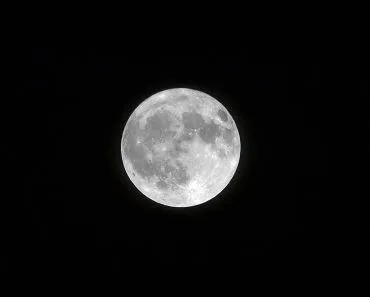
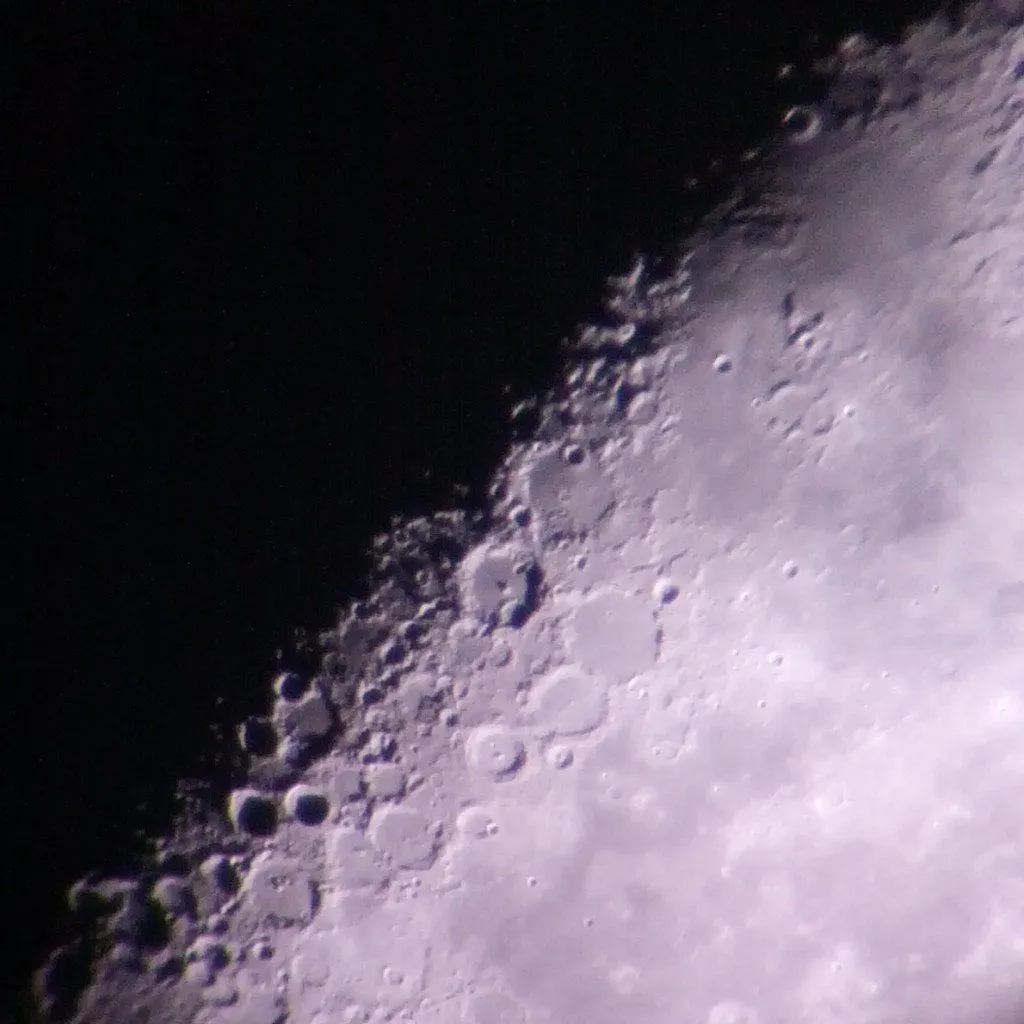
Look up at the moon in the night sky and you will see that it’s covered with many dark spots. If you’ve never paid attention to it, here’s a highly magnified picture of a full moon:
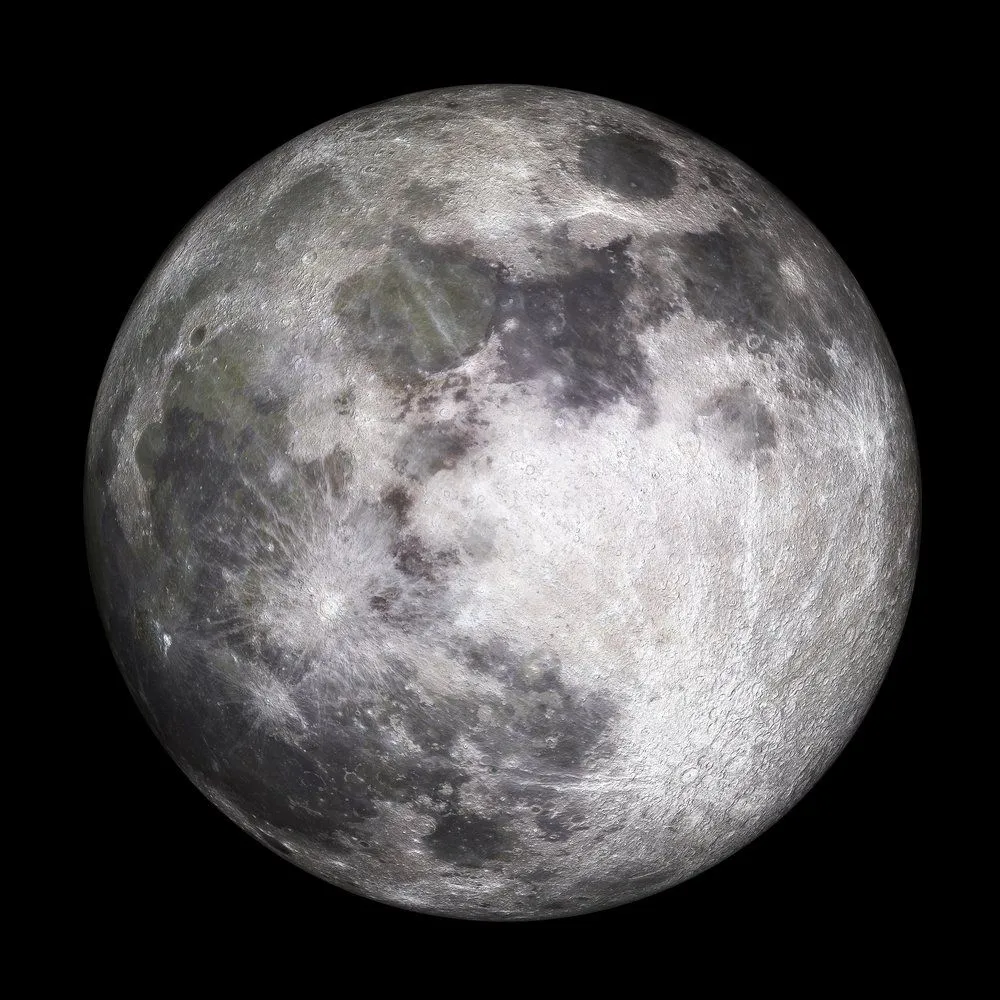
If you don’t know already, the dark spots that you see on the lunar surface are actually impact craters – holes that formed on the surface of the moon following high-speed asteroid/meteor impacts.
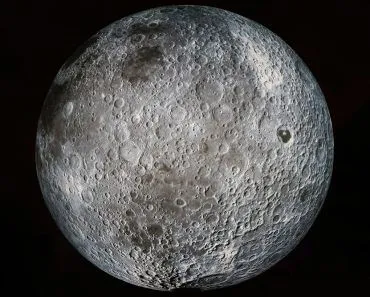
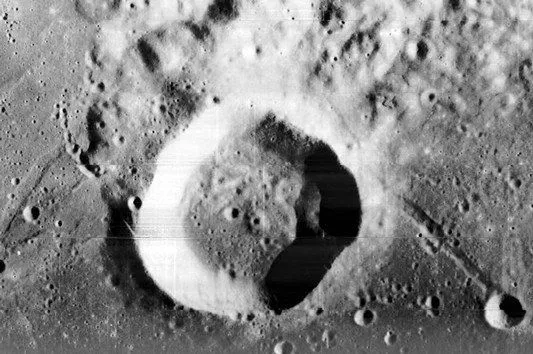
However, here’s a fun fact about lunar craters – if you observe them carefully, you will notice that most of them are circular in shape. Here’s a picture for reference:
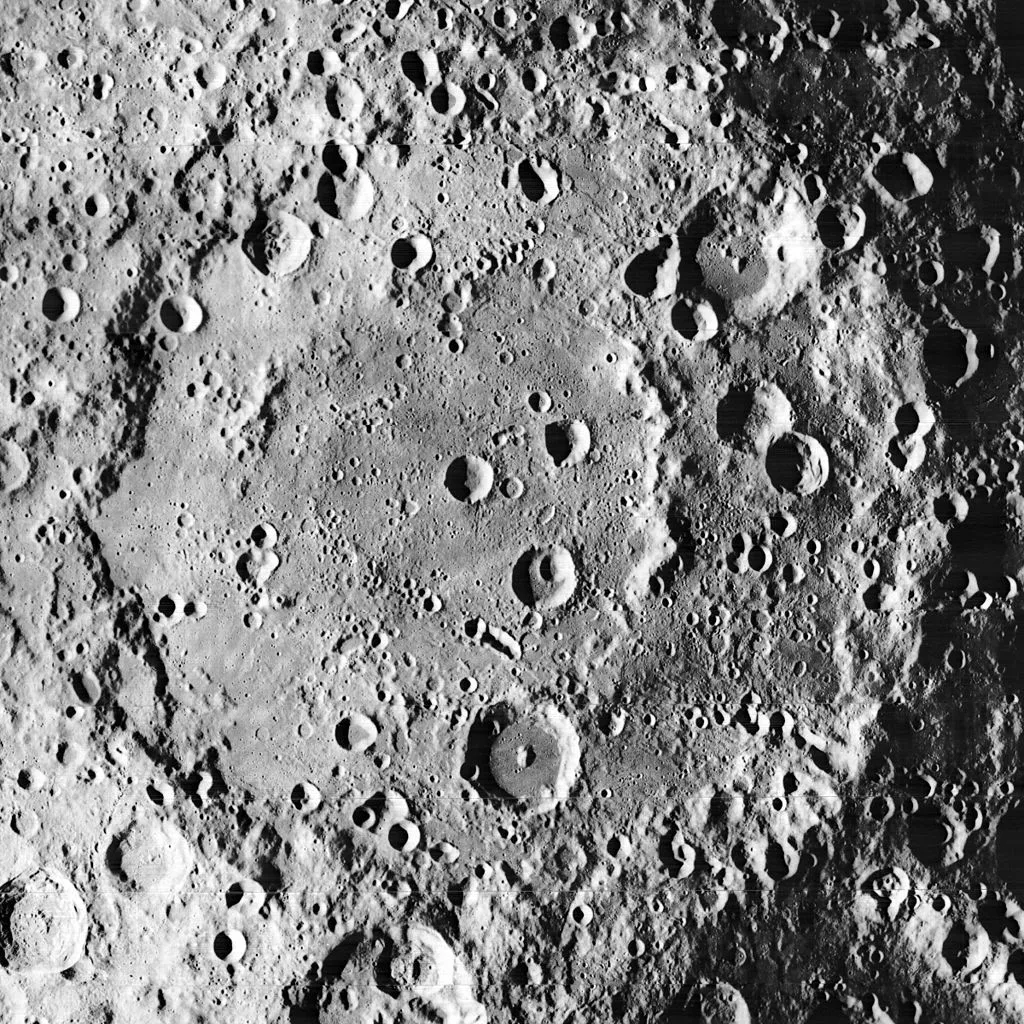
Since these craters were formed after high-speed moving objects struck the moon and left giant depressions on its surface, isn’t it intriguing that most of these craters are round? I mean, meteors can hit a celestial object from all directions and strike its surface at a wide range of angles, so shouldn’t there be some variety in the shape of these ‘moon dents’?

Crude logic dictates that we should see elongated, teardrop-shaped impact craters, as most incoming objects must strike at an angle that isn’t straight down, but all we see are circular craters. Why?
Why Are The Impact Craters On The Lunar Surface Mostly Circular?
Short answer: When a meteor hits the lunar surface, a shockwave spreads out in all directions and the impact creates a dent in the surface that is much bigger than the size of the impacting object itself. Since the impact sprays ejecta in all directions in equal proportions (just like the shockwave of an explosion), the direction and incident angle of the impact become irrelevant in determining the shape of the crater.
The Origins Of Lunar Craters
In the early days of lunar exploration, geologists vehemently argued that the large craters dotting the surface of our only natural satellite could not be the result of meteor strikes, due to the unmistakable round shape of nearly all craters.
They postulated that those craters were the result of volcanic eruptions that had blasted holes in the surface of the moon and consequently formed calderas. For the uninitiated, a caldera is a cauldron-like depression that forms on the crust of a celestial body following a powerful volcanic eruption.
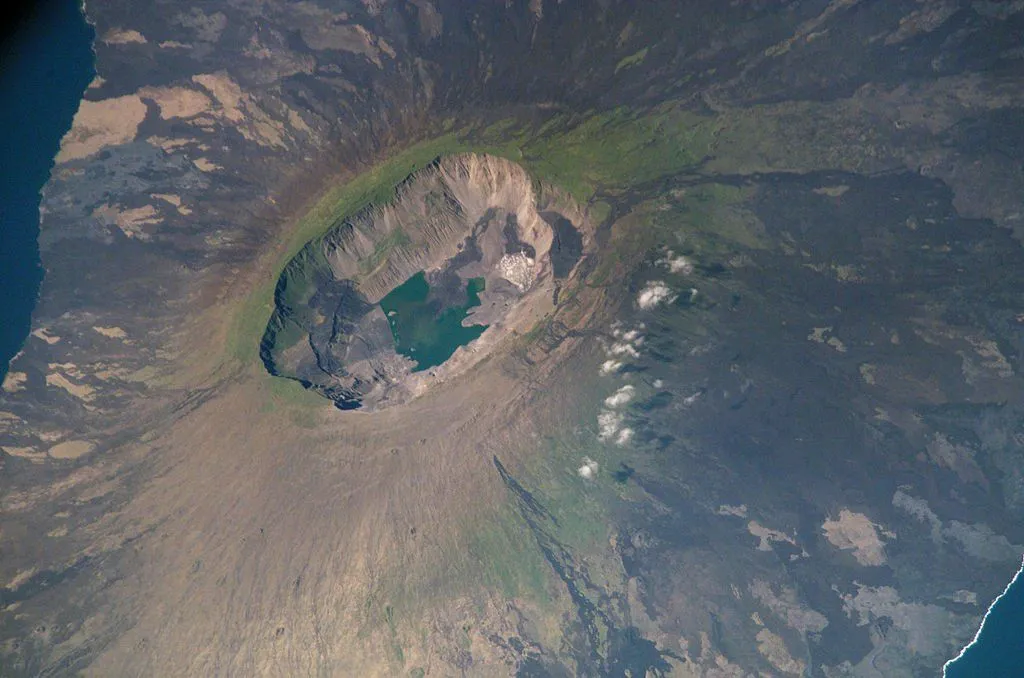
Scientists who supported the ‘caldera hypothesis’ argued that it was impossible for meteors of different shapes, sizes and compositions to leave the same circular crater after impact.
However, as computer and space technology improved, it was determined that when objects traveling at ‘solar system velocities’ (i.e., speeds of a few kilometers per second, which is very fast) strike the lunar surface, the impactor evaporates completely upon impact.
Meteors Hitting The Lunar Surface Have A Lot Of Kinetic Energy
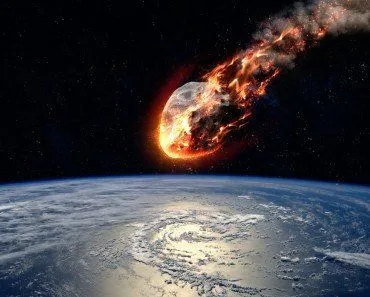
The meteors that hit not just the moon, but any celestial body, travel at very high speeds through space before crashing into the surface. They carry a huge amount of kinetic energy on account of their staggering speeds prior to the impact.
Now, when the impactor makes contact with the surface, there is a rapid, explosive release of its kinetic energy, most of which is abruptly deposited onto a single, relatively small area on the crust. This is quite similar to the detonation of a powerful explosive.
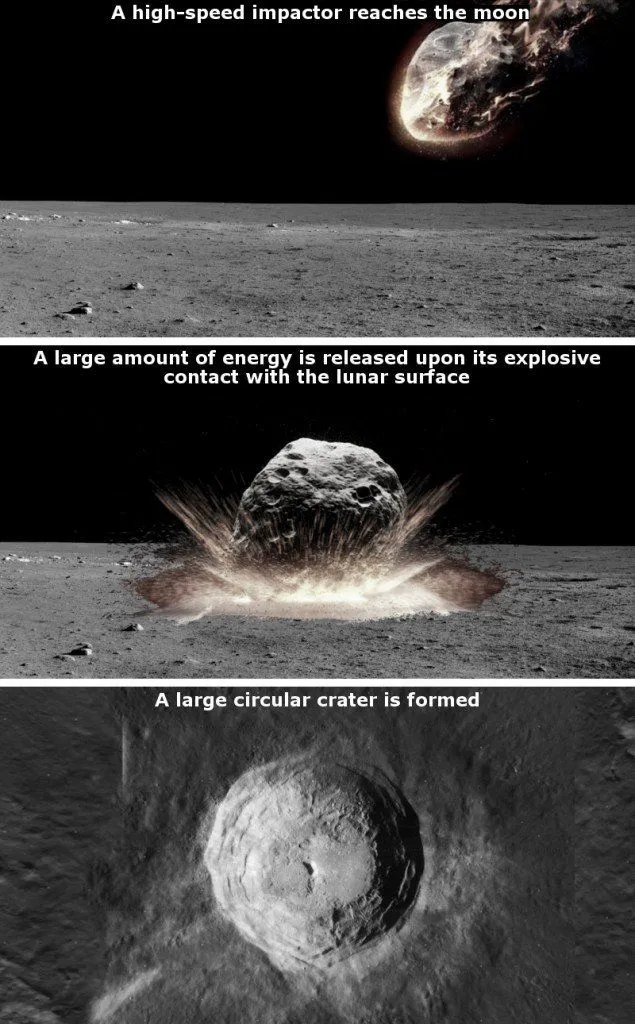
As the impactor makes contact, a powerful shock wave spreads out in all directions and – as is the case with a detonated bomb – it sprays out ejecta in every direction. The impactor (meteor or asteroid) itself is pulverized into small pieces or vaporizes entirely almost instantly after the impact.
The kinetic energy and the power with which the impactor hits the lunar surface is so high that the original shape of the impactor and the angle at which it strikes the surface become irrelevant in determining the shape of the resulting crater.
Why Does The Moon Have So Many Craters In The First Place?
Here’s the part that really stops you in your tracks: the Earth and the Moon have been pelted by roughly the same hail of space rocks over the past few billion years, yet our planet looks almost smooth in comparison. So why is the Moon so spectacularly pockmarked while Earth gets away with just a handful of obvious craters?

The difference isn’t how many rocks hit each world, but what each world does with the scars afterward. The Moon has no atmosphere, so there’s no wind, no rain, and no weather of any kind to wear its craters down. It has had no plate tectonics to recycle its crust for billions of years, and its volcanism essentially shut off around three billion years ago. With none of those processes at work, a crater that formed when dinosaurs were still a long way off is, for all practical purposes, frozen in place.
Earth is the opposite. Our atmosphere burns up most of the smaller incoming meteors before they ever reach the ground, and the impacts that do leave a mark are quickly attacked by erosion from wind, water, and living things, buried under lava flows, or dragged back into the interior by plate tectonics. The result is that Earth simply scrubs its craters away, while the Moon keeps a near-complete record of every major hit it has ever taken. In a real sense, the Moon’s battered face is a fossil of the violent early Solar System that our own planet has long since erased.
How Many Craters Are On The Moon?
Far more than you could ever count by eye. Using high-resolution images and laser-altimeter maps from NASA’s Lunar Reconnaissance Orbiter, planetary scientist Stuart Robbins compiled a global database in 2019 that catalogues roughly 1.3 million impact craters. That catalogue is considered close to a complete census of every lunar crater larger than about 1 to 2 km (0.6 to 1.2 mi) across, and it still misses the countless smaller pits that dimple the surface down to centimeter scales.
Crucially, those craters aren’t spread evenly. The bright, ancient highlands are saturated with overlapping craters, while the dark volcanic plains called maria are far smoother, because younger lava flows resurfaced them and reset the clock. This contrast is more than a curiosity. Counting craters on a given patch of ground is one of the main tools scientists use to estimate how old that surface is: the more craters per square kilometer, the longer that terrain has been sitting there collecting hits.
Do All Lunar Craters Necessarily Have To Be Circular?
Not really.

If the meteor hits the moon at a very shallow angle and just grazes the surface, the crater may not be circular. In this case, the kinetic energy would be deposited over a larger area, as opposed to being concentrated at a single point. The resulting crater, therefore, could be elongated and have a rod-like or teardrop shape.
How shallow does the angle have to be? Studies of oblique impacts find that the strike has to come in at roughly 15 degrees or less above the surface before the crater itself starts to stretch out of round, and even more grazing angles are needed to skew the ejecta into a lopsided pattern. Because shots that shallow are statistically rare, genuinely elliptical craters make up only a small slice of the total population, on the order of a few percent for craters in the kilometers-wide range. That’s exactly why almost everything you see through a telescope looks circular.

The classic example is Messier crater in Mare Fecunditatis, an unmistakably oblong gouge about 9 by 11 km (5.6 by 6.8 mi) that was carved by a projectile skimming in at a very low angle. Its companion, Messier A, and the pair of long, comet-like rays of ejecta trailing off to one side are the fingerprints of that grazing hit. So no, lunar craters don’t have to be circular, but the physics of high-speed impacts makes round the overwhelming default.
References (click to expand)
- Lunar craters - Wikipedia. Wikipedia
- Caldera - Wikipedia. Wikipedia
- Shaping the Planets: Impact Cratering. The Lunar and Planetary Institute
- Lunar Craters. NASA Goddard Space Flight Center.
- Why Does the Moon Have Craters? NASA Space Place.
- Why is the Earth Less Cratered than the Moon? National Radio Astronomy Observatory (NRAO).
- Robbins, S. J. (2019). A New Global Database of Lunar Impact Craters. USGS Astrogeology Science Center.
- Herrick, R. R. & Forsberg-Taylor, N. K. (2003). The shape and appearance of craters formed by oblique impact on the Moon and Venus. Meteoritics & Planetary Science.
- Collins, G. S. et al. (2011). The size-frequency distribution of elliptical impact craters. Earth and Planetary Science Letters.