Water is a polar molecule because the electronegativity of oxygen is higher than that of hydrogen, meaning that the electron density is shifted towards the oxygen atom in the molecule.
Water is a polar molecule because its oxygen is strongly electronegative and, as such, pulls the electron pair towards itself (away from the two hydrogen atoms), thus acquiring a slightly negative charge.
The polarity of a molecule depends not only on its constituent atoms, but also on how they are arranged around the central atom, i.e. the spatial arrangement of those atoms. To understand this better, let’s discuss the topic in more detail.
What Makes A Molecule Polar?
The polarity of a molecule is related to the shifting of electrons in a particular direction. This, in turn, depends on the polarity of the bonds present in the molecule, as these bonds also contain electrons.
Within a molecule, the atom with the higher power to attract electrons towards itself (i.e., it’s more electronegative than the other atom) will acquire a slight negative charge on itself, and the bond between the two atoms will become polar.
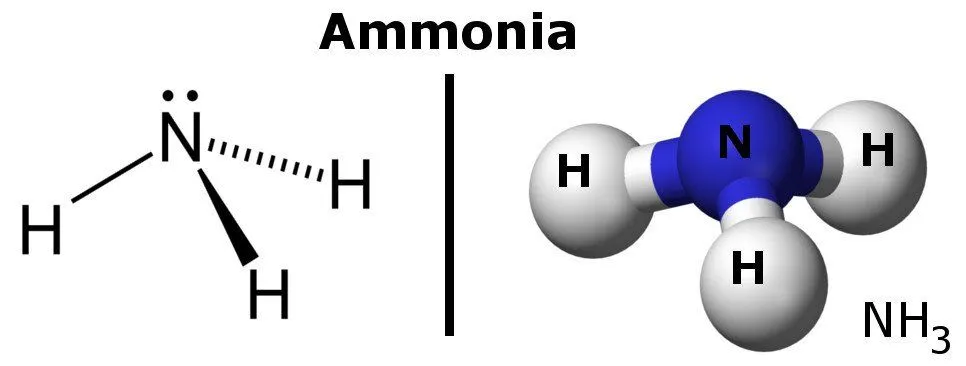
All in all, you could say that the electron density of a polar bond accumulates towards one end of the bond, which results in that end possessing a slight negative charge, while the other end has a slight positive charge. This makes a molecule polar.
Likewise, if a molecule does not have regions of positive and negative charge, it’s considered nonpolar.
However, an interesting thing to note is that the larger the electronegativity difference, the more polar the bond will be within a molecule. Carbonyl compounds are polar because the carbonyl carbon is slightly positive. Thus, shouldn’t carbon dioxide, which contains a positive carbon and two partially negative oxygens, be polar?
Well, carbon dioxide consists of two oxygen atoms attached to a carbon atom. Oxygen atoms are far more electronegative than carbon atoms, and as such, they should hold a partially negative charge, while the carbon atom should be slightly positively charged. However, interestingly enough, that doesn’t happen.
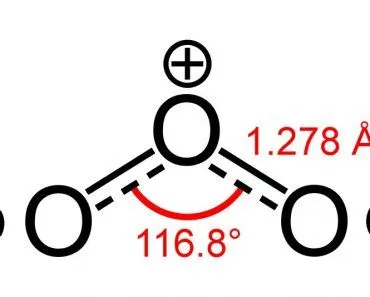
Take A Look At The Structural Formula Of Carbon Dioxide:
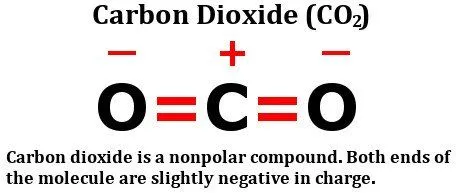
It consists of two equally electronegative oxygen atoms, yes, but look at how these atoms are arranged around the carbon atom. They both stand at perfect 180-degree angles from carbon. Consequently, they pull the electron density from carbon with equal force in opposite directions. The net result is that the electron density on the carbon atom remains unaffected, which renders the carbon dioxide molecule nonpolar.
Carbon dioxide is a great example of how the geometry of a molecule plays a crucial role in determining whether it’s polar or nonpolar. Now, let’s take a look at a molecule of water:
Why Is Water Polar?
The chemical formula of water is H20, which means that it contains two hydrogen atoms and one oxygen atom. The hydrogen atoms only consist of one electron in their shell, whereas the oxygen atom has 6 valence electrons.
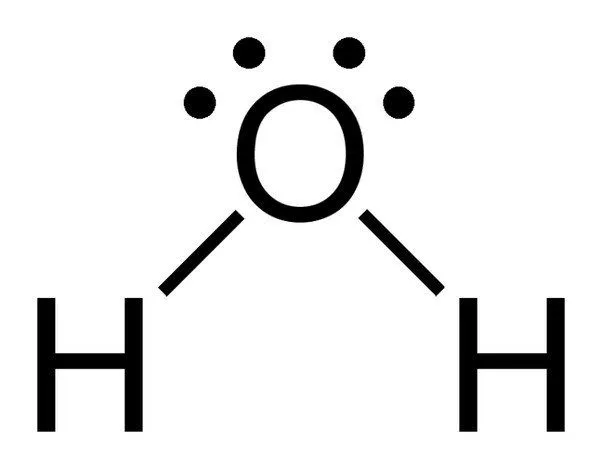
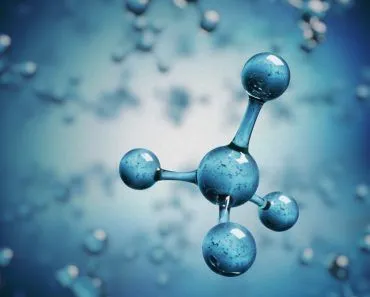
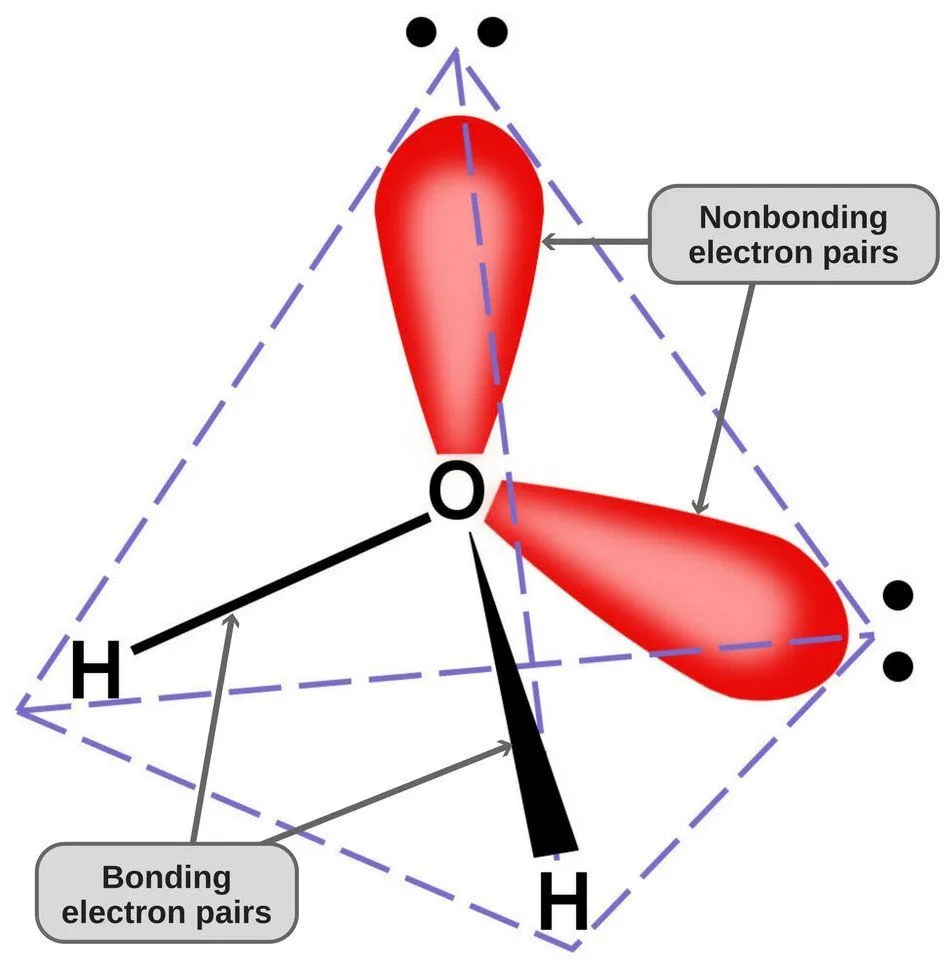
Since oxygen has 6 electrons in its valence shell, it shares an electron with each hydrogen atom. In this way, it’s left with 4 unbonded electrons in its 2 orbitals. These bonded and unbonded electron pairs arrange themselves in a tetrahedral shape around oxygen, which is why the two bonds appear to have a bent shape.
Now, both oxygen and hydrogen atoms have different electronegativities (the electronegativity value of hydrogen is 2.1, while the electronegativity of oxygen is 3.5); therefore, both bonds are polar. Since oxygen is more electronegative than hydrogen, the electron density shifts towards oxygen in both of these bonds, thereby making the region around the oxygen more negative than the areas around the two hydrogen atoms.
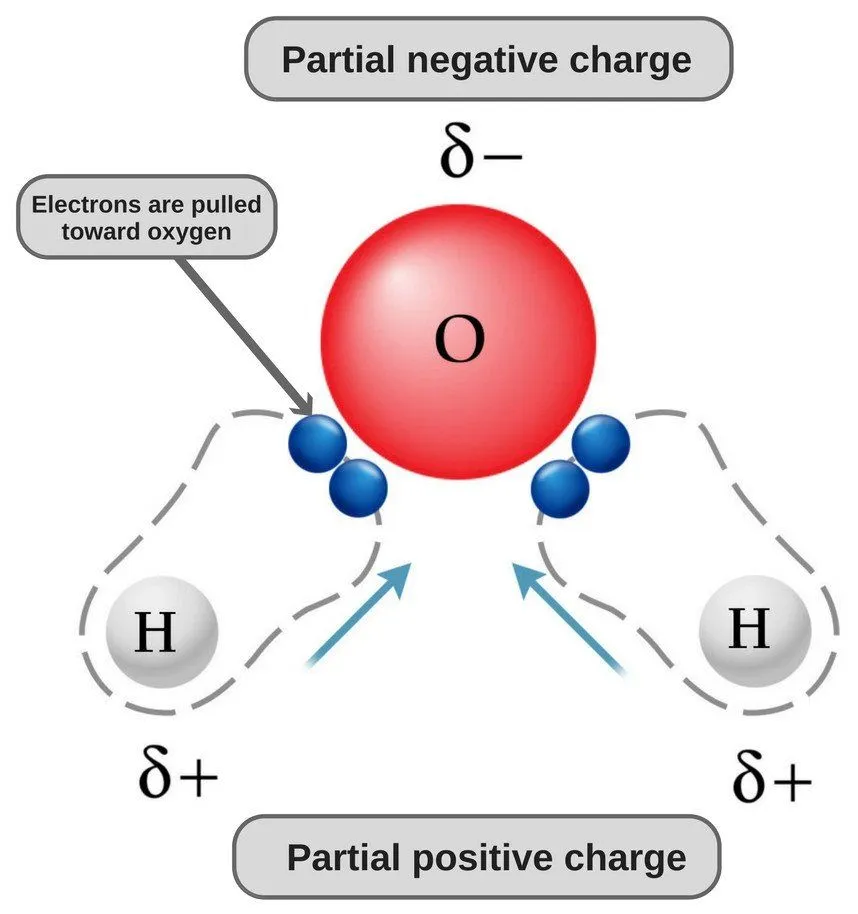
This is why the water molecule becomes polar!
Why Is Water Called The "Universal Solvent"?
So water is polar. Why should you care? Because that single fact is the reason water is often called the "universal solvent". According to the U.S. Geological Survey, water earns that nickname because it can dissolve more substances than any other liquid, and the explanation is exactly the polarity we have been discussing: each end of the molecule carries a partial charge that lets it grab onto other charged or polar molecules.

Drop a pinch of table salt (NaCl) into a glass of water and you can watch this happen. The slightly negative oxygen ends of the water molecules are attracted to the positively charged sodium ions, while the slightly positive hydrogen ends crowd around the negatively charged chloride ions. Each ion ends up wrapped in a cage of water molecules, a structure chemists call a hydration shell (or sphere of hydration). Once an ion is surrounded this way, it is pulled free of the crystal and kept dispersed in the liquid, so the salt dissolves.
This is also why chemists like to say "like dissolves like." Polar water happily dissolves polar and ionic substances, but it does a poor job on nonpolar ones, which is why oil and grease refuse to mix with it. Part of what makes water such an aggressive solvent is its very high dielectric constant, measured at 78.3 at 25 °C (77 °F) by the National Bureau of Standards. A medium with a dielectric constant that high sharply weakens the electrostatic attraction holding ions together, which makes it far easier for water to pry an ionic crystal apart.
What Does Hydrogen Bonding Do To Water?
Polarity does not just help water dissolve things, it also makes water molecules cling to each other. Because one molecule's partially positive hydrogen is drawn to a neighbor's partially negative oxygen, water molecules link up through weak attractions called hydrogen bonds. These bonds are individually feeble, but there are so many of them that they give water a set of properties that are downright strange for such a small, light molecule.
Take the boiling point. Water boils at 100 °C (212 °F), which sounds unremarkable until you compare it to a chemical cousin of similar size, hydrogen sulfide (H2S), which boils at a frigid -62 °C (-80 °F). Water sits far higher because, before it can boil, all those hydrogen bonds have to be broken, and that takes a lot of extra energy. The same stubbornness shows up in water's specific heat capacity: it takes 4.184 joules (one calorie) to warm a single gram of water by just 1 °C. That is unusually high, and it is why water heats up and cools down slowly, acting as a built-in thermostat for everything from a pot on the stove to the world's oceans.

Hydrogen bonding also gives water its famously high surface tension. At the surface, water molecules are tugged inward by their neighbors, forming a kind of elastic "skin." It is strong enough that a steel paper clip or a carefully placed needle can float on it despite being far denser than water, and it lets insects such as water striders stroll across a pond. The same stickiness comes in two flavors: cohesion (water molecules sticking to one another) and adhesion (water sticking to other surfaces). Together they drive capillary action, the way water can creep up a narrow tube against gravity. Capillary action even helps draw water up into the roots and stems of plants, though lifting it all the way to the top of a tall tree also relies on evaporation pulling water from the leaves above.
Why Does Ice Float On Water?
Here is one of water's neatest party tricks: solid water floats on liquid water. That is genuinely odd. For nearly every other substance, the solid form is denser than the liquid and sinks. Water bucks the trend, and once again the culprit is hydrogen bonding.

When water freezes, its molecules lock into an open, hexagonal crystal lattice with empty spaces running through it. This rigid framework actually holds the molecules farther apart than they sit in liquid water, so the same number of molecules takes up more room. The result is that ice is roughly 9% less dense than liquid water (about 0.917 g/cm3 for ice versus close to 1.000 g/cm3 for water), which is why it bobs at the surface.
Liquid water has its own quirk too: it is densest not at its freezing point but at about 4 °C (39 °F). As a pond chills toward winter, the densest 4 °C water sinks to the bottom while colder water, and then ice, stays on top. That floating lid of ice is no small thing for life. As the U.S. National Ocean Service notes, the layer of ice insulates the water beneath it, so lakes and ponds freeze from the top down rather than solid, and fish and other creatures can ride out the winter in the liquid water below. You can dig deeper into this anomaly in our piece on why ice floats on water.
How Does Life Depend On Water's Polarity?
Tie all of this together and you start to see why biologists treat water as the molecule of life. Water makes up 70% or more of the mass of a typical cell, and because it is polar it readily dissolves the ions, sugars, amino acids and other charged or polar molecules that biochemistry runs on. In other words, the same property that dissolves your table salt also provides the watery medium in which the countless reactions inside a cell can take place.
Water's high specific heat matters here too. By soaking up large amounts of heat for only a small rise in temperature, water shields living things from sudden swings, keeping the inside of a cell, the body of an organism, and even the temperature of whole oceans relatively stable. Organisms that are mostly water enjoy a built-in temperature buffer.

Polarity even helps build the cell itself. The fatty molecules that make up cell membranes are amphipathic: they have a polar, water-loving head and a nonpolar, water-fearing tail. To keep their tails away from water, these molecules spontaneously line up into a double layer, the lipid bilayer, with the water-loving heads facing the watery world on either side. This "hydrophobic effect," driven by water shielding itself from the nonpolar tails, is what lets cell membranes assemble on their own. It is also why scientists hunting for life beyond Earth follow a simple mantra: "follow the water." Liquid water's talent as a polar solvent makes it, as far as we know, a basic requirement for life.
References (click to expand)
- Types of Covalent Bonds: Polar and Nonpolar.
- Polar and Non-polar Covalent Bonds - Chemistry LibreTexts.
- Water and Ice - www.nyu.edu
- Water, the Universal Solvent. USGS Water Science School.
- Water - Water's Solvent Properties. Biology LibreTexts.
- Malmberg & Maryott. Dielectric Constant of Water from 0° to 100° C. Journal of Research of the National Bureau of Standards (NIST).
- Unusual Properties of Water. Chemistry LibreTexts.
- Surface Tension and Water. USGS Water Science School.
- Capillary Action and Water. USGS Water Science School.
- The Unusual Properties of Water and Density. Penn State EARTH 111.
- Why Don't Fish Freeze in Winter? NOAA National Ocean Service.
- The Molecular Composition of Cells. The Cell: A Molecular Approach. NCBI Bookshelf.
- The Lipid Bilayer. Molecular Biology of the Cell. NCBI Bookshelf.
- Why Is Water So Important for Life? NASA Astrobiology.