If you are exposed to the vacuum of space, you would not explode. The real killer is asphyxiation: with no oxygen reaching the brain, you would black out in about 15 seconds. Your body would also swell as water in your tissues turned to vapor, and you would slowly lose heat through radiation. Recovered and repressurized within a minute or two, you could survive with no lasting harm.
When you were a child, perhaps you looked up at the sky from time to time. You looked up, saw the night sky, and for better or worse, you started wondering. Maybe that prompted you to dream of becoming an astronaut somewhere down the line, drifting through the vast expanse, the cold darkness, and the infinity of nothingness. It’s a common dream, but it feels a bit terrifying, doesn’t it?
Every person that has ever gone into space has always had the same reservations at one time or another. Maybe it was during their training for the long journey, or in the moments strapping up for the launch before a humongous amount of fuel ejected them into the orbit, or even when they first laid eyes on a shooting star.
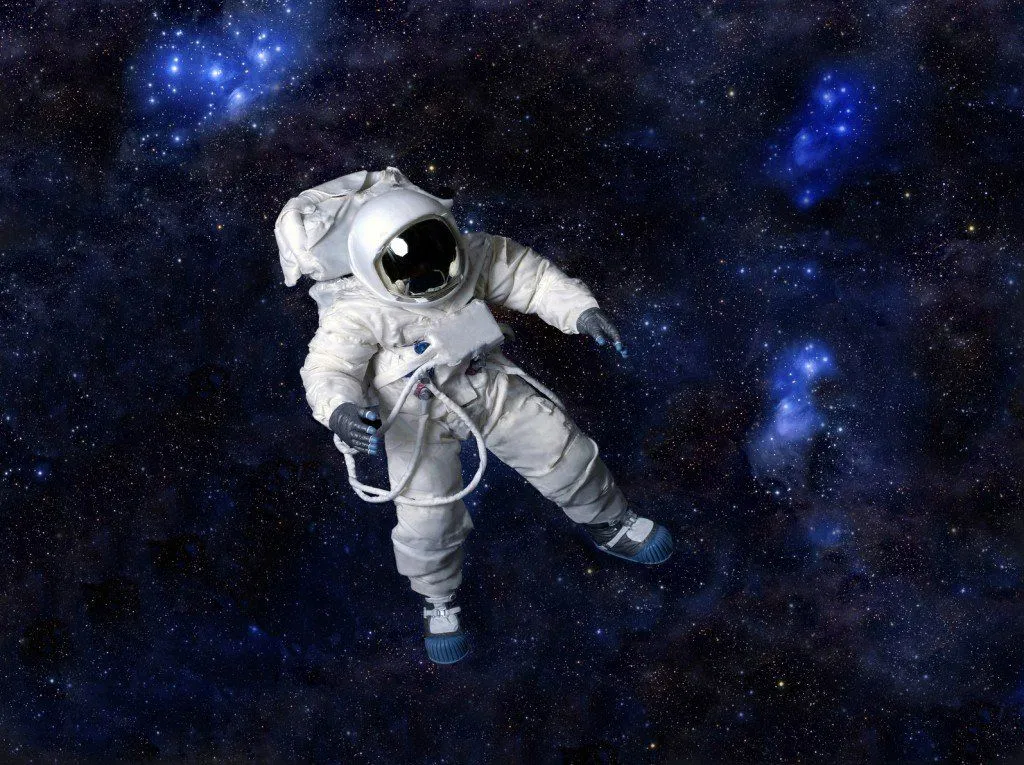
Beautiful. Magnificient. Lethal. Those are just a few descriptions of what outer space truly is. Therefore, if you ever wondered what would happen if you were actually stranded in space without a suit, gear, or anything else between your outstretched hand and the absolute vacuum, then this article is for you!
Time and again, you have seen in movies, read in novels, or heard it from someone’s imaginary account in which the hull of a spaceship explodes and humans fly out without any equipment. With no air and no atmospheric pressure, the human body can’t survive for long without some form of protection, but what happens exactly? Do your eyes explode, does your body blow up like a balloon, and does your blood start boiling? These are some of the common ideas of what occurs in the vacuum of space, but is that what actually occurs?

The truth is less dramatic, but even more fascinating. Although you might have only seen this in movies, accidents have happened that have been invaluable to us in terms of the knowledge acquired. There have also been many tests done in controlled environments of zero pressure to simulate the conditions that one might face in space.
Chronologically, the events would occur in the following order…
Asphyxiation
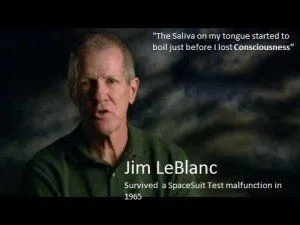
Asphyxiation, or lack of oxygen in the bloodstream, is the first obstacle to overcome. You wouldn’t lose consciousness straightaway, because your body would burn through whatever oxygen was still in your bloodstream to keep your brain ticking over. That buys you only about 15 seconds of useful consciousness, after which you black out. This isn’t guesswork: in 1966, NASA technician Jim LeBlanc was accidentally exposed to near-vacuum in a test chamber and stayed conscious for roughly 14 seconds, recalling that he could feel the saliva on his tongue start to bubble just before he passed out. He was repressurized in time and walked away unharmed, which tells us something important: get someone back into a pressurized space within a minute or two and they can survive with no permanent damage.
You might think that a possible solution to this problem is to take in as much air as possible before being thrown out into the void, but that might be the biggest mistake you could make in this scenario. You’ll see why in a bit…
Depressurization
Depressurization is another not so obvious, but very dangerous problem. Your lungs sit at the ambient pressure of the cabin or suit, so a sudden drop to the near-zero pressure of space is life-threatening. Here’s the catch though: the danger only becomes lethal if you hold your breath. With a sealed throat, the air trapped in your lungs has nowhere to go, so it expands and can tear the delicate lung tissue (a barotrauma divers know well as the reason you never hold your breath while surfacing). Let that air out, however, and your lungs ride out the pressure change just fine.

What we learn from this is to follow one very important piece of advice; if you ever find yourself in such a scenario (fingers crossed you don’t…), the first thing to do when being expelled into the vacuum of space is exhale.
Swelling
Swelling of the soft tissues due to the loss of atmospheric pressure is another experience that you can check off your bucket list if you ever expose yourself to open space. Unfortunately, you can’t really prepare yourself for it or do anything to prevent it. After about 10 seconds of exposure, the water in your tissues will start to turn to vapor, since with no pressure pushing back, water boils at body temperature. Scientists call this ebullism, and it’s what makes you puff up.

You won’t “explode” though, because human skin is quite strong and elastic, and if you are returned to normal atmospheric conditions in a reasonable amount of time, the swelling subsides and you can still live out the rest of your life with the same number of limbs. Just before losing consciousness, you would feel the water on your tongue start to bubble, exactly as Jim LeBlanc described. The blood coursing through your veins and arteries, however, doesn’t boil away. Contrary to the movies, that’s not because of body heat; it’s because your closed circulatory system keeps your blood under its own pressure, well above the point at which it would vaporize.
Freezing
Freezing is perhaps the most obvious outcome of being stranded at almost absolute zero temperatures, but since there is no medium of heat transfer in space, you will only lose heat through radiation, which is a very slow process. Good for you? Maybe… You can’t really call it a good thing, since you would be long dead from asphyxiation by the time you would have to start worrying about frostbite.
It seems like no matter what you do, you can’t catch a single break. Outer space is brutal!

Radiation
Radiation from the sun and other cosmic bodies would also make you miss our precious ozone layer, in those few moments before you pass out. Such huge amounts of radiation would be fatal, or at least result in a truly nasty sunburn.
The fact is, unless you’re brought back into a pressurized and protected space, your body will be floating in space for a very long time. Imagine those vacuum-sealed chicken legs that you find at your supermarket. That’s close enough to what you have to look forward to becoming if you ever find yourself drifting in the void. No oxygen and no decomposition. You would have the same look on your face forever – gasping for air and waiting for the asphyxiation to set in.
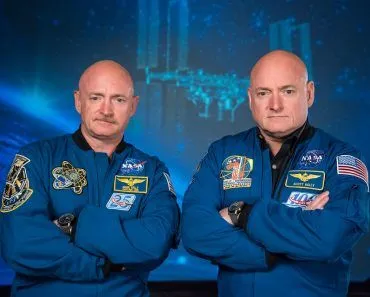
In other words, don’t ever try to skinny dip in this particular ocean of “stars”. This guy knows what I’m talking about.
Would Your Head, Eyes Or Body Really Explode In Space?
This is the question most people actually want answered, so let us settle it: no, your head does not explode, your eyes do not pop out of their sockets, and your body does not burst like an overfilled balloon. Hollywood loves the image, but it simply is not what happens. The pressure difference between the inside of your body (roughly one atmosphere) and the vacuum outside is real, yet it is far too small to overpower how strong and stretchy human tissue actually is. Your skin, held together by tough, elastic connective tissue, comfortably contains that pressure, which is why you would puff up rather than rupture.
Your blood vessels tell the same story. They are built to hold blood under pressure, so they keep your circulatory system sealed and your blood well below its boiling point, exactly as we saw in the swelling section. What can boil are the thin films of water sitting on surfaces open to the vacuum, such as the saliva on your tongue and the moisture on your eyes. That fizzing feels bizarre, but it is a long way from an eyeball detonating. In short, the vacuum is out to suffocate you, not to blow you apart.
How Much Pressure Can The Human Body Survive? The Armstrong Limit
There is a specific altitude where survival without protection ends, and it has a name: the Armstrong limit. It sits around 18 to 19 kilometers (roughly 62,000 feet) above sea level, where atmospheric pressure falls to about 6.3 kilopascals (0.9 psi, or around 47 mmHg). That is only about one-sixteenth of the pressure you feel at sea level. The limit is named after Harry George Armstrong, the United States Air Force physician who first recognized it.

What makes this exact pressure special is that it is the point at which water boils at your body temperature of 37 degrees Celsius (98.6 degrees Fahrenheit). Rise above the Armstrong limit without a pressurized suit and the exposed water in your body, including your saliva, your tears and the fluid lining your lungs, begins to boil away, which is the ebullism we met earlier. Your blood, sealed inside its vessels, stays under enough pressure that it does not boil. Open space lies far, far below this limit, its pressure is effectively zero, so a body exposed there is well past the point where breathing extra oxygen could do any good at all.
What If Only Part Of You, Like A Hand, Was Exposed?
You do not need a torn-open spaceship to picture this, because it has already happened to a single hand. In August 1960, US Air Force pilot Joseph Kittinger rode a balloon gondola to 102,800 feet (about 31 kilometers) as part of Project Excelsior. On the way up, the pressure seal on his right glove failed, exposing his hand to the near-vacuum outside.

His hand swelled to roughly twice its normal size and became painful and useless, precisely the localized ebullism you would expect. Kittinger, worried that the mission would be scrubbed, chose not to report it and went on to make his record-setting parachute jump anyway. Because this kind of swelling reverses once pressure is restored, his hand recovered after he returned to denser air. That is vacuum exposure in miniature: an unprotected body part swells dramatically, but it does not explode, and the damage can be undone if pressure comes back in time.
References (click to expand)
- Effect of spaceflight on the human body - Wikipedia. Wikipedia
- What Happens to the Human Body in Space? - NASA. The National Aeronautics and Space Administration
- What Happens to the Human Body in Space? | Science. Smithsonian
- How long could you survive in space without a spacesuit? Space.com
- The human body in space: Distinguishing fact from fiction. Harvard University
- Survival in Space Unprotected Is Possible--Briefly. Scientific American
- Armstrong limit - Wikipedia. Wikipedia
- Project Excelsior - Wikipedia. Wikipedia
- How long can a human in outer space last without a spacesuit before exploding? West Texas A&M University